Sara Wakefield – författare
Visar alla böcker från författaren Sara Wakefield. Handla med fri frakt och snabb leverans.
6 produkter
6 produkter
Häftad, Engelska, 2016
358 kr
Skickas inom 5-8 vardagar
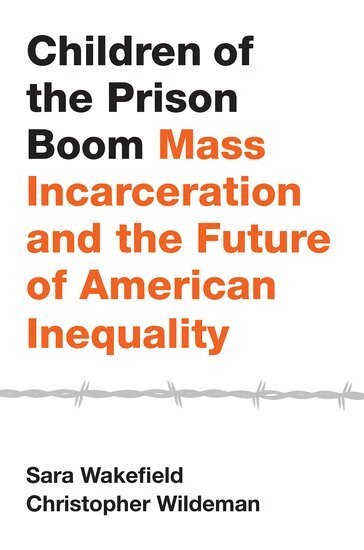
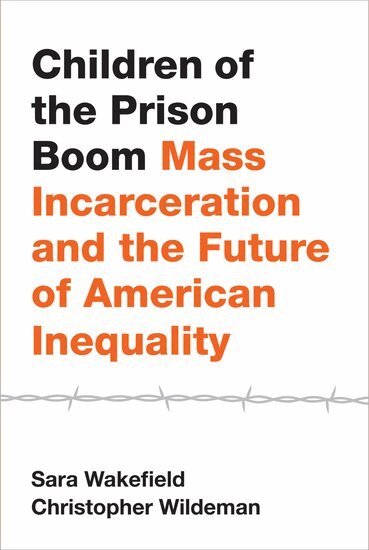
An unrelenting prison boom, marked by stark racial disparities, pulled a disproportionate number of young black men into prison in the last forty years. In Children of the Prison Boom, Sara Wakefield and Christopher Wildeman draw upon broadly representative survey data and interviews to describe the devastating effects of America's experiment in mass incarceration on a generation of vulnerable children tied to these men. In so doing, they show that the effects of mass imprisonment may be even greater on the children left behind than on the men who were locked up.Parental imprisonment has been transformed from an event affecting only the unluckiest of children-those with parents seriously involved in crime-to one that is remarkably common, especially for black children. This book documents how, even for children at high risk of problems, paternal incarceration makes a bad situation worse, increasing mental health and behavioral problems, infant mortality, and child homelessness. Pushing against prevailing understandings of and research on the consequences of mass incarceration for inequality among adult men, these harms to children translate into large-scale increases in racial inequalities. Parental imprisonment has become a distinctively American way of perpetuating intergenerational inequality-one that should be placed alongside a decaying public education system and concentrated disadvantage in urban centers as a factor that disproportionately touches, and disadvantages, poor black children. More troubling, even if incarceration rates were reduced dramatically in the near future, the long-term harms of our national experiment in the mass incarceration of marginalized men are yet to be fully revealed. Optimism about current reductions in the imprisonment rate and the resilience of children must therefore be set against the backdrop of the children of the prison boom-a lost generation now coming of age.
Inbunden, Engelska, 2014
702 kr
Skickas inom 7-10 vardagar
An unrelenting prison boom, marked by racial disparities, characterized the latter third of the twentieth century. Drawing upon broadly representative survey data and qualitative interviews, Children of the Prison Boom describes the devastating effects of America's experiment in mass incarceration for a generation of vulnerable children. Parental imprisonment has transformed from an event affecting only the unluckiest of children-children of parents whose involvement in crime would have been quite serious-to one that is remarkably common, especially for black children. Even for high-risk youth, Children of the Prison Boom shows that paternal incarceration makes a bad situation worse, increasing mental health and behavioral problems, infant mortality, and child homelessness. These findings have broad implications for social inequality. Contrary to a great deal of research on the consequences of mass incarceration for inequality among adult men, these harms to children translate into large-scale increases in racial inequalities at the aggregate level. Parental imprisonment has become a distinctively American force for promoting intergenerational social inequality that should be placed alongside a decaying urban public school system and highly concentrated disadvantaged populations in urban centers as factors that distinctively touch-and disadvantage-poor black children.More troubling, even if incarceration rates were reduced dramatically in the near future, the long-term harms of incarcerating marginalized men have yet to be fully revealed. Optimism about current reductions in the imprisonment rate and the resilience of children must therefore be set against the backdrop of the children of the prison boom-a lost generation now coming of age.
E-bok
PDF, Engelska, 2013447 kr
Läs direkt efter köp
An unrelenting prison boom, marked by stark racial disparities, pulled a disproportionate number of young black men into prison in the last forty years. In Children of the Prison Boom, Sara Wakefield and Christopher Wildeman draw upon broadly representative survey data and interviews to describe the devastating effects of America''s experiment in mass incarceration on a generation of vulnerable children tied to these men. In so doing, they show that the effects of mass imprisonment may be even greater on the children left behind than on the men who were locked up.Parental imprisonment has been transformed from an event affecting only the unluckiest of children-those with parents seriously involved in crime-to one that is remarkably common, especially for black children. This book documents how, even for children at high risk of problems, paternal incarceration makes a bad situation worse, increasing mental health and behavioral problems, infant mortality, and child homelessness. Pushing against prevailing understandings of and research on the consequences of mass incarceration for inequality among adult men, these harms to children translate into large-scale increases in racial inequalities. Parental imprisonment has become a distinctively American way of perpetuating intergenerational inequality-one that should be placed alongside a decaying public education system and concentrated disadvantage in urban centers as a factor that disproportionately touches, and disadvantages, poor black children. More troubling, even if incarceration rates were reduced dramatically in the near future, the long-term harms of our national experiment in the mass incarceration of marginalized men are yet to be fully revealed. Optimism about current reductions in the imprisonment rate and the resilience of children must therefore be set against the backdrop of the children of the prison boom-a lost generation now coming of age.
E-bok
Engelska, 2013447 kr
Läs direkt efter köp
An unrelenting prison boom, marked by stark racial disparities, pulled a disproportionate number of young black men into prison in the last forty years. In Children of the Prison Boom, Sara Wakefield and Christopher Wildeman draw upon broadly representative survey data and interviews to describe the devastating effects of America''s experiment in mass incarceration on a generation of vulnerable children tied to these men. In so doing, they show that the effects of mass imprisonment may be even greater on the children left behind than on the men who were locked up.Parental imprisonment has been transformed from an event affecting only the unluckiest of children-those with parents seriously involved in crime-to one that is remarkably common, especially for black children. This book documents how, even for children at high risk of problems, paternal incarceration makes a bad situation worse, increasing mental health and behavioral problems, infant mortality, and child homelessness. Pushing against prevailing understandings of and research on the consequences of mass incarceration for inequality among adult men, these harms to children translate into large-scale increases in racial inequalities. Parental imprisonment has become a distinctively American way of perpetuating intergenerational inequality-one that should be placed alongside a decaying public education system and concentrated disadvantage in urban centers as a factor that disproportionately touches, and disadvantages, poor black children. More troubling, even if incarceration rates were reduced dramatically in the near future, the long-term harms of our national experiment in the mass incarceration of marginalized men are yet to be fully revealed. Optimism about current reductions in the imprisonment rate and the resilience of children must therefore be set against the backdrop of the children of the prison boom-a lost generation now coming of age.
Häftad, Engelska, 2012
132 kr
Skickas inom 5-8 vardagar
Häftad, Engelska, 2025
495 kr
Skickas inom 10-15 vardagar
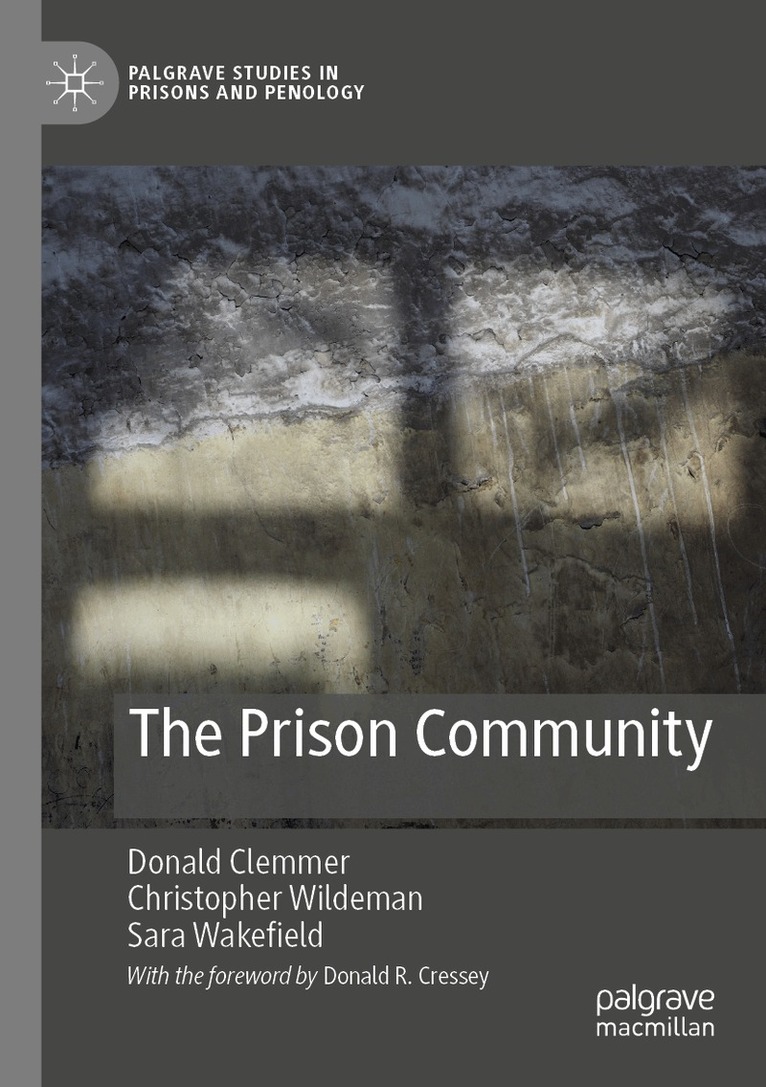
The Prison Community was a landmark study on prison culture and social processes, first published in 1940 (and reissued in 1958). This reissue includes a new introduction by Wildeman and Wakefield to situate the study in a contemporary context, alongside the foreword by Donald R. Cressey. The original book represented one of the first studies to take the cultural, social, and administrative conditions of confinement seriously, providing insight into how incarcerated people make community within a correctional facility, the structural conditions that determine such relationships, and the constraints that prison administration both operates under and imposes. The Prison Community is best known for developing the concept of ‘prisonization’ or the process by which incarcerated people learn and adopt the norms, values, and cultures of prison communities. This book is key for undergraduate and graduate courses on penology and is relevant for a host of contemporary issues of interest including reentry success, network science, and the structural determinants of cultural values and norms.