Sarah A. Herr - Böcker
Visar alla böcker från författaren Sarah A. Herr. Handla med fri frakt och snabb leverans.
2 produkter
2 produkter
279 kr
Skickas inom 11-20 vardagar
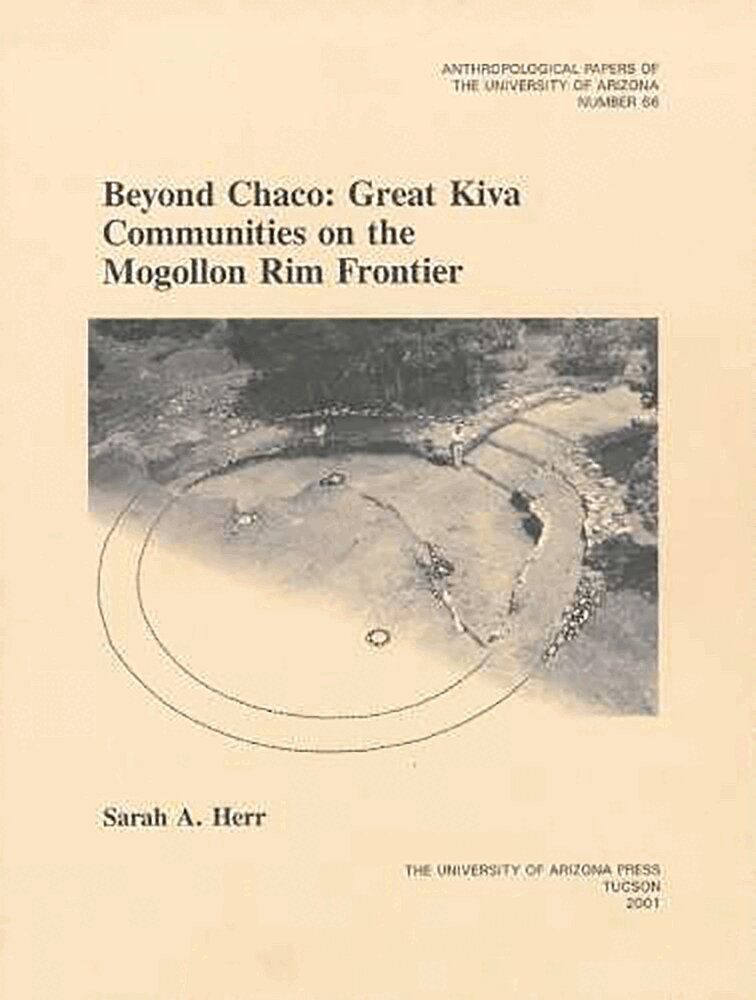
During the eleventh and twelfth centuries A.D., the Mogollon Rim region of east-central Arizona was a frontier, situated beyond and between larger regional organizations such as Chaco, Hohokam, and Mimbres. On this southwestern edge of the Puebloan world, past settlement poses a contradiction to those who study it. Population density was low and land abundant, yet the region was overbuilt with great kivas, a form of community-level architecture. Using a frontier model to evaluate household, community, and regional data, Sarah Herr demonstrates that the archaeological patterns of the Mogollon Rim region were created by the flexible and creative behaviors of small-scale agriculturalists. These people lived in a land-rich and labor-poor environment in which expediency, mobility, and fluid social organization were the rule and rigid structures and normative behaviors the exception. Herr's research shows that the eleventh- and twelfth-century inhabitants of the Mogollon Rim region were recent migrants, probably from the southern portion of the Chacoan region.These early settlers built houses and ceremonial structures and made ceramic vessels that resembled those of their homeland, but their social and political organization was not the same as that of their ancestors. Mogollon Rim communities were shaped by the cultural backgrounds of migrants, by their liminal position on the political landscape, and by the unique processes associated with frontiers. As migrants moved from homeland to frontier, a reversal in the proportion of land to labor dramatically changed the social relations of production. Herr argues that when the context of production changes in this way, wealth-in-people becomes more valuable than material wealth, and social relationships and cultural symbols such as the great kiva must be reinterpreted accordingly. Beyond Chaco expands our knowledge of the prehistory of this region and contributes to our understanding of how ancestral communities were constituted in lower-population areas of the agrarian Southwest.
Engaged Archaeology in the Southwestern United States and Northwestern Mexico
Inbunden, Engelska, 2021
951 kr
Tillfälligt slut
This volume of proceedings from the fifteenth biennial Southwest Symposium makes the case for engaged archaeology, an approach that considers scientific data and traditional Indigenous knowledge alongside archaeological theories and methodologies. Focusing on the southwestern United States and northwestern Mexico, the contributors show what can be gained when archaeologists engage with Indigenous communities and natural scientists: improved contemporary archaeological practice through better understandings of heritage and identity, anthropogenic landscapes, and societal potential for resilience. Organized around the theme of interdisciplinary perspectives, the book highlights collaborations with those who have other ways of knowing the past, from the traditional and proprietary knowledge of communities to new scientific methods, and considers the social context of archaeological practice and the modern relationships that inform interpretations of the past. Chapters show how cutting-edge practices lead to new archaeological understandings when archaeologists work in partnership with descendant and stakeholder communities and across international and disciplinary borders. Authors work across anthropological subfields and with the sciences, demonstrating that anthropological archaeology’s methods are starting points for investigation that allow for the expansion of understanding by incorporating long-remembered histories with innovative analytic methods. Engaged Archaeology in the Southwestern United States and Northwestern Mexico identifies current and near-future trends in archaeological practice in the US Southwest and northwestern Mexico, including repatriation, community engagement, and cross-disciplinary approaches, and focuses on Native American archaeologists and their communities, research, collaborations, and interests. It will be of interest to archaeologists and anthropologists working in the Southwest and to any researchers interested in interdisciplinary approaches to archaeology, heritage studies, and the natural sciences. Contributors: Christopher Caseldine, Chip Colwell, Guillermo Córdova Tello, Patrick Cruz, T. J. Ferguson, Cécile R. Ganteaume, Vernelda Grant, Neysa Grider-Potter, Christopher Grivas, Michael Heilen, Jane H. Hill, Leigh J. Kuwanwisiwma, Teresita Majewski, Debra L. Martin, Estela Martínez Mora, John A. McClelland, Emiliano Ricardo Melgar Tísoc, Darsita R. North, Scott Ortman, Peter J. Pilles Jr., Susan Sekaquaptewa, Arleyn W. Simon, Kimberly Spurr, Sarah Striker, Kerry F. Thompson, John A. Ware, Peter M. Whiteley, Lisa C. Young