Sarah Eron - Böcker
Visar alla böcker från författaren Sarah Eron. Handla med fri frakt och snabb leverans.
6 produkter
6 produkter
1 419 kr
Skickas inom 10-15 vardagar
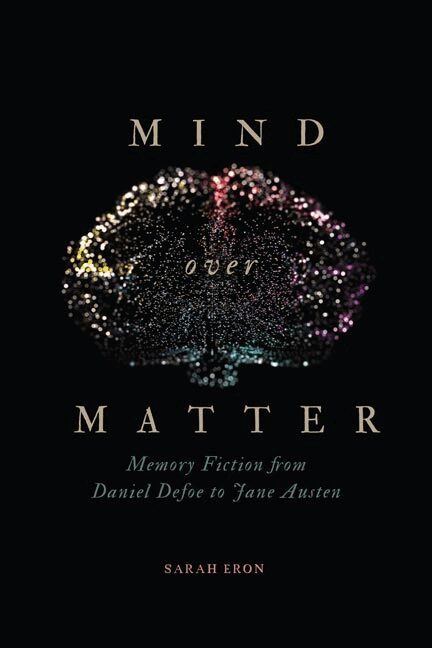
How do we understand memory in the early novel? Departing from traditional empiricist conceptualizations of remembering, Mind over Matter uncovers a social model of memory in Enlightenment fiction that is fluid and evolving - one that has the capacity to alter personal histories. Memories are not merely imprints of first-hand experience stored in the mind, but composite stories transacted through dialogue and reading.Through new readings of works by Daniel Defoe, Frances Burney, Laurence Sterne, Jane Austen, and others, Sarah Eron tracks the fictional qualities of memory as a force that, much like the Romantic imagination, transposes time and alters forms. From Crusoe's island and Toby's bowling green to Evelina's garden and Fanny's east room, memory can alter, reconstitute, and even overcome the conditions of the physical environment. Memory shapes the process and outcome of the novel's imaginative world-making, drafting new realities to better endure trauma and crises. Bringing together philosophy of mind, formalism, and narrative theory, Eron highlights how eighteenth-century novelists explored remembering as a creative and curative force for literary characters and readers alike. If memory is where we fictionalize reality, fiction--and especially the novel--is where the truths of memory can be found.
545 kr
Skickas inom 10-15 vardagar
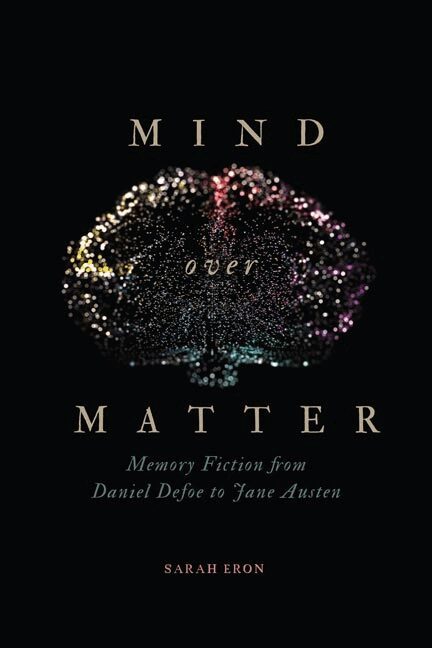
How do we understand memory in the early novel? Departing from traditional empiricist conceptualizations of remembering, Mind over Matter uncovers a social model of memory in Enlightenment fiction that is fluid and evolving - one that has the capacity to alter personal histories. Memories are not merely imprints of first-hand experience stored in the mind, but composite stories transacted through dialogue and reading.Through new readings of works by Daniel Defoe, Frances Burney, Laurence Sterne, Jane Austen, and others, Sarah Eron tracks the fictional qualities of memory as a force that, much like the Romantic imagination, transposes time and alters forms. From Crusoe's island and Toby's bowling green to Evelina's garden and Fanny's east room, memory can alter, reconstitute, and even overcome the conditions of the physical environment. Memory shapes the process and outcome of the novel's imaginative world-making, drafting new realities to better endure trauma and crises. Bringing together philosophy of mind, formalism, and narrative theory, Eron highlights how eighteenth-century novelists explored remembering as a creative and curative force for literary characters and readers alike. If memory is where we fictionalize reality, fiction--and especially the novel--is where the truths of memory can be found.
3 637 kr
Skickas inom 10-15 vardagar
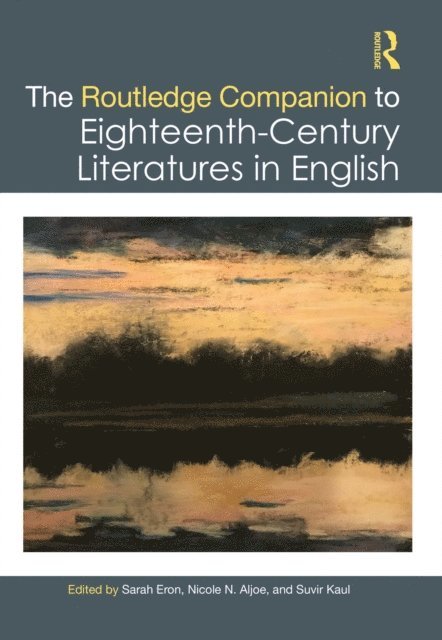
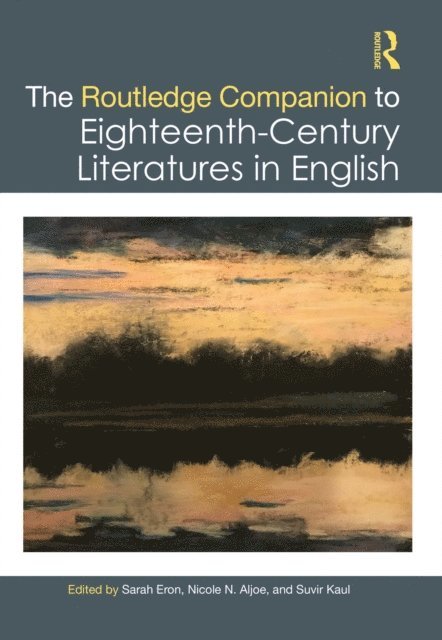
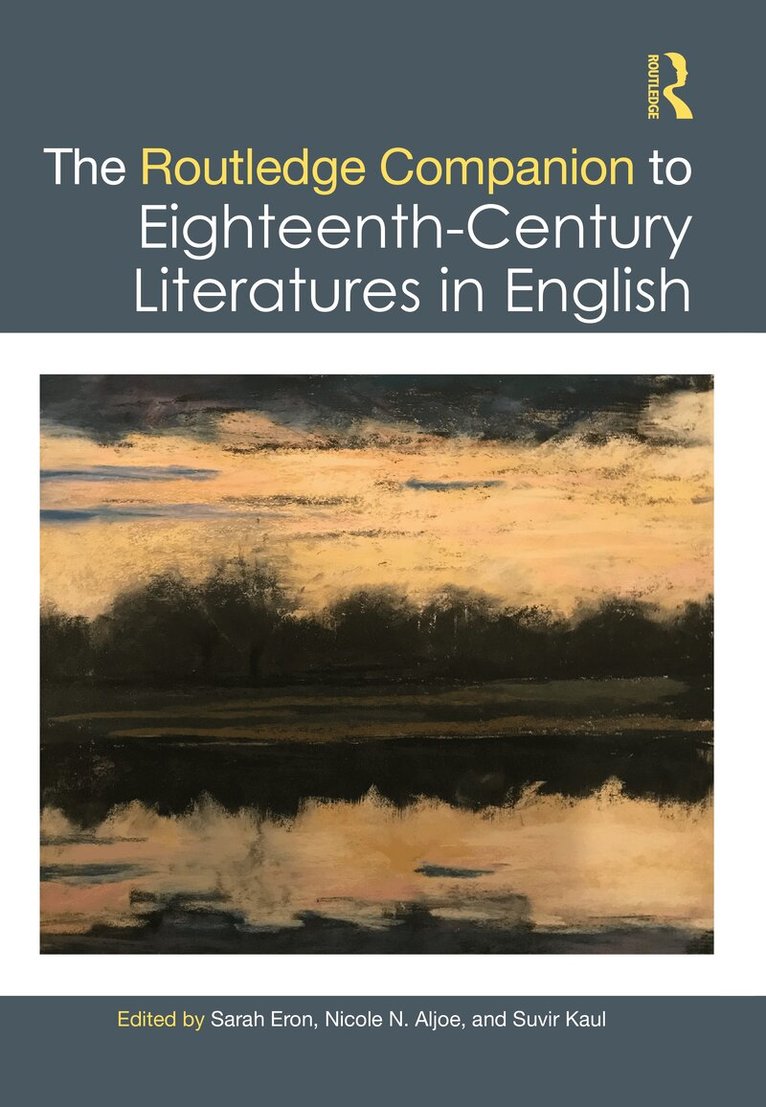
The Routledge Companion to Eighteenth-Century Literatures in English brings together essays that respond to consequential cultural and socio-economic changes that followed the expansion of the British Empire from the British Isles across the Atlantic. Scholars track the cumulative power of the slave trade, settlements and plantations, and the continual warfare that reshaped lives in the Americas, Africa, and Asia. Importantly, they also analyze the ways these histories reshaped class and social relations, scientific inquiry and invention, philosophies of personhood, and cultural and intellectual production. As European nations fought each other for territories and trade routes, dispossessing and enslaving Indigenous and Black people, the observations of travellers, naturalists, and colonists helped consolidate racism and racial differentiation, as well as the philosophical justifications of “civilizational” differences that became the hallmarks of intellectual life.Essays in this volume address key shifts in disciplinary practices even as they examine the past, looking forward to and modeling a rethinking of our scholarly and pedagogic practices. This volume is an essential text for academics, researchers, and students researching eighteenth-century literature, history, and culture.
803 kr
Skickas inom 10-15 vardagar
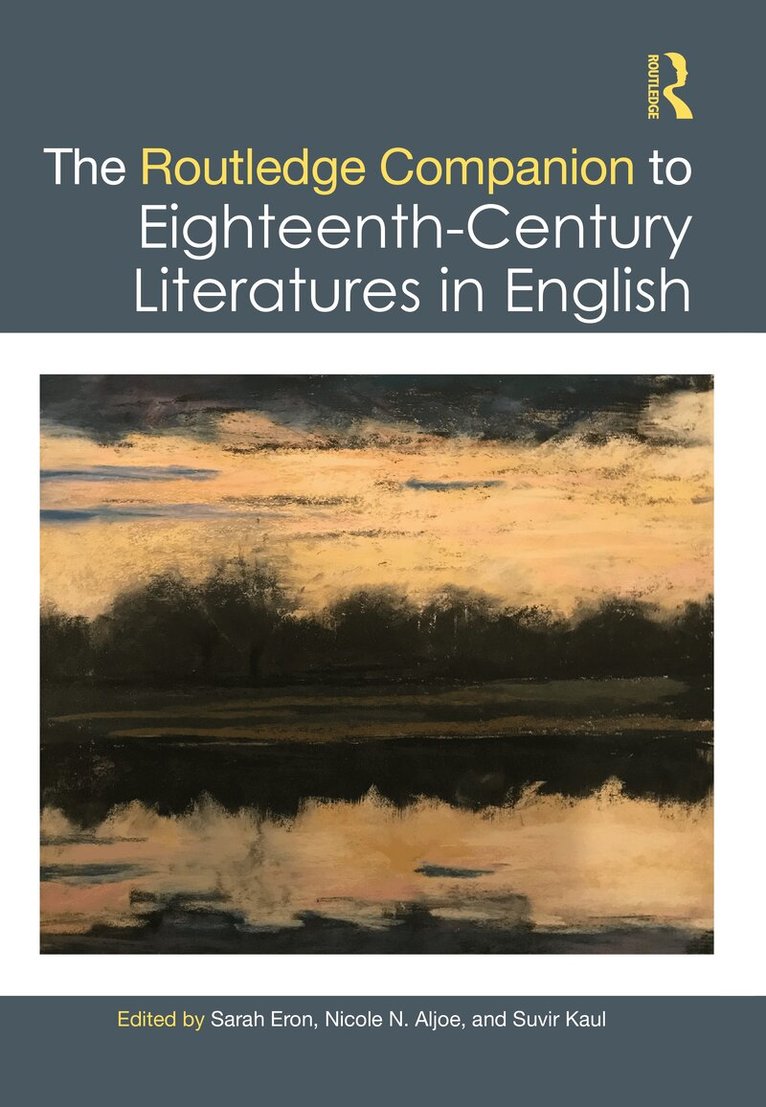
The Routledge Companion to Eighteenth-Century Literatures in English brings together essays that respond to consequential cultural and socio-economic changes that followed the expansion of the British Empire from the British Isles across the Atlantic. Scholars track the cumulative power of the slave trade, settlements and plantations, and the continual warfare that reshaped lives in the Americas, Africa, and Asia. Importantly, they also analyze the ways these histories reshaped class and social relations, scientific inquiry and invention, philosophies of personhood, and cultural and intellectual production. As European nations fought each other for territories and trade routes, dispossessing and enslaving Indigenous and Black people, the observations of travellers, naturalists, and colonists helped consolidate racism and racial differentiation, as well as the philosophical justifications of “civilizational” differences that became the hallmarks of intellectual life.Essays in this volume address key shifts in disciplinary practices even as they examine the past, looking forward to and modeling a rethinking of our scholarly and pedagogic practices. This volume is an essential text for academics, researchers, and students researching eighteenth-century literature, history, and culture.
1 544 kr
Skickas inom 10-15 vardagar
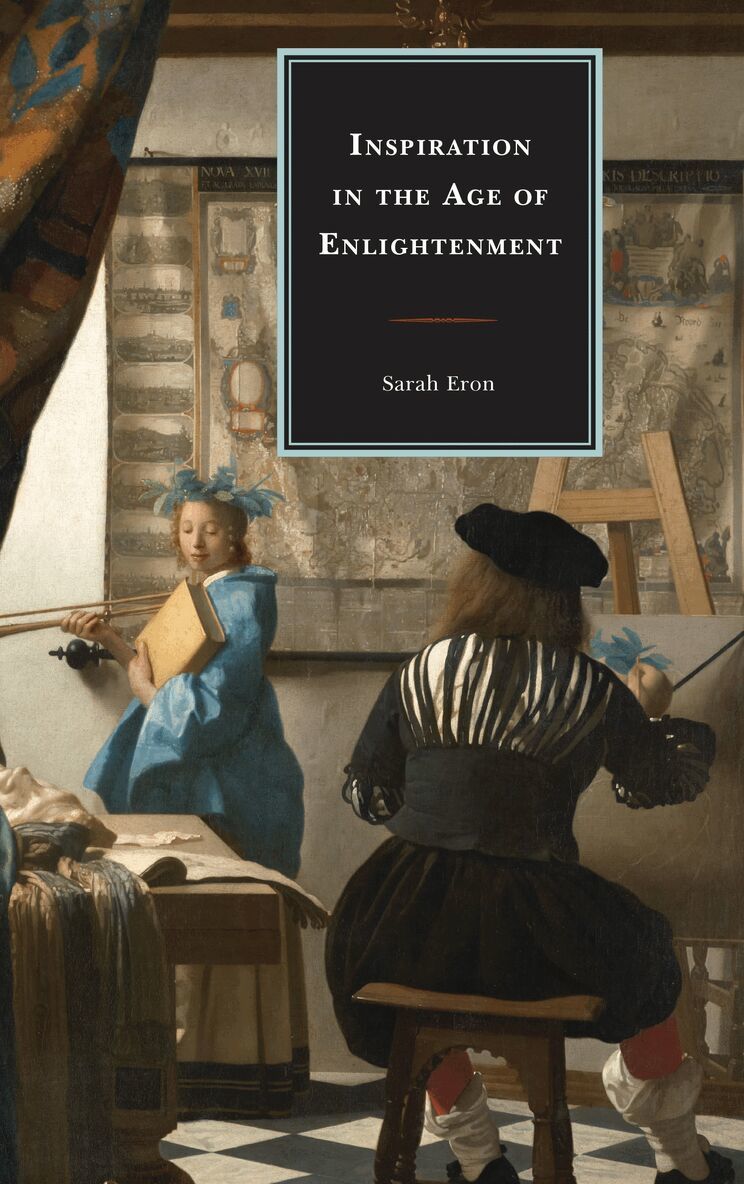
Inspiration in the Age of Enlightenment reconsiders theories of apostrophe and poetic authority to argue that the Augustan age created a new form of inspiration, one that not only changed the relationship of literary production to authority in the modern period but also crucially contributes to defining the movement of secularization in literature from the Renaissance to Romanticism. Seeking to redefine what we mean by secularization in the early stages of modernity, Eron argues that secularization’s link to enthusiasm, or inspiration, often associated with Romanticism, begins in the imaginative literature of the early eighteenth century. If Romantic enthusiasm has been described through the rhetoric of transport, or “unworlding,” then Augustan invocation appears more akin to a process of “worlding” in its central aim to appeal to the social other as a function of the eighteenth-century belief in a literary public sphere. By reformulating the passive structure of ancient invocation and subjecting it to the more dialogical methods of modern apostrophe and address, authors such as the Third Earl of Shaftesbury, Alexander Pope, Henry Fielding, and Anna Laetitia Barbauld formally revise inspiration in a way that generates a new and distinctive representation of the author. In this context, inspiration becomes a social gesture—an apostrophe to a friend or judging spectator or an allusion to the mental or aesthetic faculties of the author himself, his genius. Articulating this struggle toward modernity at its inception, this book examines modern authority at the moment of its extraordinariness, when it was still tied to the creative energies of inspiration, to the revelatory powers that marked the awakening of a new age, an era and an ethos of Enlightenment.
776 kr
Skickas inom 10-15 vardagar
Inspiration in the Age of Enlightenment reconsiders theories of apostrophe and poetic authority to argue that the Augustan age created a new form of inspiration, one that not only changed the relationship of literary production to authority in the modern period but also crucially contributes to defining the movement of secularization in literature from the Renaissance to Romanticism. Seeking to redefine what we mean by secularization in the early stages of modernity, Eron argues that secularization’s link to enthusiasm, or inspiration, often associated with Romanticism, begins in the imaginative literature of the early eighteenth century. If Romantic enthusiasm has been described through the rhetoric of transport, or “unworlding,” then Augustan invocation appears more akin to a process of “worlding” in its central aim to appeal to the social other as a function of the eighteenth-century belief in a literary public sphere. By reformulating the passive structure of ancient invocation and subjecting it to the more dialogical methods of modern apostrophe and address, authors such as the Third Earl of Shaftesbury, Alexander Pope, Henry Fielding, and Anna Laetitia Barbauld formally revise inspiration in a way that generates a new and distinctive representation of the author. In this context, inspiration becomes a social gesture—an apostrophe to a friend or judging spectator or an allusion to the mental or aesthetic faculties of the author himself, his genius. Articulating this struggle toward modernity at its inception, this book examines modern authority at the moment of its extraordinariness, when it was still tied to the creative energies of inspiration, to the revelatory powers that marked the awakening of a new age, an era and an ethos of Enlightenment.