Sarah Gilbreath Ford - Böcker
Visar alla böcker från författaren Sarah Gilbreath Ford. Handla med fri frakt och snabb leverans.
4 produkter
4 produkter
1 355 kr
Skickas inom 10-15 vardagar
At the heart of America's slave system was the legal definition of people as property. While property ownership is a cornerstone of the American dream, the status of enslaved people supplies a contrasting American nightmare. Sarah Gilbreath Ford considers how writers in works from nineteenth-century slave narratives to twenty-first-century poetry employ gothic tools, such as ghosts and haunted houses, to portray the horrors of this nightmare. Haunted Property: Slavery and the Gothic thus reimagines the southern gothic, which has too often been simply equated with the macabre or grotesque and then dismissed as regional.Although literary critics have argued that the American gothic is driven by the nation's history of racial injustice, what is missing in this critical conversation is the key role of property. Ford argues that out of all of slavery's perils, the definition of people as property is the central impetus for haunting because it allows the perpetration of all other terrors. Property becomes the engine for the white accumulation of wealth and power fueled by the destruction of black personhood.Specters often linger, however, to claim title, and Ford argues that haunting can be a bid for property ownership. Through examining works by Harriet Jacobs, Hannah Crafts, Mark Twain, Herman Melville, Sherley Anne Williams, William Faulkner, Eudora Welty, Toni Morrison, Octavia Butler, and Natasha Trethewey, Ford reveals how writers can use the gothic to combat legal possession with spectral possession.
415 kr
Skickas inom 7-10 vardagar
At the heart of America's slave system was the legal definition of people as property. While property ownership is a cornerstone of the American dream, the status of enslaved people supplies a contrasting American nightmare. Sarah Gilbreath Ford considers how writers in works from nineteenth-century slave narratives to twenty-first-century poetry employ gothic tools, such as ghosts and haunted houses, to portray the horrors of this nightmare. Haunted Property: Slavery and the Gothic thus reimagines the southern gothic, which has too often been simply equated with the macabre or grotesque and then dismissed as regional.Although literary critics have argued that the American gothic is driven by the nation's history of racial injustice, what is missing in this critical conversation is the key role of property. Ford argues that out of all of slavery's perils, the definition of people as property is the central impetus for haunting because it allows the perpetration of all other terrors. Property becomes the engine for the white accumulation of wealth and power fueled by the destruction of black personhood.Specters often linger, however, to claim title, and Ford argues that haunting can be a bid for property ownership. Through examining works by Harriet Jacobs, Hannah Crafts, Mark Twain, Herman Melville, Sherley Anne Williams, William Faulkner, Eudora Welty, Toni Morrison, Octavia Butler, and Natasha Trethewey, Ford reveals how writers can use the gothic to combat legal possession with spectral possession.
1 380 kr
Kommande
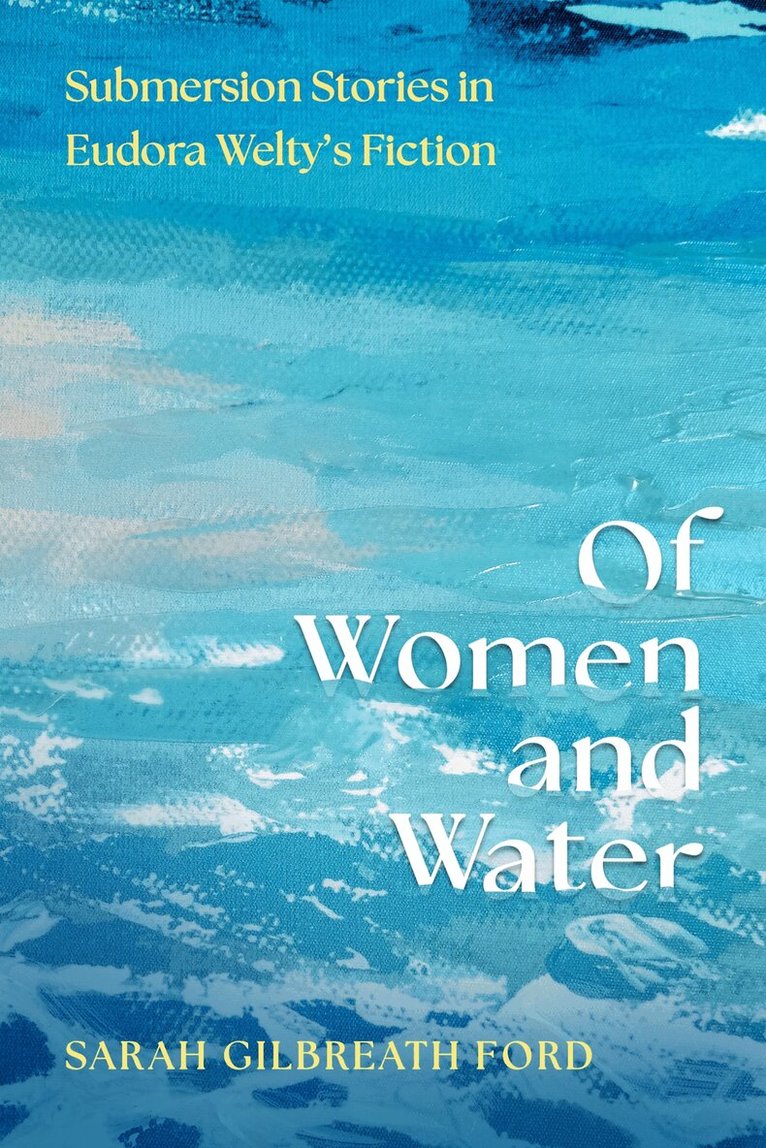
Too often, when women in literary texts come of age, they die. Instead of entering an adulthood full of possibility, female characters time and again follow the path charted by Ophelia and drown, either literally in waters they cannot navigate or metaphorically in a society that does not allow them to construct their own stories.Eudora Welty, however, rewrites this standard female coming-of-age story by repeating a specific key scene. More than a dozen times in her narratives, a young woman encounters a body of water—a lake, a river, a whirlpool, or even a rain barrel. In every case, the character’s submersion signals her entry into an adulthood full of possible danger. When the submersion experience becomes a spiritual baptism, however, the enchanted natural world can empower female characters to counter human social structures that tend to leave them silent, ignored, or dead.In crafting these submersion scenes, Welty upends the power dynamics of perspective. Against the corporate point of view of a town, society, or family, Welty writes the individual, submerged perspectives of women trying to create adult identities not defined by societal scripts. By positing an ecofeminist reading of Welty’s fiction, Of Women and Water: Submersion Stories in Eudora Welty’s Fiction argues that Welty’s texts seek a narrative that will safely land female characters in adulthood with the agency to tell their own stories of confinement, submersion, and escape.
341 kr
Kommande
Too often, when women in literary texts come of age, they die. Instead of entering an adulthood full of possibility, female characters time and again follow the path charted by Ophelia and drown, either literally in waters they cannot navigate or metaphorically in a society that does not allow them to construct their own stories. Eudora Welty, however, rewrites this standard female coming-of-age story by repeating a specific key scene. More than a dozen times in her narratives, a young woman encounters a body of water—a lake, a river, a whirlpool, or even a rain barrel. In every case, the character’s submersion signals her entry into an adulthood full of possible danger. When the submersion experience becomes a spiritual baptism, however, the enchanted natural world can empower female characters to counter human social structures that tend to leave them silent, ignored, or dead. In crafting these submersion scenes, Welty upends the power dynamics of perspective. Against the corporate point of view of a town, society, or family, Welty writes the individual, submerged perspectives of women trying to create adult identities not defined by societal scripts. By positing an ecofeminist reading of Welty’s fiction, Of Women and Water: Submersion Stories in Eudora Welty’s Fiction argues that Welty’s texts seek a narrative that will safely land female characters in adulthood with the agency to tell their own stories of confinement, submersion, and escape.