Sarah Kenderdine - Böcker
Visar alla böcker från författaren Sarah Kenderdine. Handla med fri frakt och snabb leverans.
4 produkter
4 produkter
339 kr
Tillfälligt slut
2 151 kr
Skickas inom 10-15 vardagar
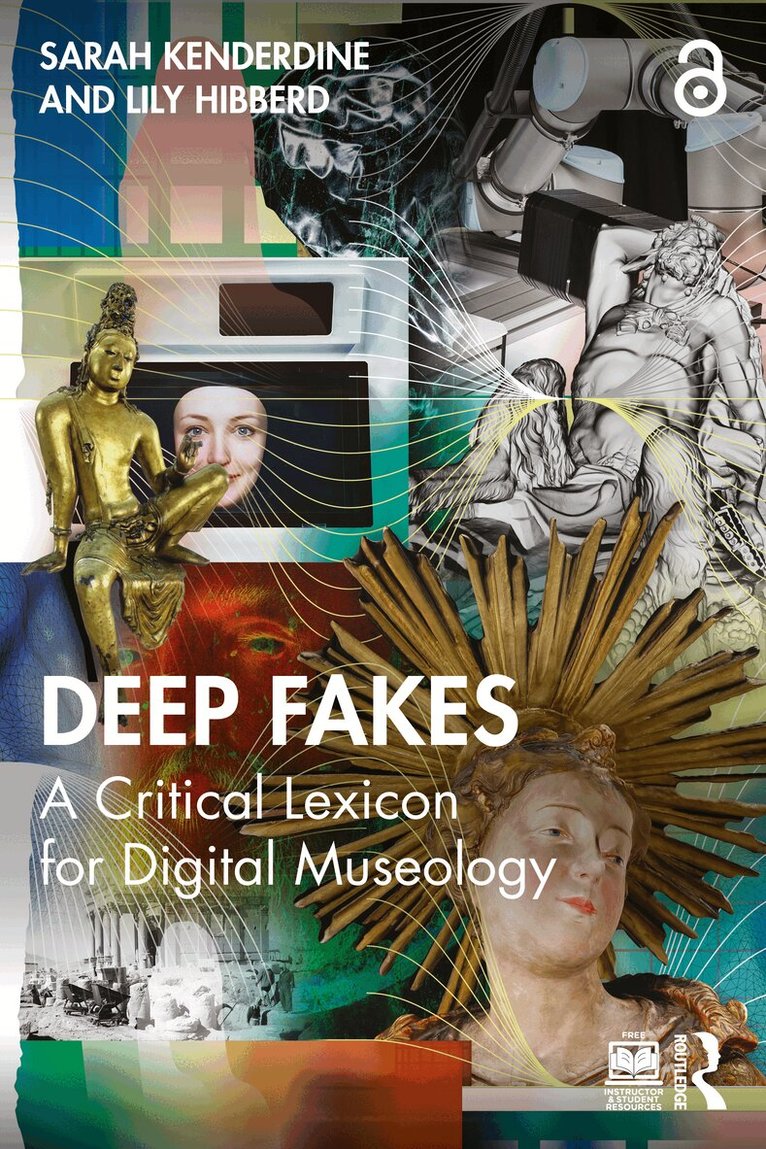
Deep Fakes: A Critical Lexicon for Digital Museology is an illustrated monograph articulated through a comprehensive lexicon of key concepts in next-generation museology. Each of the book’s ten chapters explores specific terms in the lexicon, further interpreted through installations from the 2021 exhibition Deep Fakes: Art and Its Double in Switzerland.Deep Fakes: A Critical Lexicon for Digital Museology contends with the intensification of questions compounded by rapid technological change affecting contemporary museological and curatorial authority. This book introduces a novel theorization of computational techniques and their transformation of museological objects in the form of cultural deep fakes—the consummate shape-shifting doppelgängers of the post-digital age. Conceived by Sarah Kenderdine and written by Lily Hibberd, this volume elaborates on a spectrum of established theoretical concepts, including affect, aura, authenticity, embodied knowledge, mimesis, the post-original, presence, replication, reenactment, and the simulacrum. Grounded in the methods and techniques of computational museology and participatory visitor experience, it critically examines the practical, epistemological, societal, and ethical implications of emerging technologies and their cultural heritage material. Harnessing the affordances of these transformative approaches for communities and societies, this critical lexicon empowers future-focused curatorship for memory organizations.This book supports museum professionals in navigating the ramifications of dynamic technological change. Readers include directors, curators, researchers, and designers. Archival and imaging scientists, data managers, and software engineers are also broadly implicated. It has added significance for research disciplines in the history and theory of art and media studies, critical and cultural theory, digital humanities, and museum studies, alongside artists and producers in the cultural domain.The Open Access version of this book, available at www.taylorfrancis.com, has been made available under a Creative Commons Attribution‑Non Commercial‑No Derivatives (CC‑BY‑NC‑ND) 4.0 license.
649 kr
Skickas inom 10-15 vardagar
Deep Fakes: A Critical Lexicon for Digital Museology is an illustrated monograph articulated through a comprehensive lexicon of key concepts in next-generation museology. Each of the book’s ten chapters explores specific terms in the lexicon, further interpreted through installations from the 2021 exhibition Deep Fakes: Art and Its Double in Switzerland.Deep Fakes: A Critical Lexicon for Digital Museology contends with the intensification of questions compounded by rapid technological change affecting contemporary museological and curatorial authority. This book introduces a novel theorization of computational techniques and their transformation of museological objects in the form of cultural deep fakes—the consummate shape-shifting doppelgängers of the post-digital age. Conceived by Sarah Kenderdine and written by Lily Hibberd, this volume elaborates on a spectrum of established theoretical concepts, including affect, aura, authenticity, embodied knowledge, mimesis, the post-original, presence, replication, reenactment, and the simulacrum. Grounded in the methods and techniques of computational museology and participatory visitor experience, it critically examines the practical, epistemological, societal, and ethical implications of emerging technologies and their cultural heritage material. Harnessing the affordances of these transformative approaches for communities and societies, this critical lexicon empowers future-focused curatorship for memory organizations.This book supports museum professionals in navigating the ramifications of dynamic technological change. Readers include directors, curators, researchers, and designers. Archival and imaging scientists, data managers, and software engineers are also broadly implicated. It has added significance for research disciplines in the history and theory of art and media studies, critical and cultural theory, digital humanities, and museum studies, alongside artists and producers in the cultural domain.The Open Access version of this book, available at www.taylorfrancis.com, has been made available under a Creative Commons Attribution‑Non Commercial‑No Derivatives (CC‑BY‑NC‑ND) 4.0 license.
Virtual Systems and Multimedia
13th International Conference, VSMM 2007, Brisbane, Australia, September 23-26, 2007, Revised Selected Papers
Häftad, Engelska, 2008
551 kr
Skickas inom 10-15 vardagar
The 13th International Conference on Virtual Systems and Multimedia was held in Brisbane, Australia in September 2007. This was the first time that VSMM was sited in Australia. The Australian conference theme reflected the country’s cultural heritage, both recent and past – Exchange and Experience in Space and Place. Of the many papers submitted under this theme we were able to identify three core sub-themes: Virtual Heritage, Applied Technologies and Virtual Environments. With a truly international flavor, these sub-themes covered the diverse areas of heritage site and artifact reconstruction and analysis, Australian Aboriginal cultural heritage, training, notions of spirituality, human – computer interaction in virtual environments, 3D modelling, remote collaboration and virtual agents. This made for rich, varied and lively conference session debates. Ninety-seven papers were submitted. Of these, 56 were accepted for inclusion in the general conference proceedings. Of these, 18 were further reviewed and selected for this Springer publication. The authors of these papers were invited to revise their papers following feedback from the conference before inclusion in this volume. Many people contributed to the conference. We first wish to thank the Virtual Systems and Multimedia Society, who provided strong support to the whole process of the preparation of the conference. In particular, we would like to express our thanks to Takeo Ojika, Mario Santana Quintero and Hal Thwaites for their generous support and guidance.