Sarah Ogilvie - Böcker
Visar alla böcker från författaren Sarah Ogilvie. Handla med fri frakt och snabb leverans.
12 produkter
12 produkter
145 kr
Skickas
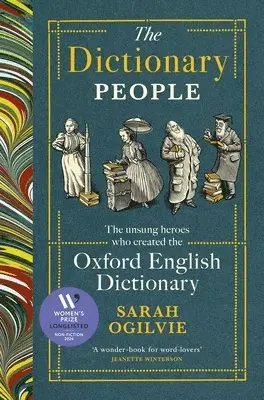
**LONGLISTED FOR THE WOMEN’S PRIZE FOR NON-FICTION 2024**‘Unmissable’ Stephen Fry'A delight' Katherine Rundell‘Illuminating’ Susie Dent'Brilliant' Philippa Perry'Enthralling' Jeanette WintersonWhat do three murderers, Karl Marx's daughter and a vegetarian vicar have in common?They all helped create the Oxford English Dictionary.The Oxford English Dictionary has long been associated with elite institutions and Victorian men. But the Dictionary didn't just belong to the experts; it relied on contributions from members of the public. By 1928, its 414,825 entries had been crowdsourced from a surprising and diverse group of people, from astronomers to murderers, naturists, pornographers, suffragists and queer couples.Lexicographer Sarah Ogilvie dives deep into previously untapped archives to tell a people's history of the OED. Here, she reveals, for the first time, the full story of the making of one of the most famous books in the world - and celebrates the extraordinary efforts of the Dictionary People.'An astonishing book' Sunday Times'Utterly fascinating, entertaining, astonishing and as clever as a box of monkeys ... I completely love it' Joanna Lumley‘A fascinating and delightful exploration of the Victorian world … Wonderful’ Nicola Shulman, TLS Podcast** A Financial Times, TLS and Daunt Books Book of the Year **
592 kr
Skickas inom 7-10 vardagar
Nineteenth-century readers had an appetite for books so big they seemed to contain the whole world: immense novels, series of novels, encyclopaedias. Especially in Eurasia and North America, especially among the middle and upper classes, people had the space, time, and energy for very long books. More than other multi-volume nineteenth-century collections, the dictionaries, or their descendants of the same name, remain with us in the twenty-first century. Online or on paper, people still consult Oxford for British English, Webster for American, Grimm for German, Littré for French, Dahl for Russian. Even in spaces whose literary languages already had long philological and lexicographic traditions-Chinese, Japanese, Arabic, Persian, Greek, Latin-the burgeoning imperialisms and nationalisms of the nineteenth century generated new dictionaries.The Whole World in a Book explores a period in which globalization, industrialization, and social mobility were changing language in unimaginable ways. Newly automated technologies and systems of communication expanded the international reach of dictionaries, while rising literacy rates, book consumption, and advertising led to their unprecedented popularization. Dictionaries in the nineteenth century became more than dictionaries: they were battlefields between prestige languages and lower-status dialects; national icons celebrating the language and literature of the nation-state; and sites of innovative authorship where middle and lower classes, volunteers, women, colonial subjects, the deaf, and missionaries joined the ranks of educated white men in defining how people communicated and understood the world around them.In this volume, eighteen of the world's leading scholars investigate these lexicographers asking how the world within which they lived supported their projects? What did language itself mean for them? What goals did they try to accomplish in their dictionaries?
212 kr
Skickas inom 7-10 vardagar
An optimistic and nuanced portrait of a generation that has much to teach us about how to live and collaborate in our digital world.
133 kr
Skickas inom 7-10 vardagar
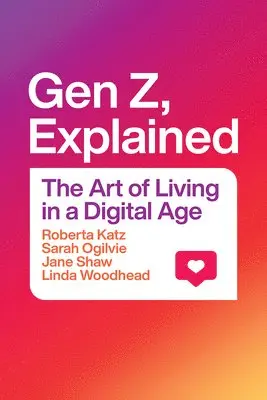
An optimistic and nuanced portrait of a generation that has much to teach us about how to live and collaborate in our digital world.Born since the mid-1990s, members of Generation Z comprise the first generation never to know the world without the internet, and the most diverse generation yet. As Gen Z starts to emerge into adulthood and enter the workforce, what do we really know about them? And what can we learn from them? Gen Z, Explained is the authoritative portrait of this significant generation. It draws on extensive interviews that display this generation’s candor, surveys that explore their views and attitudes, and a vast database of their astonishingly inventive lexicon to build a comprehensive picture of their values, daily lives, and outlook. Gen Z emerges here as an extraordinarily thoughtful, promising, and perceptive generation that is sounding a warning to their elders about the world around them—a warning of a complexity and depth the “OK Boomer” phenomenon can only suggest.Much of the existing literature about Gen Z has been highly judgmental. In contrast, this book provides a deep and nuanced understanding of a generation facing a future of enormous challenges, from climate change to civil unrest. What’s more, they are facing this future head-on, relying on themselves and their peers to work collaboratively to solve these problems. As Gen Z, Explained shows, this group of young people is as compassionate and imaginative as any that has come before, and understanding the way they tackle problems may enable us to envision new kinds of solutions. This portrait of Gen Z is ultimately an optimistic one, suggesting they have something to teach all of us about how to live and thrive in this digital world.
The Dictionary People: The Unsung Heroes Who Created the Oxford English Dictionary
Häftad, Engelska, 2024
256 kr
Skickas inom 3-6 vardagar
780 kr
Skickas inom 7-10 vardagar
Most people think of the Oxford English Dictionary (OED) as a distinctly British product. Begun in England 150 years ago, it took more than 60 years to complete and, when it was finally finished in 1928, the British prime minister heralded it as a 'national treasure'. It maintained this image throughout the twentieth century, and in 2006 the English public voted it an 'Icon of England', alongside Marmite, Buckingham Palace and the bowler hat. However, this book shows that the dictionary is not as 'British' as we all thought. The linguist and lexicographer, Sarah Ogilvie, combines her insider knowledge and experience with impeccable research to show that the OED is in fact an international product in both its content and its making. She examines the policies and practices of the various editors, applies qualitative and quantitative analysis, and finds new OED archival materials in the form of letters, reports and proofs. She demonstrates that the OED, in its use of readers from all over the world and its coverage of World English, is in fact a global text.
1 417 kr
Skickas inom 7-10 vardagar
Many of the world's languages have diminishing numbers of speakers and are in danger of falling silent. Around the globe, a large body of linguists are collaborating with members of indigenous communities to keep these languages alive. Mindful that their work will be used by future speech communities to learn, teach and revitalise their languages, scholars face new challenges in the way they gather materials and in the way they present their findings. This volume discusses current efforts to record, collect and archive endangered languages in traditional and new media that will support future language learners and speakers. Chapters are written by academics working in the field of language endangerment and also by indigenous people working 'at the coalface' of language support and maintenance. Keeping Languages Alive is a must-read for researchers in language documentation, language typology and linguistic anthropology.
280 kr
Skickas inom 7-10 vardagar
Most people think of the Oxford English Dictionary (OED) as a distinctly British product. Begun in England 150 years ago, it took more than 60 years to complete and, when it was finally finished in 1928, the British prime minister heralded it as a 'national treasure'. It maintained this image throughout the twentieth century, and in 2006 the English public voted it an 'Icon of England', alongside Marmite, Buckingham Palace and the bowler hat. However, this book shows that the dictionary is not as 'British' as we all thought. The linguist and lexicographer, Sarah Ogilvie, combines her insider knowledge and experience with impeccable research to show that the OED is in fact an international product in both its content and its making. She examines the policies and practices of the various editors, applies qualitative and quantitative analysis, and finds new OED archival materials in the form of letters, reports and proofs. She demonstrates that the OED, in its use of readers from all over the world and its coverage of World English, is in fact a global text.
1 235 kr
Skickas inom 7-10 vardagar
How did a single genre of text have the power to standardise the English language across time and region, rival the Bible in notions of authority, and challenge our understanding of objectivity, prescription, and description? Since the first monolingual dictionary appeared in 1604, the genre has sparked evolution, innovation, devotion, plagiarism, and controversy. This comprehensive volume presents an overview of essential issues pertaining to dictionary style and content and a fresh narrative of the development of English dictionaries throughout the centuries. Essays on the regional and global nature of English lexicography (dictionary making) explore its power in standardising varieties of English and defining nations seeking independence from the British Empire: from Canada to the Caribbean. Leading scholars and lexicographers historically contextualise an array of dictionaries and pose urgent theoretical and methodological questions relating to their role as tools of standardisation, prestige, power, education, literacy, and national identity.
384 kr
Skickas inom 7-10 vardagar
How did a single genre of text have the power to standardise the English language across time and region, rival the Bible in notions of authority, and challenge our understanding of objectivity, prescription, and description? Since the first monolingual dictionary appeared in 1604, the genre has sparked evolution, innovation, devotion, plagiarism, and controversy. This comprehensive volume presents an overview of essential issues pertaining to dictionary style and content and a fresh narrative of the development of English dictionaries throughout the centuries. Essays on the regional and global nature of English lexicography (dictionary making) explore its power in standardising varieties of English and defining nations seeking independence from the British Empire: from Canada to the Caribbean. Leading scholars and lexicographers historically contextualise an array of dictionaries and pose urgent theoretical and methodological questions relating to their role as tools of standardisation, prestige, power, education, literacy, and national identity.
441 kr
Skickas inom 7-10 vardagar
Many of the world's languages have diminishing numbers of speakers and are in danger of falling silent. Around the globe, a large body of linguists are collaborating with members of indigenous communities to keep these languages alive. Mindful that their work will be used by future speech communities to learn, teach and revitalise their languages, scholars face new challenges in the way they gather materials and in the way they present their findings. This volume discusses current efforts to record, collect and archive endangered languages in traditional and new media that will support future language learners and speakers. Chapters are written by academics working in the field of language endangerment and also by indigenous people working 'at the coalface' of language support and maintenance. Keeping Languages Alive is a must-read for researchers in language documentation, language typology and linguistic anthropology.
Dictionary People
The unsung heroes who created the Oxford English Dictionary
Inbunden, Engelska, 2023
297 kr
Skickas
**LONGLISTED FOR THE WOMEN’S PRIZE FOR NON-FICTION 2024**'Enthralling and exuberant ... Here is a wonder-book for word-lovers' Jeanette Winterson‘A lively, entertaining, and illuminating read. I loved it’ Susie DentWhat do three murderers, Karl Marx's daughter and a vegetarian vicar have in common?They all helped create the Oxford English Dictionary.The Oxford English Dictionary has long been associated with elite institutions and Victorian men. But the Dictionary didn't just belong to the experts; it relied on contributions from members of the public. By 1928, its 414,825 entries had been crowdsourced from a surprising and diverse group of people, from astronomers to murderers, naturists, pornographers, suffragists and queer couples.Lexicographer Sarah Ogilvie dives deep into previously untapped archives to tell a people's history of the OED. Here, she reveals, for the first time, the full story of the making of one of the most famous books in the world - and celebrates the extraordinary efforts of the Dictionary People.** A Financial Times, TLS and Daunt Books Book of the Year 2023 **'Utterly fascinating, entertaining, astonishing and as clever as a box of monkeys ... I completely love it' Joanna Lumley'Full marks to Sarah Ogilvie... guaranteed to grab those of us obsessed with books, language and mystery' Financial Times'[An] astonishing book' Sunday Times'Touching ... The oddities [of language] enliven the book' Observer *Book of the Day*'[An] affectionate and accomplished book' TLS'Engaging' Spectator'Marvellous, witty and wholly original' Alan Rusbridger'Glorious and surprising' Richard Ovenden, Bodley's Librarian and author of Burning the Books‘A fascinating and delightful exploration of the Victorian world … Wonderful’ Nicola Shulman, TLS Podcast