Sarah Ruden - Böcker
Visar alla böcker från författaren Sarah Ruden. Handla med fri frakt och snabb leverans.
8 produkter
8 produkter
252 kr
Skickas inom 7-10 vardagar
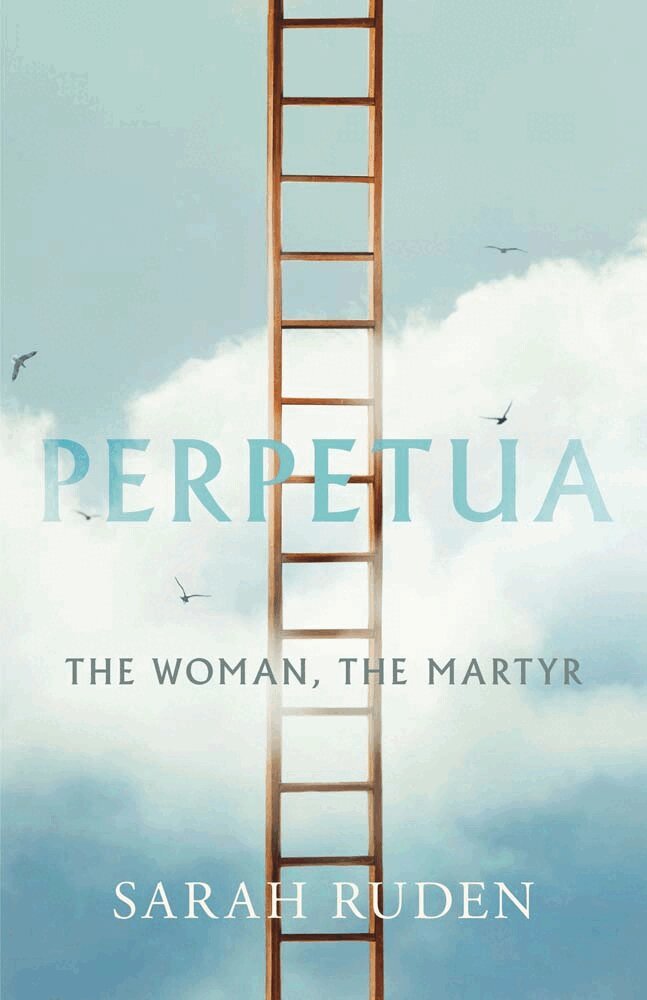
An intimate and human portrait of Perpetua, a third-century woman author who was idealized as a Christian martyr“[Ruden’s] fresh, engaging translation of the Perpetua dossier captures the nuances of the Latin with remarkable skill. She has an eye for fine but crucial distinctions of meaning. It is a pleasure to read something with such a sensitive guide.”—George Woudhuysen, Wall Street Journal On March 7, 203, in the monumental amphitheater at Carthage, Vibia Perpetua was one of five Christians who met their deaths after refusing to venerate the Roman emperor Septimius Severus and his son. Perpetua stood out from the other four, and in fact from all the other martyrs of her era and before: she was an aristocratic married woman with an infant son, and she is the first female prose author whose work survives. Offering a probing new translation of Perpetua’s extraordinary prison diary and situating the life behind that diary within the turbulent late Roman Empire, Sarah Ruden tells the story of Perpetua’s remarkable feat of self‑invention as a martyr. As she builds on Perpetua’s own words and integrates them into their religious and historical contexts, Ruden shines a light on Perpetua’s disarming candidness, her brashness, and her naïvété. In contrast to traditional portrayals of the saint as a brave but submissive young woman, Ruden’s narrative reveals a complex individual who flaunts a vivid public persona as a martyr while at the same time navigating the emotions of a mother, daughter, sister, and friend approaching death.
232 kr
Skickas inom 7-10 vardagar
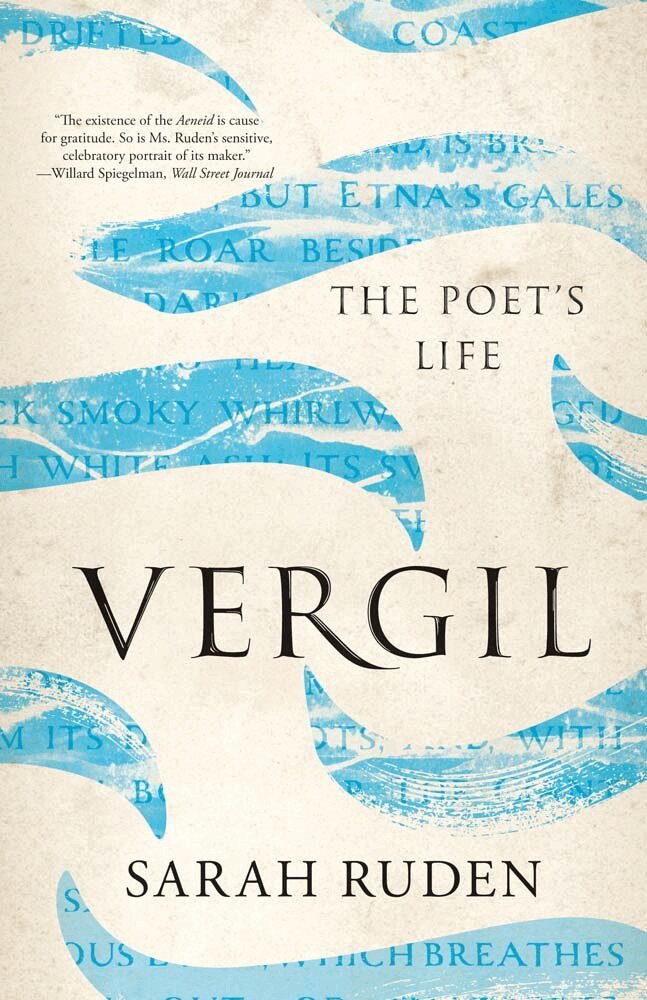
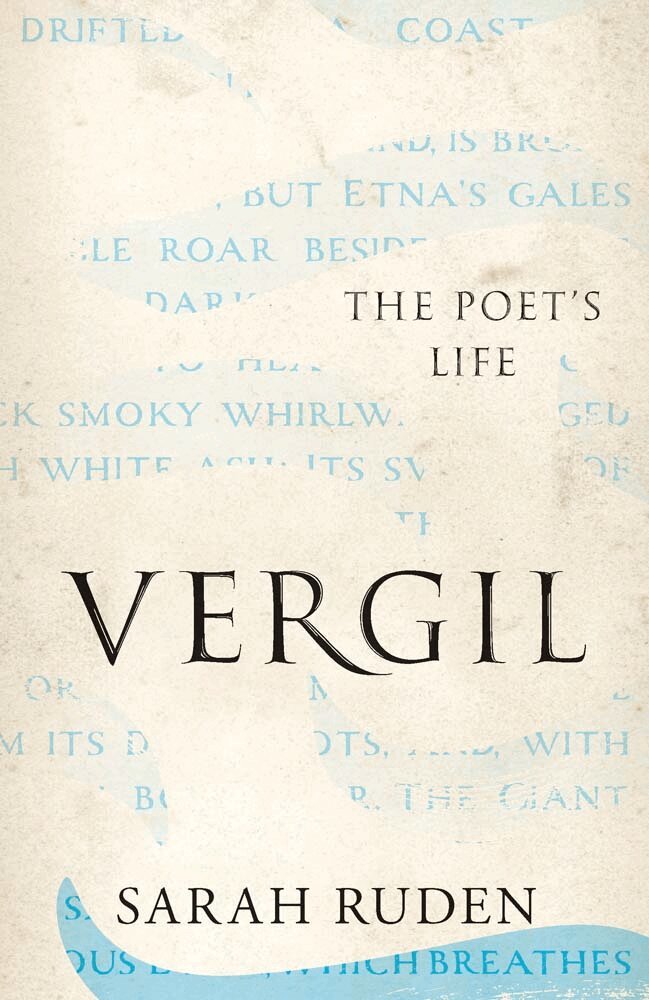
A biography of Vergil, Rome’s greatest poet, by the acclaimed translator of the Aeneid “Ms. Ruden has converted the writer of the Aeneid from a noble and stodgy ‘ancient’ into our contemporary . . . persuasively re-imagined [as] a sympathetic, three-dimensional figure. . . . The existence of the Aeneid is cause for gratitude. So is Ms. Ruden’s sensitive, celebratory portrait of its maker.”—Willard Spiegelman, Wall Street Journal The Aeneid stands as a towering work of Classical Roman literature and a gripping dramatization of the best and worst of human nature. In the process of creating this epic poem, Vergil (70–19 BCE) became the world’s first media celebrity, a living legend. But the real Vergil is a shadowy figure; we know that he was born into a modest rural family, that he led a private and solitary life, and that, in spite of poor health and unusual emotional vulnerabilities, he worked tirelessly to achieve exquisite new effects in verse. Vergil’s most famous work, the Aeneid, was commissioned by the emperor Augustus, who published the epic despite Vergil’s dying wish that it be destroyed. Sarah Ruden, widely praised for her translation of the Aeneid, uses evidence from Roman life and history alongside Vergil’s own writings to make careful deductions to reconstruct his life. Through her intimate knowledge of Vergil’s work, she brings to life a poet who was committed to creating something astonishingly new and memorable, even at great personal cost.
149 kr
Skickas inom 7-10 vardagar
A biography of Vergil, Rome’s greatest poet, by the acclaimed translator of the Aeneid “Ms. Ruden has converted the writer of the Aeneid from a noble and stodgy ‘ancient’ into our contemporary . . . persuasively re-imagined [as] a sympathetic, three-dimensional figure. . . . The existence of the Aeneid is cause for gratitude. So is Ms. Ruden’s sensitive, celebratory portrait of its maker.”—Willard Spiegelman, Wall Street Journal The Aeneid stands as a towering work of Classical Roman literature and a gripping dramatization of the best and worst of human nature. In the process of creating this epic poem, Vergil (70–19 BCE) became the world’s first media celebrity, a living legend. But the real Vergil is a shadowy figure; we know that he was born into a modest rural family, that he led a private and solitary life, and that, in spite of poor health and unusual emotional vulnerabilities, he worked tirelessly to achieve exquisite new effects in verse. Vergil’s most famous work, the Aeneid, was commissioned by the emperor Augustus, who published the epic despite Vergil’s dying wish that it be destroyed. Sarah Ruden, widely praised for her translation of the Aeneid, uses evidence from Roman life and history alongside Vergil’s own writings to make careful deductions to reconstruct his life. Through her intimate knowledge of Vergil’s work, she brings to life a poet who was committed to creating something astonishingly new and memorable, even at great personal cost.
188 kr
Skickas inom 5-8 vardagar
103 kr
Skickas inom 11-20 vardagar
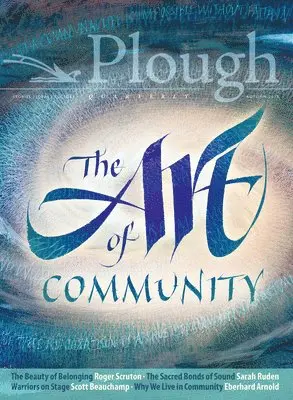
Can beauty save the world?These days criticism of art--whether visual, musical, or literary--is often marked by a suspicion of beauty. What happened to the belief that the creativity of the artist reflects the creativity of the Maker of heaven and earth, and that art can therefore be a channel for divine truth? Anyone who has joined with others to sing Bach’s Saint Matthew Passion or stood before a painting by Raphael or Chagall can attest to this. At such moments, art binds people together. This issue of Plough focuses on art that leads to such community: through theater, painting, music, and the objects and architecture of everyday life. And while art fosters community, building community is itself a work of creativity.Also in this issue: original poetry by Cozine Welch Jr.; reviews of new books by Eliza Griswold, Alissa Quart, Eugene Vodolazkin, and Nathan Englander; and art by Denis Brown, JR, Valérie Jardin, Isaiah King, Isaiah Tanenbaum, George Makary, Oriol Malet, Alex Nwokolo, Ashik and Jenelle Mohan, Raphael, Aaron Douglas, Winslow Homer, Vincent van Gogh, Wassily Kandinsky, and Jason Landsel. Plough Quarterly features stories, ideas, and culture for people eager to put their faith into action. Each issue brings you in-depth articles, interviews, poetry, book reviews, and art to help you put Jesus’ message into practice and find common cause with others.
100 kr
Skickas inom 5-8 vardagar
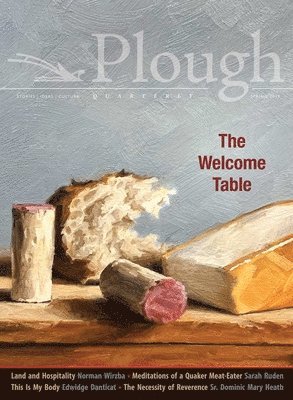
Food – how it’s grown, how it’s shared – makes us who we are. This issue traces the connections between farm and food, between humus and human. According to the first book of the Bible, tending the earth was humankind’s first task: “The Lord God planted a garden in Eden, in the east; and there he put the man whom he had formed” (Gen. 2:8). The desire to get one’s hands dirty raising one’s own food, then, doesn’t just come from modern romanticism, but is built into human nature.The title, “The Welcome Table,” comes from a spiritual first sung by enslaved African-Americans. The song refers to the Bible’s closing scene, the wedding feast of the Lamb described in the Book of Revelation, to which every race, tribe, and tongue are invited – a divine pledge of a day of freedom and freely shared plenty, of earth renewed and humanity restored. In the case of food, the symbol is the substance. Every meal, if shared generously and with radical hospitality, is already now a taste of the feast to come.Also in this issue: poetry by Luci Shaw; reviews of books by Julia Child, Robert Farrar Capon, Peter Mayle, Albert Woodfox, and Maria von Trapp; and art by Michael Naples, Sieger Köder, Carl Juste, André Chung, Ángel Bracho, Winslow Homer, Raymond Logan, Sybil Andrews, Cameron Davidson, and Jason Landsel.Plough Quarterly features stories, ideas, and culture for people eager to put their faith into action. Each issue brings you in-depth articles, interviews, poetry, book reviews, and art to help you put Jesus’ message into practice and find common cause with others.
298 kr
Skickas
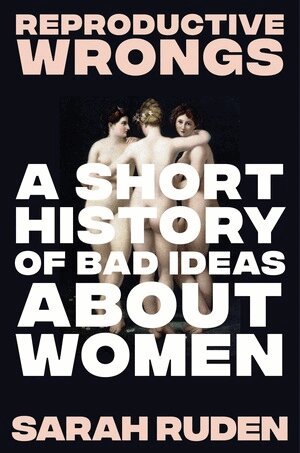
The dangerous belief that granting women reproductive freedom poses a threat to “traditional” values is a myth that has long prospered in American politics, playing an especially vicious role in the development of totalitarianism in the West. How did such damaging ideas arise?In Reproductive Wrongs, acclaimed translator and cultural historian Sarah Ruden exposes how ideologies that oppress women and families in the service of power took hold. Ruden traces a sweeping history through her trenchant analysis of seven pieces of literature that, she argues, marked key inflection points across two thousand years. From propagandistic poetry written by Ovid in the early Roman Empire to the biography of an evangelical American “abortion survivor”, Ruden lays bare how doctrines of control over women were invented and propagated.Scathing and vital, Reproductive Wrongs unearths the evolution of a right-wing radicalism that endures to this day.
299 kr
Skickas inom 3-6 vardagar