Sarah Vandegrift Eldridge - Böcker
Visar alla böcker från författaren Sarah Vandegrift Eldridge. Handla med fri frakt och snabb leverans.
3 produkter
3 produkter
1 208 kr
Skickas inom 5-8 vardagar
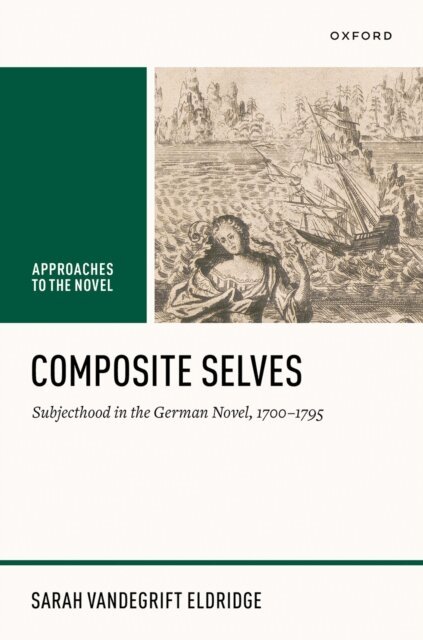
Composite Selves contributes to studies of the novel rooted in but continuing beyond the eighteenth century by reflecting on the ways in which a broad corpus of German-language novels reveals the self as composite. It uses detailed literary analysis to trace the changing and contingent models of selfhood presented in three clusters of novels: courtly novels from the 1720s and 30s; adventure novels from the 1750s; and sentimental novels of interiority from the 1770s and 80s. Drawing on insights from critical whiteness studies and historical analysis, it illuminates how literary selfhood changes over the century and how even the supposedly 'natural' interior selves of the late eighteenth-century novel are constituted by their encounters with an exterior literary world. Responding to debates over aesthetic education and literary universality that run through humanism, deconstruction, and cognitive literary studies, this project insists on recognizing the socially-turned qualities of novelistic 'selves' and on asking how these qualities relate to groups historically excluded from full selfhood and the social and cultural access that selfhood affords. This book is thus also a story about the construction of literary whiteness in the eighteenth-century novel--a story that fills a notable gap in German literary studies and thus uncovers a missing facet of narratives of the European novel from its earliest phases.
Del 173 - Studies in German Literature Linguistics and Culture
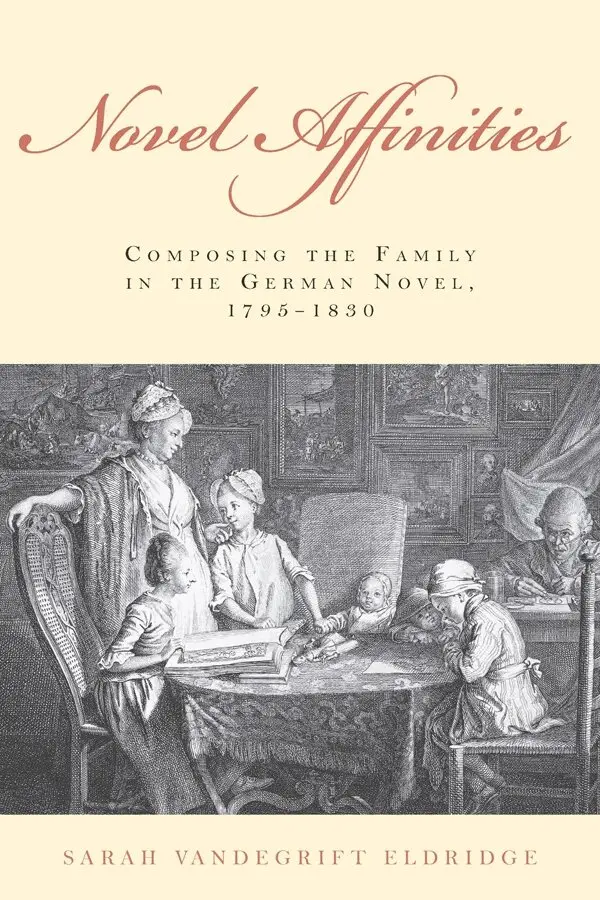
Novel Affinities
Composing the Family in the German Novel, 1795-1830
Inbunden, Engelska, 2016
1 207 kr
Skickas inom 10-15 vardagar
Challenges traditional novel scholarship that emphasizes the individual and the Bildungsroman, broadening the focus to the family and both canonical and non-canonical novels, reading them together with biological, legal and pedagogical texts.The novel, according to standard scholarly narratives, depicts an individual's path to maturity. Scholarship on the rise of the novel in Germany and in Europe more broadly, from Watt to Moretti, has essentially collapsed the genreinto the individualist Bildungsroman, exemplified by a narrow canon. This study challenges and nuances these narratives, first by expanding the focus from the individual to the family, second by broadening the field of novels treated to include not only canonical works but also so-called trivial literature, and third, by reading novels alongside contemporary biological, legal, and pedagogical texts. This perspective reveals that the novel and the family around 1800 were mutually constitutive and that the two together were instrumental in the development of conceptions of individuality, kinship, and society that are still relevant today. Sarah Vandegrift Eldridge reads novels by Goethe, Wolzogen, Engel, Karoline Fischer, August Lafontaine, and Brentano, showing that they exhibit varying degrees of "imaginative didacticism": suggestions not of what to think and feel, but that thinking and feeling in reaction to literature are central to cultural practices of self-reflection and development. The family is a crucial locus for this practice, and reading novels together with nonliterary texts illuminates how they experiment productively with the infinite possibilities presented by the relationships they portray.Sarah Vandegrift Eldridge is Associate Professor of German at the University of Tennessee, Knoxville.
1 344 kr
Skickas
This year's volume features special sections on gambling in the Age of Goethe and on Goethe and music, as well as book reviews, a translation of Lenz's "Zerbin" and other essays on the period.The Goethe Yearbook is a publication of the Goethe Society of North America, showcasing North American and international scholarship on Goethe and other authors and aspects of German literature and culture of the late eighteenth and early nineteenth centuries. In volume 32, Joanna Raisbeck analyzes two recently discovered sonnets by Karoline von Günderrode, uncovering an a priori pessimism that anticipates nineteenth-century thinkers. This is followed by Brian Donarski's scholarly introduction to and translation of Lenz's Zerbin, or Recent Philosophy-the first time this text has appeared in English. Ethan Blass reads surprising similarities in staging and visual language between Goethe's Die natürliche Tochter and Hitchcock's film Marnie, arguing that Goethe's theatrical innovations are protocinematic. The next four articles, by Claire Baldwin, Austen Hinkley, Jürgen Overhoff, and William H. Carter, offer an exploration of the theme "Gambling in the Age of Goethe." These essays touch on both canonical and forgotten figures to illuminate a rich discourse around chance, coincidence, risk management, and play that connects with key aspects of historical discourse and literary representation in the eighteenth and early nineteenth centuries. The final two pieces, by Jonathan Guez and Matthew Poon, treat musical responses to Goethe's works by Franz Schubert and Robert Schumann. A collection of book reviews that offer a comprehensive view of new work in the wider field closes the volume.