Saskia E. Wieringa - Böcker
Visar alla böcker från författaren Saskia E. Wieringa. Handla med fri frakt och snabb leverans.
5 produkter
5 produkter
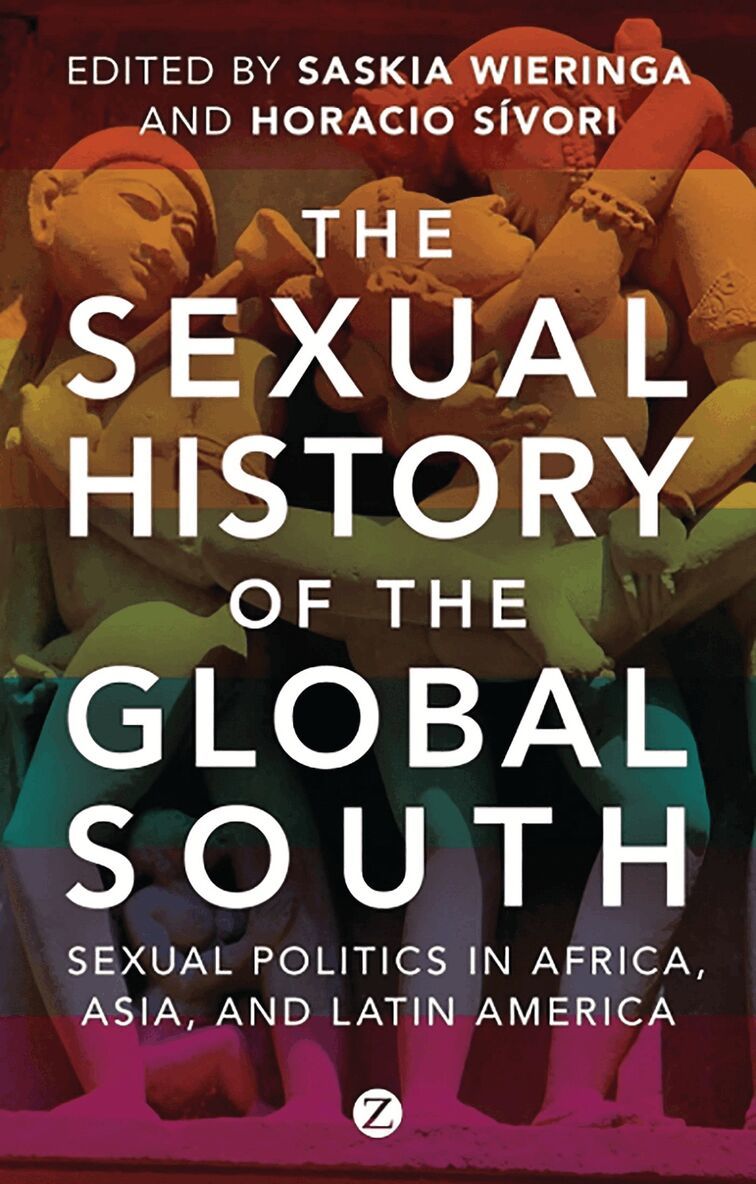
Sexual History of the Global South
Sexual Politics in Africa, Asia and Latin America
Häftad, Engelska, 2013
331 kr
Skickas inom 10-15 vardagar
The Sexual History of the Global South explores the gap between sexuality studies and post-colonial cultural critique. Featuring twelve case studies, based on original historical and ethnographic research from countries in Africa, Asia, and Latin America, the book examines the sexual investments underlying the colonial project and the construction of modern nation-states.Covering issues of heteronormativity, post-colonial amnesia regarding non-normative sexualities, women's sexual agency, the policing of the boundaries between the public and the private realm, sexual citizenship, the connections between LGBTQ activism and processes of state formation, and the emergence of sexuality studies in the global South, this collection is of great geographical, historical, and topical significance.
4 191 kr
Skickas inom 11-20 vardagar
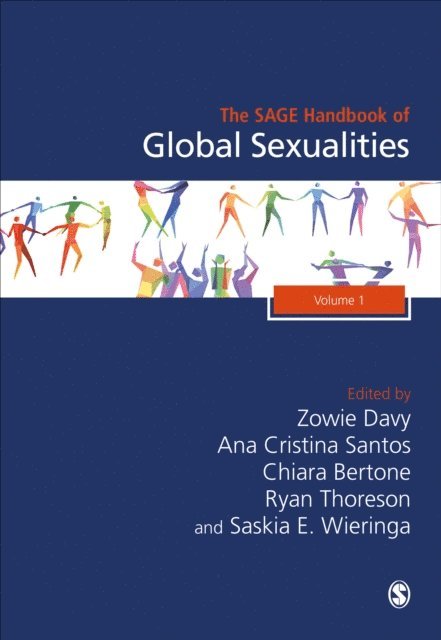
This two-volume Handbook provides a major thematic overview of global sexualities, spanning each of the continents, and its study, which is both reflective and prospective, and includes traditional approaches and emerging themes. The Handbook offers a robust theoretical underpinning and critical outlook on current global, glocal, and ‘new’ sexualities and practices, whilst offering an extensive reflection on current challenges and future directions of the field. The broad coverage of topics engages with a range of theories, and maintains a multi-disciplinary framework. PART ONE: Understanding Sexuality: Epistemologies/Conceptual and Methodological ChallengesPART TWO: Enforcing and Challenging Sexual NormsPART THREE: Interrogating/Undoing Sexual CategoriesPART FOUR: Enhancement Practices and Sexual Markets/IndustriesPART FIVE: Sexual Rights and Citizenship (And the Governance of Sexuality)PART SIX: Sexuality and Social Movements PART SEVEN: Language and Cultural Representation
1 645 kr
Skickas inom 7-10 vardagar
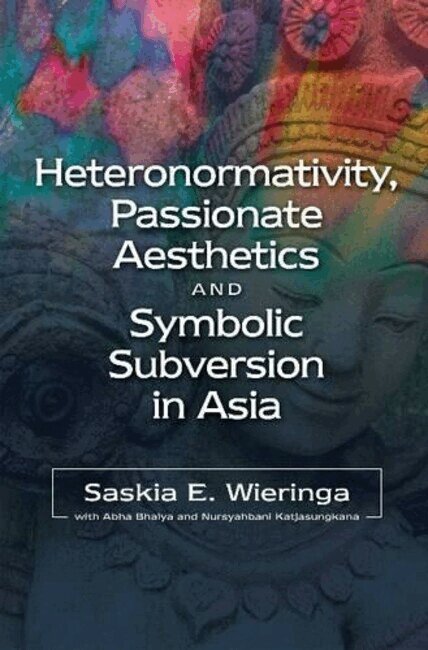
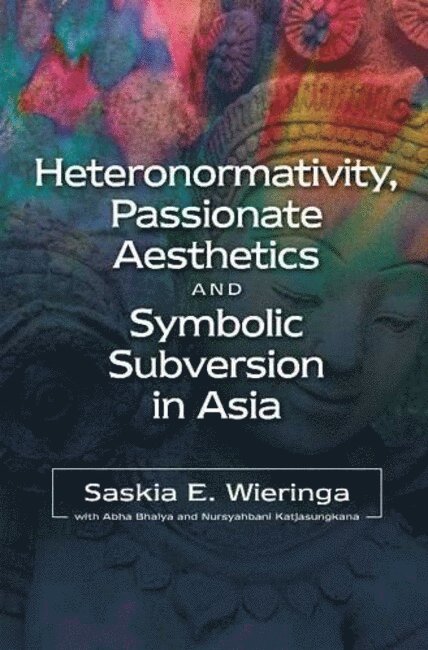
This book examines life trajectories among three categories of women living beyond the bounds of heteronormativity in Jakarta and Delhi, two major cities with substantively different religious and social values: women who have lost their husbands, either through divorce or death; sex workers; and young, urban lesbians. Delhi has a large Hindu majority and a sizeable Muslim minority, amongst other religious and cultural pluralities. The Indian state is constitutionally committed to secularism and equal respect to all regions despite right-wing Hindu fundamentalism. Jakarta is the capital of a sprawling archipelago with a large variety of ethnic cultures, Indonesia having the largest Muslim population of the world, as well as sizeable ethnic and religious minorities comprising Christians, Hindus, Buddhists and others. The Indonesian state is constitutionally secular, but religion plays a large role in public life and is embedded in regulations that strongly impact people's private lives. Recently, there have been strong political currents to impose stricter Islamic codes. The public arena of sexual politics, in which the media play an important role, is explored in both cities. Hot sex is a major media selling point, particularly in Indonesia. Heteronormativity entails a system of symbolic violence in the sense that it punishes those that it excludes and polices those that it includes; the ways its powers are subverted are likewise symbolic. Passionate aesthetics refers to the dynamics, motivations, codes of behavior and presentation, subjectivities and identities that together make up the complex workings of erotic attraction, sexual relations and partnerships patterns. By charting the lives of women who live beyond the boundaries of the heteronormative, commonalities are revealed; boundaries and regulatory mechanisms in the context of symbolic violence are delineated; and the issue of the struggle for sexual rights for marginalised groups, and their open rebellion, brought to the fore. At the heart of the book lies elaboration of the ways Asian families are constructed -- their social, economic, sexual and religious agency, and how these engage with state-led values.
1 693 kr
Skickas inom 7-10 vardagar
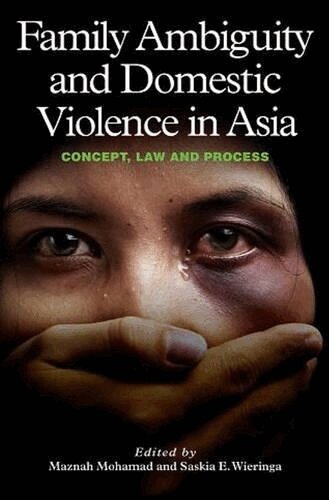
This book revisits the issue of Domestic Violence (DV) in Asia by exploring the question of family ambiguity, and interrogating DV's relationship between concept, law and strategy. Comparative experiences in the Asian context enable an examination of the effectiveness of family regulations and laws in diverse national, cultural and religious settings. Key questions relate to the limits and relevance of the human rights discourse in resolving family conflicts; the extent to which power and control in intimate relationships can actually be regulated by a set of inanimate, homogeneous and uniform policies and legislations; and how the state relates to the family as an "ambiguous" unit given state rules of governance that perpetuate unequal gender relations. Many of the difficulties in understanding DV have sprung from the fact that the family unit is ambiguous. When the state intervenes (e.g. reproductive health) the family is treated as a public concern; yet with respect to individual human/multicultural rights, the family is considered a private domain. Complications and contradictions arise with regard to different legislative/religious practices across Asia: for example, the enforcement of Sharia; technocratic imperatives with regard to demographic goals of marriage and reproduction; and state interference of gender imbalances and inequality. The politics and culture around DV is thus a mirror of modern-day Family-State collusion, which sustains rather than curtails discrimination based on sexuality and gender. This book views gender inequality for instance in relation to heteronormativity as the fundamental basis of intimate violence, rather than violence as a generic and neutral phenomenon, requiring generic solutions. It offers news theoretical insights to the conceptualisation of the family, culture and law with respect to DV. And it provides reasoned new perspectives on the effectiveness/inadequacy of present policies, laws and enforcement strategies against domestic violence in Asia.
503 kr
Skickas inom 7-10 vardagar
This book examines life trajectories among three categories of women living beyond the bounds of heteronormativity in Jakarta and Delhi, two major cities with substantively different religious and social values: women who have lost their husbands, either through divorce or death; sex workers; and young, urban lesbians. Delhi has a large Hindu majority and a sizeable Muslim minority, amongst other religious and cultural pluralities. The Indian state is constitutionally committed to secularism and equal respect to all regions despite right-wing Hindu fundamentalism. Jakarta is the capital of a sprawling archipelago with a large variety of ethnic cultures, Indonesia having the largest Muslim population of the world, as well as sizeable ethnic and religious minorities comprising Christians, Hindus, Buddhists and others. The Indonesian state is constitutionally secular, but religion plays a large role in public life and is embedded in regulations that strongly impact people's private lives. Recently, there have been strong political currents to impose stricter Islamic codes. The public arena of sexual politics, in which the media play an important role, is explored in both cities. Hot sex is a major media selling point, particularly in Indonesia. Heteronormativity entails a system of symbolic violence in the sense that it punishes those that it excludes and polices those that it includes; the ways its powers are subverted are likewise symbolic. Passionate aesthetics refers to the dynamics, motivations, codes of behavior and presentation, subjectivities and identities that together make up the complex workings of erotic attraction, sexual relations and partnerships patterns. By charting the lives of women who live beyond the boundaries of the heteronormative, commonalities are revealed; boundaries and regulatory mechanisms in the context of symbolic violence are delineated; and the issue of the struggle for sexual rights for marginalised groups, and their open rebellion, brought to the fore. At the heart of the book lies elaboration of the ways Asian families are constructed -- their social, economic, sexual and religious agency, and how these engage with state-led values.