Satsuki Kawano - Böcker
Visar alla böcker från författaren Satsuki Kawano. Handla med fri frakt och snabb leverans.
4 produkter
4 produkter
193 kr
Skickas inom 10-15 vardagar
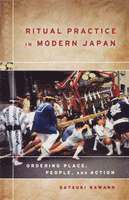
National surveys indicate that most Japanese, while professing no religious commitment, frequently perform rituals: They regularly tend their family home altars, look after family graves, participate in neighborhood festivals, and visit Shinto shrines and Buddhist temples. Are these rituals mere formalities? Based on fourteen months of fieldwork in Kamakura city near Tokyo, Satsuki Kawano examines the power of ritual and its relevance for modern urbanites. She reveals the indebtedness of ritual to forms that create an elevated context and infuse the mundane with a sense of moral order. By employing acts and environments common to everyday life, Kawano argues, ritual evokes morally positive values such as purity, gratitude, respect, and indebtedness. Rather than objectify morality in a sacred text or religious doctrine, ritual embodies and emplaces a sense of what it means to be a good person and creates moments of personal significance and engagement. In Kamakura, belief is therefore a consequence and not a prerequisite of ritual engagement. Ritual Practice in Modern Japan effectively challenges the widespread assumption that ritual in non-Western societies has little moral significance and that, with modernization, ""traditional"" practices inevitably disappear. This is a book that will interest scholars and students of cultural anthropology, ritual studies, and Japanese studies.
282 kr
Skickas inom 7-10 vardagar
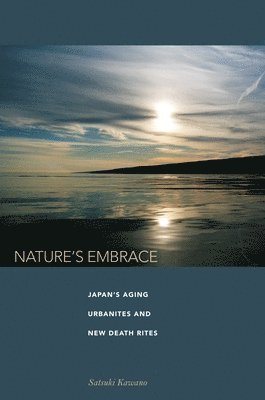
Offers insightful discussion on the rise of new death rites and ideologies, older adults’ views of their death rites, and Japan’s changing society through the eyes of aging urbanites. This book will engage a wide range of readers interested in death and culture, mortuary ritual, and changes in age relations in postindustrial societies.
592 kr
Skickas inom 10-15 vardagar
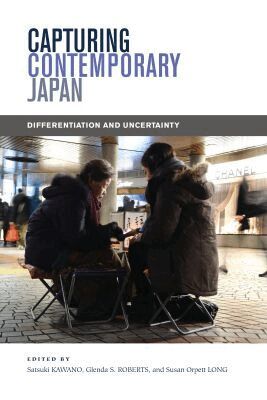
What are people's life experiences in present-day Japan? This timely volume addresses fundamental questions vital to under- standing Japan in the first decade of the twenty-first century. Its chapters collectively reveal a questioning of middle-class ideals once considered the essence of Japaneseness. In the postwar model household a man was expected to obtain a job at a major firm that offered life-long employment; his counterpart, the professional housewife, managed the domestic sphere and the children, who were educated in a system that provided a path to mainstream success. In the past twenty years, however, Japanese society has seen a sharp increase in precarious forms of employment, higher divorce rates, and a widening gap between haves and have-nots.Contributors draw on rich, nuanced fieldwork data collected during the 2000s to examine work, schooling, family and marital relations, child rearing, entertainment, lifestyle choices, community support, consumption and waste, material culture, well-being, aging, death and memorial rites, and sexuality. The voices in these pages vary widely: They include schoolchildren, teenagers, career women, unmarried women, young mothers, people with disabilities, small business owners, organic farmers, retirees, and the elderly.
256 kr
Skickas inom 7-10 vardagar
What are people's life experiences in present-day Japan? This timely volume addresses fundamental questions vital to under- standing Japan in the first decade of the twenty-first century. Its chapters collectively reveal a questioning of middle-class ideals once considered the essence of Japaneseness. In the postwar model household a man was expected to obtain a job at a major firm that offered life-long employment; his counterpart, the professional housewife, managed the domestic sphere and the children, who were educated in a system that provided a path to mainstream success. In the past twenty years, however, Japanese society has seen a sharp increase in precarious forms of employment, higher divorce rates, and a widening gap between haves and have-nots.Contributors draw on rich, nuanced fieldwork data collected during the 2000s to examine work, schooling, family and marital relations, child rearing, entertainment, lifestyle choices, community support, consumption and waste, material culture, well-being, aging, death and memorial rites, and sexuality. The voices in these pages vary widely: They include schoolchildren, teenagers, career women, unmarried women, young mothers, people with disabilities, small business owners, organic farmers, retirees, and the elderly.