
Savina J. Teubal - Böcker
Visar alla böcker från författaren Savina J. Teubal. Handla med fri frakt och snabb leverans.
2 produkter
2 produkter
257 kr
Skickas inom 7-10 vardagar
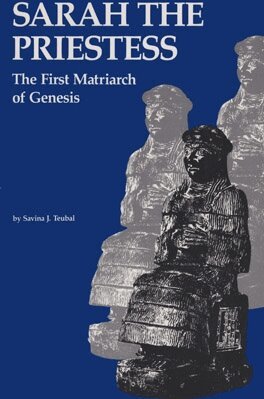
The only source in which Sarah is mentioned is the Book of Genesis, which contains very few highly selective and rather enigmatic stories dealing with her. On the surface, these stories tell us very little about Sarah, and what they do tell is complicated and confused by the probability that it represents residue surviving from two different written sources based on two independent oral traditions. Nevertheless, the role which Sarah plays, in the Genesis narratives, apears to be a highly energetic one, a role so active, in fact, that it repeatedly overshadows that of her husband.In a patriarchal environment such as the Canaan of Genesis, the situation is discordant and problematic. Dr. Teubal suggests that the difficulty is eliminated, however, if we understand that Sarah and the other matriarchs mentioned in the narratives acted within the established, traditional Mesopotamian role of priestess, of a class of women who retained a highly privileged position vis-a-vis their husbands.Dr. Teubal shows that the "Sarah tradition" represents a nonpatriarchal system struggling for survival in isolation, in the patriarchal environment of what was for Sarah a foreign society. She further indicates that the insistence of Sarah and Rebekah that their sons and heirs marry wives from the old homeland had to do not so much with preference for endogamy and cousin marriage as with their intention of ensuring the continuation of their old kahina-tradition against the overwhelming odds represented by patriarchal Canaan.
274 kr
Skickas inom 10-15 vardagar
In this fascinating piece of scholarly detective work, biblical scholar Savina J. Teubal peels away millenia of patriarchal distortion to reveal the lost tradition of biblical matriarchs. In Ancient Sisterhood: The Lost Traditions of Hagar and Sarah (originally published as Hagar the Egyptian), she shows that Hagar, the mother of Ishmael, was actually lady-in-waiting to the priestess Sarah and participated in an ancient Near Eastern custom of surrogate motherhood.Ancient Sisterhood cites evidence that Hebrew women actually enjoyed the privileges and sanctity of their own religious practices. These practices, however, were gradually eroded and usurped by the establishment of patriarchal monarchies that were based on militaristic conquest and power. Teubal examines the figures of Hagar and Sarah from a feminist perspective that combines thorough scholarship with an informed and detailed understanding of the cultural and religious influences from which the mysterious biblical figure of Hagar emerged. She looks at Hagar's important role in the genesis of Hebrew culture, her role as mother of the Islamic nations, and her power as a matriarch as opposed to her apparent status as a concubine.Teubal posits two distinct sources for the Hagar episodes: Hagar as companion to Sarah and an unknown woman whom she refers to as the desert matriarch. She explores whether Hagar was a slave to Abraham or Sarah, the differences between Hagar and the desert matriarch, and the obscurantism of these important elements in biblical texts. Teubal sheds considerable light on two central figures of these world religions and "the disassociation of woman from her own female religious experience."