SBP Editors – författare
34 kr
Läs direkt efter köp
Filled with scenes of intimate beauty, explores the emotions of a lonely woman trapped in a sterile marriage and her growing love for the robust gamekeeper of her husband's estate. The most controversial of Lawrence's books, Lady Chatterly's Lover joyously affirms the author's vision of individual regeneration through sexual love. The book's power, complexity, and psychological intricacy make this a completely original work—a triumph of passion, an erotic celebration of life.Love and personal relationships are the threads that bind this novel together. Lawrence explores a wide range of different types of relationships. The reader sees the brutal, bullying relationship between Mellors and his wife Bertha, who punishes him by preventing his pleasure. There is Tommy Dukes, who has no relationship because he cannot find a woman who he respects intellectually and at the same time finds desirable. There is also the perverse, maternal relationship that ultimately develops between Clifford and Mrs. Bolton after Connie has left. Masterfully written, one of the most important novels of all time.
ABOUT THE AUTHOR:
D.H. LAWRENCE was born September 11, 1885 in Eastwood, Nottinghamshire. His father was a miner and his mother was a school teacher. In 1906 he took up a scholarship at Nottingham University to study to be a teacher. His first novel, 'The White Peacock', was published in 1911. Lawrence gave up teaching in 1911 due to illness. In 1912 he met and fell in love with a married woman, Frieda Weekley, and they eloped to Germany together. They were married in 1914 and spent the rest of their lives together travelling around the world.
In 1915, Lawrence published 'The Rainbow' which was banned in Great Britain for obscenity. 'Women in Love' continues the story of the Brangwen family begun in 'The Rainbow' and was finished by Lawrence in 1916 but not published until 1920. Another of Lawrence's most famous works, 'Lady Chatterley's Lover', was privately printed in Florence in 1928 but was not published in Britain until 1960, when it was the subject of an unsuccessful court case brought against it for obscenity. As well as novels, Lawrence also wrote in a variety of other genres and his poetry, criticism and travel books remain highly regarded. He was also a keen painter. He died in France on March 2, 1930.
17 kr
Läs direkt efter köp
Treasure Island is an adventure novel by Scottish author Robert Louis Stevenson, narrating a tale of 'buccaneers and buried gold'. First published as a book on 23 May 1883, it was originally serialized in the children's magazine Young Folks between 1881 and 1882 under the title Treasure Island or, the mutiny of the Hispaniola with Stevenson adopting the pseudonym Captain George North. Traditionally considered a coming-of-age story, Treasure Island is a tale noted for its atmosphere, characters and action, and also as a wry commentary on the ambiguity of morality – as seen in Long John Silver – unusual for children's literature. It is one of the most frequently dramatized of all novels. The influence of Treasure Island on popular perceptions of pirates is enormous, including such elements as treasure maps marked with an 'X', schooners, the Black Spot, tropical islands, and one-legged seamen bearing parrots on their shoulders.Since its publication in 1883, Treasure Island has provided an enduring literary model for such eminent writers as Anthony Hope, Graham Greene, and Jorge Luis Borges. As David Daiches wrote: “Robert Louis Stevenson transformed the Victorian boys’ adventure into a classic of its kind.”
ABOUT THE AUTHOR:
Robert Louis Stevenson was a Scottish novelist, poet, and travel writer, and a leading representative of English literature. He was greatly admired by many authors, including Jorge Luis Borges, Ernest Hemingway, Rudyard Kipling and Vladimir Nabokov.
He was born in Edinburgh, Scotland. A sickly child, Stevenson was an invalid for part of his childhood and remained in ill health throughout his life. He began studying engineering at Edinburgh University but soon switched to law. His true inclination, however, was for writing. For several years after completing his studies, Stevenson traveled on the Continent, gathering ideas for his writing. His Inland Voyage (1878) and Travels with a Donkey (1878) describe some of his experiences there. A variety of essays and short stories followed, most of which were published in magazines. It was with the publication of Treasure Island in 1883, however, that Stevenson achieved wide recognition and fame. This was followed by his most successful adventure story, Kidnapped, which appeared in 1886. The Master of Ballantrae, in particular, is a study of evil character, and this study is taken even further in The Strange Case of Dr. Jekyll and Mr. Hyde (1886).
In 1887 Stevenson and his wife, Fanny, went to the United States, first to the health spas of Saranac Lake, New York, and then on to the West Coast. From there they set out for the South Seas in 1889. Except for one trip to Sidney, Australia, Stevenson spent the remainder of his life on the island of Samoa with his devoted wife and stepson. While there he wrote The Wrecker (1892), Island Nights Entertainments (1893), and Catriona (1893), a sequel to Kidnapped. He also worked on St. Ives and The Weir of Hermiston, which many consider to be his masterpiece. He died suddenly of apoplexy, leaving both of these works unfinished. Both were published posthumously; St. Ives was completed by Sir Arthur Quiller-Couch, and The Weir of Hermiston was published unfinished.
18 kr
Läs direkt efter köp
Since its inception in 1894, 'The Jungle Book' has enchanted readers—both young and old—with its invaluable moral lessons. By bestowing the animals in the stories with human traits, famed writer Rudyard Kipling gives readers timeless parables that teach family values and the importance of community.
The most popular of these tales center on Mowgli, a young boy who lives in the jungle amongst a community of animals. All before reaching his teenage years, he is brought up by wolves, trained by a bear, kidnapped by monkeys, and much more. This collection also features other classic stories, most notably 'Rikki Tikki Tavi', a story of a young mongoose named 'Rikki' who serves as a protector from dangerous cobras for a British family residing in India. In this masterful tale, the young mongoose is forced into a ferocious battle with Nagin, a large venomous cobra threatening Rikki’s family and seeking revenge for the death of her counterpart, Nag. These stories, with their vibrant characters and important moral lessons, have stood the test of time, having been reprinted in hundreds of different versions and languages around the world.
Still amazingly contemporary even though it was written more than 100 years ago, the pacing, language, and characters will keep readers young and old turning the pages, and then begging for more.
ABOUT THE AUTHOR:
Rudyard Kipling (1865-1936) was born in Bombay, but educated in England at the United Services College, Westward Ho, Bideford. In 1882 he returned to India, where he worked for Anglo-Indian newspapers.His literary career began with Departmental Ditties (1886), but subsequently he became chiefly known as a writer of short stories. A prolific writer, he achieved fame quickly. Kipling was the poet of the British Empire and its yeoman, the common soldier, whom he glorified in many of his works, in particular Plain Tales from the Hills (1888) and Soldiers Three (1888), collections of short stories with roughly and affectionately drawn soldier portraits. His Barrack Room Ballads (1892) were written for, as much as about, the common soldier. In 1894 appeared his Jungle Book, which became a children's classic all over the world. Kim (1901), the story of Kimball O'Hara and his adventures in the Himalayas, is perhaps his most felicitous work. Other works include The Second Jungle Book (1895), The Seven Seas (1896), Captains Courageous (1897), The Day's Work (1898), Stalky and Co. (1899), Just So Stories (1902), Trafficks and Discoveries (1904), Puck of Pook’s Hill (1906), Actions and Reactions (1909), Debits and Credits (1926), Thy Servant a Dog (1930), and Limits and Renewals (1932). During the First World War Kipling wrote some propaganda books. His collected poems appeared in 1933.Kipling was the recipient of many honorary degrees and other awards. In 1926 he received the Gold Medal of the Royal Society of Literature, which only Scott, Meredith, and Hardy had been awarded before him.Rudyard Kipling died on January 18, 1936.
17 kr
Läs direkt efter köp
Jane Austen is without question, one of England's most enduring and skilled novelists. With her wit, social precision, and unerring ability to create some of literature's most charismatic and believable heroines, she mesmerises her readers as much today as when her novels were first published. With its imperfect but charming heroine and its witty and subtle exploration of relationships, 'Emma' is often seen as Jane Austen's most flawless work.
Beautiful, clever, rich—and single—Emma Woodhouse is perfectly content with her life and sees no need for either love or marriage. Nothing, however, delights her more than interfering in the romantic lives of others. But when she ignores the warnings of her good friend Mr Knightley and attempts to arrange a suitable match for her protégée Harriet Smith, her carefully laid plans soon unravel and have consequences that she never expected. 'Emma' is the story of 19th century romance and relationships and is a timeless classic from the era. Will Emma marry or will she remain a single girl? Read this classic and discover for yourself.
ABOUT THE AUTHOR:
Jane Austen was an English novelist whose works of romantic fiction, set among the landed gentry, earned her a place as one of the most widely read writers in English literature, her realism and biting social commentary cementing her historical importance among scholars and critics.
Austen lived her entire life as part of a close-knit family located on the lower fringes of the English landed gentry. She was educated primarily by her father and older brothers as well as through her own reading. The steadfast support of her family was critical to her development as a professional writer. Her artistic apprenticeship lasted from her teenage years until she was about 35 years old. During this period, she experimented with various literary forms, including the epistolary novel which she tried then abandoned, and wrote and extensively revised three major novels and began a fourth. From 1811 until 1816, with the release of 'Sense and Sensibility' (1811), 'Pride and Prejudice' (1813), 'Mansfield Park' (1814) and 'Emma' (1815), she achieved success as a published writer. She wrote two additional novels, 'Northanger Abbey' and 'Persuasion', both published posthumously in 1818, and began a third, which was eventually titled 'Sanditon', but died before completing it.
Austen's works critique the novels of sensibility of the second half of the 18th century and are part of the transition to 19th-century realism. Her plots, though fundamentally comic, highlight the dependence of women on marriage to secure social standing and economic security. Her work brought her little personal fame and only a few positive reviews during her lifetime, but the publication in 1869 of her nephew's 'A Memoir of Jane Austen' introduced her to a wider public, and by the 1940s she had become widely accepted in academia as a great English writer. The second half of the 20th century saw a proliferation of Austen scholarship and the emergence of a Janeite fan culture.
17 kr
Läs direkt efter köp
Aged ten, Fanny Price is sent to live with her wealthier relations, the Bertrams, at Mansfield Park. However, life there is not as she imagined. Treated with disdain by three of her cousins, she finds her only comfort in the kindness of the fourth, Edmund. As they grow, their friendship develops into romantic love—until the arrival of Henry Crawford and his charming sister Mary causes an emotional upheaval that no one in the family expects. With psychological insight and sparkling wit, Jane Austen paints an irresistibly lifelike portrait of shifting values and split loyalties.
Described as the most experimental and modern of Jane Austen's works, 'Mansfield Park' is also Austen's most serious novel, written in the full flower of the novelist's maturity. Enlivened by an amusing cast of busybodies, ne'er-do-wells, and social climbers, this acclaimed novel of early 19th Century English society will also appeal to readers as an entertaining study of the interplay between manners, education, and ethics.
ABOUT THE AUTHOR:
Jane Austen was an English novelist whose works of romantic fiction, set among the landed gentry, earned her a place as one of the most widely read writers in English literature, her realism and biting social commentary cementing her historical importance among scholars and critics.
Austen lived her entire life as part of a close-knit family located on the lower fringes of the English landed gentry. She was educated primarily by her father and older brothers as well as through her own reading. The steadfast support of her family was critical to her development as a professional writer. Her artistic apprenticeship lasted from her teenage years until she was about 35 years old. During this period, she experimented with various literary forms, including the epistolary novel which she tried then abandoned, and wrote and extensively revised three major novels and began a fourth. From 1811 until 1816, with the release of 'Sense and Sensibility' (1811), 'Pride and Prejudice' (1813), 'Mansfield Park' (1814) and 'Emma' (1815), she achieved success as a published writer. She wrote two additional novels, 'Northanger Abbey' and 'Persuasion', both published posthumously in 1818, and began a third, which was eventually titled 'Sanditon', but died before completing it.
Austen's works critique the novels of sensibility of the second half of the 18th century and are part of the transition to 19th-century realism. Her plots, though fundamentally comic, highlight the dependence of women on marriage to secure social standing and economic security. Her work brought her little personal fame and only a few positive reviews during her lifetime, but the publication in 1869 of her nephew's 'A Memoir of Jane Austen' introduced her to a wider public, and by the 1940s she had become widely accepted in academia as a great English writer. The second half of the 20th century saw a proliferation of Austen scholarship and the emergence of a Janeite fan culture.
17 kr
Läs direkt efter köp
Jane Austen's final novel is her most mature and wickedly satirical. It follows the story of Anne Elliott, who as a teenager, was engaged to a seemingly ideal man—Frederick Wentworth. But after being persuaded by her friend Lady Russell that he is too poor to be a suitable match, Anne ends their engagement.
When they are reacquainted eight years later, their circumstances are transformed—Frederick is returning triumphantly from the Napoleonic War, while Anne's fortunes are floundering. Will their past regrets prevent them from finding future happiness? Buttressed by the author's humane characterization and sharp social commentary, 'Persuasion' is a must-read for any Jane Austen fan.
ABOUT THE AUTHOR:
Jane Austen was an English novelist whose works of romantic fiction, set among the landed gentry, earned her a place as one of the most widely read writers in English literature, her realism and biting social commentary cementing her historical importance among scholars and critics.
Austen lived her entire life as part of a close-knit family located on the lower fringes of the English landed gentry. She was educated primarily by her father and older brothers as well as through her own reading. The steadfast support of her family was critical to her development as a professional writer. Her artistic apprenticeship lasted from her teenage years until she was about 35 years old. During this period, she experimented with various literary forms, including the epistolary novel which she tried then abandoned, and wrote and extensively revised three major novels and began a fourth. From 1811 until 1816, with the release of 'Sense and Sensibility' (1811), 'Pride and Prejudice' (1813), 'Mansfield Park' (1814) and 'Emma' (1815), she achieved success as a published writer. She wrote two additional novels, 'Northanger Abbey' and 'Persuasion', both published posthumously in 1818, and began a third, which was eventually titled 'Sanditon', but died before completing it.
Austen's works critique the novels of sensibility of the second half of the 18th century and are part of the transition to 19th-century realism. Her plots, though fundamentally comic, highlight the dependence of women on marriage to secure social standing and economic security. Her work brought her little personal fame and only a few positive reviews during her lifetime, but the publication in 1869 of her nephew's 'A Memoir of Jane Austen' introduced her to a wider public, and by the 1940s she had become widely accepted in academia as a great English writer. The second half of the 20th century saw a proliferation of Austen scholarship and the emergence of a Janeite fan culture.
17 kr
Läs direkt efter köp
A collection of over one hundred inspirational poems, Gitanjali covers the breadth of life's experiences, from the quite pleasure of observing children at play to man's struggle with his god.An integration of two words, 'Git' and 'Anjali,' meaning song and offering respectively, the literal meaning of the word is 'offering of songs.' and because of the strong devotional tone and subliminal spiritual incitation, the book can be said to have devotion to god as its theme. It highlights the poet's intense response to the magnificence of the universe or rather an affirmation of life with all its abundance, mystery and diversity.
ABOUT THE AUTHOR:Rabindranath Tagore (1861-1941) was the youngest son of Debendranath Tagore, a leader of the Brahmo Samaj. He was educated at home and although at seventeen he was sent to England for formal schooling, he did not finish his studies there. In his mature years, in addition to his many-sided literary activities, he managed the family estates, a project which brought him into close touch with common humanity and increased his interest in social reforms. He also started an experimental school at Shantiniketan where he tried his Upanishadic ideals of education. From time to time he participated in the Indian nationalist movement, though in his own non-sentimental and visionary way; and Gandhi, the political father of modern India, was his devoted friend. Tagore was knighted by the ruling British Government in 1915, but within a few years he resigned the honour as a protest against British policies in India.Tagore had early success as a writer in his native Bengal. With his translations of some of his poems he became rapidly known in the West. In fact, his fame attained a luminous height, taking him across continents on lecture tours and tours of friendship. For the world he became the voice of India's spiritual heritage; and for India, especially for Bengal, he became a great living institution.Although, Tagore wrote successfully in all literary genres, he was first of all a poet. Among his fifty and odd volumes of poetry are Manasi (1890) {The Ideal One}, Sonar Tari (1894) {The Golden Boat}, Gitanjali (1910) {Song Offerings}, Gitimalya (1914) {Wreath of Songs}, and Balaka (1916) {The Flight of Cranes}. The English renderings of his poetry, which include The Gardener (1913), Fruit-Gathering (1916), and The Fugitive (1921), do not generally correspond to particular volumes in the original Bengali; and in spite of its title, Gitanjali: Song Offerings (1912), the most acclaimed of them, contains poems from other works besides its namesake. Tagore’s major plays are Raja (1910) {The King of the Dark Chamber}, Dakghar (1912) {The Post Office}, Achalayatan (1912) {The Immovable}, Muktadhara (1922) {The Waterfall}, and Raktakaravi (1926) {Red Oleanders}. He is the author of several volumes of short stories and a number of novels, among them Gora (1910), Ghare-Baire (1916) {The Home and the World}, and Yogayog (1929) {Crosscurrents}. Besides these, he wrote musical dramas, dance dramas, essays of all types, travel diaries, and two autobiographies, one in his middle years and the other shortly before his death in 1941. Tagore also left numerous drawings and paintings, and songs for which he wrote the music himself.
17 kr
Läs direkt efter köp
The Secret Garden is a must-read for children and adults, especially if you missed out on this while growing up. When Mary Lennox's parents pass away, she is sent to live in Misselthwaite Manor, her uncle's enormous house. Mary is considered a spoilt and ill-tempered child, but with the help of a gardener, a robin redbreast and two new friends, she discovers a garden full of magic and vigour that begins to transform her own personality in the most astonishing of ways.
ABOUT THE AUTHOR:Frances Eliza Hodgson Burnett was an English playwright and author. She is best known for her children's stories, in particular Little Lord Fauntleroy, A Little Princess, and The Secret Garden.Frances Eliza Hodgson was born in Cheetham, near Manchester, England. After her father died in 1852, the family eventually fell on straitened circumstances and in 1865 emigrated to the United States, settling near Knoxville, Tennessee. There, Frances began writing to help earn money for the family, publishing stories in magazines from the age of 19. In 1870 her mother died and in 1872 she married Swan Burnett, who became a medical doctor after which they lived in Paris for two years where their two sons were born before returning to the US to live in Washington D.C. There she began to write novels, the first of which, was published to good reviews. Little Lord Fauntleroy was published in 1886 and made her a popular writer of children's fiction, although her romantic adult novels written in the 1890s were also popular. She wrote and helped to produce stage versions of Little Lord Fauntleroy and A Little Princess.
16 kr
Läs direkt efter köp
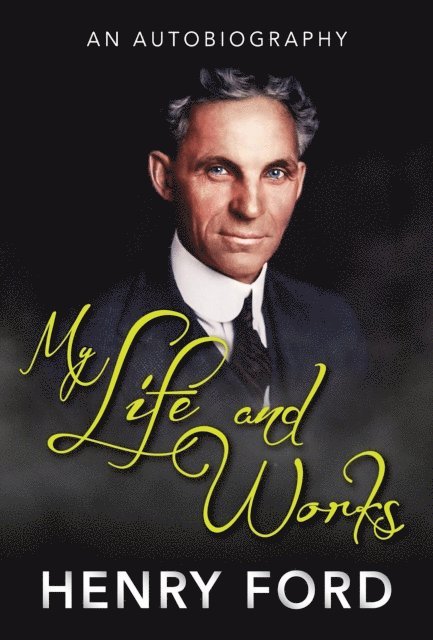
Anyone can think up an idea. The thing that counts is developing it into a practical product. The lessons of Henry Ford, one of America's greatest business innovators, are as fresh and vital today as they were in 1922, when this extraordinary book was first published. Ford explains: how his experiences as an employee influenced his philosophies as an employer. It's easy to see that much of Ford's wisdom has been forgotten today and that individual entrepreneurs and global corporations alike would do well to take another look. American entrepreneur, inventor, and philanthropist HENRY FORD (1863-1947) was born in Michigan and trained as a machinist and engineer before founding, in 1903, the Ford Motor Company.
ABOUT THE AUTHOR:Henry Ford was an American industrialist, the founder of the Ford Motor Company, and sponsor of the development of the assembly line technique of mass production. Although Ford did not invent the automobile or the assembly line, he developed and manufactured the first automobile that many middle class Americans could afford. In doing so, Ford converted the automobile from an expensive curiosity into a practical conveyance that would profoundly impact the landscape of the twentieth century. His introduction of the Model T automobile revolutionized transportation and American industry. As owner of the Ford Motor Company, he became one of the richest and best-known people in the world. He is credited with "Fordism": mass production of inexpensive goods coupled with high wages for workers. Ford had a global vision, with consumerism as the key to peace. His intense commitment to systematically lowering costs resulted in many technical and business innovations, including a franchise system that put dealerships throughout most of North America and in major cities on six continents.
16 kr
Läs direkt efter köp
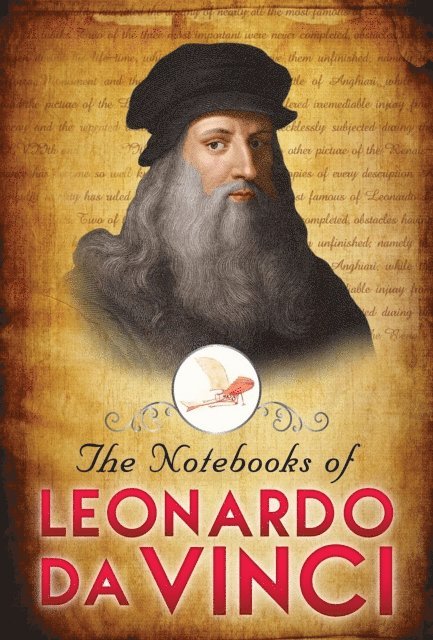
Leonardo da Vinci—artist, inventor, and prototypical Renaissance man—is a perennial source of fascination because of his astonishing intellect and boundless curiosity about the natural and man-made world. During his life he created numerous works of art and kept voluminous notebooks that detailed his artistic and intellectual pursuits. The collection of writings and art in this magnificent book are drawn from his notebooks. The book organizes his wide range of interests into subjects such as human figures, light and shade, perspective and visual perception, anatomy, botany and landscape, geography, the physical sciences and astronomy, architecture, sculpture, and inventions. Nearly every piece of writing throughout the book is keyed to the piece of artwork it describes.
ABOUT THE AUTHOR:Leonardo Da Vinci, Born on April 15, 1452, in Vinci, Italy, was concerned with the laws of science and nature, which greatly informed his work as a painter, sculptor, inventor and draftsmen. His ideas and body of work—which includes "Virgin of the Rocks," "The Last Supper," "Leda and the Swan" and "Mona Lisa"—have influenced countless artists and made da Vinci a leading light of the Italian Renaissance. Quotes "Iron rusts from disuse, stagnant water loses its purity and in cold weather becomes frozen; even so does inaction sap the vigor of the mind." – Leonardo da Vinci Humble Beginnings Leonardo da Vinci was born on April 15, 1452, in Vinci, Italy. Born out of wedlock, the love child of a respected notary and a young peasant woman, he was raised by his father, and his stepmothers. 'The Last Supper' In 1482, Lorenzo de' Medici, a man from a prominent Italian family, commissioned da Vinci to create a silver lyre and bring it to Ludovico il Moro, the Duke of Milan, as a gesture of peace. Da Vinci did so and then wrote Ludovico a letter describing how his engineering and artistic talents would be of great service to Ludovico's court. His letter successfully endeared him to Ludovico, and from 1482 until 1499, Leonardo was commissioned to work on a great many projects.It was during this time that da Vinci painted "The Last Supper." 'Mona Lisa' Da Vinci's most well-known painting, and arguably the most famous painting in the world, the "Mona Lisa," was a privately commissioned work and was completed sometime between 1505 and 1507. Of the painting's wide appeal, James Beck, an art historian at Columbia University, once explained, "It is the inherent spirituality of the human creature that Leonardo was able to ingenuine to the picture that raises the human figure to some kind of majesty." It's been said that the Mona Lisa had jaundice, that she was a pregnant woman and that she wasn't actually a woman at all, but a man in drag. Based on accounts from an early biographer, however, the "Mona Lisa" is a picture of Lisa Gioconda, the real-life wife of a merchant, but that's far from certain. For da Vinci, the "Mona Lisa" was forever a work in progress, as it was his attempt at perfection. The painting was never delivered to its commissioner; da Vinci kept it with him until the end of his life. Today, the "Mona Lisa" hangs in the Louvre Museum in Paris, France, secured behind bulletproof glass, and is regarded as a priceless national treasure.
17 kr
Läs direkt efter köp
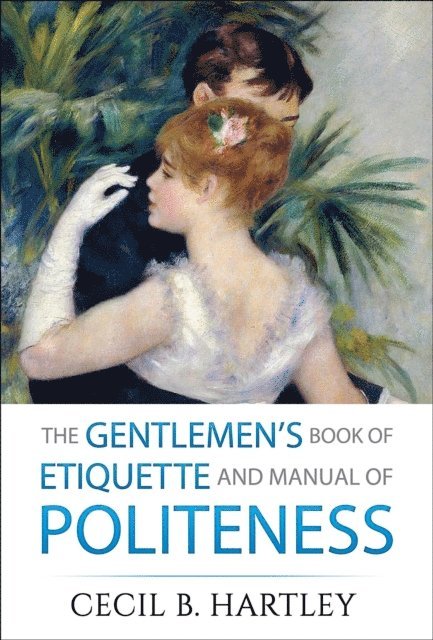
This book provides rules for the etiquette to be observed in the street, at table, in the ball room, evening party, and morning call; with full directions for polite or respondence, dress, conversation, manly exercises, and accomplishments. Man was not intended to live like a bear or a hermit, apart from others of his own nature, and, philosophy and reason will each agree with me, that man was born for sociability and finds his true delight in society. Society is a word capable of many meanings, and used here in each and all of them. Society, par excellence; the world at large; the little clique to which he is bound by early ties; the companionship of friends or relatives; even society tete a tete with one dear sympathizing soul, are pleasant states for a man to be in. All in all this is a great book on etiquette. A great place to learn the rules of etiquette.
ABOUT THE AUTHOR:Cecil B. Hartley was a 19th-century biographer and etiquette expert. He is the author of The Gentleman's Book of Etiquette, The Life and Times of Colonel Daniel Boone, and The Three Mrs. Judsons.
16 kr
Läs direkt efter köp
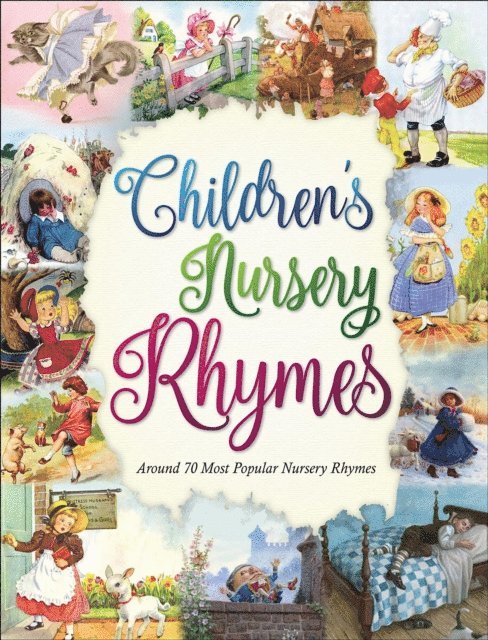
Children's Nursery Rhymes contains traditional rhymes, such as Baa Baa Black Sheep, Humpty Dumpty, Mary Had A Little Lamb, Ring A-Round the Roses, Twinkle Twinkle Little Star, Jack and Jill, and many more. Inviting illustrations add a visual dimension to the rhymes, which further engage young imaginations. This is the perfect collection for parents and children to share and enjoy together. Join them, and hundreds of other amazing characters, on a spellbinding journey into the magical land of rhymes.
17 kr
Läs direkt efter köp
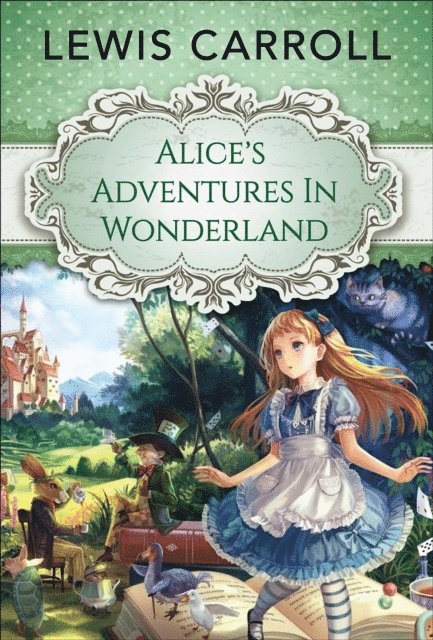
Life gets strange when Alice sees a white rabbit wearing a coat and gloves. Then she follows him down a hole. Suddenly she grows smaller, larger, smaller, larger, smaller--and almost drown in her own tears.
She meets a dodo, a lizard, a smoking caterpillar, a duchess... a cat without a grin. Then a grin--without a cat. She has a mad tea party with a hatter and a hare.
And a madder croquet game with a King--where playing card soldiers are the hoops, flamingoes are the mallets, hedgehogs are the balls and the Queen of Hearts cries "OFF WITH THEIR HEADS!" Which lands Alice, the mock turtle, and a gryphon (a what?) at a trial without rules where death is the penalty! In Wonderland, anything can happen...
And probably, anything will....
ABOUT THE AUTHOR:
Lewis Carroll was the pen name of Charles Lutwidge Dodgson who was born 27 January 1832. He was an English writer, mathematician, logician, Anglican deacon and photographer. His most famous writings are Alice’s Adventures in Wonderland and its sequel Through the Looking-Glass, as well as the poems “The Hunting of the Snark” and “Jabberwocky”, all examples of the genre of literary nonsense. He is noted for his facility at word play, logic, and fantasy, and there are societies in many parts of the world (including the United Kingdom, Japan, the United States, and New Zealand dedicated to the enjoyment and promotion of his works and the investigation of his life. He died – 14 January 1898.
17 kr
Läs direkt efter köp
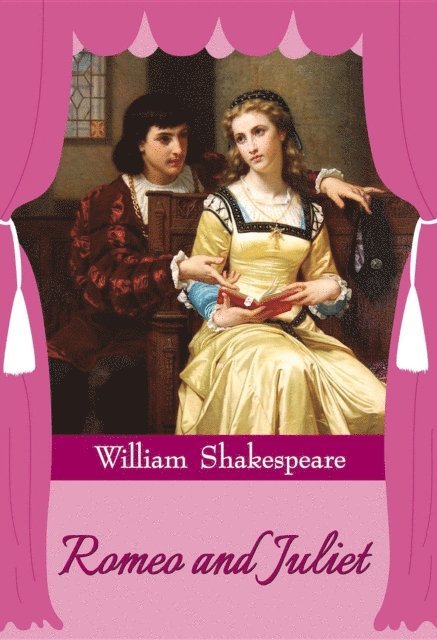
Romeo and Juliet is the world's most famous drama of tragic young love, ending with their suicides, against the backdrop of a vicious family feud. It has been praised for its language and dramatic effect.Shakespeare set the scene of the play in Verona, Italy. Juliet, a Capulet, and Romeo, a Montague, fall in love at a masked ball. Because the two noble families are enemies, the couple is married secretly by Friar Laurence. After Tybalt, a Capulet, kills Romeo’s friend Mercutio in a quarrel, Romeo kills Tybalt and is banished to Mantua. Juliet's father then demands that she marry Count Paris. When Juliet goes to Friar Laurence for advice, he gives her a potion that makes a person appear to be dead. He suggests that she take it and that Romeo rescue her; she agrees. Not knowing about the Friar's scheme, Romeo hears of Juliet's apparent death and returns to Verona. After killing Count Paris, he finds Juliet in a burial vault. He gives her a last kiss and kills himself with poison. Juliet awakens, sees the dead Romeo, and kills herself.
ABOUT THE AUTHOR:
William Shakespeare (baptised 26 April 1564) was an English poet and playwright, widely regarded as the greatest writer in the English language and the world's pre-eminent dramatist. He is often called England's national poet and the 'Bard of Avon' (or simply "The Bard"). His surviving works consist of 37 plays, 154 sonnets, two long narrative poems, and several other poems. His plays have been translated into every major living language.
Shakespeare was born and raised in Stratford-upon-Avon. Scholars believe that he died on his fifty-second birthday, coinciding with St George’s Day. At the age of 18 he married Anne Hathaway, who bore him three children: Susanna, twins Hamnet and Judith. Between 1585 and 1592 he began a successful career in London as an actor, writer, and part owner of the playing company the Lord Chamberlain's Men, later known as the King's Men. He appears to have retired to Stratford around 1613, where he died three years later.
Shakespeare produced most of his known work between 1590 and 1613. His early plays were mainly comedies and histories, genres he raised to the peak of sophistication and artistry by the end of the sixteenth century. Next he wrote mainly tragedies until about 1608. He was a respected poet and playwright in his own day, but his reputation did not rise to its present heights until the nineteenth century. The Romantics, in particular, acclaimed Shakespeare's genius, and the Victorians hero-worshipped Shakespeare. In the twentieth century, his work was repeatedly adopted and rediscovered by new movements in scholarship and performance. His plays remain highly popular today and are consistently performed and reinterpreted in diverse cultural and political contexts throughout the world.
17 kr
Läs direkt efter köp
Shakespeare's Macbeth is one of the greatest tragic dramas the world has known. Macbeth himself, a brave warrior, is fatally impelled by supernatural forces, by his proud wife, and by his own burgeoning ambition.The play is set in Scotland. Returning from battle with his companion Banquo, the nobleman Macbeth meets a group of witches. They predict that Macbeth will first become thane (baron) of Cawdor and then king of Scotland. Urged on by Lady Macbeth, his wife, Macbeth murders King Duncan. But Duncan's sons, Malcolm and Donalbain, escape. Macbeth then seizes the throne of Scotland. But Macbeth has no peace. In a bid to prevent Banquo's descendants from becoming kings according to the witches' prophecy, Macbeth arranges for him to be murdered, along with his son Fleance. Macbeth's men kill Banquo, but Fleance escapes. Haunted by Banquo's ghost, Macbeth seeks counsel from the witches. They tell him to beware of Macduff, another Scottish nobleman. Macbeth is now hardened to killing. He orders the murder of Macduff's wife and children. By contrast, Lady Macbeth, who had encouraged her husband to embark upon his path of slaughter, goes mad with guilt and dies. Macduff's army attacks Macbeth's forces. Macduff meets Macbeth in single combat and kills him. Malcolm, Duncan's son, is then proclaimed king of Scotland.
ABOUT THE AUTHOR:
William Shakespeare (baptised 26 April 1564) was an English poet and playwright, widely regarded as the greatest writer in the English language and the world's pre-eminent dramatist. He is often called England's national poet and the 'Bard of Avon' (or simply "The Bard"). His surviving works consist of 37 plays, 154 sonnets, two long narrative poems, and several other poems. His plays have been translated into every major living language.
Shakespeare was born and raised in Stratford-upon-Avon. Scholars believe that he died on his fifty-second birthday, coinciding with St George’s Day. At the age of 18 he married Anne Hathaway, who bore him three children: Susanna, twins Hamnet and Judith. Between 1585 and 1592 he began a successful career in London as an actor, writer, and part owner of the playing company the Lord Chamberlain's Men, later known as the King's Men. He appears to have retired to Stratford around 1613, where he died three years later.
Shakespeare produced most of his known work between 1590 and 1613. His early plays were mainly comedies and histories, genres he raised to the peak of sophistication and artistry by the end of the sixteenth century. Next he wrote mainly tragedies until about 1608. He was a respected poet and playwright in his own day, but his reputation did not rise to its present heights until the nineteenth century. The Romantics, in particular, acclaimed Shakespeare's genius, and the Victorians hero-worshipped Shakespeare. In the twentieth century, his work was repeatedly adopted and rediscovered by new movements in scholarship and performance. His plays remain highly popular today and are consistently performed and reinterpreted in diverse cultural and political contexts throughout the world.
17 kr
Läs direkt efter köp
This is a story of the English moneyed class and its eternal struggle for creating "sense and sensibility" in its world. A potential marriage prospect must make "sense" by bringing with it enough assets and income to permit the couple to continue to live in happy, idle leisure, complete with servants and a prestigious address. Provided one can find such a match among the eligible persons of the opposite sex, one then hopes for "sensibility", or capacity for emotion, so that if love is not immediately to hand, it might come around later. And while these gentlemen and ladies make their hopeful pirouettes in the social eye, they must of course adhere to all the forms of civility.Jane Austen writes of the family of a gentleman named Dashwood who dies and leaves most of his fortune to his son, with the understanding that he will "look out for" his mother and three sisters. When that son marries a grasping woman who convinces him that his sisters' funds are suitable to their needs and so require no contributions from his inherited fortune, the sisters are left to play the game of "Sense and Sensibility" in earnest.But all's not fair in love. Carefully prepared "attachments" can and do go awry when gentlemen find other young women of greater fortunes than the Dashwood sisters. So, will they marry for love? Or money? Or perhaps, not at all?The Dashwood sisters are very different from each other in appearance and temperament; Elinor's good sense and readiness to observe social forms contrast with Marianne's impulsive candor and warm but excessive sensibility. Both struggle to maintain their integrity and find happiness in the face of a competitive marriage market.
ABOUT THE AUTHOR:
Jane Austen was an English novelist whose works of romantic fiction, set among the landed gentry, earned her a place as one of the most widely read writers in English literature, her realism and biting social commentary cementing her historical importance among scholars and critics.
Austen lived her entire life as part of a close-knit family located on the lower fringes of the English landed gentry. She was educated primarily by her father and older brothers as well as through her own reading. The steadfast support of her family was critical to her development as a professional writer. Her artistic apprenticeship lasted from her teenage years until she was about 35 years old. During this period, she experimented with various literary forms, including the epistolary novel which she tried then abandoned, and wrote and extensively revised three major novels and began a fourth. From 1811 until 1816, with the release of 'Sense and Sensibility' (1811), 'Pride and Prejudice' (1813), 'Mansfield Park' (1814) and 'Emma' (1815), she achieved success as a published writer. She wrote two additional novels, 'Northanger Abbey' and 'Persuasion', both published posthumously in 1818, and began a third, which was eventually titled 'Sanditon', but died before completing it.
Austen's works critique the novels of sensibility of the second half of the 18th century and are part of the transition to 19th-century realism. Her plots, though fundamentally comic, highlight the dependence of women on marriage to secure social standing and economic security. Her work brought her little personal fame and only a few positive reviews during her lifetime, but the publication in 1869 of her nephew's 'A Memoir of Jane Austen' introduced her to a wider public, and by the 1940s she had become widely accepted in academia as a great English writer. The second half of the 20th century saw a proliferation of Austen scholarship and the emergence of a Janeite fan culture.
17 kr
Läs direkt efter köp
For most children, reading the fairy tales of the Brothers Grimm is an essential experience when growing up. Grimm's Fairy Tales collects fifty-five of the best-known fairy and folk tales set down by the Brothers Grimm, including 'Sleeping Beauty,' 'Snow White and the Seven Dwarfs,' 'Little Red Riding Hood,' 'Hansel and Gretel,' 'The Frog-Prince,' and 'Rumpelstiltskin'. The Brothers Grimm rediscovered a host of fairy tales, telling of princes and princesses in their castles, witches in their towers and forests, of giants and dwarfs, of fabulous animals and dark deeds.
ABOUT THE AUTHOR:
The Brothers Grimm, Jacob (1785-1863) and Wilhelm (1786-1859), were born in Hanau, near Frankfurt, in the German state of Hesse. Throughout their lives they remained close friends, and both studied law at Marburg University. Jacob was a pioneer in the study of German philology, and although Wilhelm’s work was hampered by poor health the brothers collaborated in the creation of a German dictionary, not completed until a century after their deaths. But they were best (and universally) known for the collection of over two hundred folk tales they made from oral sources and published in two volumes of ‘Nursery and Household Tales’ in 1812 and 1814. Although their intention was to preserve such material as part of German cultural and literary history, and their collection was first published with scholarly notes and no illustration, the tales soon came into the possession of young readers. This was in part due to Edgar Taylor, who made the first English translation in 1823, selecting about fifty stories ‘with the amusement of some young friends principally in view.’ They have been an essential ingredient of children’s reading ever since.
17 kr
Läs direkt efter köp
Modern science has proved that the fundamental traits of every individual are indelibly stamped in the shape of his body, head, face and hands-an X-ray by which you can read the characteristics of any person on sight.The most essential thing in the world to any individual is to understand himself. The next is to understand the other fellow. For life is largely a problem of running your own car as it was built to be run, plus getting along with the other drivers on the highway.From this book you are going to learn which type of car you are and the main reasons why you have not been getting the maximum of service out of yourself.Also you are going to learn the makes of other human cars, and how to get the maximum of co-operation out of them. This co-operation is vital to happiness and success. We come in contact with our fellowman in all the activities of our lives and what we get out of life depends, to an astounding degree, on our relations with him.
ABOUT THE AUTHOR:Elsie Lincoln Benedict was a famous human analyst and her views, especially as put forward in this book, captured an enormous audience and were massively famous in their day.