SCHLIESSER - Böcker
Visar alla böcker från författaren SCHLIESSER. Handla med fri frakt och snabb leverans.
3 produkter
3 produkter
1 757 kr
Skickas inom 5-8 vardagar
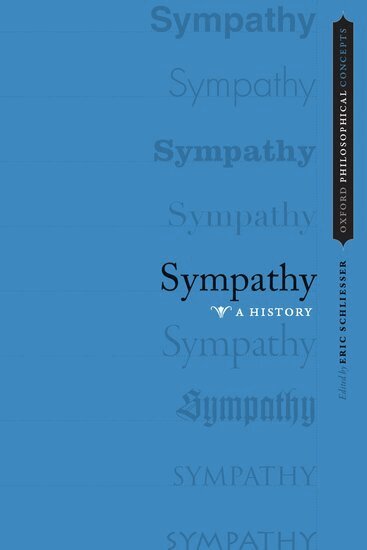
Our modern-day word for sympathy is derived from the classical Greek word for fellow-feeling. Both in the vernacular as well as in the various specialist literatures within philosophy, psychology, neuroscience, economics, and history, "sympathy" and "empathy" are routinely conflated. In practice, they are also used to refer to a large variety of complex, all-too-familiar social phenomena: for example, simultaneous yawning or the giggles. Moreover, sympathy is invoked to address problems associated with social dislocation and political conflict. It is, then, turned into a vehicle toward generating harmony among otherwise isolated individuals and a way for them to fit into a larger whole, be it society and the universe.This volume offers a historical overview of some of the most significant attempts to come to grips with sympathy in Western thought from Plato to experimental economics. The contributors are leading scholars in philosophy, classics, history, economics, comparative literature, and political science. Sympathy is originally developed in Stoic thought. It was also taken up by Plotinus and Galen. There are original contributed chapters on each of these historical moments. Use for the concept was re-discovered in the Renaissance. And the volume has original chapters not just on medical and philosophical Renaissance interest in sympathy, but also on the role of antipathy in Shakespeare and the significance of sympathy in music theory. Inspired by the influence of Spinoza, sympathy plays a central role in the great moral psychologies of, say, Anne Conway, Leibniz, Hume, Adam Smith, and Sophie De Grouchy during the eighteenth century. The volume should offers an introduction to key background concept that is often overlooked in many of the most important philosophies of the early modern period.About a century ago the idea of Einfühlung (or empathy) was developed in theoretical philosophy, then applied in practical philosophy and the newly emerging scientific disciplines of psychology. Moreover, recent economists have rediscovered sympathy in part experimentally and, in part by careful re-reading of the classics of the field.
537 kr
Skickas inom 5-8 vardagar
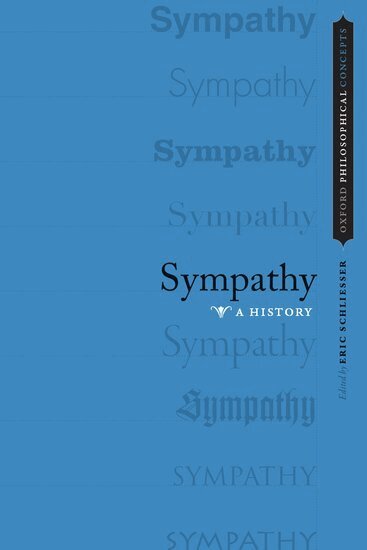
Our modern-day word for sympathy is derived from the classical Greek word for fellow-feeling. Both in the vernacular as well as in the various specialist literatures within philosophy, psychology, neuroscience, economics, and history, "sympathy" and "empathy" are routinely conflated. In practice, they are also used to refer to a large variety of complex, all-too-familiar social phenomena: for example, simultaneous yawning or the giggles. Moreover, sympathy is invoked to address problems associated with social dislocation and political conflict. It is, then, turned into a vehicle toward generating harmony among otherwise isolated individuals and a way for them to fit into a larger whole, be it society and the universe.This volume offers a historical overview of some of the most significant attempts to come to grips with sympathy in Western thought from Plato to experimental economics. The contributors are leading scholars in philosophy, classics, history, economics, comparative literature, and political science. Sympathy is originally developed in Stoic thought. It was also taken up by Plotinus and Galen. There are original contributed chapters on each of these historical moments. Use for the concept was re-discovered in the Renaissance. And the volume has original chapters not just on medical and philosophical Renaissance interest in sympathy, but also on the role of antipathy in Shakespeare and the significance of sympathy in music theory. Inspired by the influence of Spinoza, sympathy plays a central role in the great moral psychologies of, say, Anne Conway, Leibniz, Hume, Adam Smith, and Sophie De Grouchy during the eighteenth century. The volume should offers an introduction to key background concept that is often overlooked in many of the most important philosophies of the early modern period.About a century ago the idea of Einfühlung (or empathy) was developed in theoretical philosophy, then applied in practical philosophy and the newly emerging scientific disciplines of psychology. Moreover, recent economists have rediscovered sympathy in part experimentally and, in part by careful re-reading of the classics of the field.
1 757 kr
Skickas inom 5-8 vardagar
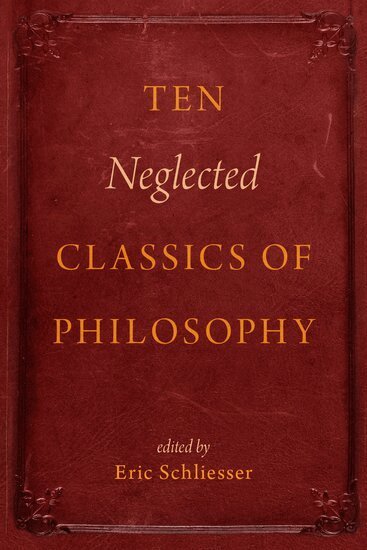
What makes for a philosophical classic? Why do some philosophical works persist over time, while others do not? The philosophical canon and diversity are topics of major debate today. This stimulating volume contains ten new essays by accomplished philosophers writing passionately about works in the history of philosophy that they feel were unjustly neglected or ignored-and why they deserve greater attention. The essays cover lesser known works by famous thinkers as well as works that were once famous but now only faintly remembered. Works examined include Gorgias' Encomium of Helen, Jane Adams' Women and Public Housekeeping, W.E.B. DuBois' Whither Now and Why, Edith Stein's On the Problem of Empathy, Jonathan Bennett's Rationality, and more. While each chapter is an expression of engagement with an individual work, the volume as a whole, and Eric Schliesser's introduction specifically, address timely questions about the nature of philosophy, disciplinary contours, and the vagaries of canon formation.