• Fri frakt över 249 kr
  • •
  • Snabba leveranser
  • •
  • Billiga böcker
Kundservice

Du är på sajten för privatpersoner.

Företag, bibliotek eller offentlig verksamhet?

Du handlar på classic.bokus.com, där alla dina funktioner finns intakta.
Till classic.bokus.com
Bokus logotyp. Gå till startsidan.
  • Erbjudanden
  • Student
  • Topplistor
  • Barn & ungdom
  • Bokus Play
  • E-böcker
  • Ljudböcker
  • Pocketböcker
  • Spel & pussel

Upp till 25% på utvalda nyheter →

Sidfot

Mina sidor

    Hjälp

    • Kundservice
    • Vanliga frågor och svar
    • Frakt och leverans
    • Retur vid ångerrätt
    • Reklamera vara
    • Betalning
    • Köpvillkor
    • Allmänna villkor
    • Information om webbplatsens tillgänglighet

    Om Bokus

    • Om oss
    • Pressrum
    • För studenter
    • För företag
    • För bibliotek och offentlig verksamhet
    • För leverantörer
    • Hållbarhet

    Populärt

    • Aktuella erbjudanden
    • Presentkort
    • Studentlitteratur
    • Nya böcker
    • Topplistor
    • Signerade böcker
    • Engelska böcker

    Inspiration

    • Boktips
    • BookTok
    • Populära bokserier
    • Barnbokskaraktärer
    • Populära författare
    Logotyp för Bokus
    Följ oss på Facebook (extern länk)Följ oss på Instagram (extern länk)Följ oss på YouTube (extern länk)Följ oss på TikTok (extern länk)
    bokus @ CookiesAnpassa cookiesIntegritetspolicyKöpvillkor
    Till Citymail hemsida (extern länk)Till Budbee hemsida (extern länk)Till Postnord hemsida (extern länk)Till Schenker hemsida (extern länk)Till Early Bird hemsida (extern länk)Till Walleys hemsida (extern länk)
    1. Ekonomi och Ledarskap
    2. Nationalekonomi

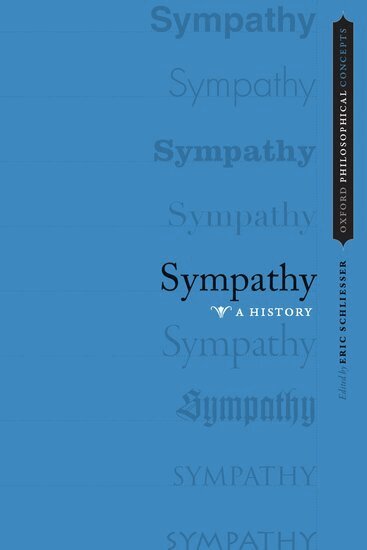
    Sympathy

    A History

    AvSCHLIESSER,Eric Schliesser

    Inbunden, Engelska, 2015

    Del i serien Oxford Philosophical Concepts

    2 722 kr

    Beställningsvara. Skickas inom 5-8 vardagar. Fri frakt över 249 kr.

    Fler format och utgåvor

    Häftad

    905 kr

    Beskrivning

    Our modern-day word for sympathy is derived from the classical Greek word for fellow-feeling. Both in the vernacular as well as in the various specialist literatures within philosophy, psychology, neuroscience, economics, and history, "sympathy" and "empathy" are routinely conflated. In practice, they are also used to refer to a large variety of complex, all-too-familiar social phenomena: for example, simultaneous yawning or the giggles. Moreover, sympathy is invoked to address problems associated with social dislocation and political conflict. It is, then, turned into a vehicle toward generating harmony among otherwise isolated individuals and a way for them to fit into a larger whole, be it society and the universe.This volume offers a historical overview of some of the most significant attempts to come to grips with sympathy in Western thought from Plato to experimental economics. The contributors are leading scholars in philosophy, classics, history, economics, comparative literature, and political science. Sympathy is originally developed in Stoic thought. It was also taken up by Plotinus and Galen. There are original contributed chapters on each of these historical moments. Use for the concept was re-discovered in the Renaissance. And the volume has original chapters not just on medical and philosophical Renaissance interest in sympathy, but also on the role of antipathy in Shakespeare and the significance of sympathy in music theory. Inspired by the influence of Spinoza, sympathy plays a central role in the great moral psychologies of, say, Anne Conway, Leibniz, Hume, Adam Smith, and Sophie De Grouchy during the eighteenth century. The volume should offers an introduction to key background concept that is often overlooked in many of the most important philosophies of the early modern period.About a century ago the idea of Einfühlung (or empathy) was developed in theoretical philosophy, then applied in practical philosophy and the newly emerging scientific disciplines of psychology. Moreover, recent economists have rediscovered sympathy in part experimentally and, in part by careful re-reading of the classics of the field.

    Produktinformation

    • Utgivningsdatum:2015-10-08
    • Mått:218 x 147 x 33 mm
    • Vikt:712 g
    • Format:Inbunden
    • Språk:Engelska
    • Serie:Oxford Philosophical Concepts
    • Antal sidor:456
    • Förlag:OUP USA
    • ISBN:9780199928873

    Utforska kategorier

    • Nationalekonomi inom Ekonomi och Ledarskap
    • Psykologiska teorier och skolor inom Psykologi och pedagogik
    • Filosofiska discipliner inom Filosofi och religion

    Mer om författaren

    Eric Schliesser is a philosopher with a wide variety of interests; he published extensively on seventeenth and eighteenth century science, metaphysics, and moral and political philosophy, including Newton, Spinoza, David Hume, Adam Smith, and Sophie de Grouchy; he also publishes regularly in philosophy of economics. At Ghent he has helped co-found an interdisciplinary research institute, the Complex Science Institute, with economists and physicists.

    Innehållsförteckning

    • Contents ; List of Illustrations ; Contributors ; Series Editor's Foreword ; Editor's Acknowledgments ; Introduction: On Sympathy ; Eric Schliesser ; 1. Stoic Sympathy ; Rene Brouwer ; 2. Plotinus on sympatheia ; Eyjolfur Kjalar Emilsson ; Reflection: Galen's Sympathy ; Brooke Holmes ; 3. Sympathy in the Renaissance ; Ann Moyer ; Reflection: Music and Sympathy ; Giuseppe Gerbino ; 4. Seventeenth-Century Universal Sympathy: Stoicism, ; Platonism, Leibniz, and Conway ; Christia Mercer ; Reflection: "Take physic, pomp": King Lear Learns Sympathy ; Sarah Skwire ; 5. Spinoza's Parallelism Doctrine and Metaphysical Sympathy ; Karolina Hubner ; 6. The Eighteenth-Century Context of Sympathy ; from Spinoza to Kant ; Ryan Hanley ; Reflection: Theaters of Sympathy in France ; Julie Candler Hayes ; 7. Hume and Smith on Sympathy, Approbation, ; and Moral Judgment ; Geoffrey Sayre-Mccord ; Reflection: Tracing a Line of Sympathy for Nature in Goethe's ; Wahlverwandtschaften ; Elizabeth Millan ; 8. Sympathy in Schopenhauer and Nietzsche ; Bernard Reginster ; 9. From Einfuhlung to Empathy: Sympathy in Early ; Phenomenology and Psychology ; Remy Debes ; 10. Sympathy Caught Between Darwin and Eugenics ; David M. Levy & Sandra ; Peart ; 11. Fair and Impartial Spectators in Experimental Economic ; Behavior: Using Sympathy to Derive Action ; Vernon L. Smith & Bart J. Wilson