Scot Schraufnagel - Böcker
Visar alla böcker från författaren Scot Schraufnagel. Handla med fri frakt och snabb leverans.
6 produkter
6 produkter
2 306 kr
Skickas inom 10-15 vardagar
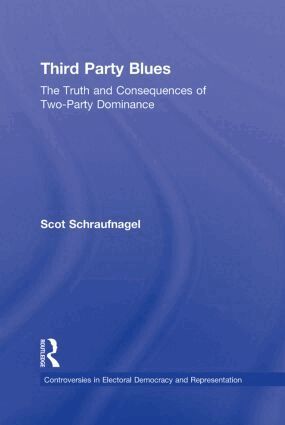
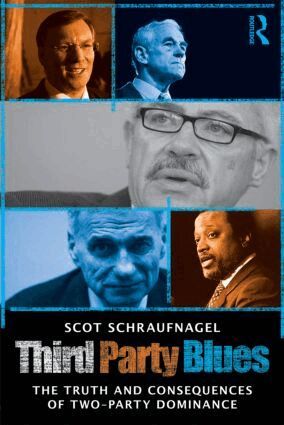
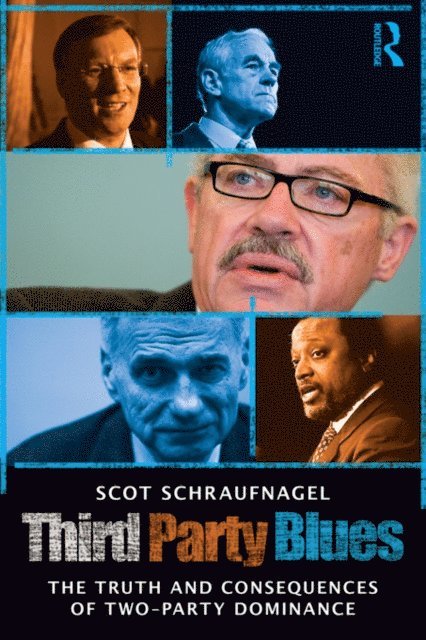
More than many areas of American politics research, studies of minor party competition and success are often overly driven by normative concerns that do not hold up to empirical scrutiny. This concise book presents a concerted effort to analyze the barriers in election law, such as ballot access restrictions and single member districts with a plurality rule, that prevent third parties from gaining a durable hold in American politics. Rather than trudge through yet another history of third parties in America or polemical arguments for minor party inclusion, Schraufnagel provides empirical grounding for the claims of third party backers. This thoughtful analysis demonstrates that the inclusion of third parties improves electoral participation rates and that third party involvement in the legislative process is linked to landmark legislative productivity. In the end, the work provides thoughtful suggestions on the types of reforms that would lead to greater third party success in American elections.
851 kr
Skickas inom 5-8 vardagar
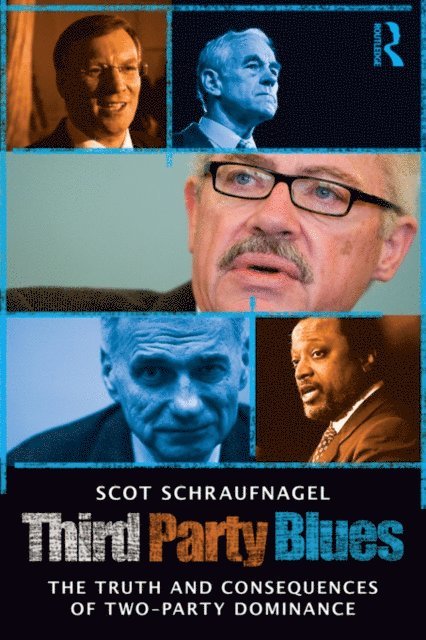
More than many areas of American politics research, studies of minor party competition and success are often overly driven by normative concerns that do not hold up to empirical scrutiny. This concise book presents a concerted effort to analyze the barriers in election law, such as ballot access restrictions and single member districts with a plurality rule, that prevent third parties from gaining a durable hold in American politics. Rather than trudge through yet another history of third parties in America or polemical arguments for minor party inclusion, Schraufnagel provides empirical grounding for the claims of third party backers. This thoughtful analysis demonstrates that the inclusion of third parties improves electoral participation rates and that third party involvement in the legislative process is linked to landmark legislative productivity. In the end, the work provides thoughtful suggestions on the types of reforms that would lead to greater third party success in American elections.
1 072 kr
Skickas inom 10-15 vardagar
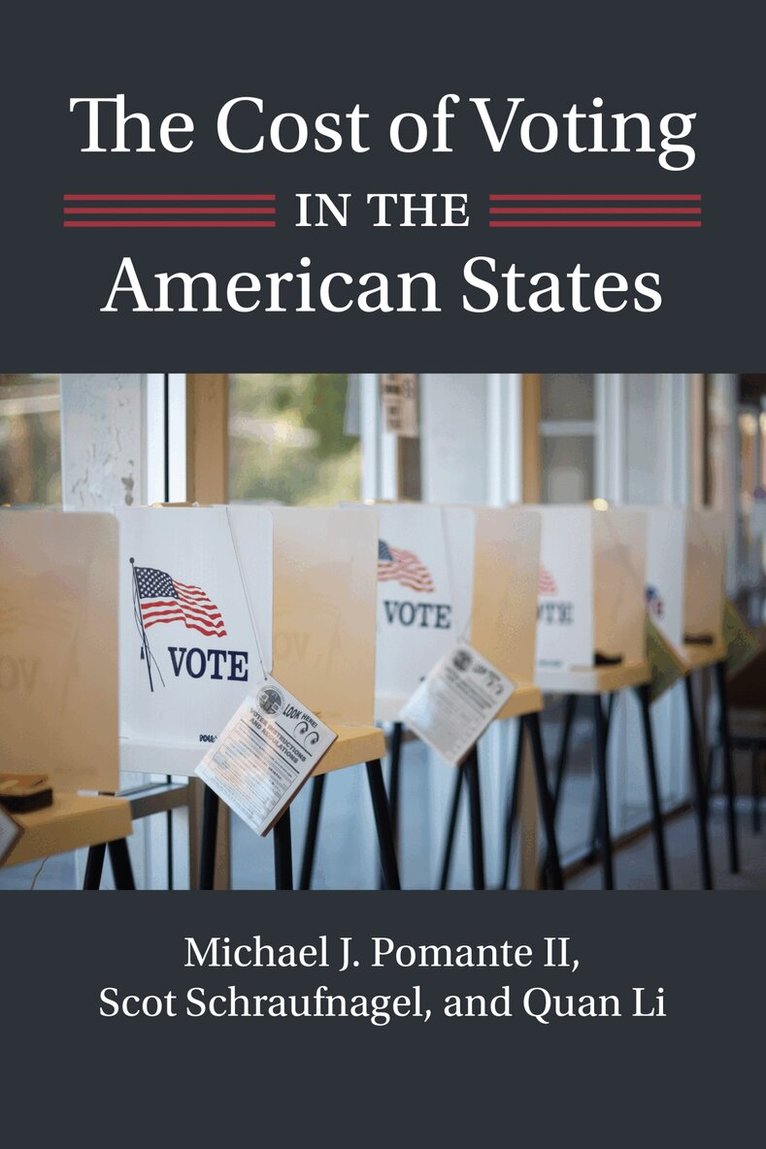
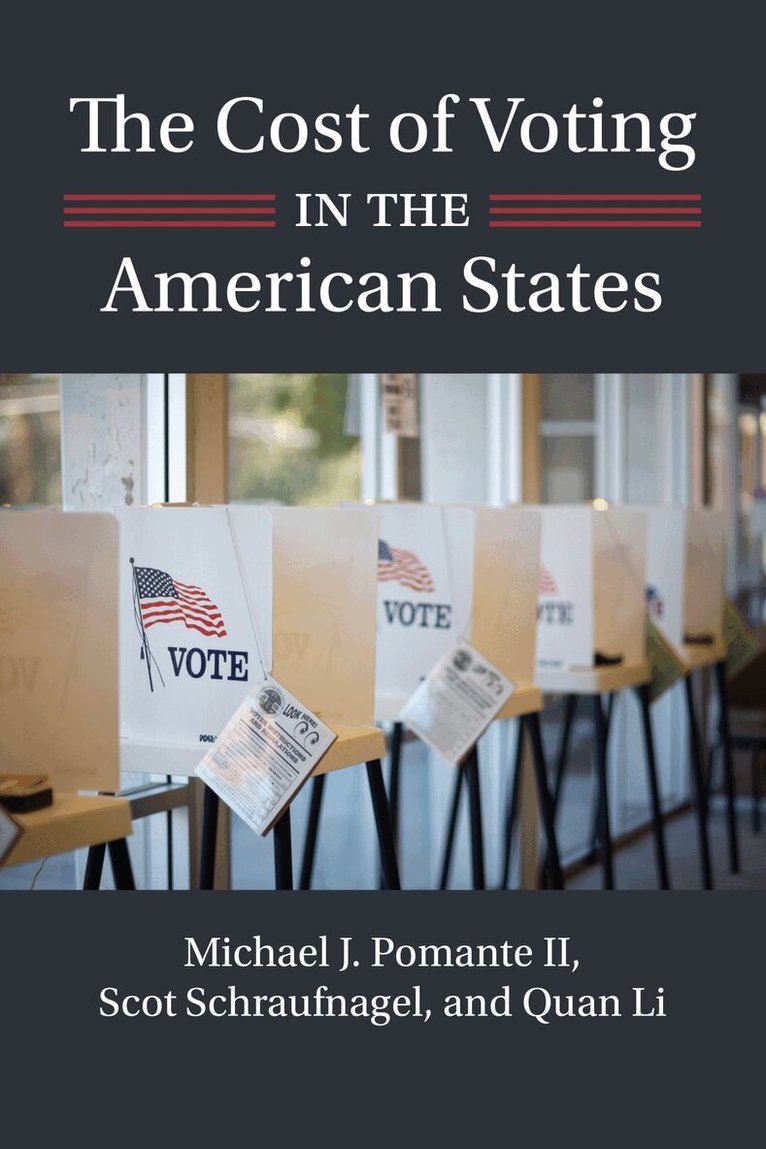
In the wake of Shelby County v. Holder and the January 6 Capitol insurrection, changes to election laws, policies, and especially access to voting have become a key political battleground. A central point of contention is whether new restrictive voting laws intentionally discriminate against Black and Hispanic subpopulations in the United States. Conversely, do policies that expand voting access favor Democrats and increase the possibility of election fraud?In The Cost of Voting in the American States, Michael J. Pomante II, Scot Schraufnagel, and Quan Li test these questions. The authors look specifically for systematic outcomes produced by distinctive election policies in the American states. First, they establish a competent measure of voting restrictions to begin this unraveling. The authors create a Cost of Voting Index (COVI) for the fifty states, which uses a statistical procedure to extract an underlying dimension and to determine significance from state laws based on how restrictive the polices are. The authors call the underlying dimension extracted the “cost of voting.” With this measure in place, they evaluate which states have a higher cost of voting, how this cost impacts who votes, and whether there is a correlation between the cost of voting and minority populations.Using Racial Threat Theory arguments, the authors demonstrate that states with larger or growing Black and Hispanic populations have more restricted voting, and that these restrictive voting laws disproportionately demobilize these populations in predictable ways. States with a higher cost of voting also show lower minority electoral success as well as a larger gap in Black and female representation, and the authors reveal that decreasing the cost of voting does not lead to fraud or favor one party over another. The Cost of Voting in the American States makes a case for a new preclearance formula, and the COVI provides a viable approach for future election law.
313 kr
Skickas inom 10-15 vardagar
In the wake of Shelby County v. Holder and the January 6 Capitol insurrection, changes to election laws, policies, and especially access to voting have become a key political battleground. A central point of contention is whether new restrictive voting laws intentionally discriminate against Black and Hispanic subpopulations in the United States. Conversely, do policies that expand voting access favor Democrats and increase the possibility of election fraud?In The Cost of Voting in the American States, Michael J. Pomante II, Scot Schraufnagel, and Quan Li test these questions. The authors look specifically for systematic outcomes produced by distinctive election policies in the American states. First, they establish a competent measure of voting restrictions to begin this unraveling. The authors create a Cost of Voting Index (COVI) for the fifty states, which uses a statistical procedure to extract an underlying dimension and to determine significance from state laws based on how restrictive the polices are. The authors call the underlying dimension extracted the “cost of voting.” With this measure in place, they evaluate which states have a higher cost of voting, how this cost impacts who votes, and whether there is a correlation between the cost of voting and minority populations.Using Racial Threat Theory arguments, the authors demonstrate that states with larger or growing Black and Hispanic populations have more restricted voting, and that these restrictive voting laws disproportionately demobilize these populations in predictable ways. States with a higher cost of voting also show lower minority electoral success as well as a larger gap in Black and female representation, and the authors reveal that decreasing the cost of voting does not lead to fraud or favor one party over another. The Cost of Voting in the American States makes a case for a new preclearance formula, and the COVI provides a viable approach for future election law.
1 389 kr
Skickas inom 10-15 vardagar
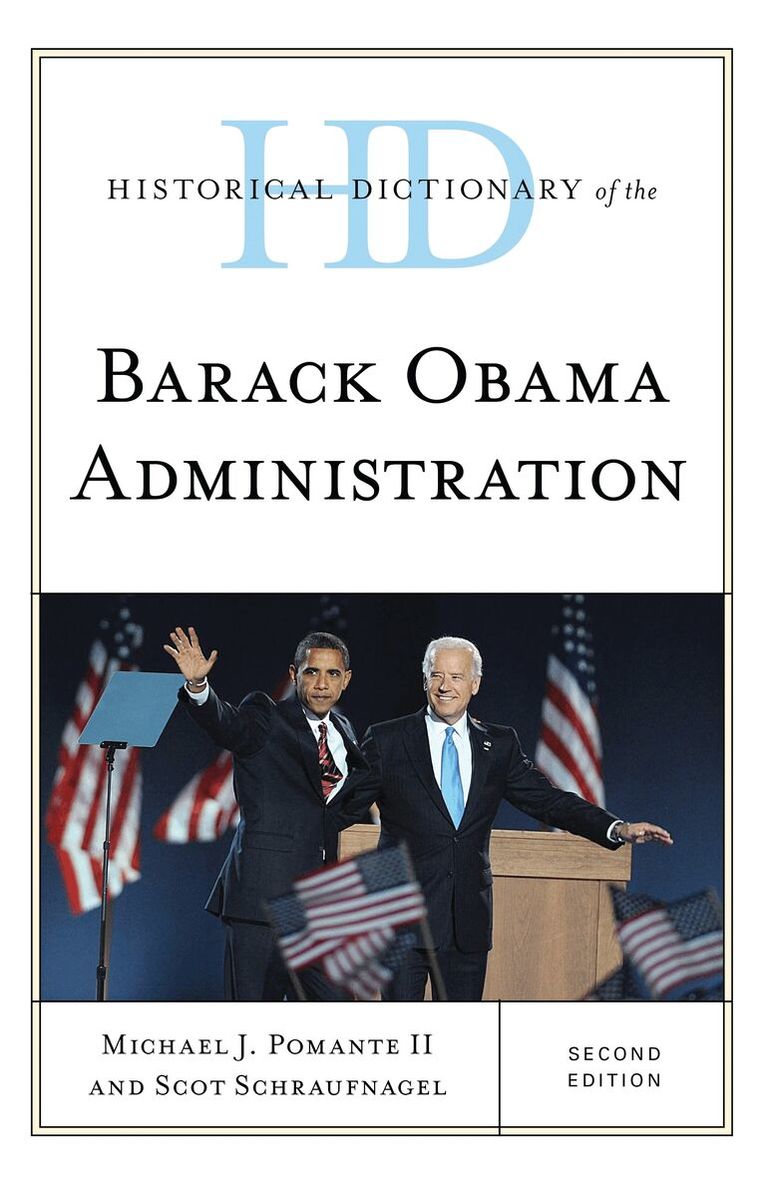
Barack Obama, the first African-American president of the United States. In a country with a rich history of racial animosities, Obama represents a notable deviation in the trajectory of America’s presidential history. At the close of his second term in office, a survey of the personalities and events associated with his presidency is fitting. In this walk through recent history we will be keen to point out the president’s successes, failures, and challenges. Governing in a society ripe with ideological and partisan polarization, the Obama Administration was surrounded by controversy, much of it manufactured by his opponents but salient nonetheless. This volume will attempt to provide perspective and clarity on the most important individuals and experiences connected to Obama during his eight years in office, but also his early life. Information included in this volume also includes discussion of his transition out of office and events taking place at the beginning of the Donald Trump Administration.This second edition of Historical Dictionary of the Barack Obama Administration contains a chronology, an introduction, appendixes, and an extensive bibliography. The dictionary section has over 300 cross-referenced entries on important personalities, including the president, his advisors, his family, his opponents, and his critics, as well as members of Congress, military leaders, and international leaders. This book is an excellent resource for students, researchers, and anyone wanting to know more about Barack Obama.
990 kr
Skickas inom 10-15 vardagar
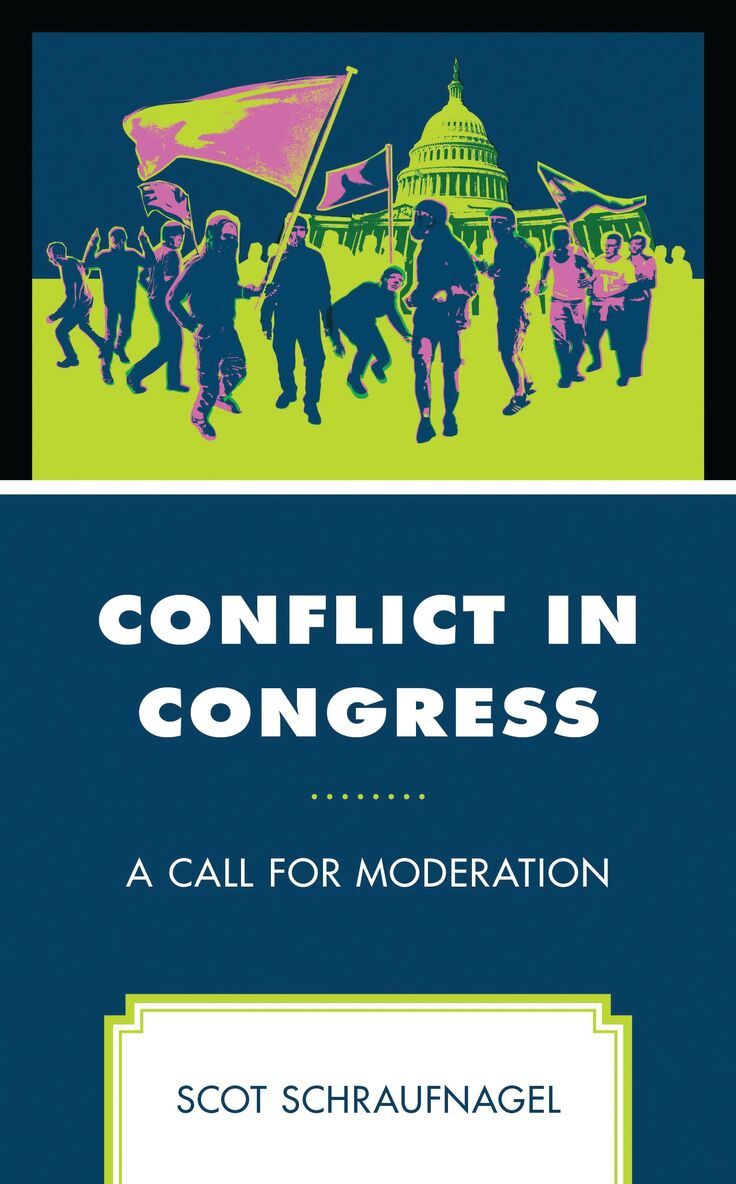
The book introduces Legislative Conflict Theory. The theory suggests that conflict in legislatures is two-dimensional and that a moderate level of conflict will be most productive. The two types of conflict are policy differences and relational conflict. Using the US Congress as a testing ground, and novel indicators of both forms of conflict and legislative productivity, the book tests the theory various ways. The testing arrives at the conclusion that specific Congresses and historical eras, easily identified as more productive, experienced a median level of two-dimensional conflict. There are implications for effective legislative process in all political settings including democratically elected legislatures and ‘rubber stamp’ legislatures in authoritarian environments. In the end, the research makes the case for recruiting the right type of people to serve. However, the most effective legislators will be context dependent. In low conflict scenarios, rabble-rousers become the most effective legislators. When two-dimensional conflict is too high, the need is for disciplined-mannerly legislators committed to compromise.