Scott H. Podolsky - Böcker
Visar alla böcker från författaren Scott H. Podolsky. Handla med fri frakt och snabb leverans.
4 produkter
4 produkter
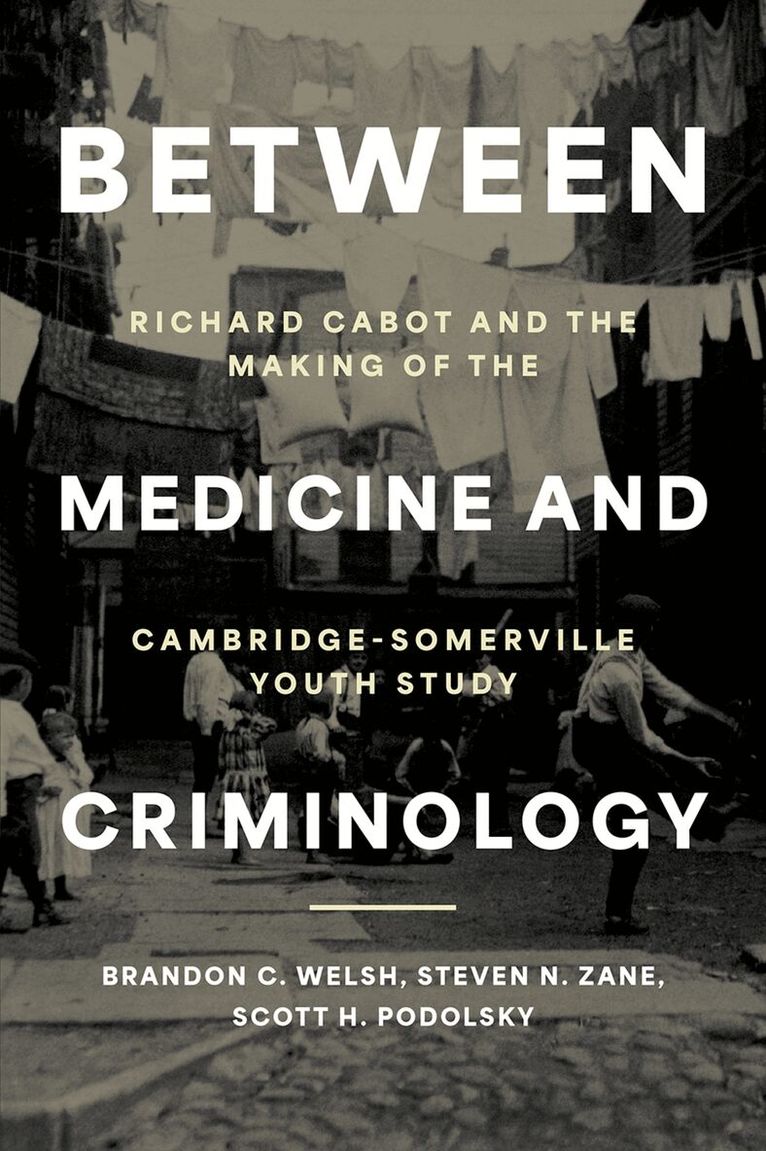
Between Medicine and Criminology
Richard Cabot and the Making of the Cambridge-Somerville Youth Study
Inbunden, Engelska, 2028
805 kr
Skickas inom 5-8 vardagar
In 1935, Richard Cabot (1868-1939), a renowned physician and professor of clinical medicine and social ethics at Harvard University, founded the Cambridge-Somerville Youth Study. Appalled by high recidivism rates of reformatories of the day, Cabot wanted to do something to help young, underprivileged boys from engaging in delinquency and embarking on a life of crime. Described as character development through positive role models, with similarities to today's mentoring programs, the prevention intervention enrolled 650 boys (later reduced to 506) from Cambridge and Somerville (Mass.) and operated from 1939-45. Over the next 30 years, three major follow-ups would be undertaken, producing a wealth of knowledge on the development and prevention of offending over the life-course.As the earliest randomized controlled trial in criminology, one of the earliest trials of a social intervention, and the longest running trial in the Western world-with the latest follow-up currently tracing participants well into old age-the CSYS is a famous and consequential study in the annals of criminology. But Cabot was not a criminologist. Instead, he worked at the interface of medicine and the social sciences, bringing to bear his important grounding in social ethics and engaging with leading academicians, including Sheldon and Eleanor Glueck and William Healy. In the years to come, Joan McCord-a leading criminologist in her own right-would take over the study and bring it into the modern era.Drawing on extensive archival materials and published works, Between Medicine and Criminology is the first book about the history of the making of the CSYS, as well as what this history holds for modern criminology. It interrogates and describes in fascinating detail the personal, professional, and institutional influences that led Cabot to develop the study; the social and intellectual contexts during the 1920s and 1930s that helped shape the study's novel and rigorous evaluation design; how the operation of the study and changes from the original design may have contributed to its ineffectiveness in preventing delinquency and later offending; and the impacts-and limitations-of this iconic study in the history of criminology.
Generation of Diversity
Clonal Selection Theory and the Rise of Molecular Immunology
Häftad, Engelska, 2000
494 kr
Skickas inom 10-15 vardagar
In recent decades immunology has been one of the most exciting--and successful--fields of biomedical research. Over the past thirty years immunologists have acquired a detailed understanding of the immune system's unique recognition mechanism and of the cellular and chemical means used to destroy or neutralize invading organisms. This understanding has been formulated in terms of the clonal selection theory, the dominant explanation of immune behavior. That story is the subject of The Generation of Diversity.A major problem for immunologists had long been to determine how cells of the immune system could produce millions of distinct antibodies--and produce them on demand. The clonal selection theory explains that cells with genetic instructions to produce each antibody exist in the body in small numbers until exposure to the right molecule--the antigen--triggers the selective cloning that will reproduce exactly the cell needed. But how can so many different antibody-producing cells be generated from such limited genetic material? The solution to this question came from new applications of molecular biology, and, as the authors argue, the impact of the new techniques changed both the methods and the concepts of immunology.The Generation of Diversity is an intellectual history of the major theoretical problem in immunology and its resolution in the post-World War II period. It will provide for immunologists essential background for understanding the conceptual conflicts occurring in the field today.
Pneumonia Before Antibiotics
Therapeutic Evolution and Evaluation in Twentieth-Century America
Inbunden, Engelska, 2006
564 kr
Tillfälligt slut
Pneumonia-Osler's "Captain of the Men of Death" and still the leading infectious cause of death in the United States-has until now received scant attention from historians. In Pneumonia Before Antibiotics, clinician-historian Scott H. Podolsky uses pneumonia's enduring prevalence and its centrality to the medical profession's therapeutic self-identity to examine the evolution of therapeutics in twentieth-century America. Focusing largely on the treatment of pneumonia in first half of the century with type-specific serotherapy, Podolsky provides insight into the rise and clinical evaluation of therapeutic "specifics," the contested domains of private practice and public health, and-as the treatment of pneumonia made the transition from serotherapy to chemotherapy and antibiotics-the tempo and mode of therapeutic change itself. Type-specific serotherapy, founded on the tenets of applied immunology, justified by controlled clinical trials, and grounded in a novel public ethos, was deemed revolutionary when it emerged to replace supportive therapeutics.With the advent of the even more revolutionary sulfa drugs and antibiotics, pneumonia ceased to be a public health concern and became instead an illness treated in individual patients by individual physicians. Podolsky describes the new therapeutics and the scientists and practitioners who developed and debated them. He finds that, rather than representing a barren era in anticipation of some unknown transformation to come, the first decades of the twentieth-century shaped the use of, and reliance upon, the therapeutic specific throughout the century and beyond. This intriguing study will interest historians of medicine and science, policymakers, and clinicians alike.
Antibiotic Era
Reform, Resistance, and the Pursuit of a Rational Therapeutics
Inbunden, Engelska, 2015
356 kr
Tillfälligt slut
In The Antibiotic Era, physician-historian Scott H. Podolsky narrates the far-reaching history of antibiotics, focusing particularly on reform efforts that attempted to fundamentally change how antibiotics are developed and prescribed. This sweeping chronicle reveals the struggles faced by crusading reformers from the 1940s onward as they advocated for a rational therapeutics at the crowded intersection of bugs and drugs, patients and doctors, industry and medical academia, and government and the media. During the post-World War II "wonder drug" revolution, antibiotics were viewed as a panacea for mastering infectious disease. But from the beginning, critics raised concerns about irrational usage and overprescription. The first generation of antibiotic reformers focused on regulating the drug industry. The reforms they set in motion included the adoption of controlled clinical trials as the ultimate arbiters of therapeutic efficacy, the passage of the Kefauver-Harris amendments mandating proof of drug efficacy via well-controlled studies, and the empowering of the Food and Drug Administration to remove inefficacious drugs from the market.Despite such victories, no entity was empowered to rein in physicians who inappropriately prescribed, or overly prescribed, approved drugs. Now, in an era of emerging bugs and receding drugs, discussions of antibiotic resistance focus on the need to develop novel antibiotics and the need for more appropriate prescription practices in the face of pharmaceutical marketing, pressure from patients, and the structural constraints that impede rational delivery of antibiotics worldwide. Concerns about the enduring utility of antibiotics-indeed, about a post-antibiotic era-are widespread, as evidenced by reports from the Centers for Disease Control and Prevention, academia, and popular media alike. Only by understanding the historical forces that have shaped our current situation, Podolsky argues, can we properly understand and frame our choices moving forward.