Scott L. Waugh - Böcker
Visar alla böcker från författaren Scott L. Waugh. Handla med fri frakt och snabb leverans.
5 produkter
5 produkter
622 kr
Skickas inom 7-10 vardagar
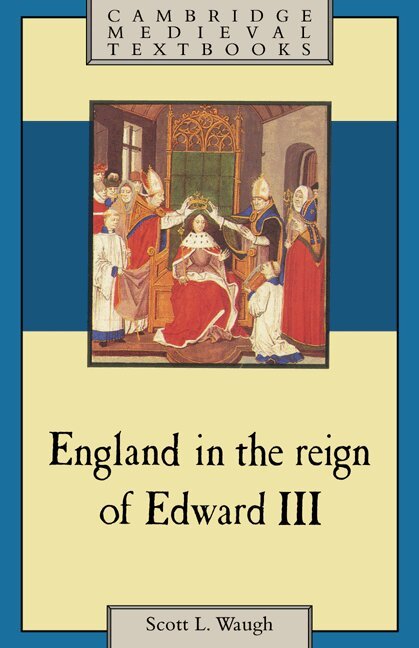
The reign of Edward III is usually remembered for his stirring victories over the French and Scots. Yet these triumphs occurred against a domestic backdrop of economic upheaval, crime, high taxation and the Black Death. Edward's ability to pursue his ambitions amid such challenges shows the effectiveness of his leadership and the resilience of English institutions. This book examines the strains on English life in this remarkable era, and shows how an interlocking network of hierarchies at each level enabled Edward to reach into local communities to get what he needed. Compliance, however, required hard bargaining as subjects chafed under incessant taxes and royal demands and, during Edward's reign, parliament became the primary arena for negotiations between the king and the community. Professor Waugh's incisive account of these tumultuous events also contains an extensive guide to further reading, in addition to a glossary of the more abstruse medieval terms.
Christendom and its Discontents
Exclusion, Persecution, and Rebellion, 1000-1500
Inbunden, Engelska, 1996
1 390 kr
Skickas inom 7-10 vardagar
From the eleventh century onward, Latin Christendom was torn by discontent and controversy. As the Church and secular rulers defined more clearly than ever before the laws and institutions on which they based their power, they demanded greater uniformity and obedience to their authority. The essays in this book cast new light on the dynamics of repression, highlighting the controversies and discontent that troubled medieval society. Looking especially at the mechanisms underlying the dissemination of heterodoxy and its repression, the religious aspirations of women, the fate of non-Christian minorities in Europe, and changing boundaries between orthodoxy and heterodoxy, the authors provide a new understanding of the Church's response to the diversity of belief and practice by which it was confronted.
Christendom and its Discontents
Exclusion, Persecution, and Rebellion, 1000-1500
Häftad, Engelska, 2002
507 kr
Skickas inom 7-10 vardagar
From the eleventh century onward, Latin Christendom was torn by discontent and controversy. As the Church and secular rulers defined more clearly than ever before the laws and institutions on which they based their power, they demanded greater uniformity and obedience to their authority. The essays in this book cast new light on the dynamics of repression, highlighting the controversies and discontent that troubled medieval society. Looking especially at the mechanisms underlying the dissemination of heterodoxy and its repression, the religious aspirations of women, the fate of non-Christian minorities in Europe, and changing boundaries between orthodoxy and heterodoxy, the authors provide a new understanding of the Church's response to the diversity of belief and practice by which it was confronted.
Lordship of England
Royal Wardships and Marriages in English Society and Politics, 1217-1327
Häftad, Engelska, 2014
493 kr
Skickas inom 7-10 vardagar
This thorough examination of the feudal powers of English kings in the thirteenth and early fourteenth centuries is the only study to analyze the actual pattern of royal grants and the grantees' use of their rights, and to place them in the social context of marriage, kinship, and landholding within the English elite. The royal rights, known as feudal incidents, included custody of a tenant's lands when he died leaving minor heirs, the arrangement of the heir's marriage, and consent to the widow's remarriage. Scott Waugh shows how the king exercised those rights and how his use of feudal incidents affected his relations with the tenants-in-chief. He concludes that royal lordship was of fundamental importance in reinforcing the power and prestige of the monarchy and in offering the king a valuable source of patronage. English kings, therefore, devoted considerable effort to defining and institutionalizing their feudal authority in the thirteenth century.It is also clear that families living under royal lordship were profoundly concerned about these rights, especially since marriage was of such critical importance in providing for the smooth transfer of lands from one generation to another. Given the hazards of life in the Middle Ages, inheritance by minors was a frequent occurrence, and the king's distribution of feudal incidents was therefore a delicate political problem. It raised issues not only about royal finances and favoritism but also about the fate of families. Originally published in 1988. The Princeton Legacy Library uses the latest print-on-demand technology to again make available previously out-of-print books from the distinguished backlist of Princeton University Press. These editions preserve the original texts of these important books while presenting them in durable paperback and hardcover editions. The goal of the Princeton Legacy Library is to vastly increase access to the rich scholarly heritage found in the thousands of books published by Princeton University Press since its founding in 1905.
Lordship of England
Royal Wardships and Marriages in English Society and Politics, 1217-1327
Inbunden, Engelska, 2016
2 414 kr
Skickas inom 3-6 vardagar
This thorough examination of the feudal powers of English kings in the thirteenth and early fourteenth centuries is the only study to analyze the actual pattern of royal grants and the grantees' use of their rights, and to place them in the social context of marriage, kinship, and landholding within the English elite. The royal rights, known as feudal incidents, included custody of a tenant's lands when he died leaving minor heirs, the arrangement of the heir's marriage, and consent to the widow's remarriage. Scott Waugh shows how the king exercised those rights and how his use of feudal incidents affected his relations with the tenants-in-chief. He concludes that royal lordship was of fundamental importance in reinforcing the power and prestige of the monarchy and in offering the king a valuable source of patronage. English kings, therefore, devoted considerable effort to defining and institutionalizing their feudal authority in the thirteenth century.It is also clear that families living under royal lordship were profoundly concerned about these rights, especially since marriage was of such critical importance in providing for the smooth transfer of lands from one generation to another. Given the hazards of life in the Middle Ages, inheritance by minors was a frequent occurrence, and the king's distribution of feudal incidents was therefore a delicate political problem. It raised issues not only about royal finances and favoritism but also about the fate of families. Originally published in 1988. The Princeton Legacy Library uses the latest print-on-demand technology to again make available previously out-of-print books from the distinguished backlist of Princeton University Press. These editions preserve the original texts of these important books while presenting them in durable paperback and hardcover editions. The goal of the Princeton Legacy Library is to vastly increase access to the rich scholarly heritage found in the thousands of books published by Princeton University Press since its founding in 1905.