Scott Oldenburg - Böcker
Visar alla böcker från författaren Scott Oldenburg. Handla med fri frakt och snabb leverans.
10 produkter
10 produkter
Del 3 - Cultural Inquiries in English Literature, 1400–1700
Weaver-Poet and the Plague
Labor, Poverty, and the Household in Shakespeare’s London
Inbunden, Engelska, 2020
1 393 kr
Skickas inom 7-10 vardagar
William Muggins, an impoverished but highly literate weaver-poet, lived and wrote in London at the turn of the seventeenth century, when few of his contemporaries could even read. A Weaver-Poet and the Plague’s microhistorical approach uses Muggins’s life and writing, in which he articulates a radical vision of a commonwealth founded on labor and mutual aid, as a gateway into a broader narrative about London’s “middling sort” during the plague of 1603.In debt, in prison, and at odds with his livery company, Muggins was forced to move his family from the central London neighborhood called the Poultry to the far poorer and more densely populated parish of St. Olave’s in Southwark. It was here, confined to his home as that parish was devastated by the plague, that Muggins wrote his minor epic, London’s Mourning Garment, in 1603. The poem laments the loss of life and the suffering brought on by the plague but also reflects on the social and economic woes of the city, from the pains of motherhood and childrearing to anxieties about poverty, insurmountable debt, and a system that had failed London’s most vulnerable. Part literary criticism, part microhistory, this book reconstructs Muggins’s household, his reading, his professional and social networks, and his proximity to a culture of radical religion in Southwark.Featuring an appendix with a complete version of London’s Mourning Garment, this volume presents a street-level view of seventeenth-century London that gives agency and voice to a class that is often portrayed as passive and voiceless.
Del 3 - Cultural Inquiries in English Literature, 1400–1700
Weaver-Poet and the Plague
Labor, Poverty, and the Household in Shakespeare’s London
Häftad, Engelska, 2022
375 kr
Skickas inom 7-10 vardagar
William Muggins, an impoverished but highly literate weaver-poet, lived and wrote in London at the turn of the seventeenth century, when few of his contemporaries could even read. A Weaver-Poet and the Plague’s microhistorical approach uses Muggins’s life and writing, in which he articulates a radical vision of a commonwealth founded on labor and mutual aid, as a gateway into a broader narrative about London’s “middling sort” during the plague of 1603.In debt, in prison, and at odds with his livery company, Muggins was forced to move his family from the central London neighborhood called the Poultry to the far poorer and more densely populated parish of St. Olave’s in Southwark. It was here, confined to his home as that parish was devastated by the plague, that Muggins wrote his minor epic, London’s Mourning Garment, in 1603. The poem laments the loss of life and the suffering brought on by the plague but also reflects on the social and economic woes of the city, from the pains of motherhood and childrearing to anxieties about poverty, insurmountable debt, and a system that had failed London’s most vulnerable. Part literary criticism, part microhistory, this book reconstructs Muggins’s household, his reading, his professional and social networks, and his proximity to a culture of radical religion in Southwark.Featuring an appendix with a complete version of London’s Mourning Garment, this volume presents a street-level view of seventeenth-century London that gives agency and voice to a class that is often portrayed as passive and voiceless.
2 166 kr
Skickas inom 10-15 vardagar
Religion and the Early Modern British Marketplace explores the complex intersection between the geographic, material, and ideological marketplaces through the lens of religious belief and practice. By examining the religiously motivated markets and marketplace practices in the sixteenth and seventeenth centuries in England, Scotland, and Wales, the volume presents religious praxis as a driving force in the formulation and everyday workings of the social and economic markets. Within the volume, the authors address first spiritual markets and marketplaces, discussing the intersection of Puritan and Protestant Ethics with the market economy. The second part addresses material marketplaces, including the marriage market, commercial trade markets, and the post-Reformation Catholic black market. In the third part of the volume, the chapters focus specifically on publication markets and books, including manuscripts and commonplace books, as well as printed volumes and pamphlets. Finally, the volume concludes with an examination of the literary marketplace, with analyses of plays and poems which engage with and depict both spiritual and material markets. Taken as a whole, this collection posits that the "modern" conception of a division between religion and the socioeconomic marketplace was a largely fictional construct, and the chapters demonstrate the depth to which both were integrated in early modern life.
598 kr
Skickas inom 10-15 vardagar
Religion and the Early Modern British Marketplace explores the complex intersection between the geographic, material, and ideological marketplaces through the lens of religious belief and practice. By examining the religiously motivated markets and marketplace practices in the sixteenth and seventeenth centuries in England, Scotland, and Wales, the volume presents religious praxis as a driving force in the formulation and everyday workings of the social and economic markets. Within the volume, the authors address first spiritual markets and marketplaces, discussing the intersection of Puritan and Protestant Ethics with the market economy. The second part addresses material marketplaces, including the marriage market, commercial trade markets, and the post-Reformation Catholic black market. In the third part of the volume, the chapters focus specifically on publication markets and books, including manuscripts and commonplace books, as well as printed volumes and pamphlets. Finally, the volume concludes with an examination of the literary marketplace, with analyses of plays and poems which engage with and depict both spiritual and material markets. Taken as a whole, this collection posits that the "modern" conception of a division between religion and the socioeconomic marketplace was a largely fictional construct, and the chapters demonstrate the depth to which both were integrated in early modern life.
1 957 kr
Skickas inom 10-15 vardagar
Religion and the Medieval and Early Modern Global Marketplace brings together scholars from a variety of disciplines to examine the intersection, conflict, and confluence of religion and the market before 1700.Each chapter analyzes the unique interplay of faith and economy in a different locale: Syria, Ethiopia, France, Iceland, India, Peru, and beyond. In ten case studies, specialists of archaeology, art history, social and economic history, religious studies, and critical theory address issues of secularization, tolerance, colonialism, and race with a fresh focus. They chart the tensions between religious and economic thought in specific locales or texts, the complex ways that religion and economy interacted with one another, and the way in which matters of faith, economy, and race converge in religious images of the pre- and early modern periods. Considering the intersection of faith and economy, the volume questions the legacy of early modern economic and spiritual exceptionalism, and the ways in which prosperity still entangles itself with righteousness.The interdisciplinary nature means that this volume is the perfect resource for advanced undergraduates, postgraduates, and scholars working across multiple areas including history, literature, politics, art history, global studies, philosophy, and gender studies in the medieval and early modern periods.
569 kr
Skickas inom 10-15 vardagar
Religion and the Medieval and Early Modern Global Marketplace brings together scholars from a variety of disciplines to examine the intersection, conflict, and confluence of religion and the market before 1700.Each chapter analyzes the unique interplay of faith and economy in a different locale: Syria, Ethiopia, France, Iceland, India, Peru, and beyond. In ten case studies, specialists of archaeology, art history, social and economic history, religious studies, and critical theory address issues of secularization, tolerance, colonialism, and race with a fresh focus. They chart the tensions between religious and economic thought in specific locales or texts, the complex ways that religion and economy interacted with one another, and the way in which matters of faith, economy, and race converge in religious images of the pre- and early modern periods. Considering the intersection of faith and economy, the volume questions the legacy of early modern economic and spiritual exceptionalism, and the ways in which prosperity still entangles itself with righteousness.The interdisciplinary nature means that this volume is the perfect resource for advanced undergraduates, postgraduates, and scholars working across multiple areas including history, literature, politics, art history, global studies, philosophy, and gender studies in the medieval and early modern periods.
1 348 kr
Skickas inom 7-10 vardagar
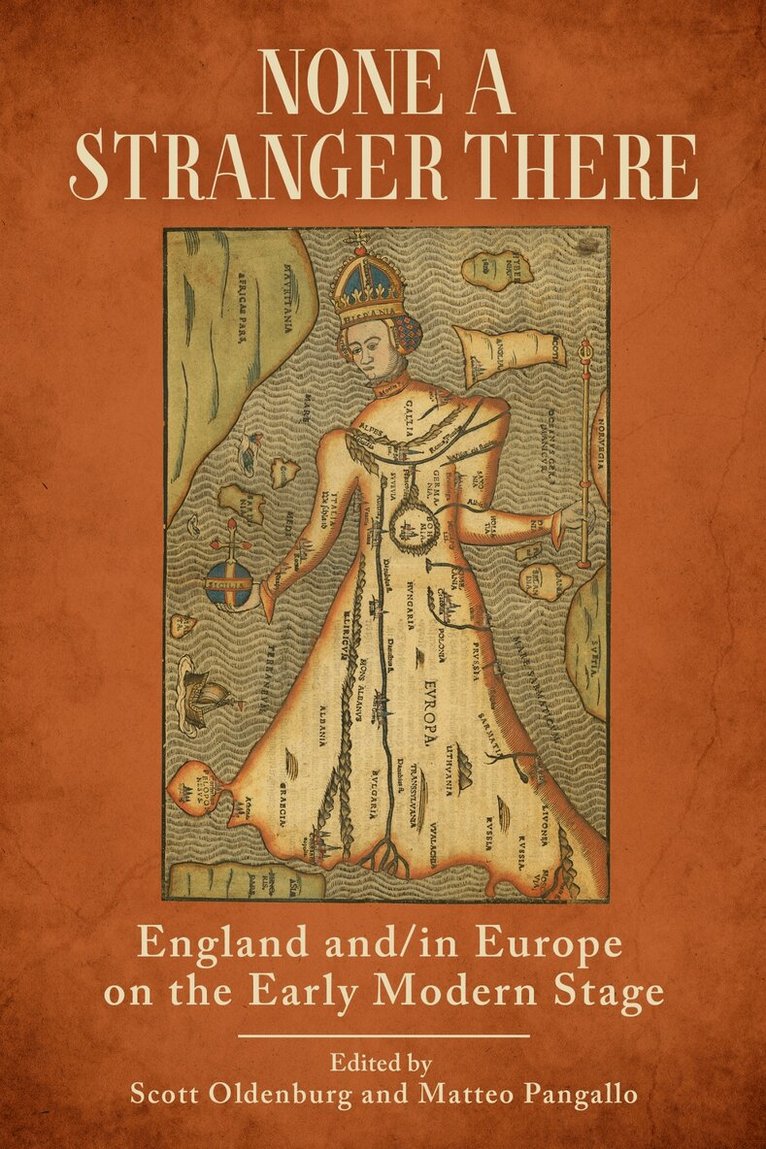
A wide-ranging group of scholarly essays that probe the historical nature of English identity, both through self-definition and in relationship to the rest of Europe.
419 kr
Skickas inom 7-10 vardagar
A wide-ranging group of scholarly essays that probe the historical nature of English identity, both through self-definition and in relationship to the rest of Europe.
450 kr
Skickas inom 7-10 vardagar
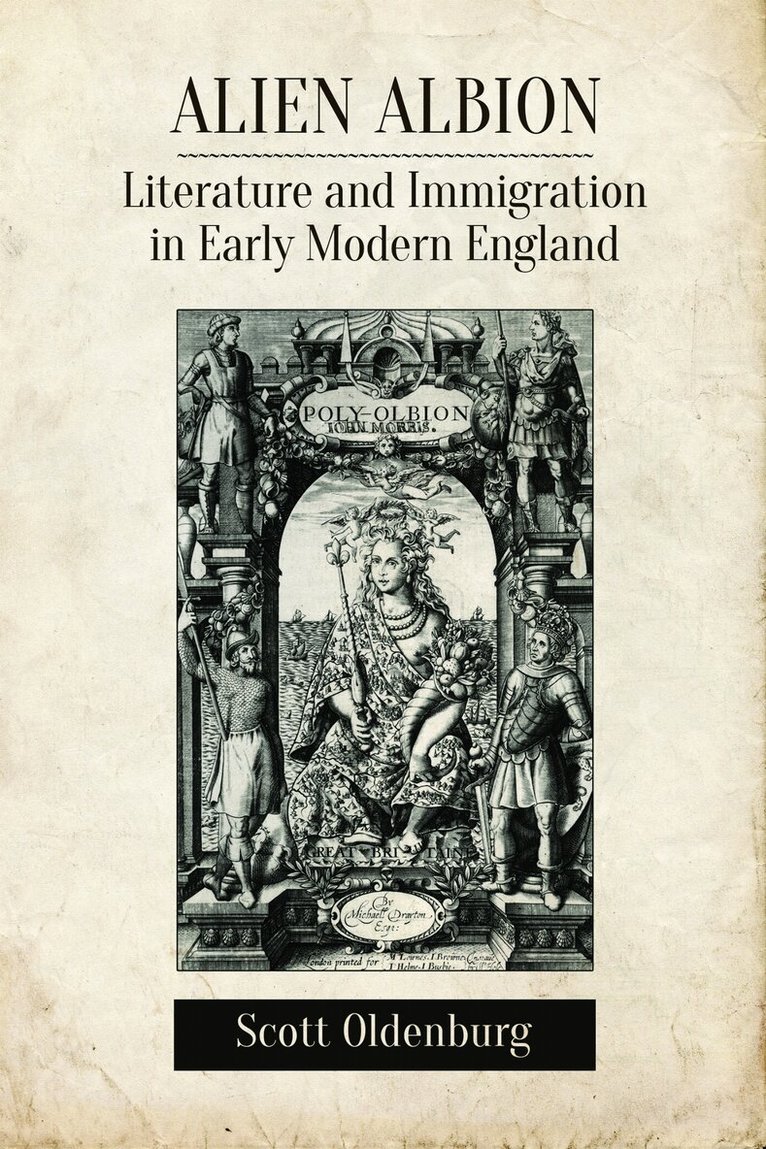
Using both canonical and underappreciated texts, Alien Albion argues that early modern England was far less unified and xenophobic than literary critics have previously suggested. Juxtaposing literary texts from the period with legal, religious, and economic documents, Scott Oldenburg uncovers how immigrants to England forged ties with their English hosts and how those relationships were reflected in literature that imagined inclusive, multicultural communities.Through discussions of civic pageantry, the plays of dramatists including William Shakespeare, Thomas Dekker, and Thomas Middleton, the poetry of Anne Dowriche, and the prose of Thomas Deloney, Alien Albion challenges assumptions about the origins of English national identity and the importance of religious, class, and local identities in the early modern era.
785 kr
Skickas inom 7-10 vardagar
Using both canonical and underappreciated texts, Alien Albion argues that early modern England was far less unified and xenophobic than literary critics have previously suggested. Juxtaposing literary texts from the period with legal, religious, and economic documents, Scott Oldenburg uncovers how immigrants to England forged ties with their English hosts and how those relationships were reflected in literature that imagined inclusive, multicultural communities.Through discussions of civic pageantry, the plays of dramatists including William Shakespeare, Thomas Dekker, and Thomas Middleton, the poetry of Anne Dowriche, and the prose of Thomas Deloney, Alien Albion challenges assumptions about the origins of English national identity and the importance of religious, class, and local identities in the early modern era.