Seamas OCathain - Böcker
Visar alla böcker från författaren Seamas OCathain. Handla med fri frakt och snabb leverans.
4 produkter
4 produkter
367 kr
Skickas inom 5-8 vardagar
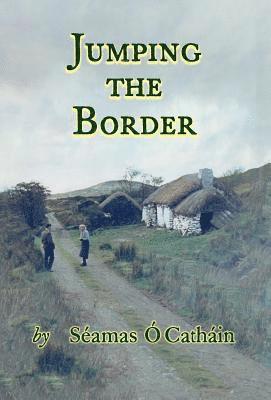
"I have run the gauntlet of many borders in my time, but the border I grew up with at home was far and away the most trying," writes Seamas OCathain, Professor Emeritus at University College Dublin and former Director of the National Folklore Collection. Born in Drumquin, County Tyrone, to a family of Catholic business people and farmers, he grew up "a stone's throw" from the border that separates Donegal in the Republic from the six counties of Northern Ireland - "a border policed by little corporals that was the bane of our lives." JUMPING THE BORDER is an engaging account of his experience - as a child and as a young man - in three distinctive cultures, now radically changed. He describes the Tyrone of the 1940s and 1950s where Protestant and Catholic neighbours shared their lives at a personal level, but where institutions were divisive. His father's prosperous business was ruined because of a political event he supported. The schools and the curriculum were dividers of the two communities. The border was a nuisance to everyone. As a post-graduate student in the 1960s, he took up residence in the Donegal Gaeltacht of "Na Cruacha", where "real old Irish" was still spoken. He did a study of the area's place names, and recorded the distinctive music and speech of "Na Cruacha". Shortly afterwards his research took him to the far north of Europe, to Sapmi (known as Lapland), a cultural rather than a political territory which spreads over four countries, and where he immersed himself in the culture and language of the Sami people at a time when their native language and customs were under threat and belittled. Seamas's many international distinctions and awards include: Knight (First Class) of the Order of the Lion of Finland; the Dag Stromback Prize of the Gustavus Adolphus Academy, Uppsala, Sweden; and the Ruth Michaela-Jena Ratcliff Prize, Edinburgh. He is an honorary member of the Finnish Kalevala Society; a member of the Folklore Fellows of the Finnish Academy of Sciences, Helsinki; and a sometime member of the Advisory Board of the Research Institute of Irish and Scottish Studies at the University of Aberdeen.
250 kr
Skickas inom 5-8 vardagar
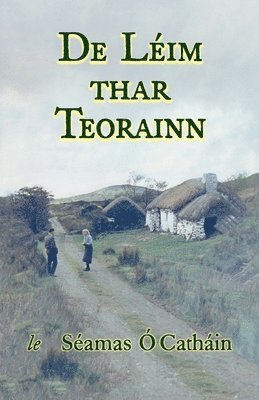
"I have run the gauntlet of many borders in my time, but the border I grew up with at home was far and away the most trying," writes Seamas O Cathain (Professor Emeritus at University College Dublin, and former Director of the National Folklore Collection). Born in Drumquin, County Tyrone, to a family of Catholic business people and farmers, he grew up "a stone's throw" from the border that separates Donegal in the Republic from the six counties of Northern Ireland - - "a border policed by little corporals that was the bane of our lives." - "Is iomai sin ait sa domhan a bhfuil cursa na slat thar teorainn rite agam ach dheamhan dath nios measa a chonaic me riamh na an teorainn a bhi sa bhaile againn" a scriobhann Seamas O Cathain (Ollamh emeritus de chuid Cholaiste Ollscoile Bhaile Atha Cliath agus Iar-Stiurthoir Chnuasach Bhealoideas Eireann) faoin teorainn in Eirinn - "mar ar ghnach leis na ceannairi beaga custam a bheith ina dtiarnai uirthi agus orainne."JUMPING THE BORDER is an engaging account of his experience - as a child and as a young man - in three distinctive cultures, now radically changed. He describes the Tyrone of the 1940s and 1950s where Protestant and Catholic neighbours shared their lives at a personal level, but where institutions were divisive. His father's prosperous business was ruined because of a political event he supported. The schools and the curriculum were dividers of the two communities. The border was a nuisance to everyone. As a post-graduate student in the 1960s, he took up residence in the Donegal Gaeltacht of "Na Cruacha", where "real old Irish" was still spoken. He did a study of the area's place names, and recorded the distinctive music and speech of "Na Cruacha". Shortly afterwards his research took him to the far north of Europe, to Sapmi (known as Lapland), a cultural rather than a political territory which spreads over four countries, and where he immersed himself in the culture and language of the Sami people at a time when their native language and customs were under threat and belittled. Seamas's many international distinctions and awards include: Knight (First Class) of the Order of the Lion of Finland; the Dag Stromback Prize of the Gustavus Adolphus Academy, Uppsala, Sweden; and the Ruth Michaela-Jena Ratcliff Prize, Edinburgh. He is an honorary member of the Finnish Kalevala Society; a member of the Folklore Fellows of the Finnish Academy of Sciences, Helsinki; and a sometime member of the Advisory Board of the Research Institute of Irish and Scottish Studies at the University of Aberdeen.
401 kr
Skickas inom 5-8 vardagar
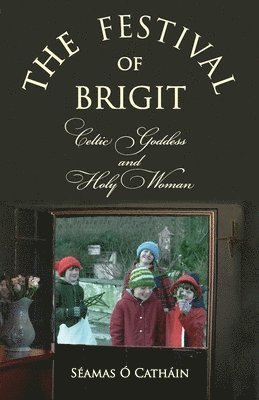
Professor Seamas OCathain's monumental study of the Festival of Brigit - Imbolc, February 1st - updated, extended, and published in a new edition, in honour of Ireland's newest national holiday. Brigit was one of three great saints of early Irish Christianity, alongside Patrick, the patron saint of Ireland, and Colm Cille (Columba), Irish colonizer of Scotland and founder of Iona. By tradition, Saints’ Day festivals and other Holy Days were celebrated over twenty-four hours, starting on the eve of the feast and continuing through the night and through the following day. Thus the Festival of Brigit includes Oiche Fheile Bride (St Brigit’s Eve) and La Fheile Bride (St Brigit’s Day) – on 31st January and 1st February respectively. However, these are not the oldest names associated with this festival in Irish tradition, for in earlier pre-Christian times it was called Imbolc – a word whose basic meaning has much to do with milking and milk-production.This book views Brigit – the Celtic goddess and the Christian-era Saint – not merely in an Irish context, but also in an international and western European context. It attempts to uncover the motivation of previous generations, both within Ireland and beyond it, in sustaining and preserving ancient practices and beliefs, and highlights how fundamentally important folk culture is to our understanding of the past.
258 kr
Skickas inom 5-8 vardagar
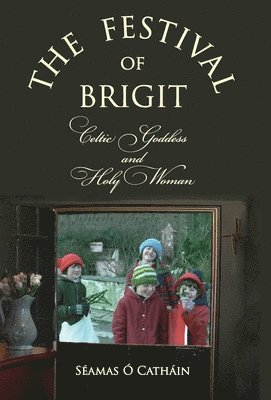
Professor Seamas OCathain's monumental study of the Festival of Brigit - Imbolc, February 1st - updated, extended, and published in a new edition, in honour of Ireland's newest national holiday. Brigit was one of three great saints of early Irish Christianity, alongside Patrick, the patron saint of Ireland, and Colm Cille (Columba), Irish colonizer of Scotland and founder of Iona. By tradition, Saints’ Day festivals and other Holy Days were celebrated over twenty-four hours, starting on the eve of the feast and continuing through the night and through the following day. Thus the Festival of Brigit includes Oiche Fheile Bride (St Brigit’s Eve) and La Fheile Bride (St Brigit’s Day) – on 31st January and 1st February respectively. However, these are not the oldest names associated with this festival in Irish tradition, for in earlier pre-Christian times it was called Imbolc – a word whose basic meaning has much to do with milking and milk-production.This book views Brigit – the Celtic goddess and the Christian-era Saint – not merely in an Irish context, but also in an international and western European context. It attempts to uncover the motivation of previous generations, both within Ireland and beyond it, in sustaining and preserving ancient practices and beliefs, and highlights how fundamentally important folk culture is to our understanding of the past.