Sean Grass - Böcker
Visar alla böcker från författaren Sean Grass. Handla med fri frakt och snabb leverans.
6 produkter
6 produkter
2 430 kr
Skickas inom 10-15 vardagar
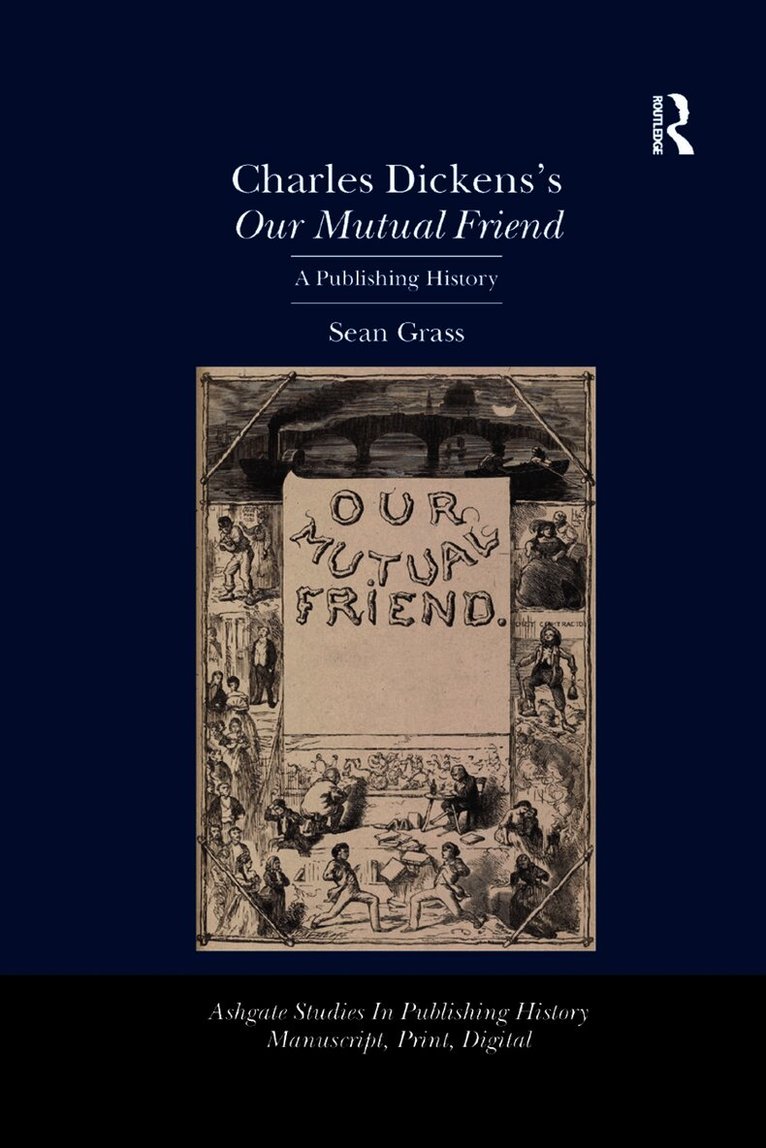
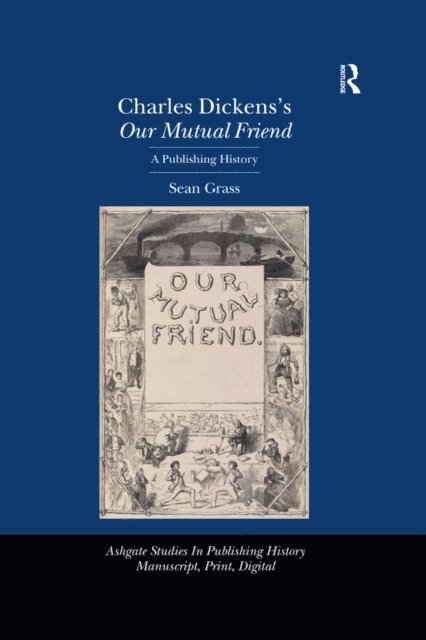
Even within the context of Charles Dickens's history as a publishing innovator, Our Mutual Friend is notable for what it reveals about Dickens as an author and about Victorian publishing. Marking Dickens's return to the monthly number format after nearly a decade of writing fiction designed for weekly publication in All the Year Round, Our Mutual Friend emerged against the backdrop of his failing health, troubled relationship with Ellen Ternan, and declining reputation among contemporary critics. In his subtly argued publishing history, Sean Grass shows how these difficulties combined to make Our Mutual Friend an extraordinarily odd novel, no less in its contents and unusually heavy revisions than in its marketing by Chapman and Hall, its transformation from a serial into British and U.S. book editions, its contemporary reception by readers and reviewers, and its delightfully uneven reputation among critics in the 150 years since Dickens’s death. Enhanced by four appendices that offer contemporary accounts of the Staplehurst railway accident, information on archival materials, transcripts of all of the contemporary reviews, and a select bibliography of editions, Grass’s book shows why this last of Dickens’s finished novels continues to intrigue its readers and critics.
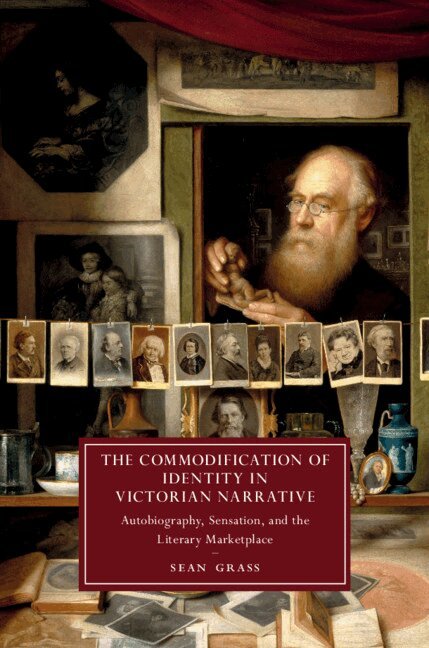
Del 121 - Cambridge Studies in Nineteenth-Century Literature and Culture
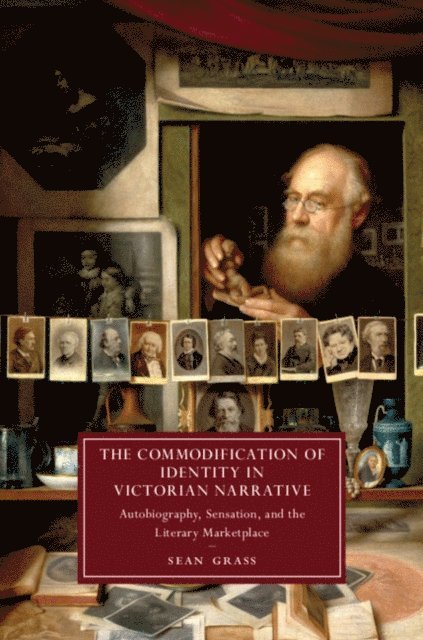
The Commodification of Identity in Victorian Narrative
Autobiography, Sensation, and the Literary Marketplace
Inbunden, Engelska, 2019
1 371 kr
Skickas inom 7-10 vardagar
In the first half of the nineteenth century autobiography became, for the first time, an explicitly commercial genre. Drawing together quantitative data on the Victorian book market, insights from the business ledgers of Victorian publishers and close readings of mid-century novels, Sean Grass demonstrates the close links between these genres and broader Victorian textual and material cultures. This book offers fresh perspectives on major works by Charles Dickens, George Eliot, Mary Elizabeth Braddon, Wilkie Collins and Charles Reade, while also featuring archival research that reveals the volume, diversity, and marketability of Victorian autobiographical texts for the first time. Grass presents life-writing not as a stand-alone genre, but as an integral part of a broader movement of literary, cultural, legal and economic practices through which the Victorians transformed identity into a textual object of capitalist exchange.
Del 121 - Cambridge Studies in Nineteenth-Century Literature and Culture
The Commodification of Identity in Victorian Narrative
Autobiography, Sensation, and the Literary Marketplace
Häftad, Engelska, 2021
493 kr
Skickas inom 7-10 vardagar
In the first half of the nineteenth century autobiography became, for the first time, an explicitly commercial genre. Drawing together quantitative data on the Victorian book market, insights from the business ledgers of Victorian publishers and close readings of mid-century novels, Sean Grass demonstrates the close links between these genres and broader Victorian textual and material cultures. This book offers fresh perspectives on major works by Charles Dickens, George Eliot, Mary Elizabeth Braddon, Wilkie Collins and Charles Reade, while also featuring archival research that reveals the volume, diversity, and marketability of Victorian autobiographical texts for the first time. Grass presents life-writing not as a stand-alone genre, but as an integral part of a broader movement of literary, cultural, legal and economic practices through which the Victorians transformed identity into a textual object of capitalist exchange.
820 kr
Skickas inom 10-15 vardagar
Even within the context of Charles Dickens's history as a publishing innovator, Our Mutual Friend is notable for what it reveals about Dickens as an author and about Victorian publishing. Marking Dickens's return to the monthly number format after nearly a decade of writing fiction designed for weekly publication in All the Year Round, Our Mutual Friend emerged against the backdrop of his failing health, troubled relationship with Ellen Ternan, and declining reputation among contemporary critics. In his subtly argued publishing history, Sean Grass shows how these difficulties combined to make Our Mutual Friend an extraordinarily odd novel, no less in its contents and unusually heavy revisions than in its marketing by Chapman and Hall, its transformation from a serial into British and U.S. book editions, its contemporary reception by readers and reviewers, and its delightfully uneven reputation among critics in the 150 years since Dickens’s death. Enhanced by four appendices that offer contemporary accounts of the Staplehurst railway accident, information on archival materials, transcripts of all of the contemporary reviews, and a select bibliography of editions, Grass’s book shows why this last of Dickens’s finished novels continues to intrigue its readers and critics.
1 406 kr
Skickas inom 7-10 vardagar
Life Writing and the Nineteenth-Century Literary Market begins from the premise that nineteenth-century life writing circulated in a market, in material and discursive forms determined substantially by the desires of publishers, readers, editors, printers, booksellers and the many other craftsmen and tradesmen who collaborated in transforming first-person narrative into a commodified thing. Studies of nineteenth-century life writing have typically focused on the major autobiographers, or on the formation of 'genre', or on the ways in which different class, gender, race and other affiliations shaped particular kinds of exemplary subjectivities. The aim of this collection, on the other hand, is to focus on life writing in terms to of profits and sales, contracts and copyright, printing and illustration to treat life writing, through particular case studies and through attentive analysis of print and material cultures, as one commodity among many in the vast, complicated literary market of nineteenth-century England.
342 kr
Kommande
Life Writing and the Nineteenth-Century Literary Market begins from the premise that nineteenth-century life writing circulated in a market, in material and discursive forms determined substantially by the desires of publishers, readers, editors, printers, booksellers and the many other craftsmen and tradesmen who collaborated in transforming first-person narrative into a commodified thing. Studies of nineteenth-century life writing have typically focused on the major autobiographers, or on the formation of ‘genre’, or on the ways in which different class, gender, race and other affiliations shaped particular kinds of exemplary subjectivities. The aim of this collection, on the other hand, is to focus on life writing in terms to of profits and sales, contracts and copyright, printing and illustration—to treat life writing, through particular case studies and through attentive analysis of print and material cultures, as one commodity among many in the vast, complicated literary market of nineteenth-century England.