Sean M. McDonough - Böcker
Visar alla böcker från författaren Sean M. McDonough. Handla med fri frakt och snabb leverans.
4 produkter
4 produkter
2 019 kr
Skickas inom 5-8 vardagar
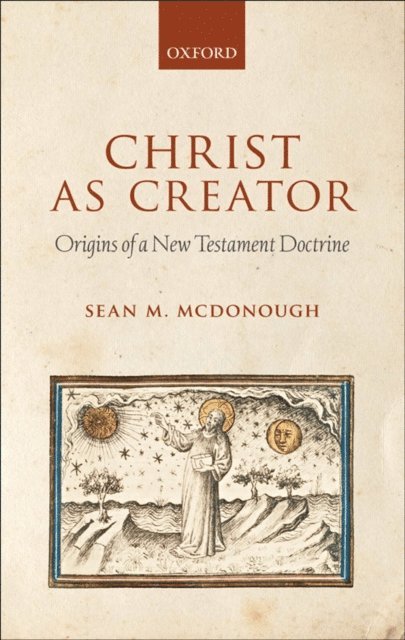
This book examines the New Testament teaching that Christ was the one through whom God made the world. While scholars usually interpret this doctrine as arising from the equation of Jesus and the Wisdom of God, Sean McDonough argues that it had its roots in the church's memories of Jesus' miracles. These memories, coupled with the experience of spiritual renewal in the early church, established Jesus as the definitive agent of God's new creation in the New Testament writings and the teachings of the Early Church. Following the logic that 'the end is like the beginning' Christ was taken to be the agent of primal creation. This insight was developed in light of Old Testament creation texts, viewed from within a 'messianic matrix' of interpretation. God gives his Word, his Spirit, and his Wisdom to his Messiah from the very beginning; and the Messiah, the radiance of God's glory, establishes the cosmos in accordance with God's purposes. Creation is the beginning of messianic dominion; he rules the world he made. McDonough carefully substantiates his thesis through a detailed exegesis of the relevant New Testament texts in the context of related texts in Judaism and Greco-Roman philosophy. He concludes with a survey of the doctrine of Christ as Creator in the work of six theologians: Justin Martyr, Irenaeus, Athanasius, Karl Barth, Jürgen Moltmann, and Wolfhart Pannenberg.
2 338 kr
Skickas inom 5-8 vardagar
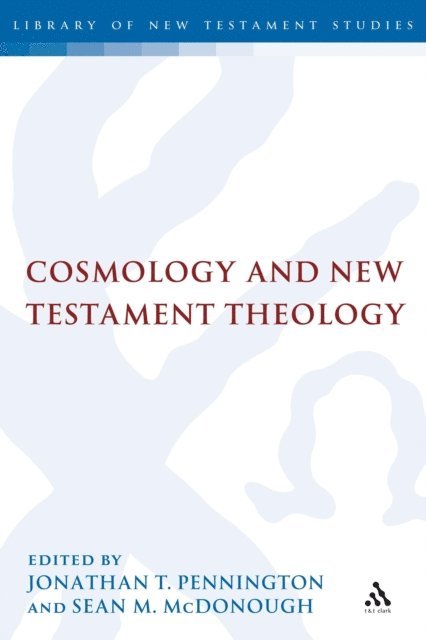
For first-century people, cosmology was a fundamental part of their worldview. Whether it was the philosopher contemplating the perfection of the heavenly orbits, the farmer searching the sky for signs of when to plant his crops, or the desert-dwelling sectarian looking for the end of the world, the cosmos held an endless fascination and occupied a prominent place in their understanding of life.For most ancient peoples, cosmology and theology were inseparable. Thus, when the Jewish and Christian Scriptural traditions begin with the bold claim, "In the beginning God created the heavens and earth," these words make statements which are at once cosmogonic, cosmological, and theological.Scholarship has begun only recently to investigate more fully the various cosmological and cosmogonic traditions that were current in the time of the Old and New Testaments. Much of this work, however, has focused on how OT conceptions of the world compared to other Ancient Near Eastern traditions. Much less has been done on the cosmological traditions which stand behind the views of the NT writers. Even fewer works have sought to connect cosmological views with NT theology. In light of the great importance that cosmology had in ancient peoples' worldviews and theological understanding, a thorough investigation of this neglected topic is in order.Cosmology and New Testament Theology systematically examines the NT documents to show how cosmological language and concepts inform, interact with, and contribute to the specific theological emphases of the various NT books. In some NT books, the importance of cosmology can be easily discerned, while in others what is required is a new and close examination of key cosmological terms (e.g., heaven, earth, world, creation) with an eye to the themes and theology of the book.
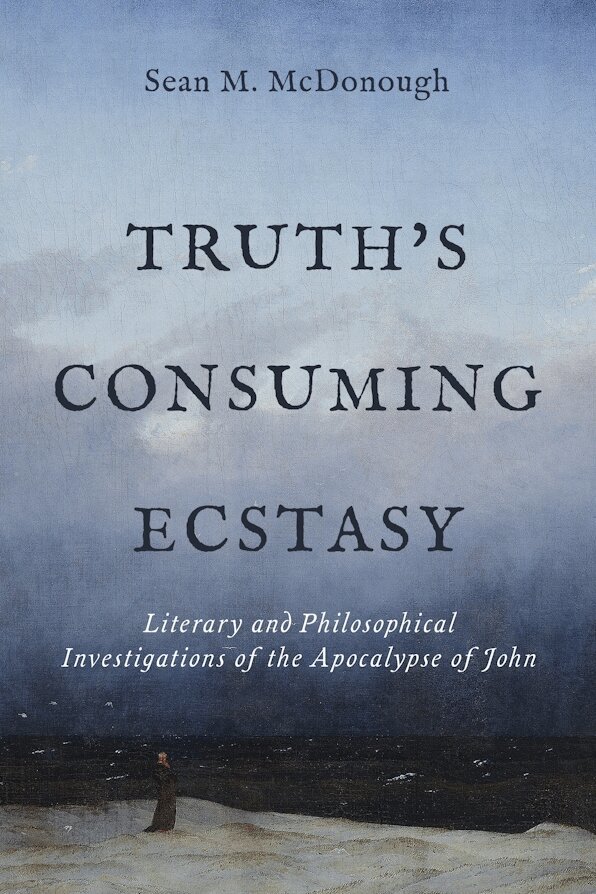
Truth's Consuming Ecstasy
Literary and Philosophical Investigations of the Apocalypse of John
Inbunden, Engelska, 2025
588 kr
Skickas inom 7-10 vardagar
The book of Revelation is strange, to put it mildly. An informed reading reveals John's pastoral intent is very much in keeping with typical New Testament instruction regarding God, Jesus, and the life that Christ followers are meant to live in the face of seductive idolatry and intense oppression. With a message so simple, why would John cloud it over with a perplexing cluster of images that only seems to obscure the reader's vision?In Truth's Consuming Ecstasy, Sean McDonough accounts for the strangeness of the book of Revelation by placing John in dialogue with a wide-ranging group of thinkers--giants of philosophy, literature, and theology. Comparisons with Plato reveal John's sweeping vision of the cosmos as a philosophically defensible approach. But does this overarching view render the Apocalypse a "totalizing" document--a tool of oppression? In response McDonough turns to Ludwig Wittgenstein, with whose assistance we recognize that Revelation conceals as much as it reveals, and so avoids the totalizing charge. McDonough presents W. B. Yeats as a poet who functions in the apocalyptic mode--though his particular brand of apocalyptic swerves in a gnostic direction, in keeping with the heritage of his Romantic forebears. J. R. R. Tolkien, by contrast, takes the reader on an apocalyptic journey rooted in Catholic doctrine, but he approaches his task with a Wittgensteinian reserve and lets the story carry the message without sermonizing. The final section engages two theologians whose work has been characterized as apocalyptic: the Russian Orthodox Sergius Bulgakov and the Catholic Hans Urs von Balthasar. Revelation opens up the imaginative space in which they pursue the grand themes of theology.The imaginative, visionary discourse of Revelation offers us the reach, but not the grasp, of the depths of reality. From John's mystical and mystifying perspective--a philosophical, literary, and theological hybrid--we learn about the purposes of God for the world, but in a certain puzzling way that is meant to check our hubris.
Del 107 - Wissenschaftliche Untersuchungen zum Neuen Testament 2. Reihe
YHWH at Patmos: Rev. 1:4 in its Hellenistic and Early Jewish Setting
Häftad, Engelska, 1999
1 883 kr
Skickas inom 5-8 vardagar
Johannes beschreibt Gott als "der Eine, der ist und der war und der kommen wird" (Apk. 1,4). Seine Beschreibung entspringt der jüdischen Reflexion über die Bedeutung des Namens YHWH, besonders der rätselhaften Redewendung von Ex 3,14, "Ich bin der ich bin". Die jüdische Reflexion des Namens wurde ihrerseits durch griechische und römische Beschreibungen der endgültigen Realität geprägt. Sean McDonough untersucht die Geschichte des Namens YHWH in der neutestamentlichen Zeit und deren Bedeutung für die Auslegung der Apk.1,4.