Sebastián Sclofsky - Böcker
Visar alla böcker från författaren Sebastián Sclofsky. Handla med fri frakt och snabb leverans.
4 produkter
4 produkter
1 078 kr
Kommande
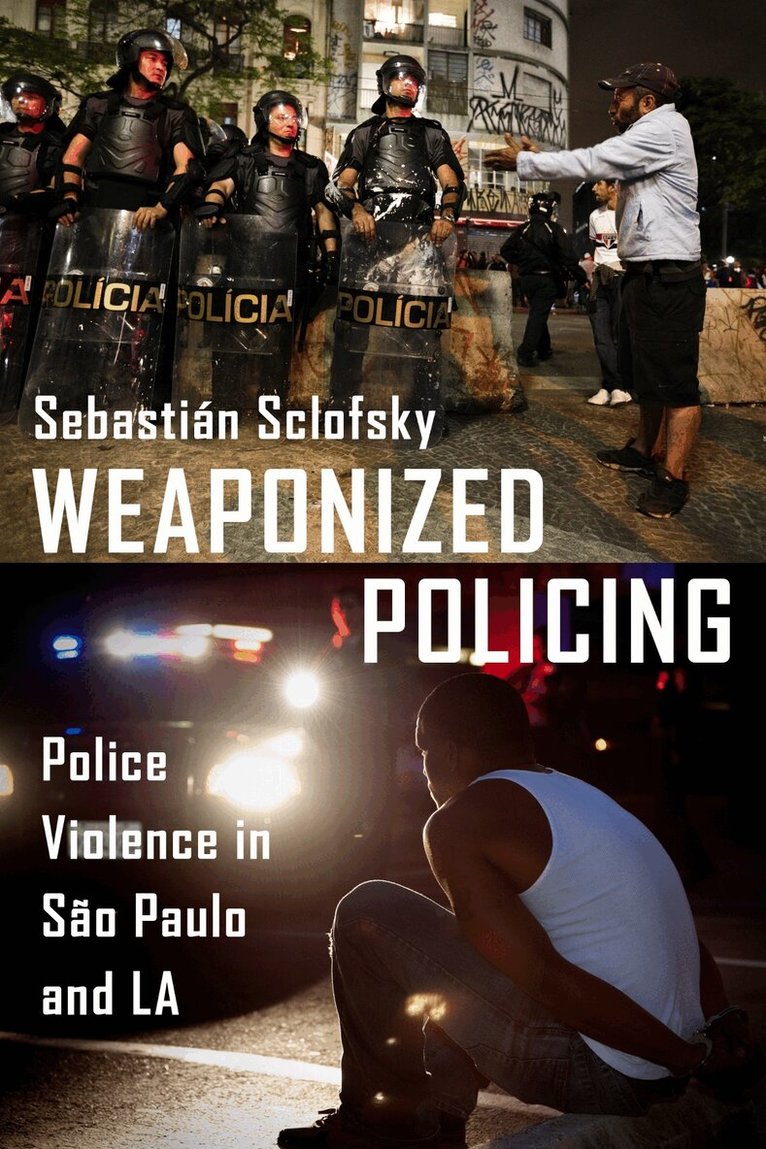
How police reproduce social, spatial, and racial inequalities in two global citiesFrom Donald Trump to Brazil's Jair Bolsonaro, political leaders endorsing "law and order" – specifically through aggressive policing strategies – have supported the formation of carceral states in self-proclaimed democracies. In Weaponized Policing, Sebastián Sclofsky provides a comparative lens on this dynamic, taking a look at police-civilian violence in the United States and Brazil, and its impact on people's understanding of race, space, and citizenship.The book argues that the socio-economic transformations of the last half-century, marked by the rise of neoliberal capitalism, have produced extreme levels of inequality, and created new forms of vulnerability that are managed and reproduced by police. The pacifying processes conducted by the police in their production and reproduction of social order produce the categories of black, poor, and periphery, transforming these subjects into the ultimate "other" against whom police intervention and violence is deemed necessary and justified for the sake of the city's well-being.Drawing on hundreds of interviews with politicians, police officers, community activists, and low-income residents of São Paulo's periphery and neighborhoods in South L.A., Sclofsky follows the stories of individuals who live, and are policed, on the "peripheries." He argues that, in both countries, aggressive policing creates authoritarian enclaves within faulty democracies. As a result, residents of color are criminalized, individual rights are systematically violated, and a sense of second-class citizenship is developed—even when people live in a country where political rights are supposedly guaranteed, and free and fair elections do take place.
297 kr
Kommande
How police reproduce social, spatial, and racial inequalities in two global citiesFrom Donald Trump to Brazil's Jair Bolsonaro, political leaders endorsing "law and order" – specifically through aggressive policing strategies – have supported the formation of carceral states in self-proclaimed democracies. In Weaponized Policing, Sebastián Sclofsky provides a comparative lens on this dynamic, taking a look at police-civilian violence in the United States and Brazil, and its impact on people's understanding of race, space, and citizenship.The book argues that the socio-economic transformations of the last half-century, marked by the rise of neoliberal capitalism, have produced extreme levels of inequality, and created new forms of vulnerability that are managed and reproduced by police. The pacifying processes conducted by the police in their production and reproduction of social order produce the categories of black, poor, and periphery, transforming these subjects into the ultimate "other" against whom police intervention and violence is deemed necessary and justified for the sake of the city's well-being.Drawing on hundreds of interviews with politicians, police officers, community activists, and low-income residents of São Paulo's periphery and neighborhoods in South L.A., Sclofsky follows the stories of individuals who live, and are policed, on the "peripheries." He argues that, in both countries, aggressive policing creates authoritarian enclaves within faulty democracies. As a result, residents of color are criminalized, individual rights are systematically violated, and a sense of second-class citizenship is developed—even when people live in a country where political rights are supposedly guaranteed, and free and fair elections do take place.
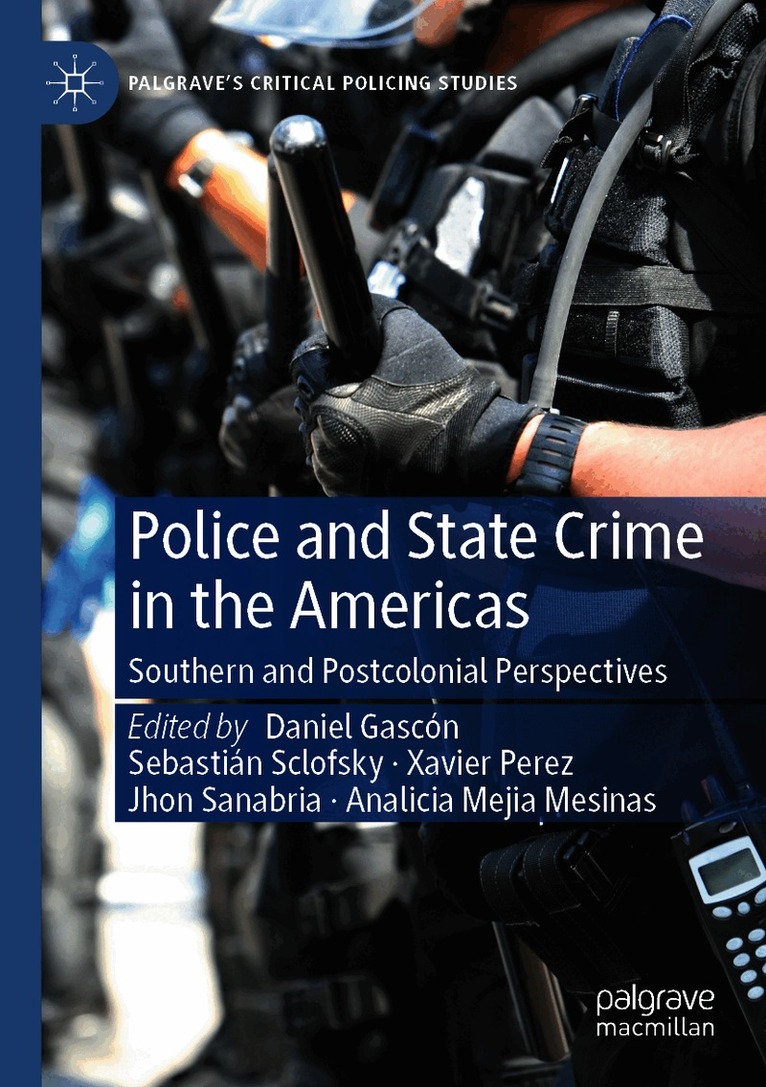
Police and State Crime in the Americas
Southern and Postcolonial Perspectives
Inbunden, Engelska, 2024
1 272 kr
Skickas inom 10-15 vardagar
Building on Chevigny's (1995) classic study, this book seeks to draw renewed attention to the role of police in perpetrating state violence and serving as the tip of the spear of state power.
1 272 kr
Skickas inom 10-15 vardagar
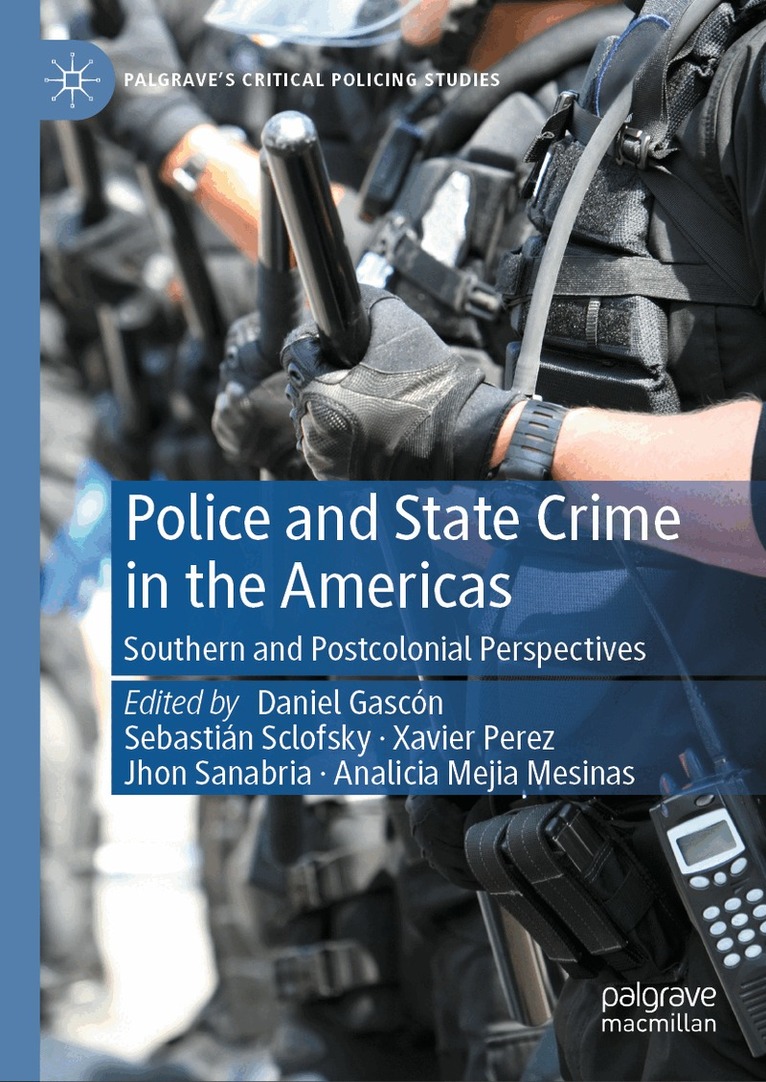
This book advances a much-needed “postcolonial” framework in analyzing the police. It seeks to deepen our understanding of the police role in maintaining Western global domination throughout the American region despite the violent end of colonial rule. Building on Chevigny's (1995) classic study, this book seeks to draw renewed attention to the role of police in perpetrating state violence and serving as the tip of the spear of state power. It seeks to understand the construction of marginality and the multiple and intersecting structures of colonial domination, before shining a light directly on the crimes of the state, in an attempt to hold criminal state organizations to account. It draws on interdisciplinary perspectives and methodologies that center marginalized and colonized experiences and allows for the development of countercolonial knowledge. It speaks to academics and students in criminology, sociology, political science, and law, as well as toethnic and area studies programs, such as Chicano/Latino and Latin American Studies, and to police administrators and policymakers.