Sebastián Smart - Böcker
Visar alla böcker från författaren . Handla med fri frakt och snabb leverans.
4 produkter
4 produkter
1 520 kr
Skickas inom 10-15 vardagar
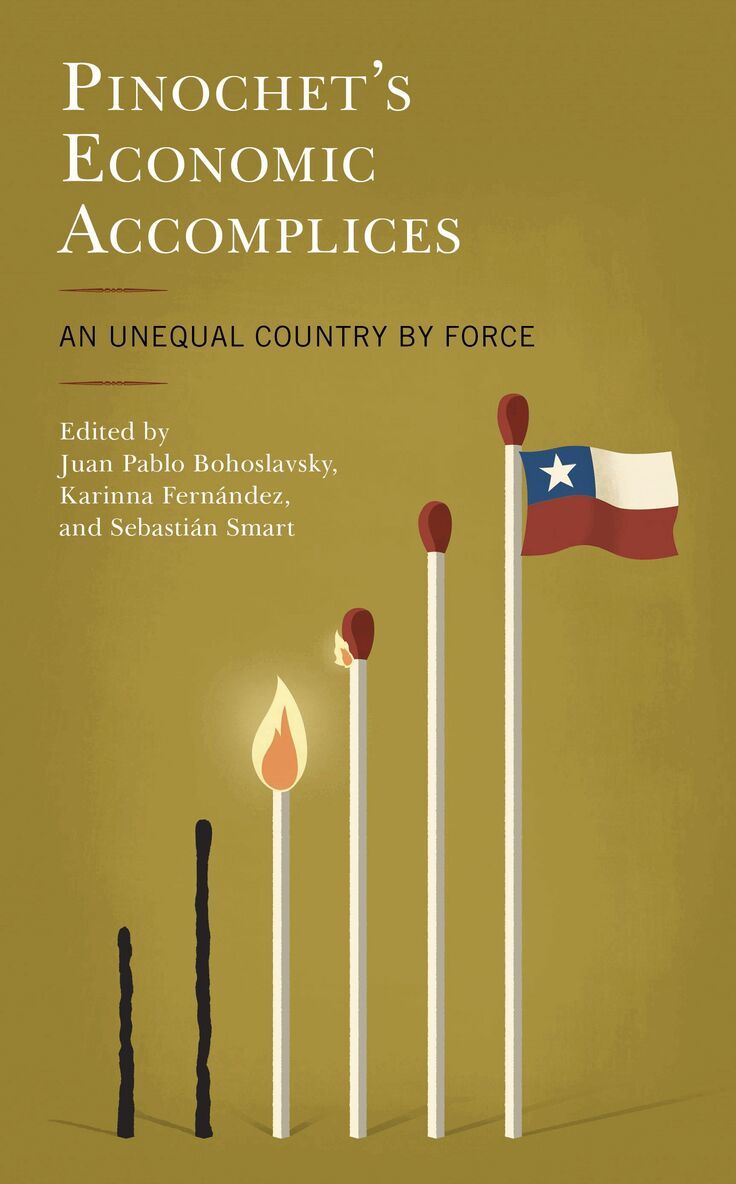
With a focus on Chile, Pinochet’s Economic Accomplices: An Unequal Country byForce uses theoretical arguments and empirical studies to argue that focusing onthe behavior of economic actors of the dictatorship is crucial to achieve basic objectivesin terms of justice, memory, reparation, and non-repetition measures. Thisbook makes visible a number of cases of economic complicity with the Chileandictatorship and explains their links with the radical inequalities the country hastoday while proposing a theoretical framework for their study. Scholars of LatinAmerican studies, history, sociology, economics, business, and human rights willfind this book particularly useful.
398 kr
Skickas inom 5-8 vardagar
Business, Human Rights, Technology, and Transitional Justice in Latin America
Tracing Connections
Inbunden, Engelska, 2025
393 kr
Skickas inom 7-10 vardagar
This book offers theoretical arguments and empirical studies that demonstrate why focusing on the interrelations of technology and transitional justice from a business and human rights approach is crucial to achieve basic objectives in terms of truth, justice, memory, reparation, and non-repetition measures in post-conflict settings.
Socio-Environmental Movements Against Extractivism
Legal Mobilisation and Resistance in Chile
Inbunden, Engelska, 2025
1 484 kr
Skickas inom 10-15 vardagar
This book offers an unprecedented exploration into the heart of socio-environmental conflicts and mobilisations sparked by extractive projects in Latin America, with a keen focus on Chile’s unique position. It provides readers with a comprehensive understanding of the intricate power dynamics between communities, corporations, and the state over environmental and territorial disputes. Delving into the contentious politics perspective, this book examines how political opportunities, organisational resources, and discursive frames developed by communities—and the strategic mobilisation of law—play a crucial role in shaping resistance against extractive projects. These conflicts are not just local disputes but are emblematic of broader environmental and political-economic transformations that challenge our understanding of sustainability, governance, and community rights. The relevance of this topic cannot be overstated in today’s global context, where environmental issues and Indigenous rights are increasingly at the forefront of political debates. By analysing the micro-foundations of contentious politics through the lens of Chile’s socio-environmental movements, this book sheds light on the mechanisms that underpin socio-legal mobilisation and protest. It offers a detailed comparison of three significant social contestation processes in Chile, providing insights into the varying strategies, aims, and resources of communities that stand against the environmental impacts of extractive industries. Furthermore, this book critically engages with classical theories of social mobilisation, adding empirical evidence and theoretical advancements to the discussion. It also considers the impact of geographical location, the phase of extractive projects, and the composition of social movements on the effectiveness of mobilisation efforts—both in the courtroom and on the streets.