Sébastien Penmellen Boret - Böcker
Visar alla böcker från författaren Sébastien Penmellen Boret. Handla med fri frakt och snabb leverans.
5 produkter
5 produkter
2 238 kr
Skickas inom 10-15 vardagar
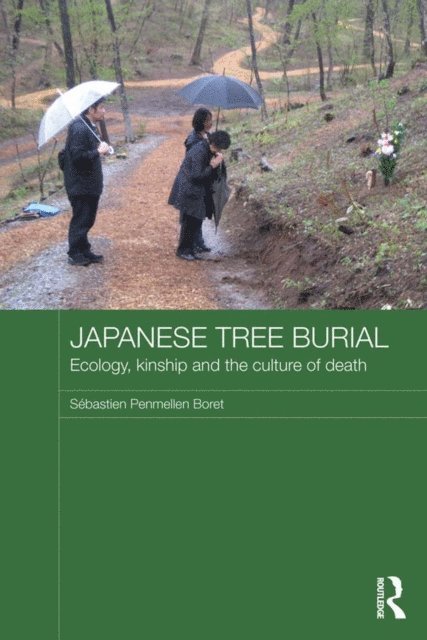
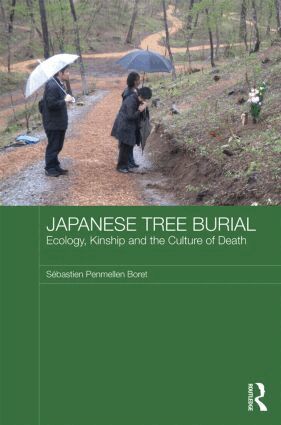
Tree burial, a new form of disposal for the cremated remains of the dead, was created in 1999 by Chisaka Genpo, the head priest of a Zen Buddhist temple in northern Japan. Instead of a conventional family gravestone, perpetuating the continuity of a household and its identity, tree burial uses vast woodlands as cemeteries, with each burial spot marked by a tree and a small wooden tablet inscribed with the name of the deceased. Tree burial is gaining popularity, and is a highly-effective means of promoting the rehabilitation of Japanese forestland critically damaged by post-war government mismanagement. This book, based on extensive original research, explores the phenomenon of tree burial, tracing its development, discussing the factors which motivate Japanese people to choose tree burial, and examining the impact of tree burial on traditional views of death, memorialisation, and the afterlife. The author argues that non-traditional, non-ancestral modes of burial have become a means of negotiating new social orders and that this symbiosis of environmentalism and memorialisation corroborates the idea that graveyards are not only places for the containment of human remains and the memorialisation of the dead, but spaces where people (re)construct, challenge, and find new senses of belonging to the wider society in which they live. Throughout, the book demonstrates how the new practice fits with developing ideas of ecology, with the individual’s corporality nourishing the earth and thus re-entering the cycle of life in nature.
722 kr
Skickas inom 10-15 vardagar
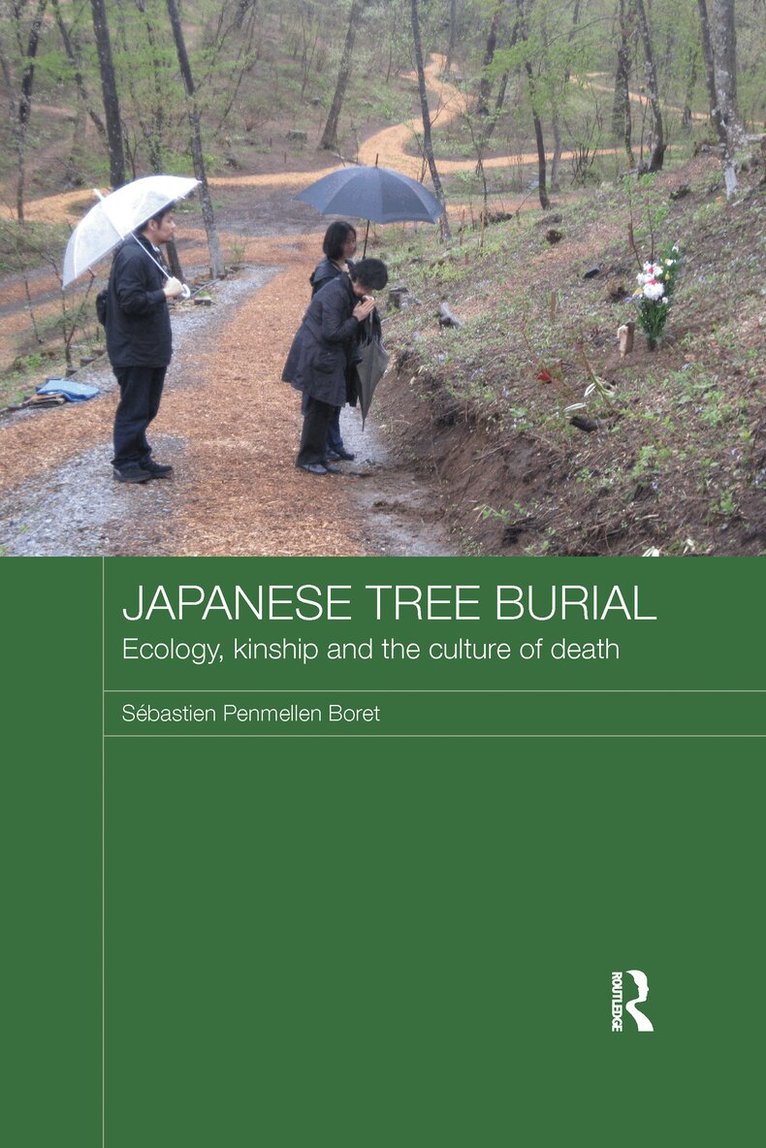
Tree burial, a new form of disposal for the cremated remains of the dead, was created in 1999 by Chisaka Genpo, the head priest of a Zen Buddhist temple in northern Japan. Instead of a conventional family gravestone, perpetuating the continuity of a household and its identity, tree burial uses vast woodlands as cemeteries, with each burial spot marked by a tree and a small wooden tablet inscribed with the name of the deceased. Tree burial is gaining popularity, and is a highly-effective means of promoting the rehabilitation of Japanese forestland critically damaged by post-war government mismanagement. This book, based on extensive original research, explores the phenomenon of tree burial, tracing its development, discussing the factors which motivate Japanese people to choose tree burial, and examining the impact of tree burial on traditional views of death, memorialisation, and the afterlife. The author argues that non-traditional, non-ancestral modes of burial have become a means of negotiating new social orders and that this symbiosis of environmentalism and memorialisation corroborates the idea that graveyards are not only places for the containment of human remains and the memorialisation of the dead, but spaces where people (re)construct, challenge, and find new senses of belonging to the wider society in which they live. Throughout, the book demonstrates how the new practice fits with developing ideas of ecology, with the individual’s corporality nourishing the earth and thus re-entering the cycle of life in nature.
Death in the Early Twenty-first Century
Authority, Innovation, and Mortuary Rites
Inbunden, Engelska, 2017
1 487 kr
Skickas inom 10-15 vardagar
In addition to offering a new theoretical perspective on the anthropology of death, this work provides a rich resource for readers interested in human responses to mortality: the one certainty of human existence.
Death in the Early Twenty-first Century
Authority, Innovation, and Mortuary Rites
Häftad, Engelska, 2018
1 487 kr
Skickas inom 10-15 vardagar
In addition to offering a new theoretical perspective on the anthropology of death, this work provides a rich resource for readers interested in human responses to mortality: the one certainty of human existence.
2 449 kr
Kommande
This edited book establishes a justice‑oriented agenda for understanding and acting on disasters in the world’s most hazard‑exposed regions. Challenging technocratic and event‑centred framings, the volume theorises disasters as historically produced and politically mediated, tracing how colonialism, capitalism, extractivism, and uneven governance create and compound risk. Across four parts—foundations; (re)conceptualising disasters; methods; and critical voices from the field—the chapters develop key ideas such as critical vulnerability, structural/prospective amnesia, and disaster populism; advance plural, decolonising methodologies (including talanoa, autoethnography and co‑production of knowledge); and offer grounded cases from Aotearoa New Zealand, Japan, the Philippines, Rapa Nui, Chile, Vietnam and the Pacific. In doing so, Critical Disaster Studies in Asia and the Pacific centres Indigenous and local epistemologies, Gender Equality, Disability, and Social Inclusion (GEDSI)‑informed practice, and systems-behaviour models for transformative disaster risk reduction. Bringing together leading and emerging scholars across disciplines, this is an indispensable resource for researchers, practitioners and policymakers seeking to move from managing hazards to transforming the conditions that generate disaster risk.