Sébastien Rey – författare
Visar alla böcker från författaren Sébastien Rey. Handla med fri frakt och snabb leverans.
4 produkter
4 produkter
1 362 kr
Skickas inom 7-10 vardagar
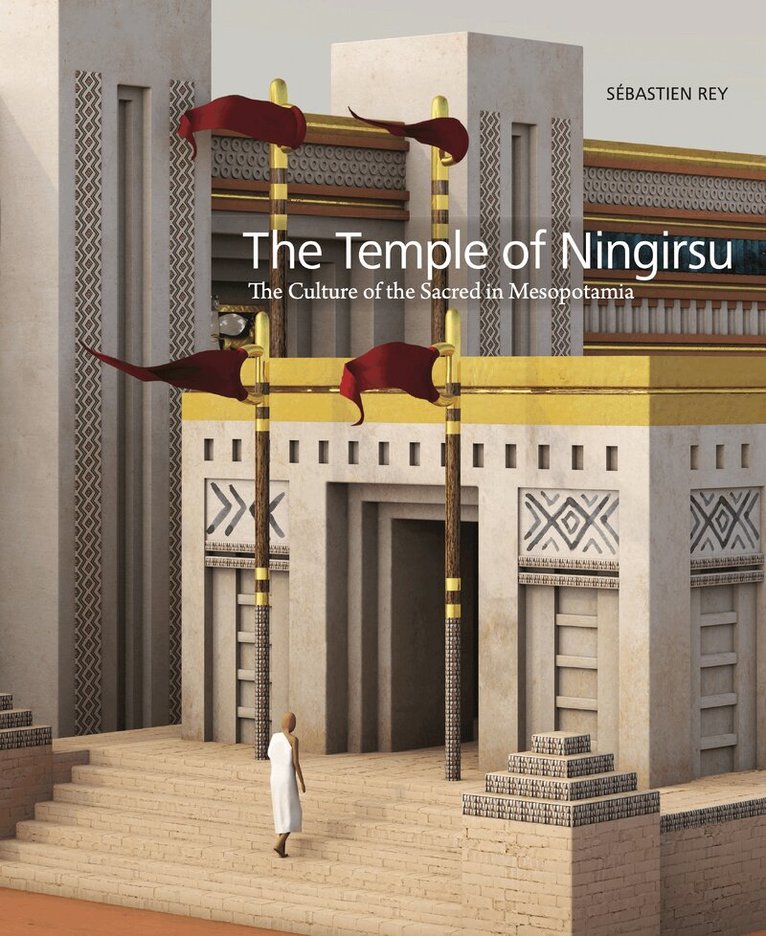
Between 2016 and 2022, a team from the British Museum conducted excavations in the ancient Sumerian city of Girsu, the sacred center of the state of Lagash. On an archaeological mound referred to as the Mound of the Palace, or Tell A, they discovered the ground plan of the fabulous Temple of Ningirsu, built by the ruler Gudea circa 2125 BCE. Deep in the heart of the mound, the excavators also exposed the remains of a series of older Sumerian shrines dating back to Early Dynastic times (2900–2350 BCE).The magnificent remains of Sumerian Girsu were first investigated by groups of French archaeologists between 1877 and 1933. Digging at great speed and using the industrial-scale methods characteristic of their era, the French pioneers unearthed extraordinary buildings and treasures, but they also left behind an unhappy legacy of confusion and gaps in the archaeological record. This two-volume study not only presents the new results of the British Museum team; it also reconsiders and recontextualizes the French reports to produce an indispensable history of the sacred complexes in Girsu over a period of nearly three thousand years. With full-color reconstructions of the principal buildings and installations, as well as many redrawn plans and sections, this lucidly written study reexamines the history of the exceptionally complete series of archaeological structures built on Tell K and Tell A from the beginning of the third millennium BCE to the fourth and third centuries BCE.
984 kr
Kommande
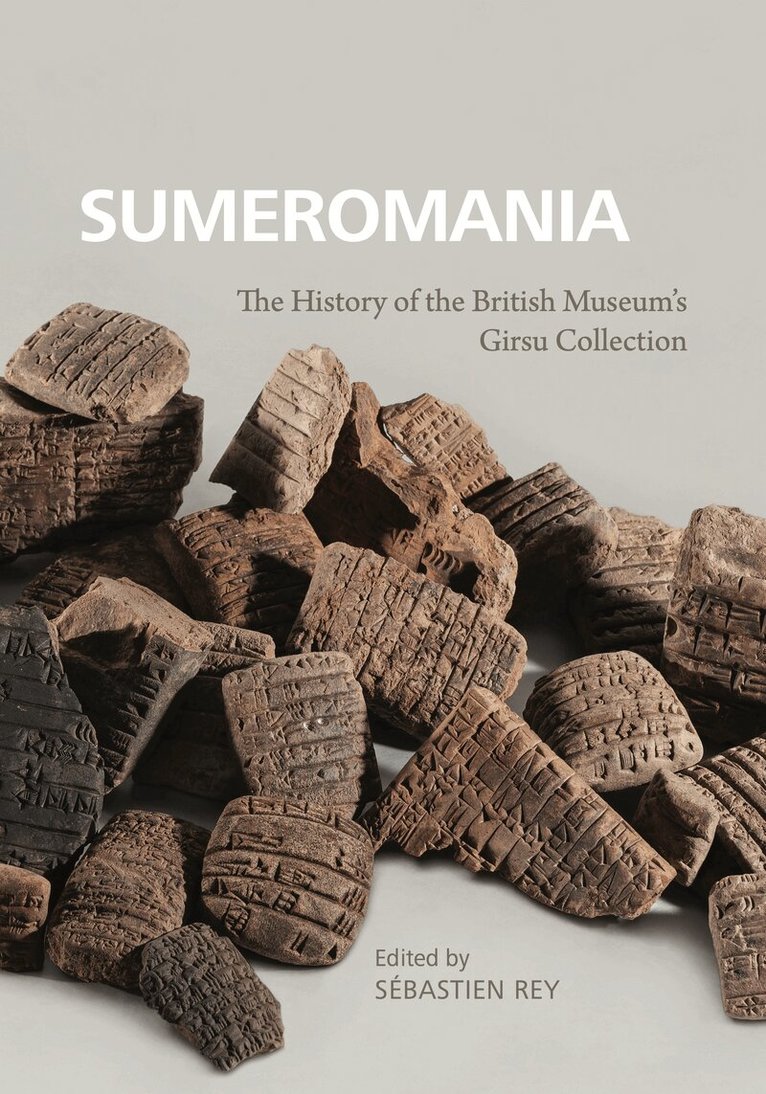
Sumeromania uncovers the dramatic and complex story behind one of the British Museum’s most important holdings: its vast collection of objects from the ancient Sumerian city of Girsu (modern Tello, Iraq). From statues of rulers to thousands of cuneiform tablets, these artifacts entered the museum during a period of fierce competition among empires, archaeologists, and dealers.Drawing on an extraordinary archive of correspondence, reports, and trustees’ minutes, the book reconstructs how these objects were unearthed, purchased, and transported between the mid-nineteenth and early twentieth centuries. It reveals the entanglements of Ottoman authorities, French excavators, British officials, and an international network of antiquities dealers, while also tracing the museum’s evolving accession practices. By linking archival documents with objects in the collection, Sumeromania not only provides a reassessment of provenance but also resituates these materials within their archaeological and geopolitical contexts.In doing so, the book offers a major contribution to the study of the history of archaeology, museum collecting, and imperialism. It reconfigures our understanding of how modern institutions came to shape—and distort—the material record of ancient Mesopotamia. Specialists in ancient Near Eastern studies, Assyriology, and archaeology will find new insights into Girsu’s recovery, while scholars of museum studies, the history of collecting, and British imperial history will discover a case study rich in archival detail and contemporary resonance.
381 kr
Skickas
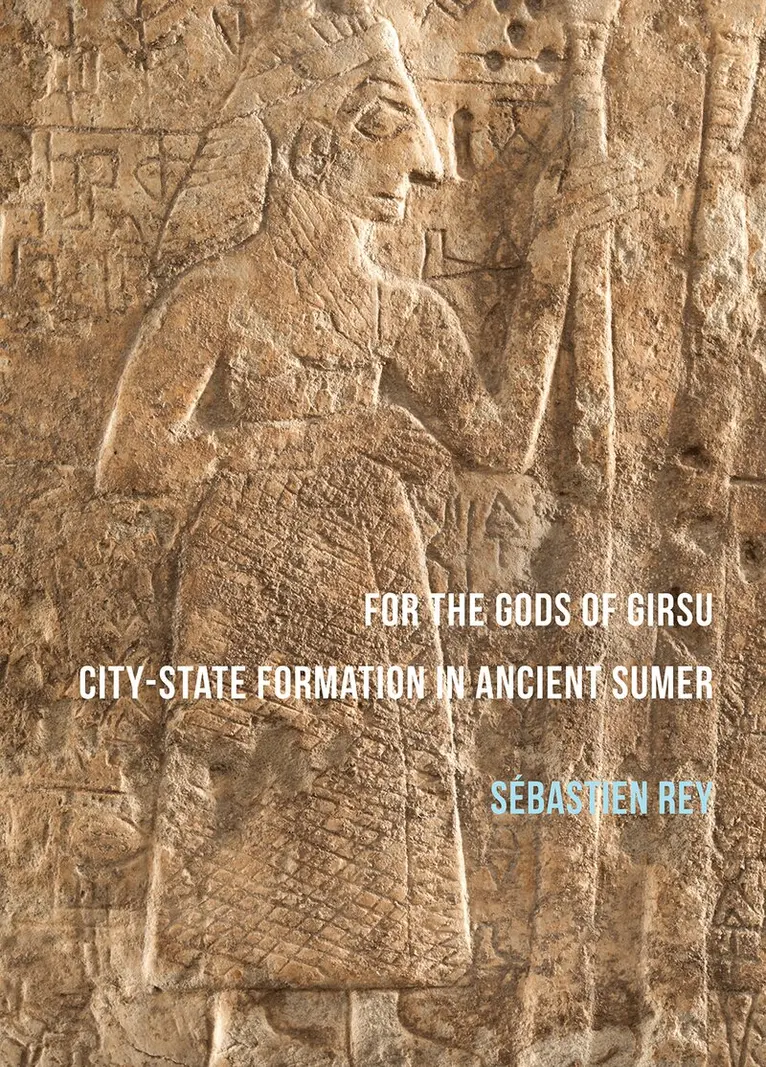
For the Gods are the opening words or incipit of the first inscribed votive artefacts dedicated to the principal deities of the Sumerian pantheon. They commemorate the construction or renovation of cities, temples, rural sanctuaries, border steles, in sum all the symbolically charged features of archaic states belonging thus metaphorically to supernatural tutelary overlords. Girsu (present-day Tello) is one of the earliest known cities of the world together with Uruk, Eridu, and Ur, and was considered to be in the 3rd Millennium the sanctuary of the Sumerian heroic god Ningirsu who fought with the demons of the Kur (Mountain) and thus made possible the introduction of irrigation and agriculture in Sumer. Girsu was the sacred metropolis and central pole of a city-state that lay in the Southeasternmost part of the Mesopotamian floodplain. The pioneering explorations carried out between 1877 and 1933 at Tello and the early decipherment of the Girsu cuneiform tablets were ground-breaking because they revealed the principal catalytic elements of the Sumerian takeoff – that is, a multiplicity and coalescence of major innovations, such as the appearance of a city– countryside continuum, the emergence of literacy, of bronze manufacture, and the development of monumental art and architecture. Because of the richness of information related in particular to the city’s spatial organization and geographical setting, and thanks to the availability of recently declassified Cold War space imagery and especially the possibility to launch new explorations in Southern Iraq, Girsu stands out as a primary locale for re-analyzing through an interdisciplinary approach combining archaeological and textual evidence the origins of the Sumerian city-state.
381 kr
Skickas
For the Gods are the opening words or incipit of the first inscribed votive artefacts dedicated to the principal deities of the Sumerian pantheon. They commemorate the construction or renovation of cities, temples, rural sanctuaries, border steles, in sum all the symbolically charged features of archaic states belonging thus metaphorically to supernatural tutelary overlords. Girsu (present-day Tello) is one of the earliest known cities of the world together with Uruk, Eridu, and Ur, and was considered to be in the 3rd Millennium the sanctuary of the Sumerian heroic god Ningirsu who fought with the demons of the Kur (Mountain) and thus made possible the introduction of irrigation and agriculture in Sumer. Girsu was the sacred metropolis and central pole of a city-state that lay in the Southeasternmost part of the Mesopotamian floodplain. The pioneering explorations carried out between 1877 and 1933 at Tello and the early decipherment of the Girsu cuneiform tablets were ground-breaking because they revealed the principal catalytic elements of the Sumerian takeoff – that is, a multiplicity and coalescence of major innovations, such as the appearance of a city– countryside continuum, the emergence of literacy, of bronze manufacture, and the development of monumental art and architecture. Because of the richness of information related in particular to the city’s spatial organization and geographical setting, and thanks to the availability of recently declassified Cold War space imagery and especially the possibility to launch new explorations in Southern Iraq, Girsu stands out as a primary locale for re-analyzing through an interdisciplinary approach combining archaeological and textual evidence the origins of the Sumerian city-state.