Sergej Olenin - Böcker
Visar alla böcker från författaren Sergej Olenin. Handla med fri frakt och snabb leverans.
4 produkter
4 produkter
2 121 kr
Skickas inom 10-15 vardagar
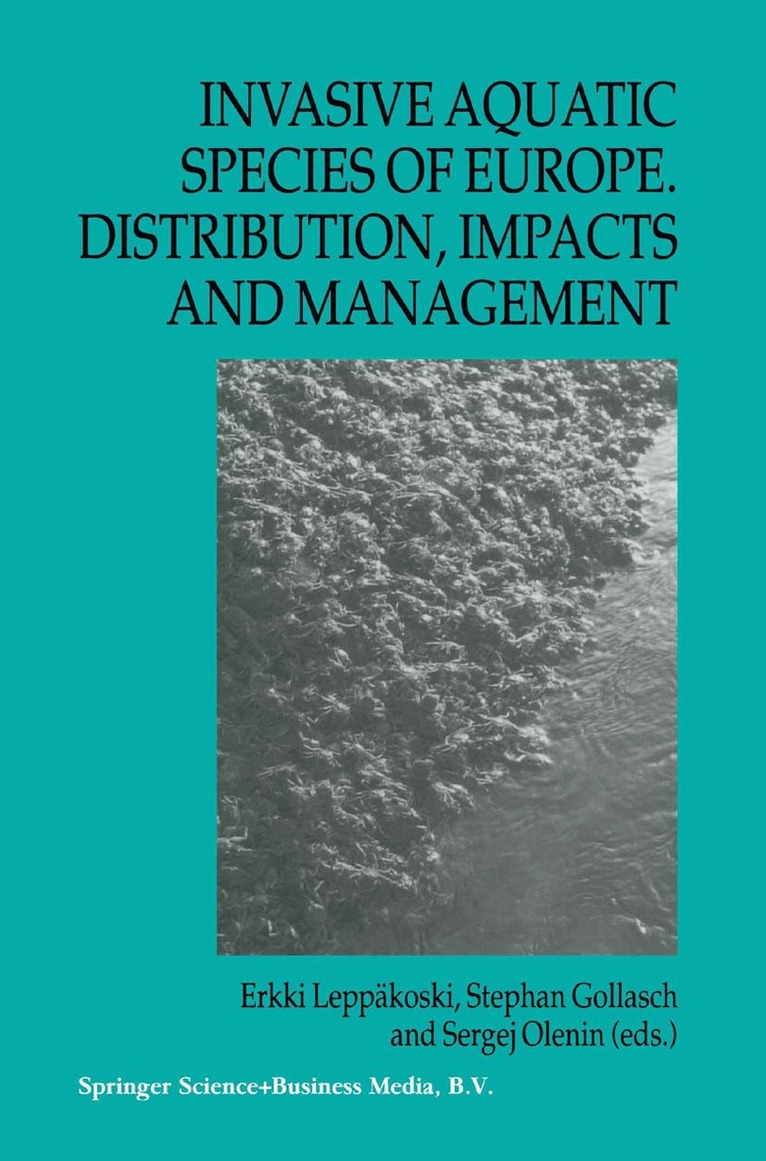
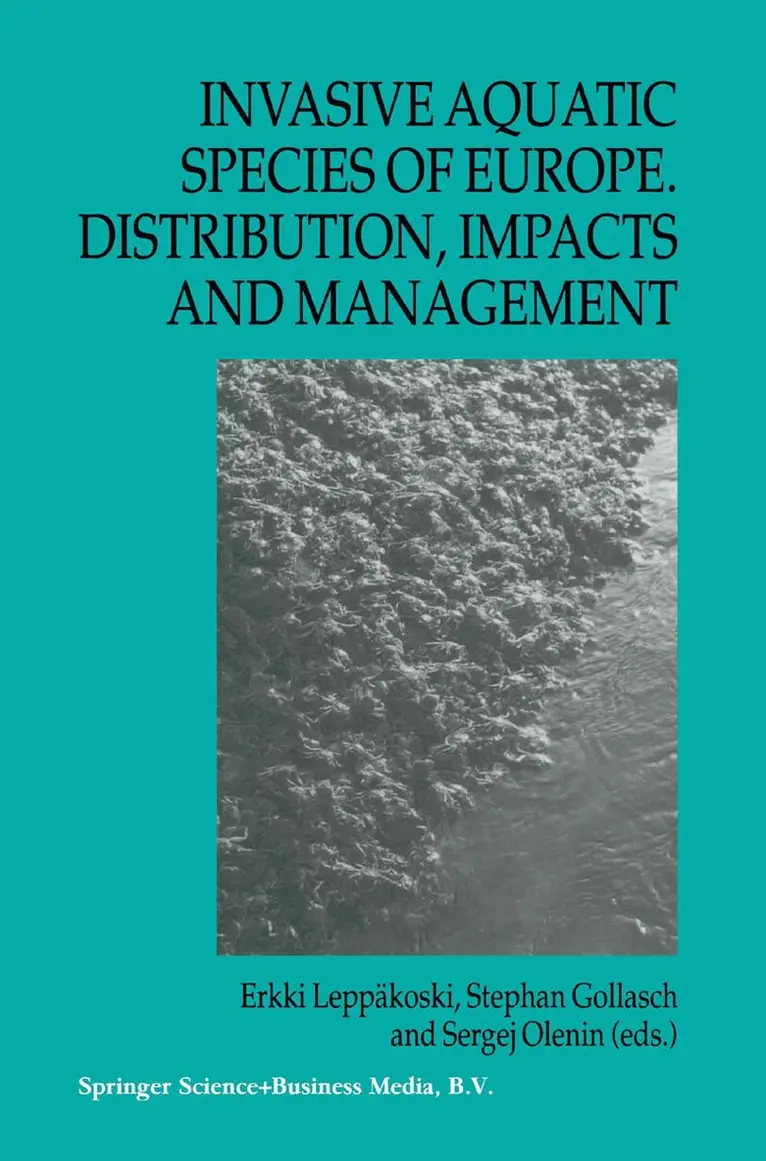
The global scale of alien species invasions is becoming increasingly evident at the beginning of the 21st century. This volume is an attempt to provide an overall picture of aquatic species invasions in Europe. Its geographical scope stretches from Irish waters in the west to the Volga River and the Caspian Sea in the east, and from the Mediterranean Sea in the south up to the Arctic coast of Europe. Not all parts of the continent could be covered equally, as in some countries species invasions are not yet studied. The book represents the array of all major European aquatic systems in the broadest geographical and ecological scope possible, from fully saline seas, semi-enclosed brackish water bodies and coastal lagoons to freshwater lakes, major river systems and waterways. Key objectives include the present status and impacts on economy and environment caused by non-native aquatic species in European waters. Altogether more than 100 scientists from 24 countries have joined together to synthesize the available information on bio-invasions.
Comparative Roles of Suspension-Feeders in Ecosystems
Proceedings of the NATO Advanced Research Workshop on The Comparative Roles of Suspension-Feeders in Ecosystems, Nida, Lithuania, 4-9 October 2003
Inbunden, Engelska, 2005
1 593 kr
Skickas inom 10-15 vardagar
Animals are a major link between the water column (pelagic) and the bottom (benthic) habitats in most shallow systems. This coupling is dominated by active processes such as suspension-feeding in which the organism actively uses energy to pump water that is then filtered to remove suspended particles that are consumed while undigested remains are deposited on the bottom. As a result of this feeding on and metabolism of particles, the animals excrete dissolved inorganic and organic waste back into the water column, and thus, become major components in the cycling and feedback of essential elements. With relatively high weight specific filtration rates of 1— 10 liters/hour/gram dry tissue and a propensity to form large aggregated populations (beds, reefs, schools and swarms), these organisms can play an important role in regulating water column processesAlthough estuarine bivalve molluscs such as oysters and mussels dominate the suspension-feeder literature, other groups including plankton and nekton that are found in estuarine as well as other aquatic systems are also potentially important removers of suspended particles. Thus, a significant part of the NATO Advanced Research Workshop focused on suspension-feeders as controllers of plankton abundance, biomass and diversity, system metabolism, nutrient cycling and scale dependency.Systems dominated by suspension-feeders are typically impacted by human activities including recreation, aquaculture, human and industrial pollution, and bilge water from shipping. Suspension-feeders are often impacted by fisheries and over-exploitation. These impacts commonly result in changes in ecosystem structure either through the food chain concentration of harmful substances or diseases, the introduction of alien species of suspension-feeders, or the instability of suspension-feeders systems through species displacement or phase shifts in the dominance between different suspension-feeding components such asnekton or zooplankton. These issues were addressed near the close of the workshop along with conclusions and syntheses developed by the working groups.
1 593 kr
Skickas inom 10-15 vardagar
Animals are a major link between the water column (pelagic) and the bottom (benthic) habitats in most shallow systems. This coupling is dominated by active processes such as suspension-feeding in which the organism actively uses energy to pump water that is then filtered to remove suspended particles that are consumed while undigested remains are deposited on the bottom. As a result of this feeding on and metabolism of particles, the animals excrete dissolved inorganic and organic waste back into the water column, and thus, become major components in the cycling and feedback of essential elements. With relatively high weight specific filtration rates of 1— 10 liters/hour/gram dry tissue and a propensity to form large aggregated populations (beds, reefs, schools and swarms), these organisms can play an important role in regulating water column processesAlthough estuarine bivalve molluscs such as oysters and mussels dominate the suspension-feeder literature, other groups including plankton and nekton that are found in estuarine as well as other aquatic systems are also potentially important removers of suspended particles. Thus, a significant part of the NATO Advanced Research Workshop focused on suspension-feeders as controllers of plankton abundance, biomass and diversity, system metabolism, nutrient cycling and scale dependency.Systems dominated by suspension-feeders are typically impacted by human activities including recreation, aquaculture, human and industrial pollution, and bilge water from shipping. Suspension-feeders are often impacted by fisheries and over-exploitation. These impacts commonly result in changes in ecosystem structure either through the food chain concentration of harmful substances or diseases, the introduction of alien species of suspension-feeders, or the instability of suspension-feeders systems through species displacement or phase shifts in the dominance between different suspension-feeding components such asnekton or zooplankton. These issues were addressed near the close of the workshop along with conclusions and syntheses developed by the working groups.
2 121 kr
Skickas inom 10-15 vardagar
This book is the first attempt to provide an overall picture of aquatic species invasions in Europe. Its geographical scope stretches from Irish waters in the west to the Volga River and the Caspian Sea in the east, and from the Mediterranean Sea in the south up to the Arctic coast of Europe. Not all parts of the continent could be covered equally, as in some countries species invasions are not yet studied. The book represents the array of all major European aquatic systems in the broadest geographical and ecological scope possible, from fully saline seas, semi-enclosed brackish water bodies and coastal lagoons to freshwater lakes, major river systems and waterways. The key objectives include the present status and impacts on economy and environment caused by non-native aquatic species in European waters. Altogether more than 100 scientists from 24 countries have joined together to synthesize the available information on bio-invasions.