Sergio Della Sala - Böcker
Visar alla böcker från författaren Sergio Della Sala. Handla med fri frakt och snabb leverans.
9 produkter
9 produkter
2 253 kr
Skickas inom 7-10 vardagar
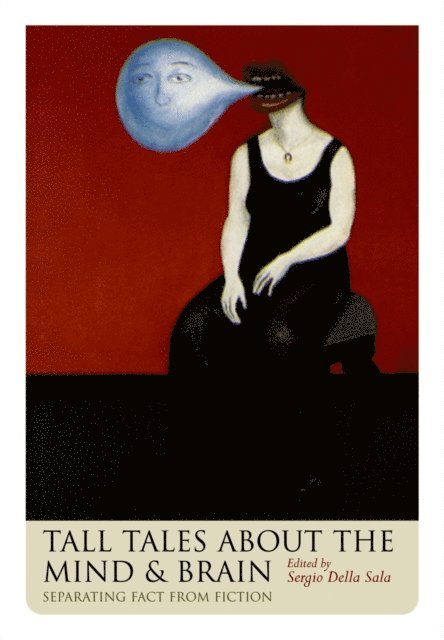
Does listening to Mozart make us more intelligent? Is there such a thing as a gay gene? Does the size of the brain matter? Does the moon influence our behaviour? Can we communicate with the dead? Can graphology tell us anything about a person's character? Is the human brain clonable? What role do dreams have in cognition? Can mind conquer matter and diseases? Are out-of-body experiences possible? Can we trust our intuitions? To some, the answer to all these questions might well be a resounding 'no', but to many people these represent serious beliefs about the mind and brain - beliefs that drive their everyday behaviour, beliefs that cost them huge amounts of money. Whole industries have developed founded on these dubious claims about the mind and brain. Even major corporations have dabbled with assessment methods such as those advocated by graphology, accepting and rejecting candidates on the basic of their handwriting. Expectant parents buy books and tapes by the dozen showing them how to improve the intelligence of their child by playing them classical music. People subscribe to expensive therapies founded on beliefs rather than science, or risk their health buying books that tell them how they can conquer illness through positive thinking, perhaps at the expense of more scientifically proven treatments.Tall Tales about the Mind and Brain presents a sweeping survey of common myths about the mind and brain. In a lighthearted and accessible style, it exposes the truth behind these beliefs, how they are perpetuated, why people believe them, and why they might even exist in the first place.
1 143 kr
Skickas
Does listening to Mozart make us more intelligent? Is there such a thing as a gay gene? Does the size of the brain matter? Does the moon influence our behaviour? Can we communicate with the dead? Can graphology tell us anything about a person's character? Is the human brain clonable? What role do dreams have in cognition? Can mind conquer matter and diseases? Are out-of-body experiences possible? Can we trust our intuitions? To some, the answer to all these questions might well be a resounding 'no', but to many people these represent serious beliefs about the mind and brain - beliefs that drive their everyday behaviour, beliefs that cost them huge amounts of money. Whole industries have developed founded on these dubious claims about the mind and brain. Even major corporations have dabbled with assessment methods such as those advocated by graphology, accepting and rejecting candidates on the basic of their handwriting. Expectant parents buy books and tapes by the dozen showing them how to improve the intelligence of their child by playing them classical music. People subscribe to expensive therapies founded on beliefs rather than science, or risk their health buying books that tell them how they can conquer illness through positive thinking, perhaps at the expense of more scientifically proven treatments.Tall Tales about the Mind and Brain presents a sweeping survey of common myths about the mind and brain. In a lighthearted and accessible style, it exposes the truth behind these beliefs, how they are perpetuated, why people believe them, and why they might even exist in the first place.
1 040 kr
Skickas inom 7-10 vardagar
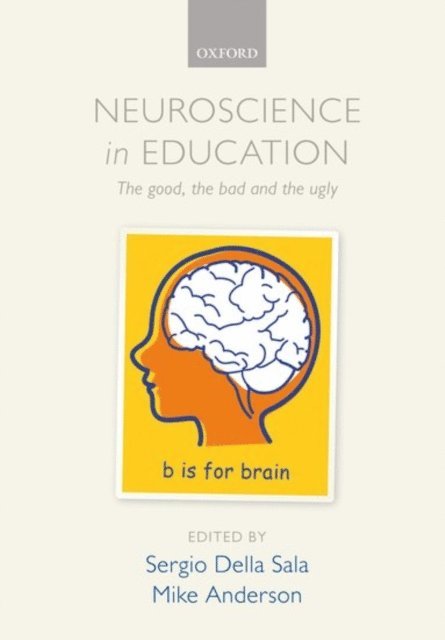
In the past ten years, there has been growing interest in applying our knowledge of the functioning of the human brain to the field of education-including reading, learning, language and mathematics. This has resulted in the development of a number of new practices in education-some good, some bad and some just crazy. The 'good' is nearly always sound cognitive research that has clear implications for educational practice. The 'bad' is the use of neuroscience jargon to lure the unwary and to give an apparent scientific aura to flawed educational programs with no evidence base and which no reputable neuroscientist would endorse. The 'ugly' is simplistic interpretation and misapplication of cognitive theories leading to errors in their application. More and better could be done if neuroscientists and educationalists acknowledge the limits of their disciplines and start listening to each other.Neuroscience in Education brings together an international group of leading psychologists, neuroscientists, educationalists and geneticists to critically review some of these new developments, examining the science behind these practices, the validity of the theories on which they are based, and whether they work. It will be fascinating reading for anyone involved in education, including teachers, psychologists, neuroscientists, and policy makers as well as interested parents.
1 111 kr
Skickas inom 5-8 vardagar
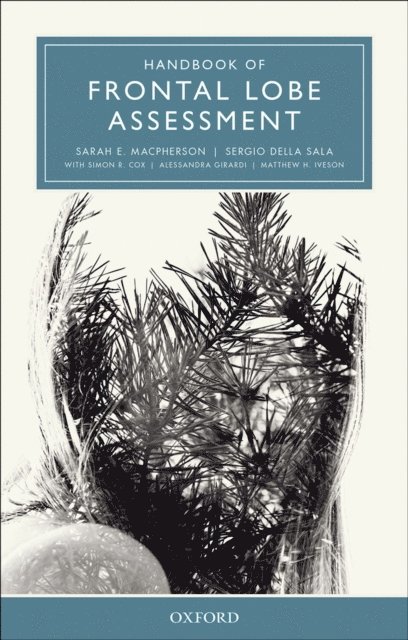
There are several tests used in clinical practice and research worldwide that have been devised to assess the functions subsumed by the frontal lobes of the brain. Anatomical localisation has revealed that the frontal lobes can be divided into sub-regions with different functional domains. As a result, a number of authors working in the frontal lobe literature have made a case for patients with frontal lobe damage to be considered in their distinct subgroups, rather than considered together in one unitary group. As a result, it is important for clinicians and researchers to be made aware of the functions assessed by individual frontal tests and understand which frontal regions might be impaired in their patient groups, as patients with damage to one of these regions will perform poorly on tasks tapping that region yet may perform well on tasks tapping the unaffected regions within the frontal lobes. The 'Handbook of Frontal Lobe Assessment' provides a critical review and appraisal of both the neuropsychological and experimental tests that have been devised to assess frontal lobe functions. It includes many tests that have not been included in previously published neuropsychological compendia. Throughout, the book discusses the available frontal tests in relation to patient and lesion data, neuroimaging data and aging data in order to offer clinicians and researchers the opportunity to choose the best assessment instrument for their purpose.
784 kr
Skickas inom 10-15 vardagar
Memory and forgetting are inextricably intertwined. In order to understand how memory works we need to understand how and why we forget. The topic of forgetting is therefore hugely important, despite the fact that it has often been neglected in comparison with other features of memory. This volume addresses various aspects of forgetting, drawing from several disciplines, including experimental and cognitive psychology, cognitive and clinical neuropsychology, behavioural neuroscience, neuroimaging, clinical neurology, and computational modeling. The first chapters of the book discuss the history of forgetting, its theories and accounts, the difference between short-term and long-term forgetting as well as the relevance of forgetting within each of the numerous components of memory taxonomy. The central part summarizes and discusses what we have learned about forgetting from animal work, from computational modeling, and from neuroimaging. Further chapters discuss pathological forgetting in patients with amnesia and epilepsy, as well as psychogenic forgetting. The book concludes by focusing on the difference between forgetting of autobiographical memories versus collective memory forgetting. This book is the first to address the issue of forgetting from an interdisciplinary point of view, but with a particular emphasis on psychology. The book is scientific and yet accessible in tone, and as such is suitable for advanced undergraduate and postgraduate students of psychology and related subjects, such as science and neuroscience.
808 kr
Skickas inom 7-10 vardagar
Currently there is a gap between what scientists know aboutthe mindand brain and the assumptions that others draw from sources ofeveryday information such as newspapers, popular press andtelevision. Mind Myths attempts to close this gap by bringingtogether top international neuroscientists and psychologists toprovide a fascinating and scientifically reliable insight into theneuropsychological and cognitive phenomena that are frequentlyreported in the media. A multitude of mind myth topics are tackled,for example* the resuscitation from coma thanks to a patient's avourite songs* the creativity of the right hemisphere* the false memory syndrome* the placebo effect* learning while sleeping"Mind Myths...includes the remarkably persistent fallacy that weonly ever use 10% of our brains, the assumption that our rightbrains function as artistic hippies and our left as desiccatedaccountants ...the book is written in a lively style and will, Ihope, be read widely by science journalists, and others who helpperpetuate the various myths... an excellent focus for anundergraduate seminar, providing a stimulating bridge between thepsychological laboratory and the rather untilled field of folkpsychology." From the Foreword by Alan Baddeley This unique book will appeal to professionals and students acrossthe psychology and science disciplines and anyone else with aninterest in how the brain works in everyday situations.
2 224 kr
Skickas inom 10-15 vardagar
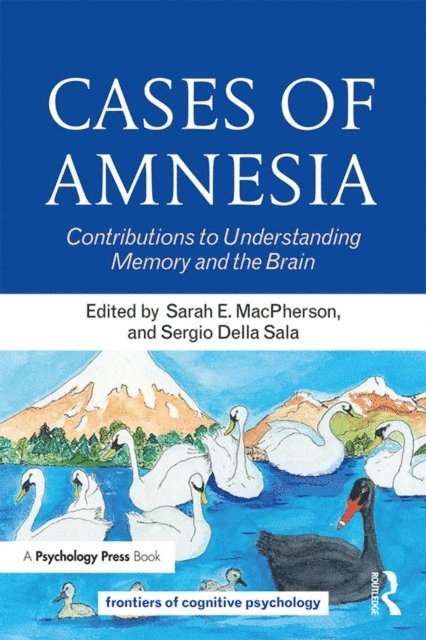
In all cognitive domains, neuropsychological research has advanced through the study of individual patients, and detailed observations and descriptions of their cases have been the backbone of medical and scientific reports for centuries. Cases of Amnesia describes some of the most important single case studies in the history of memory, as well as new case studies of amnesic patients. It highlights the major contribution they make to our understanding of human memory and neuropsychology. Written by world-leading researchers and considering the latest theory and techniques in the field, each case study provides a description of the patient's history, how their memory was assessed and what conclusions can be made in relation to cognitive models of memory. Edited by Sarah E. MacPherson and Sergio Della Sala, Cases of Amnesia is a must read for researchers and clinicians in neuropsychology, cognitive psychology and cognitive neuroscience.
797 kr
Skickas inom 10-15 vardagar
In all cognitive domains, neuropsychological research has advanced through the study of individual patients, and detailed observations and descriptions of their cases have been the backbone of medical and scientific reports for centuries. Cases of Amnesia describes some of the most important single case studies in the history of memory, as well as new case studies of amnesic patients. It highlights the major contribution they make to our understanding of human memory and neuropsychology. Written by world-leading researchers and considering the latest theory and techniques in the field, each case study provides a description of the patient's history, how their memory was assessed and what conclusions can be made in relation to cognitive models of memory. Edited by Sarah E. MacPherson and Sergio Della Sala, Cases of Amnesia is a must read for researchers and clinicians in neuropsychology, cognitive psychology and cognitive neuroscience.
2 029 kr
Skickas inom 10-15 vardagar
Memory and forgetting are inextricably intertwined. In order to understand how memory works we need to understand how and why we forget. The topic of forgetting is therefore hugely important, despite the fact that it has often been neglected in comparison with other features of memory. This volume addresses various aspects of forgetting, drawing from several disciplines, including experimental and cognitive psychology, cognitive and clinical neuropsychology, behavioural neuroscience, neuroimaging, clinical neurology, and computational modeling. The first chapters of the book discuss the history of forgetting, its theories and accounts, the difference between short-term and long-term forgetting as well as the relevance of forgetting within each of the numerous components of memory taxonomy. The central part summarizes and discusses what we have learned about forgetting from animal work, from computational modeling, and from neuroimaging. Further chapters discuss pathological forgetting in patients with amnesia and epilepsy, as well as psychogenic forgetting. The book concludes by focusing on the difference between forgetting of autobiographical memories versus collective memory forgetting. This book is the first to address the issue of forgetting from an interdisciplinary point of view, but with a particular emphasis on psychology. The book is scientific and yet accessible in tone, and as such is suitable for advanced undergraduate and postgraduate students of psychology and related subjects, such as science and neuroscience.