Serguei Netessine - Böcker
Visar alla böcker från författaren Serguei Netessine. Handla med fri frakt och snabb leverans.
3 produkter
3 produkter
Del 131 - International Series in Operations Research & Management Science
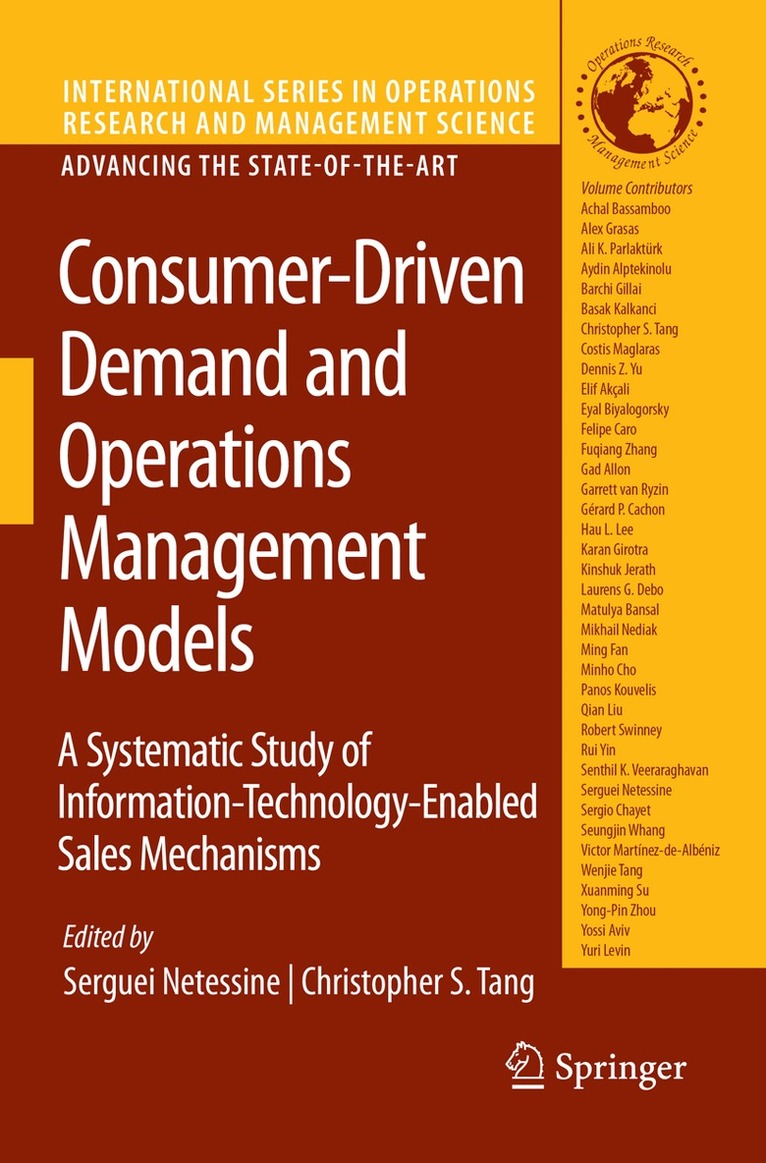
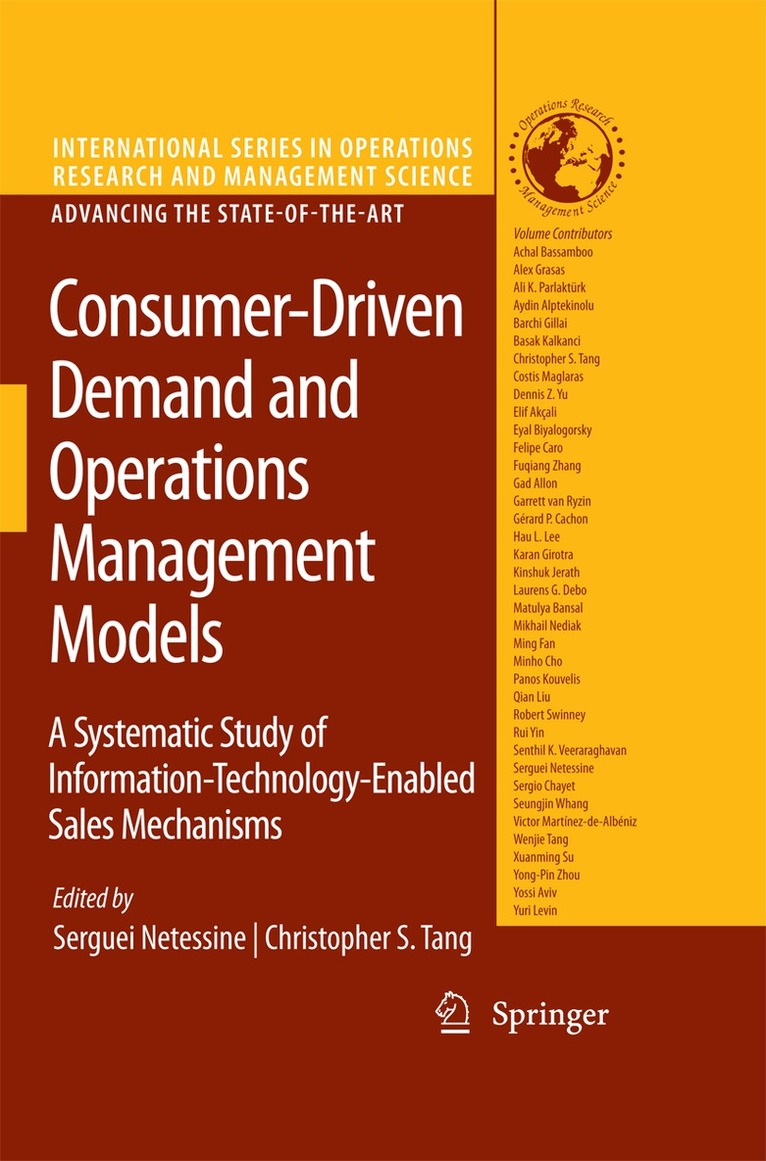
Consumer-Driven Demand and Operations Management Models
A Systematic Study of Information-Technology-Enabled Sales Mechanisms
Inbunden, Engelska, 2009
1 905 kr
Skickas inom 10-15 vardagar
To compete in today's volatile market with rapidly changing consumer tastes and erce competition, companies in the manufacturing and service industries are - ploying new mechanisms to increase sales, market shares, and pro ts. As an - fective mechanism to segment a market comprising of consumers with different needs, preferences, and willingness-to-pay, many rms have used product (or s- vice) variety with different price points to serve different segments of the market, see Ho (1998). Ideally, the price of each of these products (or services) targets a particular segment of customers. For example, airlines often use different terms of sales (refundable/non-refundable, upgradable/non-upgradable, direct/connecting ight, etc. ) to sell economy class tickets at different prices. Likewise, retailers - ten sell the same product at different prices in different channels (company's own web site, dealers' web sites, or company's physical stores) or at different times (- fore, during, and after the selling season), see Talluri and van Ryzin (2005). Ample academic literature in Operations Management and other areas considered these strategies.However, as consumers become more knowledgeable about the product, pricing, organizational and operational policies that the companies deploy for pr- ucts and services, their purchasing begins to change dramatically. In the academic Operations Management literature, consumer demand is often assumedtobe exogenous so that demand functions are usually modeled as well de- ned and exogenously speci ed functions of price and/or other product attributes such as quality.
389 kr
Skickas inom 3-6 vardagar
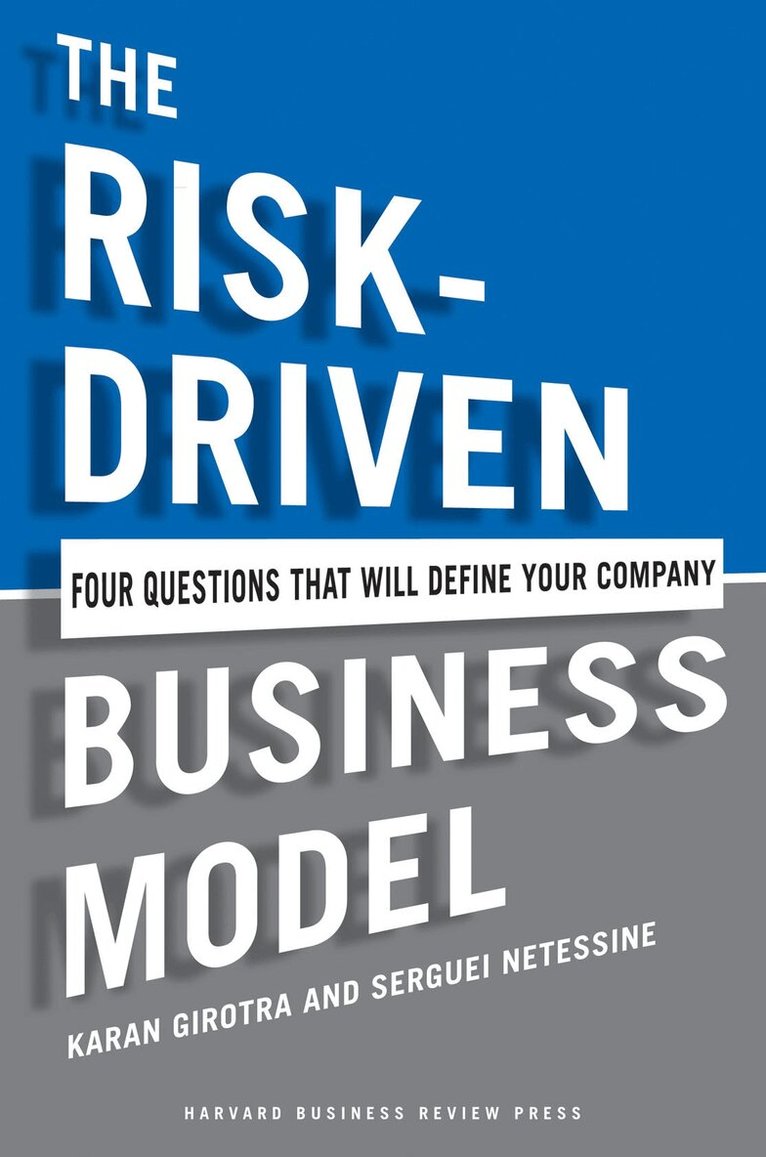
How to outsmart risk Risk has been defined as the potential for losing something of value. In business, that value could be your original investment or your expected future returns. The Risk-Driven Business Model will help you manage risk better by showing how the key choices you make in designing your business models either increase or reduce two characteristic types of risk--information risk, when you make decisions without enough information, and incentive-alignment risk, when decision makers' incentives are at odds with the broader goals of the company. Leaders who understand how the structure of their business model affects risk have the power to create wealth, revolutionize industries, and shape a better world. INSEAD's Karan Girotra and Serguei Netessine, noted operations and innovation professors who have consulted with dozens of companies, walk you through a business model audit to determine what key decisions get made in a business, when they get made, who makes them, and why we make the decisions we do. By changing your company's key decisions within this framework, you can fundamentally alter the risks that will impact your business.This book is for entrepreneurs and executives in companies involved in dynamic industries where the locus of risk is shifting, and includes lessons from Zipcar, Blockbuster, Apple, Benetton, Kickstarter, Walmart, and dozens of other global companies. The Risk-Driven Business Model demystifies business model risk, with clear directives aimed at improving decision making and driving your business forward.
Del 131 - International Series in Operations Research & Management Science
Consumer-Driven Demand and Operations Management Models
A Systematic Study of Information-Technology-Enabled Sales Mechanisms
Häftad, Engelska, 2014
1 905 kr
Skickas inom 10-15 vardagar
To compete in today's volatile market with rapidly changing consumer tastes and erce competition, companies in the manufacturing and service industries are - ploying new mechanisms to increase sales, market shares, and pro ts. As an - fective mechanism to segment a market comprising of consumers with different needs, preferences, and willingness-to-pay, many rms have used product (or s- vice) variety with different price points to serve different segments of the market, see Ho (1998). Ideally, the price of each of these products (or services) targets a particular segment of customers. For example, airlines often use different terms of sales (refundable/non-refundable, upgradable/non-upgradable, direct/connecting ight, etc. ) to sell economy class tickets at different prices. Likewise, retailers - ten sell the same product at different prices in different channels (company's own web site, dealers' web sites, or company's physical stores) or at different times (- fore, during, and after the selling season), see Talluri and van Ryzin (2005). Ample academic literature in Operations Management and other areas considered these strategies.However, as consumers become more knowledgeable about the product, pricing, organizational and operational policies that the companies deploy for pr- ucts and services, their purchasing begins to change dramatically. In the academic Operations Management literature, consumer demand is often assumedtobe exogenous so that demand functions are usually modeled as well de- ned and exogenously speci ed functions of price and/or other product attributes such as quality.