Seymour Geisser - Böcker
Visar alla böcker från författaren Seymour Geisser. Handla med fri frakt och snabb leverans.
7 produkter
7 produkter
901 kr
Skickas inom 10-15 vardagar
The author's research has been directed towards inference involving observables rather than parameters. In this book, he brings together his views on predictive or observable inference and its advantages over parametric inference. While the book discusses a variety of approaches to prediction including those based on parametric, nonparametric, and nonstochastic statistical models, it is devoted mainly to predictive applications of the Bayesian approach. It not only substitutes predictive analyses for parametric analyses, but it also presents predictive analyses that have no real parametric analogues. It demonstrates that predictive inference can be a critical component of even strict parametric inference when dealing with interim analyses. This approach to predictive inference will be of interest to statisticians, psychologists, econometricians, and sociologists.
1 064 kr
Skickas inom 10-15 vardagar
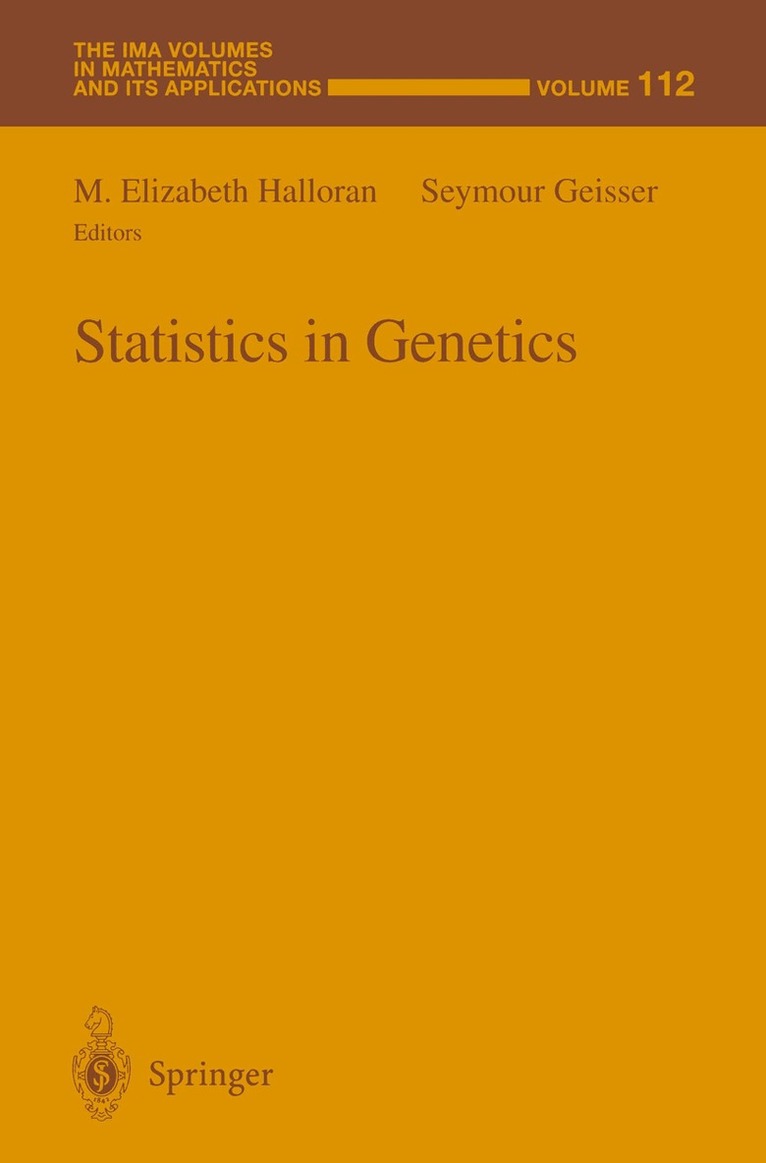
This volume contains refereed papers from a workshop on Statistics in Genetics held as part of the six-week symposium on Statistics in the Health Sciences held by the Institute of Mathematics and its Applications in the summer of 1997. The week on genetics provided a forum for lively discussion among an unusual mix of statistical scientists and population geneticists. The field of statistical genetics is growing and expanding. Though the Genome Project will eventually result in the sequencing of the human genome, as well as the genomes of several other organisms, there will still be a need for good statistics for family studies of complex diseases. Of special interest is the growing recognition of the potential role of interaction of mitochondrial genes with nuclear genes to produce many chronic or degenerative disorders. There is still much room for improving model building in phylogenetics analysis, particularly in understanding inference in this arena. The use of statistics for assessing identification in criminal and paternity cases through DNA is also becoming more widespread. The controversy over these methods is likely to rage for many years to come. The papers in this volume are contributions by some of the leading researchers in the field to the current topics in statistical genetics. One section deals with DNA sequence matching and issues related to forensics. Another group of papers deals with statistical problems of modeling phylogenies and inferential difficulties related to the complex tree structures produced, as well as the method of coalescence. Another group of papers is concerned with human genetics, including the identification of disease genes, and the
878 kr
Skickas inom 10-15 vardagar
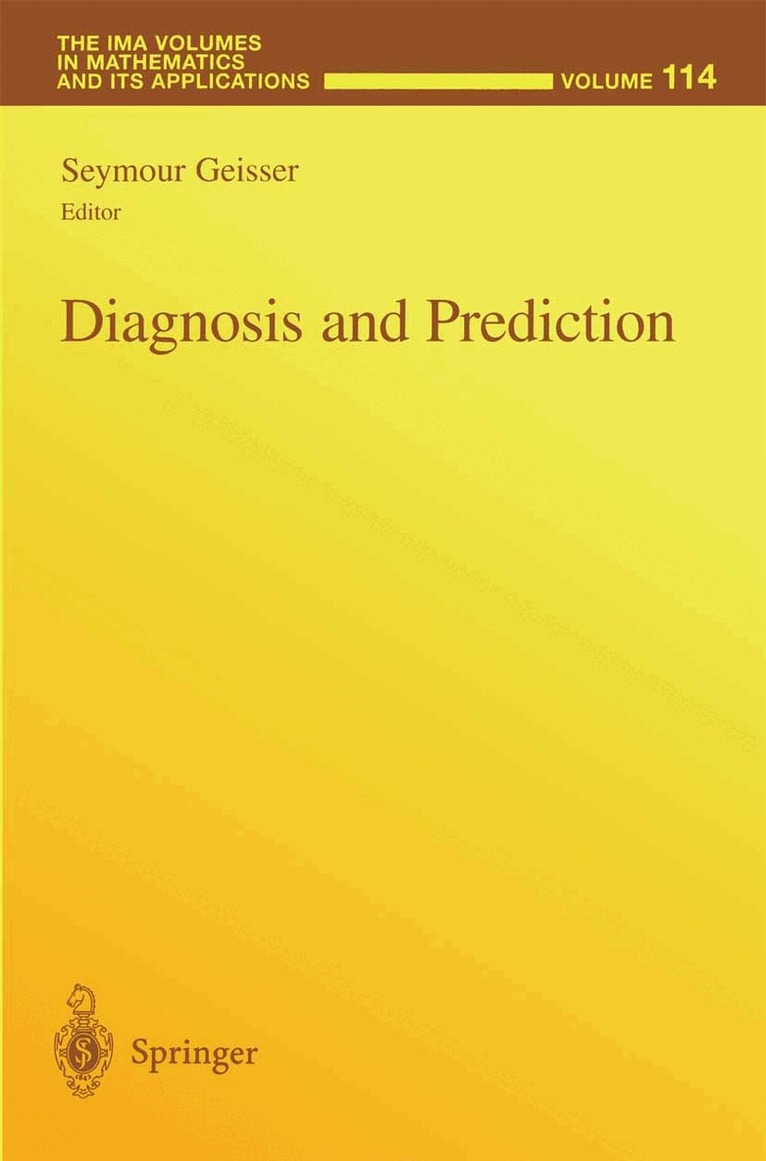
This volume contains refereed papers submitted by participants of the third week of a six week workshop on Statistics in the Health Sciences held by the Institute of Mathematics and its Applications in Minneapolis, Minnesota during July of 1997. This week was devoted to the closely related topics of Diagnosis and Prediction. Theoretical and applied statisticians from universities, medical and public health schools, government and private research institutions, and pharmaceutical companies involved in prediction problems in the life and social sciences and in diagnostic and screening tests were brought together to discuss and exchange new results and information on these important issues. A number of papers with applications were presented and especially lively discussions ensued involving the critical issues and difficulties in using and interpreting diagnostic tests and implementing mass screening programs. Both frequentist and Bayesian approaches were employed. The importance of predicting or controlling future events such as survival, comparative survival and survival post intervention for a disease or even for certain biological or natural events is growing rapidly.This area of concern was also represented by participants who presented work that devised predictive methodology for a variety of problems mainly from a Bayesian perspective.
2 557 kr
Skickas inom 10-15 vardagar
The author's research has been directed towards inference involving observables rather than parameters. In this book, he brings together his views on predictive or observable inference and its advantages over parametric inference. While the book discusses a variety of approaches to prediction including those based on parametric, nonparametric, and nonstochastic statistical models, it is devoted mainly to predictive applications of the Bayesian approach. It not only substitutes predictive analyses for parametric analyses, but it also presents predictive analyses that have no real parametric analogues. It demonstrates that predictive inference can be a critical component of even strict parametric inference when dealing with interim analyses. This approach to predictive inference will be of interest to statisticians, psychologists, econometricians, and sociologists.
Del 529 - Wiley Series in Probability and Statistics
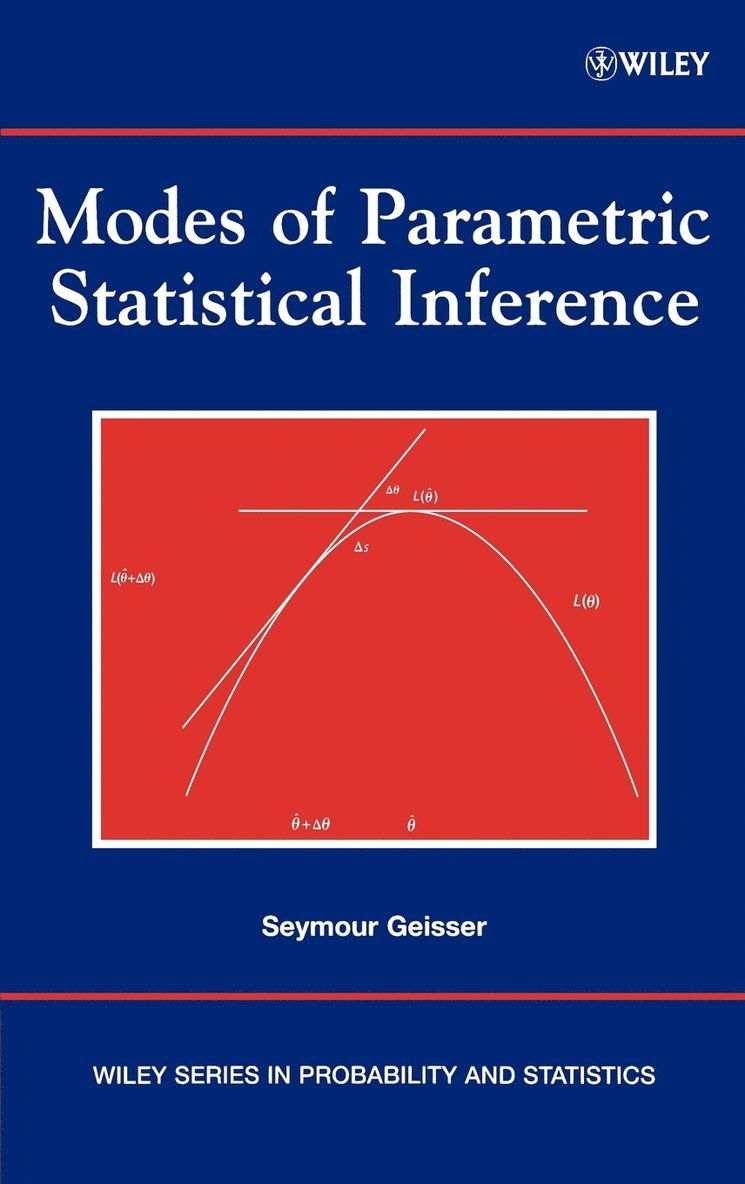
Modes of Parametric Statistical Inference
Inbunden, Engelska, 2006
1 550 kr
Skickas inom 7-10 vardagar
A fascinating investigation into the foundations of statistical inference This publication examines the distinct philosophical foundations of different statistical modes of parametric inference. Unlike many other texts that focus on methodology and applications, this book focuses on a rather unique combination of theoretical and foundational aspects that underlie the field of statistical inference. Readers gain a deeper understanding of the evolution and underlying logic of each mode as well as each mode's strengths and weaknesses. The book begins with fascinating highlights from the history of statistical inference. Readers are given historical examples of statistical reasoning used to address practical problems that arose throughout the centuries. Next, the book goes on to scrutinize four major modes of statistical inference:* Frequentist* Likelihood* Fiducial* Bayesian The author provides readers with specific examples and counterexamples of situations and datasets where the modes yield both similar and dissimilar results, including a violation of the likelihood principle in which Bayesian and likelihood methods differ from frequentist methods. Each example is followed by a detailed discussion of why the results may have varied from one mode to another, helping the reader to gain a greater understanding of each mode and how it works. Moreover, the author provides considerable mathematical detail on certain points to highlight key aspects of theoretical development. The author's writing style and use of examples make the text clear and engaging. This book is fundamental reading for graduate-level students in statistics as well as anyone with an interest in the foundations of statistics and the principles underlying statistical inference, including students in mathematics and the philosophy of science. Readers with a background in theoretical statistics will find the text both accessible and absorbing.
1 096 kr
Skickas inom 10-15 vardagar
This volume contains refereed papers from a workshop on Statistics in Genetics held as part of the six-week symposium on Statistics in the Health Sciences held by the Institute of Mathematics and its Applications in the summer of 1997. The week on genetics provided a forum for lively discussion among an unusual mix of statistical scientists and population geneticists. The field of statistical genetics is growing and expanding. Though the Genome Project will eventually result in the sequencing of the human genome, as well as the genomes of several other organisms, there will still be a need for good statistics for family studies of complex diseases. Of special interest is the growing recognition of the potential role of interaction of mitochondrial genes with nuclear genes to produce many chronic or degenerative disorders. There is still much room for improving model building in phylogenetics analysis, particularly in understanding inference in this arena. The use of statistics for assessing identification in criminal and paternity cases through DNA is also becoming more widespread. The controversy over these methods is likely to rage for many years to come. The papers in this volume are contributions by some of the leading researchers in the field to the current topics in statistical genetics. One section deals with DNA sequence matching and issues related to forensics. Another group of papers deals with statistical problems of modeling phylogenies and inferential difficulties related to the complex tree structures produced, as well as the method of coalescence. Another group of papers is concerned with human genetics, including the identification of disease genes, and the
Del 114 - IMA Volumes in Mathematics and its Applications
Diagnosis and Prediction
Häftad, Engelska, 2012
536 kr
Skickas inom 10-15 vardagar
This IMA Volume in Mathematics and its Applications DIAGNOSIS AND PREDICTION is one of the series based on the proceedings of a very successful 1997 IMA Summer Program on "Statistics in the Health Sciences. " I would like to thank Seymour Geisser of University of Minnesota, School of Statistics for his excellent work as organizer of the meeting and for editing the proceedings. I am grateful to Donald A. Berry, Duke Uni versity (Statistics); Patricia Grambsch, University of Minnesota (Biostatis tics); Joel Greenhouse, Carnegie Mellon University (Statistics); Nicholas Lange, Harvard Medical School (Brain Imaging Center, McLean Hospital); Barry Margolin, University of North Carolina-Chapel Hill (Biostatistics); Sandy Weisberg, University of Minnesota (Statistics); Scott Zeger, Johns Hopkins University (Biostatistics); and Marvin Zelen, Harvard School of Public Health (Biostatistics) for organizing the six weeks summer program. I also take this opportunity to thank the National Science Foundation (NSF) and the Army Research Office (ARO), whose financial support made the workshop possible. Willard Miller, Jr. , Professor and Director v PREFACE This volume contains refereed papers submitted by participants of the third week of a six week workshop on Statistics in the Health Sciences held by the Institute of Mathematics and its Applications in Minneapolis, Minnesota during July of 1997. This week was devoted to the closely related topics of Diagnosis and Prediction.