Seymour Lipset - Böcker
Visar alla böcker från författaren Seymour Lipset. Handla med fri frakt och snabb leverans.
11 produkter
11 produkter
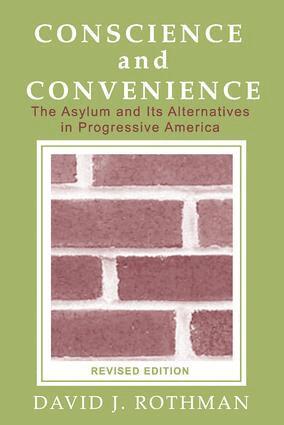
Conscience and Convenience
The Asylum and Its Alternatives in Progressive America
Häftad, Engelska, 2002
691 kr
Skickas inom 10-15 vardagar
Conscience and Convenience was quickly recognized for its masterly depiction and interpretation of a major period of reform history. This history begins in a social context in which treatment and rehabilitation were emerging as predominant after America's prisons and asylums had been broadly acknowledged to be little more than embarrassing failures. The resulting progressive agenda was evident: to develop new, more humane and effective strategies for the criminal, delinquent, and mentally ill. The results, as Rothman documents, did not turn out as reformers had planned.For adult criminal offenders, such individual treatment could be accomplished only through the provision of broad discretionary authority, whereby choices could be made between probation, parole, indeterminate sentencing, and, as a measure of last resort, incarceration in totally redesigned prisons. For delinquents, the juvenile court served as a surrogate parent and accelerated and intensified individual treatment by providing for a series of community-based individual and family services, with the newly designed, school-like reformatories being used for only the most intractable cases. For the mentally ill, psychiatrists chose between outpatient treatments, short-term intensive care, or as last resort, long-term care in mental hospitals with new cottage and family-like arrangements. Rothman shows the consequences of these reforms as unmitigated disasters. Despite benevolent intentions, the actual outcome of reform efforts was to take the earlier failures of prisons and asylums to new, more ominous heights.In this updated edition, Rothman chronicles and examines incarceration of the criminal, the deviant, and the dependent in U.S. society, with a focus on how and why these methods have persisted and expanded for over a century and a half despite longstanding evidence of their failures and abuses.
705 kr
Skickas inom 10-15 vardagar
The United States was the first major colony to revolt successfully against colonial rule. In this sense, it was the first "new nation." To see how, in the course of American history, its values took shape in institutions may help us to understand some of the problems faced by the new nations emerging today on the world scene. In The First New Nation, two broad themes occupy Seymour Martin Lipset's attention: the social conditions that make a stable democracy possible, and the extent to which the American experience was representative or exceptional.The volume is divided into three parts, each of which deals with the role of values in a nation's evolution, but each approaches this role from a different perspective. Part 1, "America as a New Nation," compares early America with today's emerging nations to discover problems common to them as new nations, and analyzes some of the consequences of a revolutionary birth for the creation of a national character and style. Part 2, "Stability in the Midst of Change," traces how values derived from America's revolutionary origins have continued to influence the form and substance of American institutions.Lipset concentrates on American history in later periods, selecting for discussion as critical cases religious institutions and trade unions. Part 3, "Democracy in Comparative Perspective," attempts to show by comparative analysis some ways through which a nation's values determine its political evolution. It compares political development in several modern industrialized democracies, including the United States, touching upon value patterns, value differences, party systems, and the bases of social cleavage.
671 kr
Skickas inom 10-15 vardagar
1 099 kr
Tillfälligt slut
"The election of 1980 did more than break the Democrats' control of the White House and Congress. It also shattered some important assumptions about the character of our voting coalitions and the condition of our political parties. It opened some possibilities for the remainder of the century that had not been there before." These reflections by David S. Broder in the introduction to Party Coalitions in the 1980s are echoed in the essays of the twenty-one scholars, party leaders, and candidates in the volume.This book presents a detailed and lively discussion of the past history, present significance, and future implications of coalitions in the American two-party political system. Patrick H. Caddell observed that "Reagan has skillfully huddled a variety of conservative program and issue initiatives under the umbrella of'economic revitalization.'" In that vein, Richard B. Wirthlin argued that "the 1980 presidential election should be viewed as a major ... opportunity to redraft the policy agenda of this country." Realizing that change is one of the few constants in politics, Lipset and his colleagues set forth strategies and guideposts for Republicans and Democrats who sought to build winning coalitions for the elections of the 1980s.
Conscience and Convenience
The Asylum and Its Alternatives in Progressive America
Inbunden, Engelska, 2017
2 357 kr
Skickas inom 10-15 vardagar
Conscience and Convenience was quickly recognized for its masterly depiction and interpretation of a major period of reform history. This history begins in a social context in which treatment and rehabilitation were emerging as predominant after America's prisons and asylums had been broadly acknowledged to be little more than embarrassing failures. The resulting progressive agenda was evident: to develop new, more humane and effective strategies for the criminal, delinquent, and mentally ill. The results, as Rothman documents, did not turn out as reformers had planned.For adult criminal offenders, such individual treatment could be accomplished only through the provision of broad discretionary authority, whereby choices could be made between probation, parole, indeterminate sentencing, and, as a measure of last resort, incarceration in totally redesigned prisons. For delinquents, the juvenile court served as a surrogate parent and accelerated and intensified individual treatment by providing for a series of community-based individual and family services, with the newly designed, school-like reformatories being used for only the most intractable cases. For the mentally ill, psychiatrists chose between outpatient treatments, short-term intensive care, or as last resort, long-term care in mental hospitals with new cottage and family-like arrangements. Rothman shows the consequences of these reforms as unmitigated disasters. Despite benevolent intentions, the actual outcome of reform efforts was to take the earlier failures of prisons and asylums to new, more ominous heights.In this updated edition, Rothman chronicles and examines incarceration of the criminal, the deviant, and the dependent in U.S. society, with a focus on how and why these methods have persisted and expanded for over a century and a half despite longstanding evidence of their failures and abuses.
2 088 kr
Skickas inom 10-15 vardagar
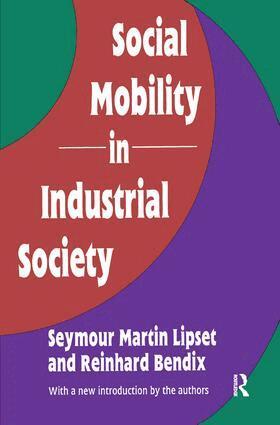
In a careful analysis of the existing literature, the authors marshal an imposing array of evidence in support of their major argument that social mobility is an integral and continuing aspect of the process of industrialization. This classic volume continues to be a basic reference source in the field of occupational mobility.
2 088 kr
Skickas inom 10-15 vardagar
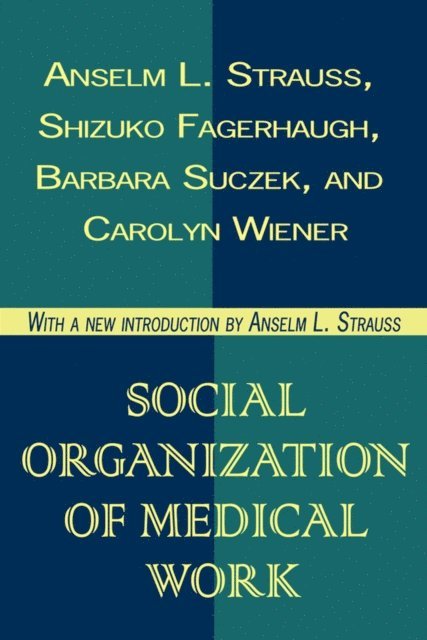
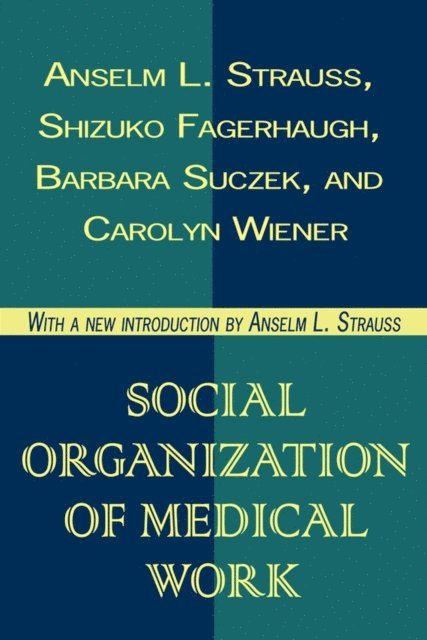
Today we face the painful reality of the prevalence of chronic, rather than acute, diseases. The technologies developed to manager long-term, incurable illnesses have radically and irrevocably altered the organizational structure of health care, presenting us with a frequently bewildering array of medical specialties. Social Organization of Medical Work offers essential insight into this new era of health care.Through richly documented, often gripping case studies, Anselm Strauss and his co-authors show us exactly how health workers are confronting the problems created by chronic disease and coping with today's highly technologized hospitals. They guide us through the various hospital work sites, describing in detail the kinds of tasks performed by medical personnel, the interactions of staff members with each other and with patients, and the overall resulting patient treatment and response.Focusing on the concept of illness trajectory, the authors vividly illustrate the complex, contingent nature of modern medical work. For example, open heart surgery keeps ill persons alive and may even improve them symptomatically, but those who do survive must face an uncertain future in terms of the physiological consequences of the surgery and the drugs required. They also have to adjust t altered lifestyles. In the new introduction, Anselm Strauss discusses the continuing importance of this work to sociologists, medical scholars, and medical professionals.
2 150 kr
Skickas inom 10-15 vardagar
The foundation of this volume is the notion that the several processes of change constituting economic and social development are systematically interrelated. The essence of development is the appearance of rapid rates of increases in many different indices--output per capita, political participation, literacy and the like. These quantitative changes are, however, commonly accompanied by vast changes in the social structure--markets emerge, political bureaucracies arise, and new educational systems appear. Written by the leading authorities on the subject, this group of papers tackles the causes and consequences of social mobility. Each author brings his particular skills to bear on various aspects of the problem in studies of persons moving from rural to urban settings, from one kind of industry to another and from one prestige level to another. Several of the papers review the theoretical and methodological issues involved in comparative research on social mobility while others compare and contrast traditional and modern stratification systems. Various papers explore the economic, religious and psychological basis of social mobility, concluding with enquiry into the consequences of rapid mobility, especially in terms of the political stability of developing nations. Because social mobility is a central consideration in any study of economic and social change, every student of change will use this pioneering reference source as a text for all future research. Contributors include Otis Dudley Duncan, Harold L. Wilensky, Michael G. Smith, Bert F. Hoselitz, Wilbert E. Moore, Natalie Rogoff Rams°y, Gideon Sjoberg, Reinhard Bendix, Harry Crockett, David Matza, Lester Seligman, and Gino Germani. Neil J. Smelser is emeritus professor, Department of Sociology, University of California, Berkeley. Seymour Martin Lipset was professor of sociology and director of the Institute of International Studies at the University of California, Berkeley.
2 357 kr
Skickas inom 10-15 vardagar
The United States was the first major colony to revolt successfully against colonial rule. In this sense, it was the first "new nation." To see how, in the course of American history, its values took shape in institutions may help us to understand some of the problems faced by the new nations emerging today on the world scene. In The First New Nation, two broad themes occupy Seymour Martin Lipset's attention: the social conditions that make a stable democracy possible, and the extent to which the American experience was representative or exceptional.The volume is divided into three parts, each of which deals with the role of values in a nation's evolution, but each approaches this role from a different perspective. Part 1, "America as a New Nation," compares early America with today's emerging nations to discover problems common to them as new nations, and analyzes some of the consequences of a revolutionary birth for the creation of a national character and style. Part 2, "Stability in the Midst of Change," traces how values derived from America's revolutionary origins have continued to influence the form and substance of American institutions.Lipset concentrates on American history in later periods, selecting for discussion as critical cases religious institutions and trade unions. Part 3, "Democracy in Comparative Perspective," attempts to show by comparative analysis some ways through which a nation's values determine its political evolution. It compares political development in several modern industrialized democracies, including the United States, touching upon value patterns, value differences, party systems, and the bases of social cleavage.
671 kr
Skickas inom 10-15 vardagar
In a careful analysis of the existing literature, the authors marshal an imposing array of evidence in support of their major argument that social mobility is an integral and continuing aspect of the process of industrialization. This classic volume continues to be a basic reference source in the field of occupational mobility.
719 kr
Skickas inom 10-15 vardagar
Today we face the painful reality of the prevalence of chronic, rather than acute, diseases. The technologies developed to manager long-term, incurable illnesses have radically and irrevocably altered the organizational structure of health care, presenting us with a frequently bewildering array of medical specialties. Social Organization of Medical Work offers essential insight into this new era of health care.Through richly documented, often gripping case studies, Anselm Strauss and his co-authors show us exactly how health workers are confronting the problems created by chronic disease and coping with today's highly technologized hospitals. They guide us through the various hospital work sites, describing in detail the kinds of tasks performed by medical personnel, the interactions of staff members with each other and with patients, and the overall resulting patient treatment and response.Focusing on the concept of illness trajectory, the authors vividly illustrate the complex, contingent nature of modern medical work. For example, open heart surgery keeps ill persons alive and may even improve them symptomatically, but those who do survive must face an uncertain future in terms of the physiological consequences of the surgery and the drugs required. They also have to adjust t altered lifestyles. In the new introduction, Anselm Strauss discusses the continuing importance of this work to sociologists, medical scholars, and medical professionals.