
Seymour P. Lachman – författare
Visar alla böcker från författaren Seymour P. Lachman. Handla med fri frakt och snabb leverans.
3 produkter
3 produkter
278 kr
Tillfälligt slut
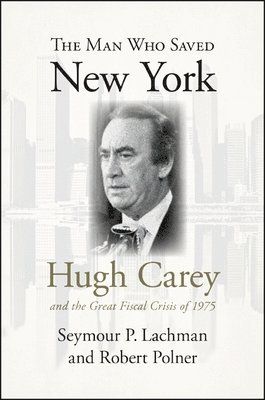
A dramatic and colorful portrait of one of New York's most remarkable governors, Hugh L. Carey, with emphasis on his leadership during the fiscal crisis of 1975.Winner of the 2011 Empire State History Book Award presented by New York State Archives Partnership Trust The Man Who Saved New York offers a portrait of one of New York's most remarkable governors, Hugh L. Carey, with emphasis on his leadership during the fiscal crisis of 1975. In this dramatic and colorful account, Seymour P. Lachman and Robert Polner's examine Carey's youth, military service, and public career against the backdrop of a changing, challenged, and recession-battered city, state, and nation.It was Carey's leadership, Lachman and Polner argue, that helped rescue the city and state from the brink of financial and social ruin. While TV comedians mocked and tabloids shrieked about the Big Apple's rising muggings, its deteriorating public services, and the threats and walkouts by embattled police, firefighters, and teachers, all amid a brutal recession, Carey and his team managed to hold on and ultimately prevailed, narrowly preventing a huge disruption to the state, national, and global economy. At one point, the city came within a few hours of having to declare itself incapable of paying its debts and obligations, but in the end stability and consensus prevailed, and America's largest city stayed out of bankruptcy court. The center held.Based on extensive interviews with Carey and his family, as well as numerous friends, observers, and former advisors, including Steven Berger, David Burke, John Dyson, Peter Goldmark, Judah Gribetz, Richard Ravitch, and Felix Rohatyn, The Man Who Saved New York aims to place Carey and his achievements at the center of the financial maelstrom that met his arrival in Albany. While others were willing to let the city go into default, Carey was strongly opposed, since it would not only affect the state as a whole but would have reverberations both nationally and internationally.In recounting the 1975 rescue of New York City and the aftershocks that nearly sank the state government, Lachman and Polner illuminate the often-volatile interplay among elite New York bankers, hard-nosed municipal union leaders, the press, and influential conservatives and liberals from City Hall to the Albany statehouse to the White House. Although often underappreciated by the public, it was Carey's force of will, wit, intellect, judgment, and experiences that allowed the state to survive this unparalleled ordeal and ultimately to emerge on a stronger footing. Further, Lachman and Polner argue, Carey's accomplishment is worth recalling as a prime example of how governments-local, state, and federal-can work to avoid the renewed the threat of bankruptcy that now confronts many overstretched states and localities.
227 kr
Tillfälligt slut
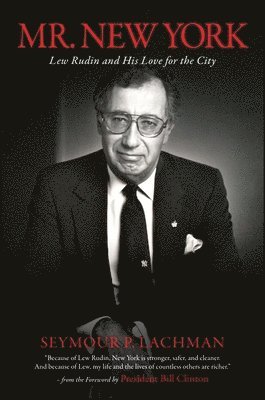
The life and times of an instrumental figure in New York City's recovery from the fiscal and social crises of the 1970s and 1980s, and in the general revitalization of the city over two generations.Lew Rudin was one of New York City's most influential power brokers in the latter part of the twentieth century, but he was also one of its most indefatigable boosters. Born in the Throgs Neck section of the Bronx on April 4, 1927, Rudin rose to become cochairman, with his brother, Jack, of one of New York's oldest real estate dynasties, Rudin Management. It is for his civic involvement, however, that he is best remembered. Whether helping to get the New York City Marathon off the ground, or rallying corporate and labor leaders to come to the city's aid during the fiscal crises of the 1970s, Rudin worked tirelessly on behalf of the city he loved. The Association for a Better New York, which he founded in 1971 in response to growing concerns about the city's decline, continues to play a vital role in virtually every area of municipal life, from transportation to education.In Mr. New York, Seymour P. Lachman chronicles Rudin's life and interesting times, and his love affair with the city he never ceased to believe in. Drawing on published materials as well as personal interviews with family members, business associates, and federal, state, and city officials, Lachman paints a portrait of a man who, by the time of his death in 2001, had truly earned the nickname "Mr. New York."
323 kr
Tillfälligt slut
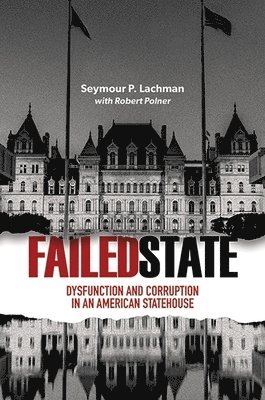
Shines a light on the dark corners of New York's legislature and points the way to much-needed reform.Failed State is both an original account of a state legislature in urgent need of reform and a call to action for those who would fix it. Drawing on his experiences both in and out of state government, former New York State senator Seymour P. Lachman reveals and explores Albany's hush-hush, top-down processes, illuminating the hidden, secretive corners where the state assembly and state senate conduct the people's business and spend public money. Part memoir and part exposé, Failed State is a revision of and follow-up to Three Men in a Room, published in 2006. The focus of the original book was the injury to democratic governance that arises when three individuals-governor, senate majority leader, and assembly speaker-tightly control one of the country's largest and most powerful state governments. Expanding on events that have occurred in the decade since the original book's publication, Failed State shows how this scenario has given way to widespread corruption, among them the convictions of two men in the room-the senate and assembly leaders-as well as a number of other state lawmakers. All chapters have been revised and expanded, new chapters have been added, and the final chapter charts a path to durable reform that would change New York's state government from its present-day status as a national disgrace to a model of transparent, more effective state politics and governance.