Seyom Brown - Böcker
Visar alla böcker från författaren Seyom Brown. Handla med fri frakt och snabb leverans.
8 produkter
8 produkter
1 137 kr
Skickas inom 3-6 vardagar
In the new edition of this major work, Seyom Brown brings his authoritative account of United States foreign policy completely up-to-date with analyses of the Truman administration to the Clinton administration. Most notably, Brown provides an insightful overview of the last three presidencies, beginning with an expanded treatment of the Reagan years to the first major scholarly assessment of Bush's foreign policies to Clinton's early ambivalence toward grappling with the dilemmas of the post-Cold War world.
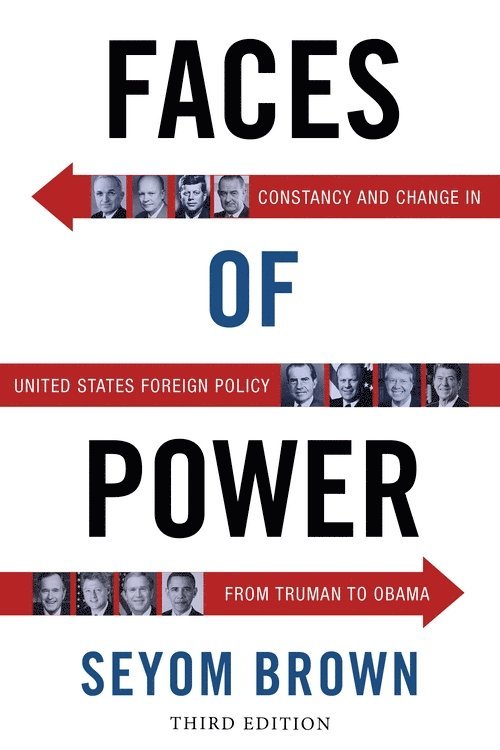
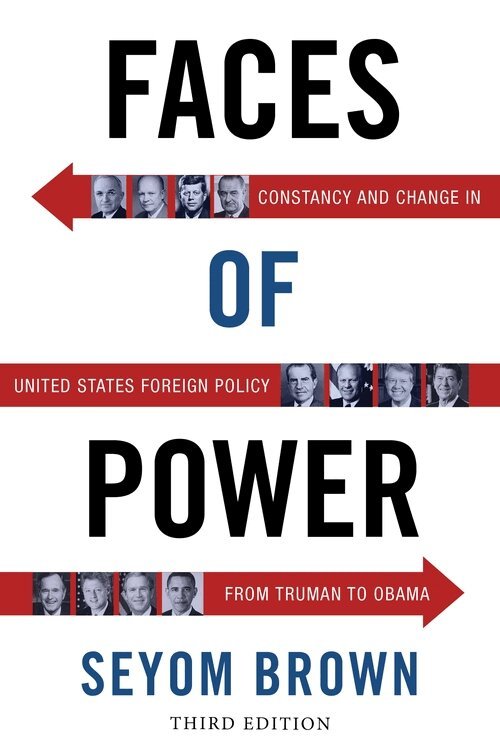
Faces of Power
Constancy and Change in United States Foreign Policy from Truman to Obama
Inbunden, Engelska, 2015
1 583 kr
Skickas inom 7-10 vardagar
Seyom Brown's authoritative account of U.S. foreign policy from the end of the Second World War to the present challenges common assumptions about American presidents and their struggle with power and purpose. Brown shows Truman to be more anguished than he publicly revealed about the use of the atomic bomb; Eisenhower and George W. Bush to be more immersed in the details of policy formulation and implementation than generally believed; Reagan to be more invested in changing his worldview while in office than any previous president; and Obama to have modeled his military exit from Iraq and Afghanistan more closely to Nixon and Kissinger's exit strategy from Vietnam than he would like to admit. Brown's analyses of Obama's policies for countering terrorist threats at home and abroad, dealing with unprecedented upheavals in the Middle East, preventing the proliferation of nuclear weapons, and containing new territorial expansion by China and Russia reinforce the book's "constancy and change" theme, which shows that serving the interests of the most powerful country in the world transforms the Oval Office's occupant more than its occupant can transform the world.Praise for previous editions: "Systematic and informative...[Brown] has a gift for clear analysis that makes his book a useful contribution to the Cold War literature."-The Journal of American History "Comprehensive and clear...thorough without ever becoming dull, providing detailed analysis of decisions while never neglecting the environment within which they are made."-International Affairs "An excellent reference for those interested in United States foreign policy...Well-written and well-researched, it is appropriate for use in both undergraduate and graduate courses."-International Journal "An analysis with difference-an important difference. Seyom Brown discusses United States policy from the perspective of how decision makers in the United States viewed their adversaries and the alternatives as those decision makers saw them...Well worth the effort of a careful reading."-American Political Science Review
Faces of Power
Constancy and Change in United States Foreign Policy from Truman to Obama
Häftad, Engelska, 2015
401 kr
Skickas inom 7-10 vardagar
Seyom Brown's authoritative account of U.S. foreign policy from the end of the Second World War to the present challenges common assumptions about American presidents and their struggle with power and purpose. Brown shows Truman to be more anguished than he publicly revealed about the use of the atomic bomb; Eisenhower and George W. Bush to be more immersed in the details of policy formulation and implementation than generally believed; Reagan to be more invested in changing his worldview while in office than any previous president; and Obama to have modeled his military exit from Iraq and Afghanistan more closely to Nixon and Kissinger's exit strategy from Vietnam than he would like to admit. Brown's analyses of Obama's policies for countering terrorist threats at home and abroad, dealing with unprecedented upheavals in the Middle East, preventing the proliferation of nuclear weapons, and containing new territorial expansion by China and Russia reinforce the book's "constancy and change" theme, which shows that serving the interests of the most powerful country in the world transforms the Oval Office's occupant more than its occupant can transform the world.Praise for previous editions: "Systematic and informative...[Brown] has a gift for clear analysis that makes his book a useful contribution to the Cold War literature."-The Journal of American History "Comprehensive and clear...thorough without ever becoming dull, providing detailed analysis of decisions while never neglecting the environment within which they are made."-International Affairs "An excellent reference for those interested in United States foreign policy...Well-written and well-researched, it is appropriate for use in both undergraduate and graduate courses."-International Journal "An analysis with difference-an important difference. Seyom Brown discusses United States policy from the perspective of how decision makers in the United States viewed their adversaries and the alternatives as those decision makers saw them...Well worth the effort of a careful reading."-American Political Science Review
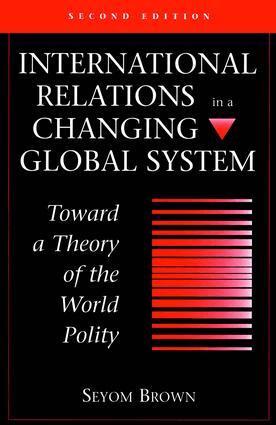
International Relations In A Changing Global System
Toward A Theory Of The World Polity, Second Edition
Inbunden, Engelska, 2019
2 104 kr
Skickas inom 10-15 vardagar
The first edition of this successful text helped to define a new approach to the study of international relations, one suited to the realities of the post?cold war world. It broke the confines of the dominant ?realist? paradigm to offer an intelligible theoretical discourse on how the world works.In this thoroughly revised and updated edition, Prof
International Relations In A Changing Global System
Toward A Theory Of The World Polity, Second Edition
Häftad, Engelska, 1995
575 kr
Skickas inom 10-15 vardagar
This book expands and deepens the analysis of a new approach to the study of international relations in a changing global system, elaborating the essential characteristics of the anarchic structure of the world polity.
274 kr
Skickas inom 10-15 vardagar
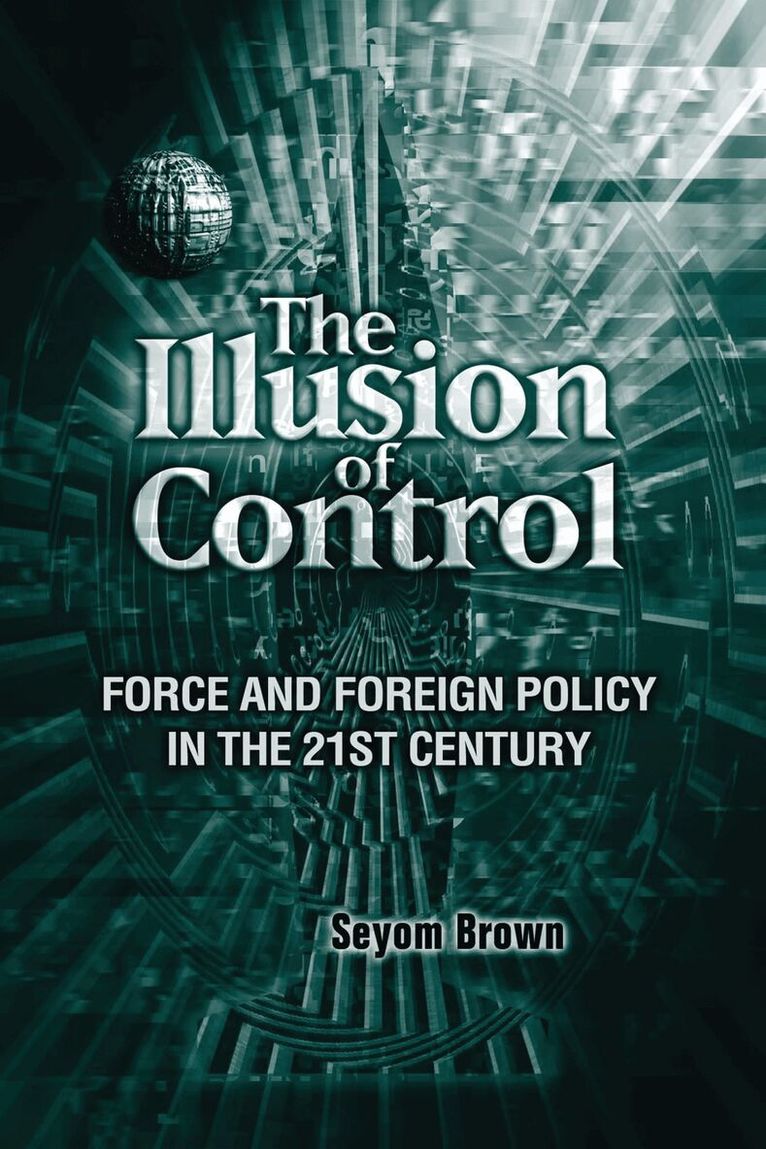
This provocative book assesses the implications of a disturbing trend in U.S. security policy: an increased willingness to use military force as an instrument of diplomacy. In The Illusion of Control, Seyom Brown shows how U.S. officials are relying on force to counter a wide range of threats to America's global interestseclipsing previous strategies that restricted the use of military force to situations in which the country's vital interests were at stake. Brown points out that a disposition to employ military power broadly as an instrument of diplomacy was on the rise well before September 11, 2001 and it shows every sign of persisting into the future. While resorting to force may seem to be a reliable way to establish control over a disorderly world, Brown cautions that expecting to gain and maintain control through military prowess could turn out to be a dangerous illusion. In fact, employing new military technologies in an effort to control international terrorist activities, wars, and civil conflicts is likely to pull the United States into excessive commitments and imprudent action. Brown analyzes the growing willingness of U.S. government officials to use force, then critically assesses the strategic, political, and moral implications for the United States. Adapting traditional ""just war"" concepts to contemporary strategic, political, and technological realities, he offers a set of guidelines to help ensure that use-of-force decisions are approached with the judicious care and gravity they warrant.
1 631 kr
Skickas inom 10-15 vardagar
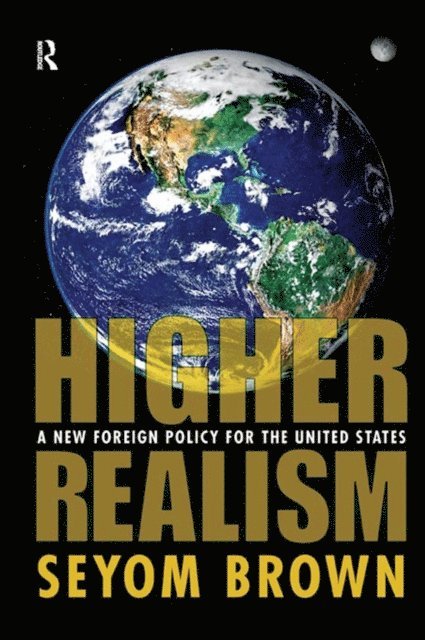
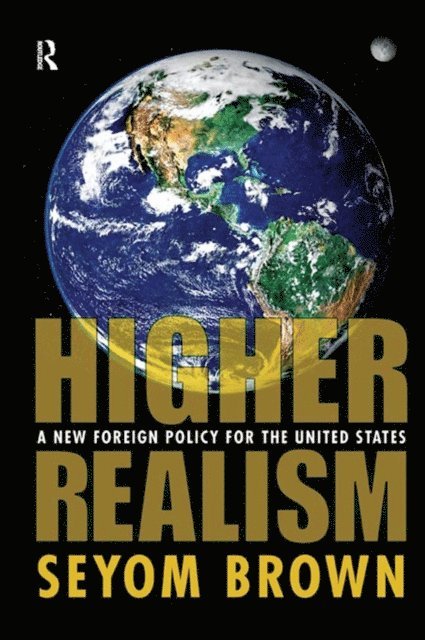
For dealing with an increasingly chaotic and violence-prone world, Higher Realism offers a grand strategy that rejects the imperial thrust of recent U.S. foreign policy as well as the conventional "realist" approach of focusing only on U.S. interests. The emerging world order is one in which many powers of various sorts-states and nonstate actors, large and small, allies and adversaries-have an essential role. Seyom Brown calls this the emergent international "polyarchy," and argues that neither the assertive interventionism of the neoconservatives nor the cool, nonideological geopolitics of the conventional realists is the appropriate response. Instead, responsive to how U.S. interests have become inextricably bound up with world interests, Brown proposes a foreign policy of higher realism centered on cooperation to ensure the security and well-being of all. Brown defines and analyzes those common interests in the environment, peace and security, health and economic vitality, human rights and democracy, and transnational accountability. He faults the arrogant assumption that what is good for the United States is ipso facto good for the world, insisting rather that U.S. policies for global development must respect religious and cultural diversity. Brown's approach transcends the traditional dichotomies of realism versus idealism and self-interest versus altruistic morality. The recommended programs and policies are designed to help a new U.S. presidential administration reformulate a foreign policy that will ensure national security and promote international well-being: higher realism in philosophy and practice.
548 kr
Skickas inom 10-15 vardagar
For dealing with an increasingly chaotic and violence-prone world, Higher Realism offers a grand strategy that rejects the imperial thrust of recent U.S. foreign policy as well as the conventional "realist" approach of focusing only on U.S. interests. The emerging world order is one in which many powers of various sorts-states and nonstate actors, large and small, allies and adversaries-have an essential role. Seyom Brown calls this the emergent international "polyarchy," and argues that neither the assertive interventionism of the neoconservatives nor the cool, nonideological geopolitics of the conventional realists is the appropriate response. Instead, responsive to how U.S. interests have become inextricably bound up with world interests, Brown proposes a foreign policy of higher realism centered on cooperation to ensure the security and well-being of all. Brown defines and analyzes those common interests in the environment, peace and security, health and economic vitality, human rights and democracy, and transnational accountability. He faults the arrogant assumption that what is good for the United States is ipso facto good for the world, insisting rather that U.S. policies for global development must respect religious and cultural diversity. Brown's approach transcends the traditional dichotomies of realism versus idealism and self-interest versus altruistic morality. The recommended programs and policies are designed to help a new U.S. presidential administration reformulate a foreign policy that will ensure national security and promote international well-being: higher realism in philosophy and practice.