Shainool Jiwa - Böcker
Visar alla böcker från författaren Shainool Jiwa. Handla med fri frakt och snabb leverans.
8 produkter
8 produkter
408 kr
Skickas inom 10-15 vardagar
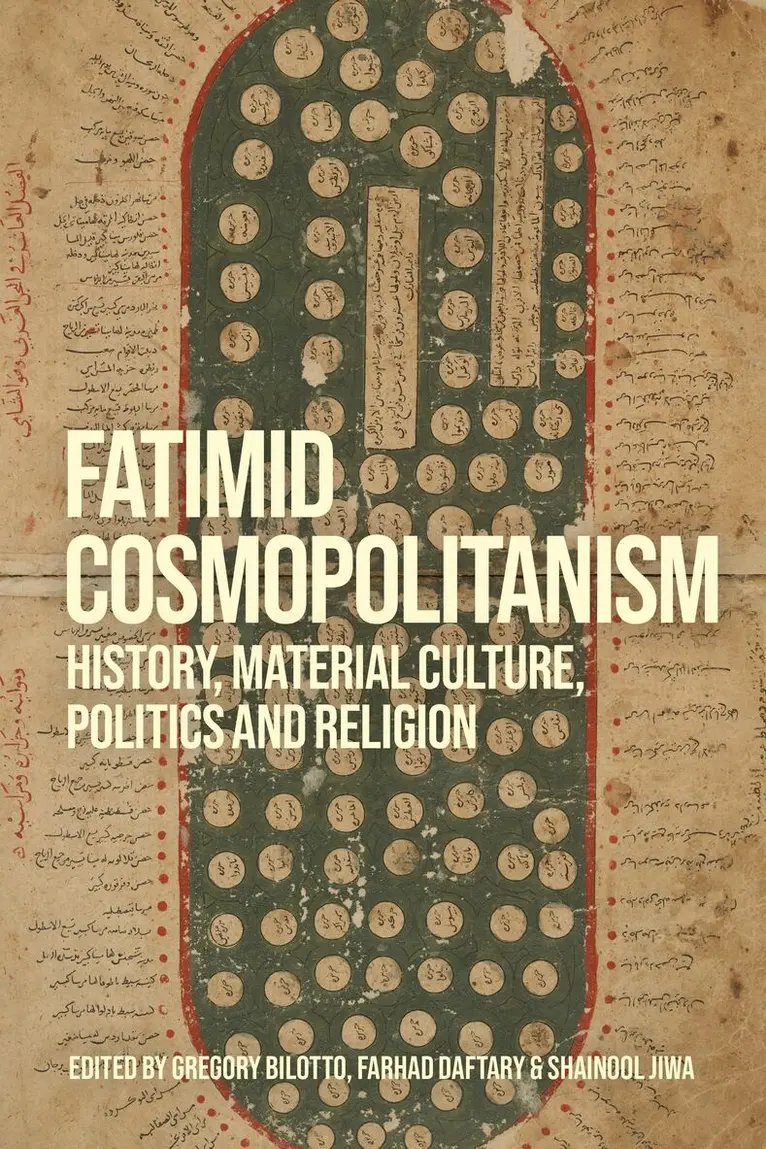
I.B. Tauris in association with the Institute of Ismaili Studies has published the following work as open access.The Fatimid caliphs (297–567/909–1171), who were also the Ismaili Imams, reigned over a vast state stretching from North Africa (including Egypt) to Sicily, Syria and the Hijaz. Under Fatimid patronage, the arts and sciences flourished alongside Ismaili thought and literature. An extensive trade network was centred on their capital, Cairo, facilitating cosmopolitan exchange across their caliphate, the Mediterranean and other lands. This led to innovation in the production of decorative arts, monumental building programmes, international commerce and significant intellectual exchange.The original research of 22 scholars is here organised into four sections on aspects of Fatimid cosmopolitanism, covering religion and statecraft, the Fatimid legacy reconsidered, ceremony and symbolism and art and archaeology.Contributors to this volume include Ali Asgar Hussamuddin Alibhai, Khalil Andani, Dina Ishak Bakhoum, Daniel Beben, Doris Behrens-Abouseif, Gregory Bilotto, Anna Contadini, Delia Cortese, Farhad Daftary, Valérie Gonzalez, Shainool Jiwa, Hasan al-Khoee, Juan de Lara, Ayala Lester, Bernard O’Kane, Marcus Pilz, Stéphane Pradines, Jennifer A. Pruitt, Yossef Rapoport, Paula Sanders, Avinoam Shalem, Yasser Tabbaa, Jamel A. Velji and Paul E. Walker.The ebook editions of this book are available open access under a CC BY-NC-ND 4.0 licence on bloomsburycollections.com. Open access was funded by the Institute of Ismaili Studies.
1 276 kr
Skickas inom 10-15 vardagar
I.B. Tauris in association with the Institute of Ismaili Studies has published the following work as open access.The Fatimid caliphs (297–567/909–1171), who were also the Ismaili Imams, reigned over a vast state stretching from North Africa (including Egypt) to Sicily, Syria and the Hijaz. Under Fatimid patronage, the arts and sciences flourished alongside Ismaili thought and literature. An extensive trade network was centred on their capital, Cairo, facilitating cosmopolitan exchange across their caliphate, the Mediterranean and other lands. This led to innovation in the production of decorative arts, monumental building programmes, international commerce and significant intellectual exchange.The original research of 22 scholars is here organised into four sections on aspects of Fatimid cosmopolitanism, covering religion and statecraft, the Fatimid legacy reconsidered, ceremony and symbolism and art and archaeology.Contributors to this volume include Ali Asgar Hussamuddin Alibhai, Khalil Andani, Dina Ishak Bakhoum, Daniel Beben, Doris Behrens-Abouseif, Gregory Bilotto, Anna Contadini, Delia Cortese, Farhad Daftary, Valérie Gonzalez, Shainool Jiwa, Hasan al-Khoee, Juan de Lara, Ayala Lester, Bernard O’Kane, Marcus Pilz, Stéphane Pradines, Jennifer A. Pruitt, Yossef Rapoport, Paula Sanders, Avinoam Shalem, Yasser Tabbaa, Jamel A. Velji and Paul E. Walker.The ebook editions of this book are available open access under a CC BY-NC-ND 4.0 licence on bloomsburycollections.com. Open access was funded by the Institute of Ismaili Studies.
640 kr
Skickas inom 10-15 vardagar
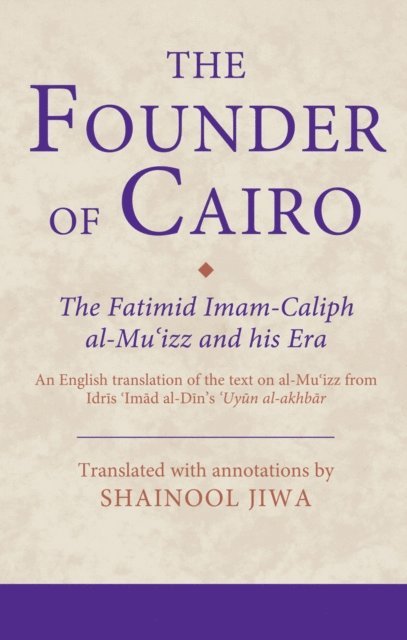
The reign of the founder of Cairo, the fourth Fatimid Imam-caliph al-Mu'izz li-Din Allah (341-365/953-975), marks a watershed in the transformation of the Fatimid state from a regional North African dynasty to an expansive Mediterranean empire. It was also under al- Mu'izz that articulations of the supreme authority of the Fatimid Ismaili imamate were written and disseminated across various regions of Fatimid influence. The writings of Idris 'Imad al-Din (d. 872/1468) provide a distinctive presentation of the Fatimid imamate from the perspective of the Ismaili da'wa itself. as the chief d'ai of the Yemeni Tayyib Ismailis, Idris composed his monumental "Uyun al-akhbar wa funun al-athar' as a record of the Ismaili imamate from its inception to his own time. in doing so, Idris drew upon the rich repertoire of Ismaili and non-Ismaili sources that had been part of the corpus of the Fatimid literary tradition, many of which have subsequently been lost due to the vagaries of time and circumstance. As the only surviving medieval Ismaili work documenting the history of the Fatimid dynasty, the "Uy-un al-akhbar' is among its principal primary sources.This book provides the first annotated English translation of the extensive chapter on al-Mu'izz in the "Uy-un', which remains a vital yet relatively unknown Ismaili source. The introduction to this work not only outlines the salient features of al-Mu'izz's reign but also examines Idris' purpose and approach to historical writing. In providing an insider's account of the reign of one of the most influential rulers of the medieval Muslim world, this work will be of particular interest to students of Ismaili history and thought, medieval Mediterranean history and Muslim historiography.
152 kr
Skickas inom 7-10 vardagar
One of the most prosperous and influential dynasties of the Muslim world, the Fatimids (909–1171) were distinguished by their Imam-caliphs, who asserted religious as well as political authority in direct descent from the family of the Prophet. Their conquest of Egypt in 969 marked the inception of a burgeoning Mediterranean empire. From there, they refined their systems of administration, judiciary, and governance, instilling principles of inclusion which contributed to stability during their caliphate. Fatimid Cairo flourished as a vibrant cultural and intellectual centre through patronage of the arts, architecture, and scholarship. This book continues the story of the Fatimids from their newly founded capital of Cairo. Introducing the figures who moulded the empire, Shainool Jiwa charts the Fatimids’ expansion, the reasons behind their ultimate fall by the hand of Saladin, and the legacy that continues with the living Ismaili communities today. This lively and engaging work, including maps and colour images, draws on a broad range of primary sources to lead readers through two centuries that witnessed the triumphs and trials of the only sustained Shi’i caliphate to rule across the medieval Islamic world.
555 kr
Skickas inom 10-15 vardagar
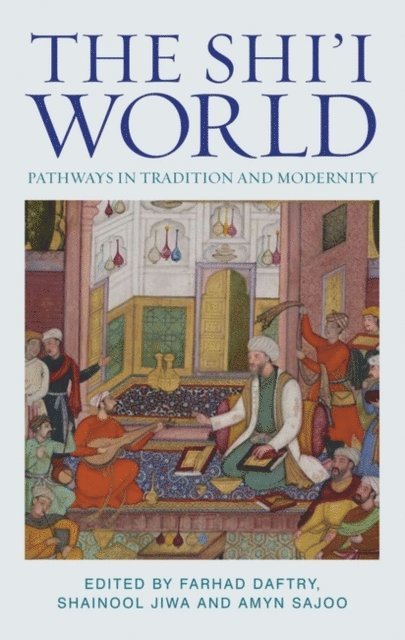
I.B.Tauris in association with the Institute of Ismaili StudiesThe world's 200 million Shi'i Muslims express their faith in a multiplicity of ways, united by reverence for the ahl al-bayt, the family of the Prophet. In embracing a pluralistic ethic, fourteen centuries of Shi'i Islam have given rise to diverse traditions and practices across varied geographic and cultural landscapes. The Shi'i World is a comprehensive work authored by leading scholars from assorted disciplines, to provide a better understanding of how Shi'i communities view themselves and articulate their teachings. The topics range from Shi'i Islam's historical and conceptual foundations, formative figures and intellectual, legal and moral traditions, to its devotional practices, art and architecture, literature, music and cinema, as well as expressions and experiences of modernity. The book thus provides a panoramic perspective of the richly textured narratives that have shaped the social and moral universe of Shi'i Muslims around the globe.This fourth volume in the Muslim Heritage Series will appeal to specialists and general readers alike, as a timely resource on the prevailing complexities not only of the 'Muslim world', but also of the dynamic Shi'i diasporas of Europe and North America.
167 kr
Skickas inom 10-15 vardagar
I.B.Tauris in association with the Institute of Ismaili StudiesEmerging from a period of long seclusion, the leader of the burgeoning community of Ismaili Shi'i Muslims was declared the first Fatimid Imam-caliph in the year 909. Abd Allah al-Mahdi founded the only sustained Shi'i dynasty (909-1171) to rule over substantial parts of the medieval Muslim world, rivalling both the Umayyads of Spain and the Abbasids. At its peak, the Fatimid Empire extended from the Atlantic shores of North Africa, across the southern Mediterranean and down both sides of the Red Sea, covering also Mecca and Medina. This accessible history, the first of two volumes, tells the story of the birth and expansion of the Fatimid Empire in the 10th century. Drawing upon eyewitness accounts, Shainool Jiwa introduces the first four generations of Fatimid Imam-caliphs -- al-Mahdi, al-Qa'im, al-Mansur, and al-Mu'izz -- as well as the people who served them and those they struggled against. Readers are taken on a journey through the Fatimid capitals of Qayrawan, Mahdiyya, and Mansuriyya and on to the founding of Cairo. In this lively and comprehensive introduction, readers will discover various milestones in Fatimid history and the political and cultural achievements that continue to resonate today.
555 kr
Skickas inom 10-15 vardagar
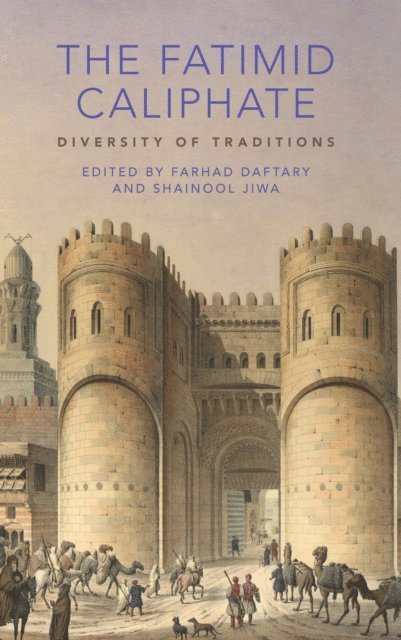
I.B.Tauris in association with the Institute of Ismaili StudiesThe Fatimids ruled much of the Mediterranean world for over two centuries. From the conquest of Qayrawan in 909 to defeat at the hands of Saladin in 1171, the Fatimid caliphate governed a vast area stretching, at its peak, from the Red Sea in the East to the Atlantic Ocean in the West. Their leaders - the Ismaili Shi`i Imam-caliphs - were distinctive in largely pursuing a policy of tolerance towards the religious and ethnic communities of their realm, and they embraced diverse approaches to the practicalities of administering a vast empire. Such methods of negotiating government and diversity created a lasting pluralistic legacy.The present volume, edited by Farhad Daftary and Shainool Jiwa, brings together a series of original contributions from a number of leading authorities in the field. Based on analyses of primary sources, the chapters shed fresh light on the impact of Fatimid rule. The book presents little explored aspects of state-society relations such as the Fatimid model of the vizierate, Sunni legal responses to Fatimid observance, and the role of women in prayer. Highlighting the distinctive nature of the Fatimid empire and its legacy, this book will be of special interest to researchers in mediaeval Islamic history and thought.
640 kr
Skickas inom 10-15 vardagar
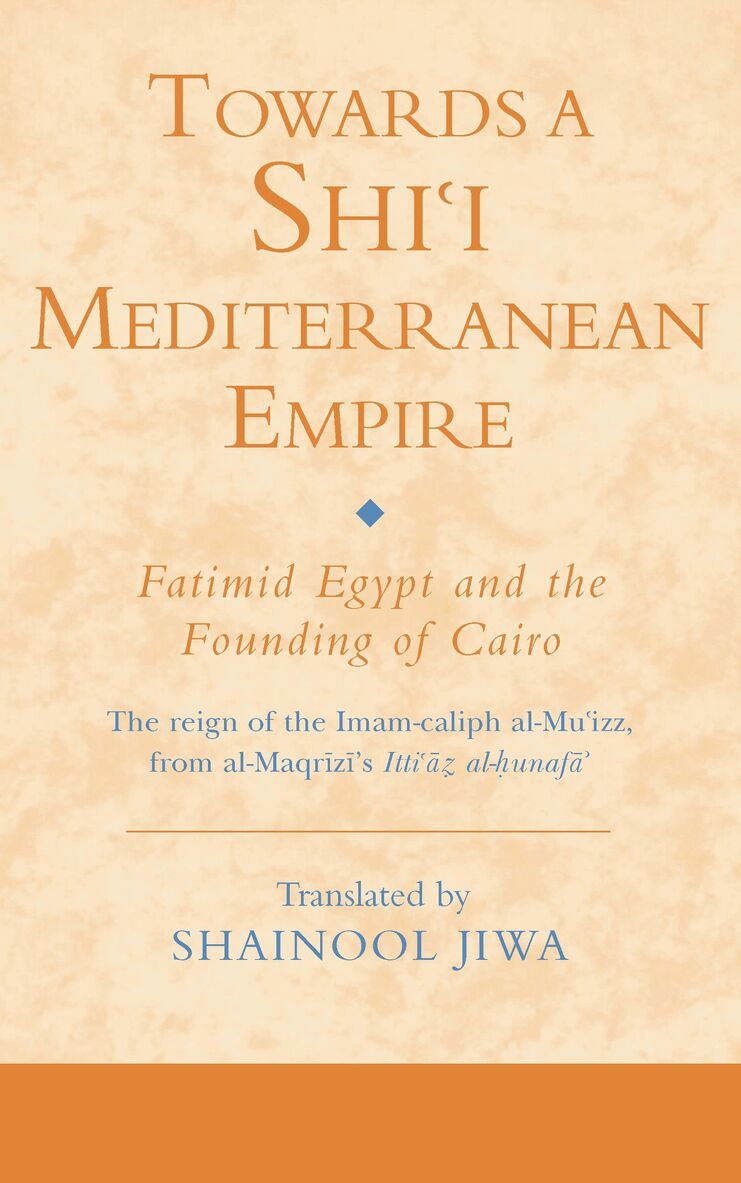
The Imam-caliph al-Mu1izz li-Din Allah (r. 953-975), founder of the city of Cairo, transformed the emergent Fatimid state from a regional power of limited influence to an impressive Mediterranean empire whose authority extended from the shores of the Atlantic to the Indian Ocean. His vision and dynamism contributed to the high watermark of Fatimid success in establishing a Shi'i empire, which contributed to the cultural and intellectual efflorescence of the Muslim world. Amongst al-Mu1izz's crowning achievements was the conquest of Egypt, a cherished goal of the Fatimids, which they subsequently governed for over two centuries. The writings of the erudite 15th-century Mamluk scholar Taqi al-Din al-Maqrizi, document this Fatimid triumph and provide one of the most comprehensive accounts of al-Mu1izz's reign. Al-Maqrizi's "Itti1az al-hunafa bi-akhbar al-a imma al-Fatimiyyin al-khulafa" is an invaluable text on the Fatimid era, compiled from a range of sources, many of which are no longer extant.In this text, the only complete history of the Fatimids written by a medieval Sunni historian, al-Maqrizi demonstrates a critical discernment regarding the value and limitations of his sources that is unusual amongst Muslim historians of the time. Moreover, he records a number of official documents, letters and sermons in their entirety, often making his writings the only surviving source for this material. The English translation of a section of this rare work, presented here for the first time, together with a comprehensive introduction and annotations, makes a notable contribution to one of the most fascinating periods in Islamic history.