Shane K. Bernard - Böcker
Visar alla böcker från författaren Shane K. Bernard. Handla med fri frakt och snabb leverans.
5 produkter
5 produkter
267 kr
Skickas inom 10-15 vardagar
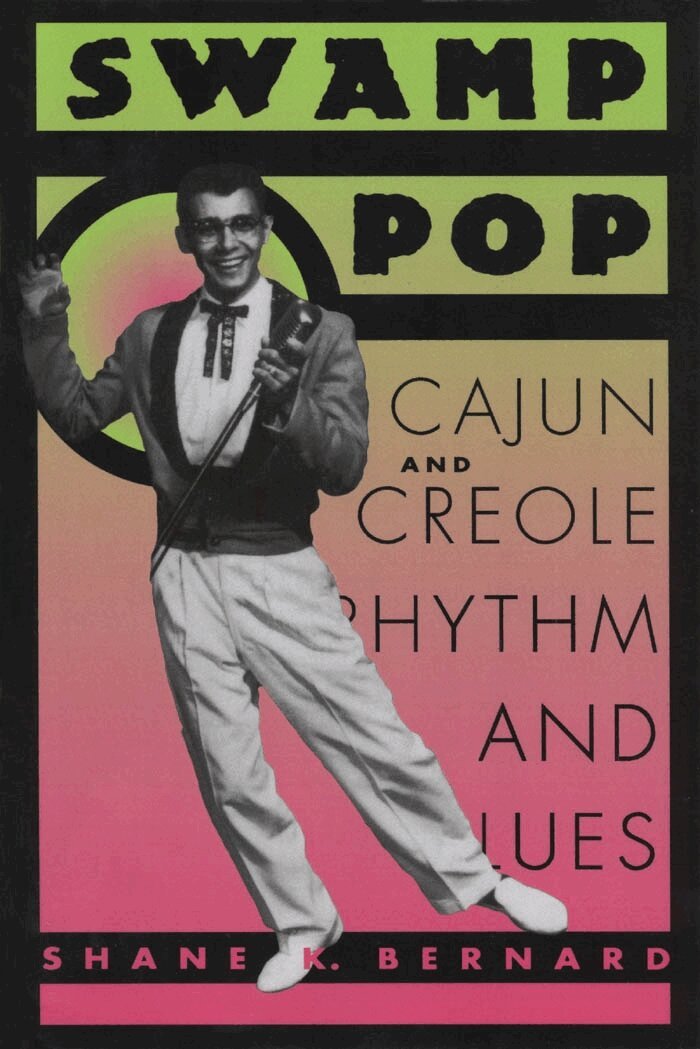
Music of Louisiana was at the heart of rock-and-roll in the 1950s. Most fans know that Jerry Lee Lewis, one of the icons, sprang out of Ferriday, Louisiana, in the middle of delta country and that along with Carl Perkins and Elvis Presley he was one of the very first of these ""white boys playing black music."" The genre was profoundly influenced by New Orleans, a launch pad for major careers, such as Little Richard's and Fats Domino's.The untold ""rest of the story"" is the story of swamp pop, a form of Louisiana music more recognized by its practitioners and their hits than by a definition. What is it? What true rock enthusiasts don't know some of its most important artists? Dale and Grace (""I'm leaving It Up to You""), Phil Phillips (""Sea of Love""), Joe Barry (""I'm a Fool to Care""), Cooke and the Cupcakes (""Mathilda""), Jimmy Clanton (""Just a Dream), Johnny Preston (""Runnin' Bear""), Rod Bernard (""This Should Go on Forever""), and Bobby Charles (""Later, Alligator"")? There were many others just as important within the region.Drawing on more than fifty interviews with swamp pop musicians in South Louisiana and East Texas, Swamp Pop: Cajun and Creole Rhythm and Blues finds the roots of this often overlooked, sometimes derided sister genre of the wildly popular Cajun and zydeco music. In this first book to be devoted entirely to swamp pop, Shane K. Bernard uncovers the history of this hybrid form invented in the 1950s by teenage Cajuns and black Creoles.They put aside the fiddle and accordion of their parents' traditional French music to learn the electric guitar and bass, saxophone, upright piano, and modern drumming trap sets of big-city rhythm-and-blues. Their new sound interwove country-and-western and rhythm-and-blues with the exciting elements of their rural Cajun and Creole heritage. In the 1950s and 1960s American juke boxes and music charts were studded with swamp pop favorites.
276 kr
Skickas inom 7-10 vardagar
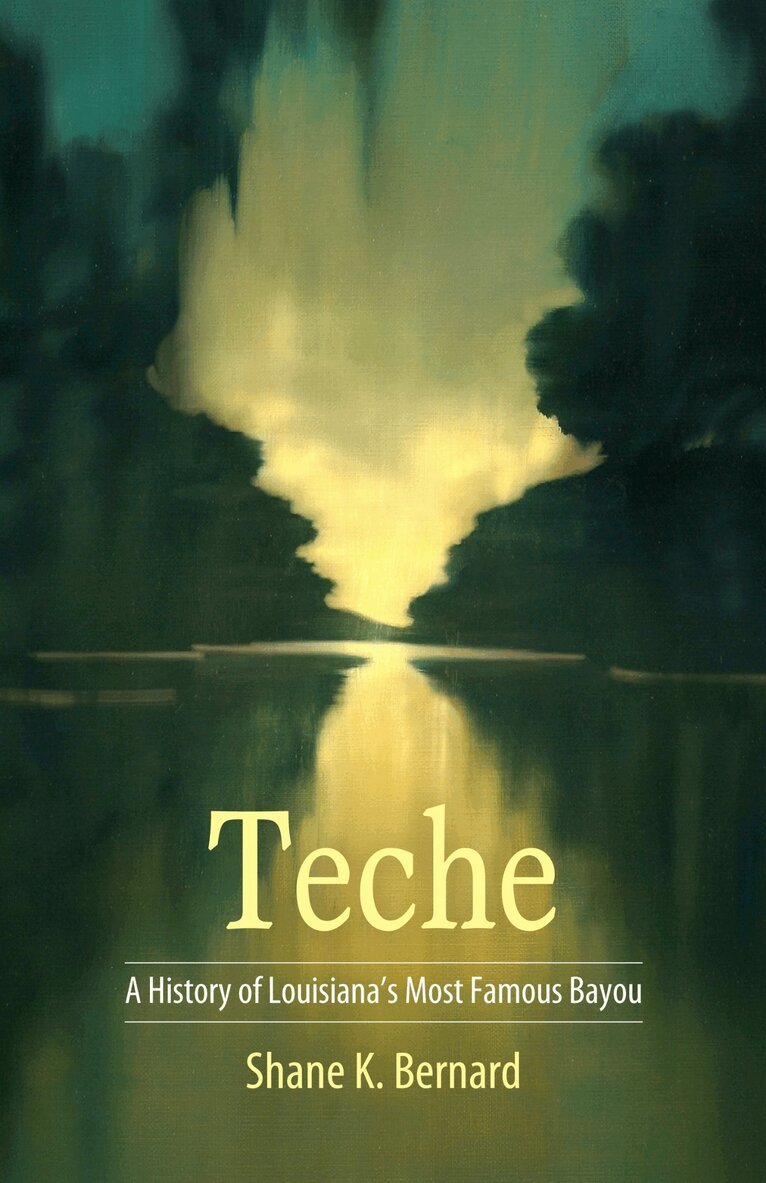
Shane K. Bernard's Teche examines this legendary waterway of the American Deep South. Bernard delves into the bayou's geologic formation as a vestige of the Mississippi and Red Rivers, its prehistoric Native American occupation, and its colonial settlement by French, Spanish, and, eventually, Anglo-American pioneers. He surveys the coming of indigo, cotton, and sugar; steam-powered sugar mills and riverboats; and the brutal institution of slavery. He also examines the impact of the Civil War on the Teche, depicting the running battles up and down the bayou and the sporadic gunboat duels, when ironclads clashed in the narrow confines of the dark, sluggish river.Describing the misery of the postbellum era, Bernard reveals how epic floods, yellow fever, racial violence, and widespread poverty disrupted the lives of those who resided under the sprawling, moss-draped live oaks lining the Teche's banks. Further, he chronicles the slow decline of the bayou, as the coming of the railroad, automobiles, and highways reduced its value as a means of travel. Finally, he considers modern efforts to redesign the Teche using dams, locks, levees, and other water-control measures. He examines the recent push to clean and revitalize the bayou after years of desecration by litter, pollutants, and invasive species. Illustrated with historic images and numerous maps, this book will be required reading for anyone seeking the colorful history of Louisiana and the Gulf Coast.As a bonus, the second part of the book describes Bernard's own canoe journey down the Teche's 125-mile course. This modern personal account from the field reveals the current state of the bayou and the remarkable people who still live along its banks.
259 kr
Skickas inom 10-15 vardagar
The past sixty years have shaped and reshaped the group of French-speaking Louisiana people known as the Cajuns. During this period they have become much like other Americans and yet have remained strikingly distinct. The Cajuns: Americanization of a People explores these six decades and analyzes the forces that had an impact on Louisiana's Acadiana.In the 1940s, when America entered World War II, so too did the isolated Cajuns. Cajun soldiers fought alongside troops from Brooklyn and Berkeley and absorbed aspects of new cultures. In the 1950s as rock 'n' roll and television crackled across Louisiana airwaves, Cajun music makers responded with their own distinct versions. In the 1960s, empowerment and liberation movements turned the South upside down. During the 1980s, as things Cajun became an absorbing national fad, ""Cajun"" became a kind of brand identity used for selling everything from swamp tours to boxed rice dinners. At the dawn of the twenty-first century, the advent of a new information age launched ""Cyber-Cajuns"" onto a worldwide web. All these forces have pushed and pulled at the fabric of Cajun life but have not destroyed it.A Cajun himself, the author of this book has an intense personal fascination in his people.By linking seemingly local events in the Cajuns' once isolated south Louisiana homeland to national and even global events, Bernard demonstrates that by the middle of the twentieth century the Cajuns for the first time in their ethnic story were engulfed in the currents of mainstream American life and yet continued to make outstandingly distinct contributions.
226 kr
Skickas inom 10-15 vardagar
Cajuns and Their Acadian Ancestors: A Young Reader's History traces the four-hundred-year history of this distinct American ethnic group. In its original English, the book proved a perfect package, comprehensible to junior-high and high-school students, while appealing to and informing adult readers seeking a one-volume exploration of these remarkable people and their predecessors. It is now available for the first time translated into French. The narrative follows the Cajuns' early ancestors, the Acadians, from seventeenth-century France to Nova Scotia, where they flourished until British soldiers expelled them in a tragic event called Le Grand Dérangement (The Great Upheaval)--an episode regarded by many historians as an instance of ethnic cleansing or genocide. Up to one-half of the Acadian population died from disease, starvation, exposure, or outright violence in the expulsion. Nearly three thousand survivors journeyed through the thirteen American colonies to Spanish-controlled Louisiana. There they resettled, intermarried with members of the local population, and evolved into the Cajun people, who today number over a half-million. Since their arrival in Louisiana, the Cajuns have developed an unmistakable identity and a strong sense of ethnic pride.In recent decades they have contributed their lively cuisine and accordion-and-fiddle dance music to American popular culture. Les Cadiens et leurs ancêtres acadiens: l'histoire racontée aux jeunes includes numerous images and over a dozen sidebars on topics ranging from Cajun music and horse racing heroes to Mardi Gras. Shane K. Bernard's welcomed and cherished history of the Cajun people is translated into French by Faustine Hillard. The book offers a long-sought immersion text, ideal for the young learner and adult alike.Intended to appeal to both native French-speakers as well as to English-speaking students who are learning French, this French translation of Shane K. Bernard's Cajuns and Their Acadian Ancestors: A Young Reader's History is perfect for middle-school and high-school readers enrolled in conversational and French Immersion classes. Adult readers of French will also find it a useful primer of Acadian and Cajun history.Les Cadiens et leurs ancêtres acadiens : l'histoire racontée aux jeunes retrace le périple de quatre siècles de ce groupe ethnique nord-américain distinct des autres. Accessible aux adolescents, ce volume s'avérera également utile et pratique pour le lecteur adulte qui cherche à connaître à la fois ce peuple remarquable et ses ancêtres.Le récit suit la trace des Acadiens, les premiers ancêtres des Cadiens, de la France du dix-septième siècle à la Nouvelle-Écosse, là où ils se sont épanouis jusqu'à ce que des soldats britanniques les expulsent lors de cet évènement tragique que fut Le grand dérangement -- un triste épisode qui a débuté en 1755 et que nombre d'historiens modernes considèrent comme un parfait exemple de nettoyage ethnique, voire de génocide. Près de trois mille survivants ont (péniblement) traversé les treize colonies américaines pour se rendre jusqu'en Louisiane, alors sous le régime espagnol. Là, ils s'installent à nouveau, s'intègrent à la population locale par le biais du mariage et forment peu à peu ce qu'il est aujourd'hui convenu d'appeler le peuple cadien. Aujourd'hui, on compte plus d'un demi-million d'habitants d'origine cadienne en Louisiane.
233 kr
Skickas inom 3-6 vardagar
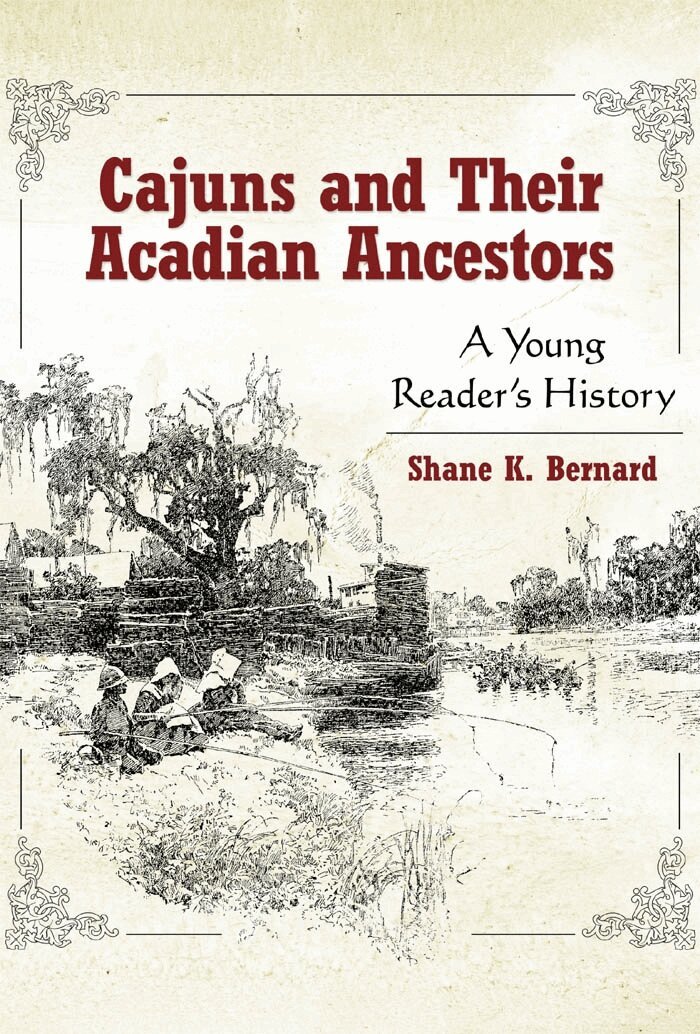
Cajuns and Their Acadian Ancestors: A Young Reader's History traces the four-hundred-year history of this distinct American ethnic group. While written in a format comprehensible to junior-high and high-school students, it will prove appealing and informative as well to adult readers seeking a one-volume exploration of these remarkable people and their predecessors. The narrative follows the Cajuns' early ancestors, the Acadians, from seventeenth-century France to Nova Scotia, where they flourished until British soldiers expelled them in a tragic event called Le Grand Dérangement (The Great Upheaval)--an episode regarded by many historians as an instance of ethnic cleansing or genocide. Up to one-half of the Acadian population died from disease, starvation, exposure, or outright violence in the expulsion. Nearly three thousand survivors journeyed through the thirteen American colonies to Spanish-controlled Louisiana. There they resettled, intermarried with members of the local population, and evolved into the Cajun people, who today number over a half-million. Since their arrival in Louisiana, the Cajuns have developed an unmistakable identity and a strong sense of ethnic pride. In recent decades they have contributed their exotic cuisine and accordion-and-fiddle dance music to American popular culture. Cajuns and Their Acadian Ancestors: A Young Reader's History includes numerous images and over a dozen sidebars on topics ranging from Cajun music to Mardi Gras.