Shane White - Böcker
Visar alla böcker från författaren Shane White. Handla med fri frakt och snabb leverans.
10 produkter
10 produkter
212 kr
Skickas inom 5-8 vardagar
306 kr
Skickas inom 10-15 vardagar
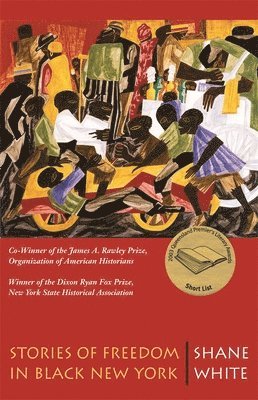
Stories of Freedom in Black New York recreates the experience of black New Yorkers as they moved from slavery to freedom. In the early decades of the nineteenth century, New York City's black community strove to realize what freedom meant, to find a new sense of itself, and, in the process, created a vibrant urban culture. Through exhaustive research, Shane White imaginatively recovers the raucous world of the street, the elegance of the city's African American balls, and the grubbiness of the Police Office. It allows us to observe the style of black men and women, to watch their public behavior, and to hear the cries of black hawkers, the strident music of black parades, and the sly stories of black conmen. Taking center stage in this story is the African Company, a black theater troupe that exemplified the new spirit of experimentation that accompanied slavery's demise. For a few short years in the 1820s, a group of black New Yorkers, many of them ex-slaves, challenged pervasive prejudice and performed plays, including Shakespearean productions, before mixed race audiences. Their audacity provoked feelings of excitement and hope among blacks, but often of disgust by many whites for whom the theater's existence epitomized the horrors of emancipation. Stories of Freedom in Black New York brilliantly intertwines black theater and urban life into a powerful interpretation of what the end of slavery meant for blacks, whites, and New York City itself. White's story of the emergence of free black culture offers a unique understanding of emancipation's impact on everyday life, and on the many forms freedom can take.
396 kr
Skickas inom 10-15 vardagar
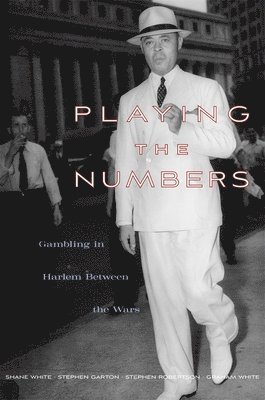
The phrase “Harlem in the 1920s” evokes images of the Harlem Renaissance, or of Marcus Garvey and soapbox orators haranguing crowds about politics and race. Yet the most ubiquitous feature of Harlem life between the world wars was the game of “numbers.” Thousands of wagers, usually of a dime or less, would be placed on a daily number derived from U.S. bank statistics. The rewards of “hitting the number,” a 600-to-1 payoff, tempted the ordinary men and women of the Black Metropolis with the chimera of the good life. Playing the Numbers tells the story of this illegal form of gambling and the central role it played in the lives of African Americans who flooded into Harlem in the wake of World War I.For a dozen years the “numbers game” was one of America’s rare black-owned businesses, turning over tens of millions of dollars every year. The most successful “bankers” were known as Black Kings and Queens, and they lived royally. Yet the very success of “bankers” like Stephanie St. Clair and Casper Holstein attracted Dutch Schultz, Lucky Luciano, and organized crime to the game. By the late 1930s, most of the profits were being siphoned out of Harlem.Playing the Numbers reveals a unique dimension of African American culture that made not only Harlem but New York City itself the vibrant and energizing metropolis it was. An interactive website allows readers to locate actors and events on Harlem’s streets.
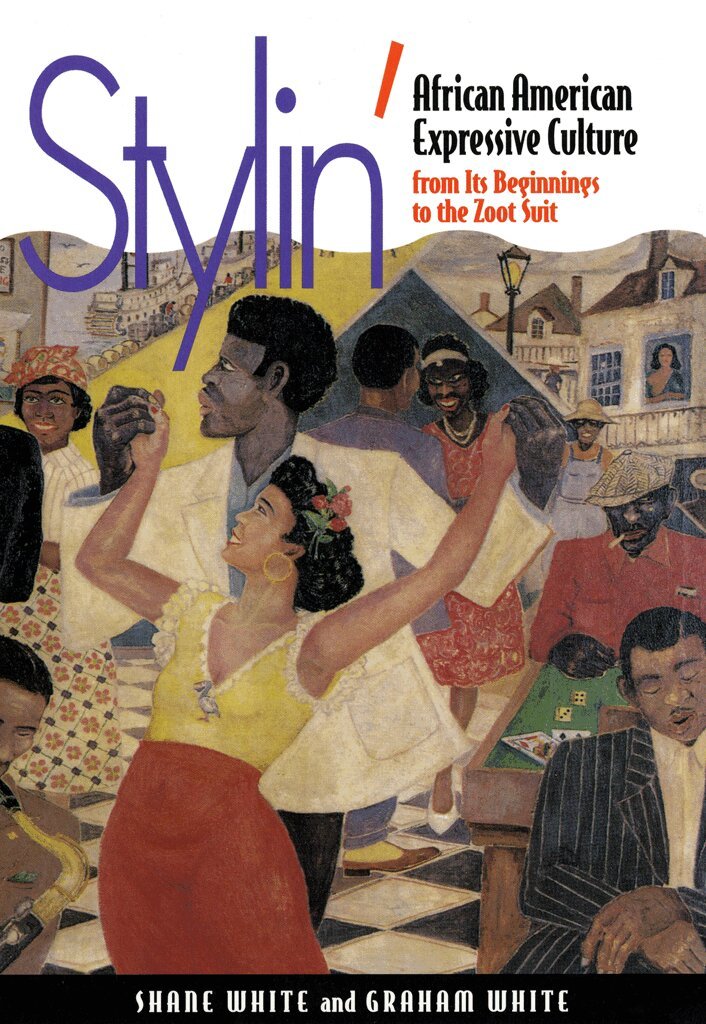
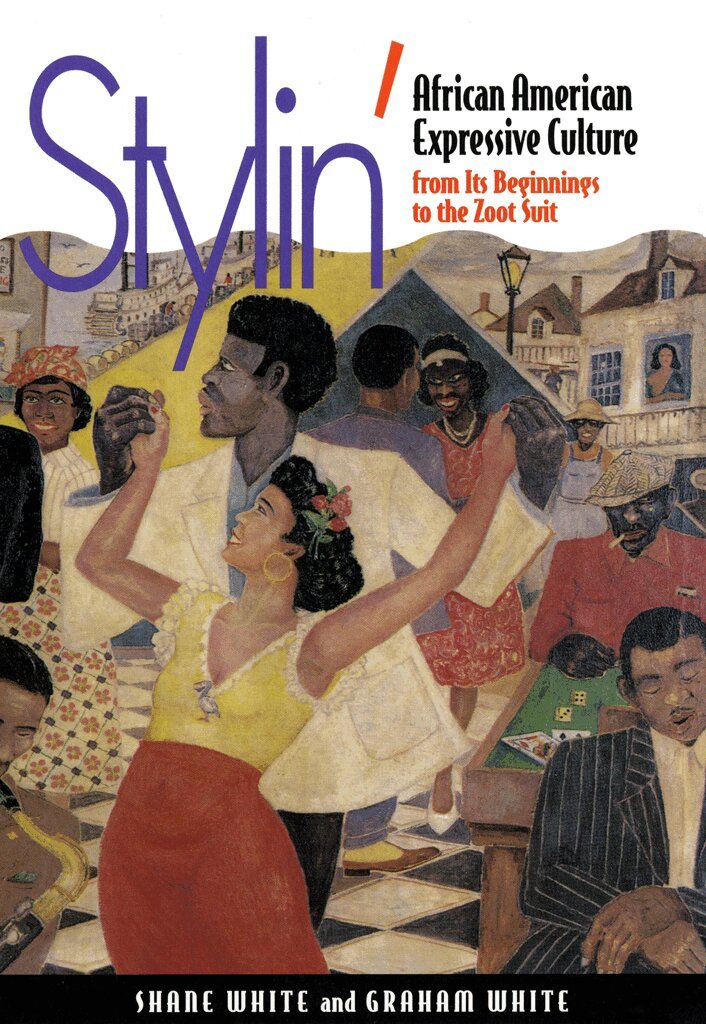
Stylin'
African-American Expressive Culture, from Its Beginnings to the Zoot Suit
Inbunden, Engelska, 1998
725 kr
Skickas inom 10-15 vardagar
For over two centuries, in the North as well as the South, both within their own community and in the public arena, African Americans have presented their bodies in culturally distinctive ways. Shane White and Graham White consider the deeper significance of the ways in which African Americans have dressed, walked, danced, arranged their hair, and communicated in silent gestures. They ask what elaborate hair styles, bright colors, bandanas, long watch chains, and zoot suits, for example, have really meant, and discuss style itself as an expression of deep-seated cultural imperatives. Their wide-ranging exploration of black style from its African origins to the 1940s reveals a culture that differed from that of the dominant racial group in ways that were often subtle and elusive.A wealth of black-and-white illustrations show the range of African American experience in America, emanating from all parts of the country, from cities and farms, from slave plantations, and Chicago beauty contests. White and White argue that the politics of black style is, in fact, the politics of metaphor, always ambiguous because it is always indirect. To tease out these ambiguities, they examine extensive sources, including advertisements for runaway slaves, interviews recorded with surviving ex-slaves in the 1930s, autobiographies, travelers' accounts, photographs, paintings, prints, newspapers, and images drawn from popular culture, such as the stereotypes of Jim Crow and Zip Coon.
Stylin'
African-American Expressive Culture, from Its Beginnings to the Zoot Suit
Häftad, Engelska, 1999
449 kr
Skickas inom 10-15 vardagar
For over two centuries, in the North as well as the South, both within their own community and in the public arena, African Americans have presented their bodies in culturally distinctive ways. Shane White and Graham White consider the deeper significance of the ways in which African Americans have dressed, walked, danced, arranged their hair, and communicated in silent gestures. They ask what elaborate hair styles, bright colors, bandanas, long watch chains, and zoot suits, for example, have really meant, and discuss style itself as an expression of deep-seated cultural imperatives. Their wide-ranging exploration of black style from its African origins to the 1940s reveals a culture that differed from that of the dominant racial group in ways that were often subtle and elusive.A wealth of black-and-white illustrations show the range of African American experience in America, emanating from all parts of the country, from cities and farms, from slave plantations, and Chicago beauty contests. White and White argue that the politics of black style is, in fact, the politics of metaphor, always ambiguous because it is always indirect. To tease out these ambiguities, they examine extensive sources, including advertisements for runaway slaves, interviews recorded with surviving ex-slaves in the 1930s, autobiographies, travelers' accounts, photographs, paintings, prints, newspapers, and images drawn from popular culture, such as the stereotypes of Jim Crow and Zip Coon.
The Sounds of Slavery: Discovering African American History Through Songs, Sermons, and Speech
Häftad, Engelska, 2006
340 kr
Skickas inom 5-8 vardagar
518 kr
Skickas inom 5-8 vardagar
Shane White creatively uses a remarkable array of primary sources—census data, tax lists, city directories, diaries, newspapers and magazines, and courtroom testimony—to reconstruct the content and context of the slave's world in New York and its environs during the revolutionary and early republic periods. White explores, among many things, the demography of slavery, the decline of the institution during and after the Revolution, racial attitudes, acculturation, and free blacks' "creative adaptation to an often hostile world."
Prince of Darkness
The Untold Story of Jeremiah G. Hamilton, Wall Street’s First Black Millionaire
Häftad, Engelska, 2016
259 kr
Skickas inom 3-6 vardagar
In the middle decades of the nineteenth century Jeremiah G. Hamilton was a well-known figure on Wall Street. Cornelius Vanderbilt, America's first tycoon, came to respect, grudgingly, his onetime opponent. The day after Vanderbilt's death on January 4, 1877, an obituary acknowledged that "There was only one man who ever fought the Commodore to the end, and that was Jeremiah Hamilton." Hamilton, although his origins were lowly, possibly slave, was reportedly the richest black man in the United States, possessing a fortune of $2 million, or in excess of two hundred and $50 million in today's currency. In this ground-breaking and vivid account, eminent historian Shane White reveals the larger than life story of a man who defied every convention of his time. He wheeled and dealed in the lily white business world, he married a white woman, he bought a mansion in rural New Jersey, he owned railroad stock on trains he was not legally allowed to ride, and generally set his white contemporaries teeth on edge when he wasn't just plain outsmarting them.An important contribution to American history, the Hamilton's life offers a way into considering, from the unusual perspective of a black man.
389 kr
Kommande
Dispelling the persistent narrative that abject poverty followed the end of slavery in New York City, acclaimed historian Shane White finally sets the historical record straight. A Moment in the Sun, a revisionist and immersive retelling of antebellum Manhattan, depicts a long-forgotten, nineteenth-century era when ordinary Black men and women, now free, “stood a brief moment in the sun” (W. E. B. Du Bois), ushering in a roughly half-century period when New York City bulged and thrummed with Black creativity and achievement nearly a hundred years before the storied Harlem Renaissance.Culling a narrative from thousands of fragmentary sources gathered over three decades of research, White conjures the distant world of these Black New Yorkers, from the streets where dandies flaunted their signature style to a rollicking dance cellar on a Friday night in the Five Points neighborhood. “In a city still rife with racism and violence,” White writes, “ordinary African New Yorkers—among them oystermen, petty entrepreneurs, fortune-tellers, and ‘confidence men’—brought into being a free urban Black culture.” Along the way, White introduces us to a notable parade of characters who helped transform Gotham into a booming urban metropolis, among them Thomas Downing, the “Oyster King of New York”; Mary Thompson, who ran a cookshop out of her cellar; and Cato Alexander, whose tavern provided cocktails and carriage races to a diverse clientele.As these people, languages, and cultures mixed in the so-called amalgamated city, racial tensions heightened and often exploded, but this friction helped facilitate a cultural melding that was extensive. To a startling degree, White reveals the myriad ways this first attempt at integration in New York City actually worked.A triumph of historical reclamation, A Moment in the Sun paints a pointillist portrait of this time in New York history, one that presents an entirely different story that was waiting to emerge from the archive. And in bringing to vivid life these Black New Yorkers and their eponymous moment in the sun, this shimmering history preserves their memory and, in the words of Caleb Gayle, “takes us into the experiment in freedom whose possibilities could have and should have lasted generations.”
327 kr
Skickas inom 5-8 vardagar