Shannon A. Novak – Författare
Visar alla böcker från författaren Shannon A. Novak. Handla med fri frakt och snabb leverans.
4 produkter
4 produkter
393 kr
Skickas inom 10-15 vardagar
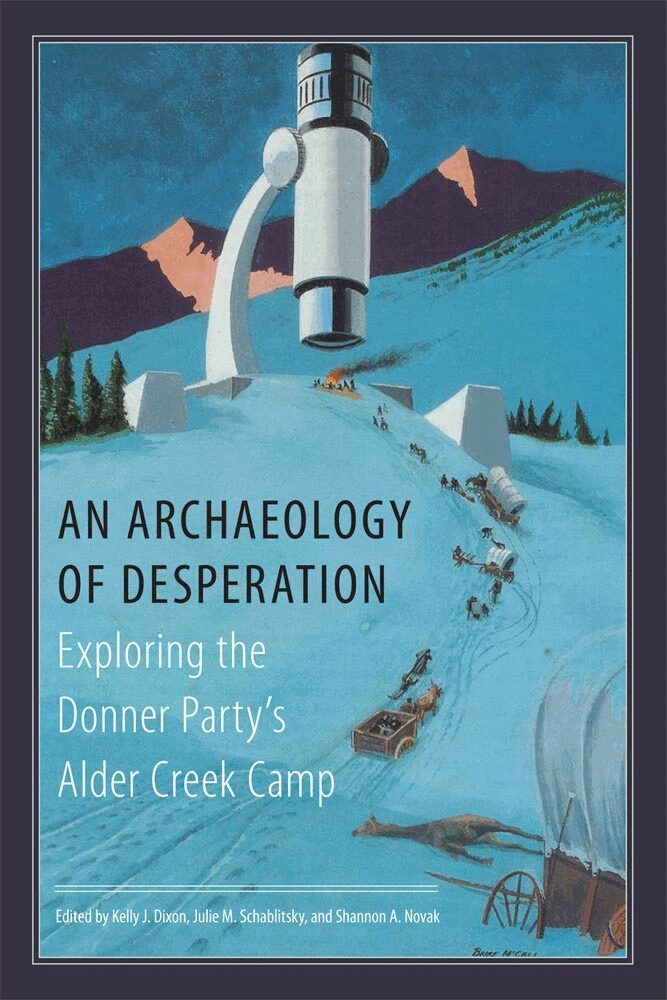
The Donner Party is almost inextricably linked with cannibalism. In truth, we know remarkably little about what actually happened to the starving travelers stranded in the Sierra Nevada in the winter of 1846-47. Combining the approaches of history, ethnohistory, archaeology, bioarchaeology, and social anthropology, this innovative look at the Donner Party's experience at the Alder Creek Camp offers insights into many long-unsolved mysteries. Centered on archaeological investigations in the summers of 2003 and 2004 near Truckee, California, the book includes detailed analyses of artifacts and bones that suggest what life was like in this survival camp. Microscopic investigations of tiny bone fragments reveal butchery scars and microstructure that illuminate what the Donner families may have eaten before the final days of desperation, how they prepared what served as food, and whether they actually butchered and ate their deceased companions. The contributors reassess old data with new analytic techniques and, by examining both physical evidence and oral testimony from observers and survivors, add new dimensions to the historical narrative. The authors' integration of a variety of approaches - including narratives of the Washoe Indians who observed the Donner Party - destroys some myths, deconstructs much of the folklore about the stranded party, and demonstrates that novel approaches can shed new light on events we thought we understood.
269 kr
Skickas inom 10-15 vardagar
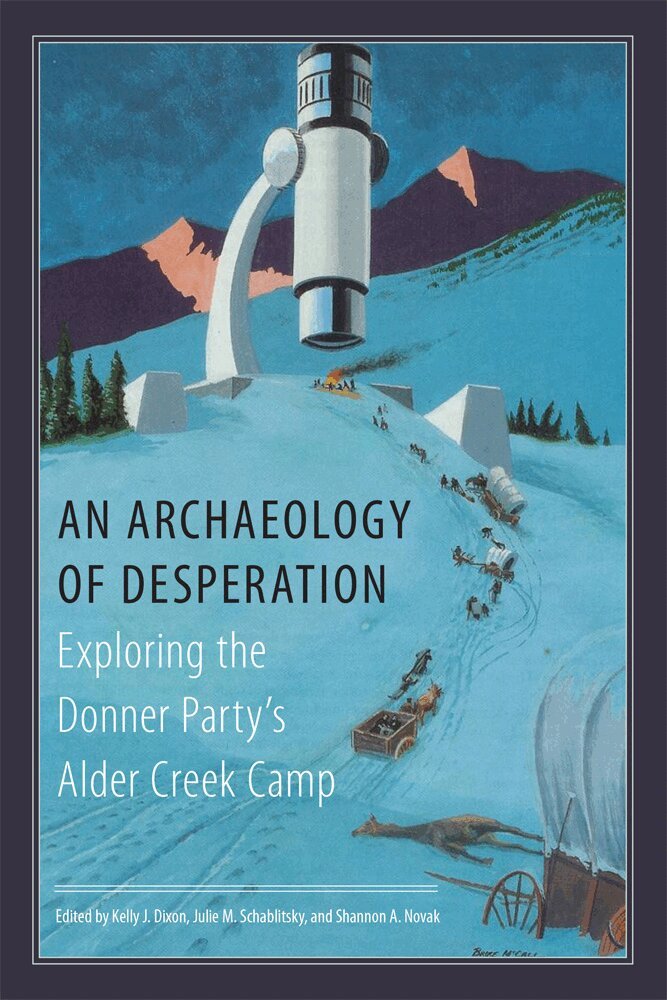
The Donner Party is almost inextricably linked with cannibalism. In truth, we know remarkably little about what actually happened to the starving travelers stranded in the Sierra Nevada in the winter of 1846-47. Combining the approaches of history, ethnohistory, archaeology, bioarchaeology, and social anthropology, this innovative look at the Donner Party's experience at the Alder Creek Camp offers insights into many long-unsolved mysteries. Centered on archaeological investigations in the summers of 2003 and 2004 near Truckee, California, the book includes detailed analyses of artifacts and bones that suggest what life was like in this survival camp. Microscopic investigations of tiny bone fragments reveal butchery scars and microstructure that illuminate what the Donner families may have eaten before the final days of desperation, how they prepared what served as food, and whether they actually butchered and ate their deceased companions. The contributors reassess old data with new analytic techniques and, by examining both physical evidence and oral testimony from observers and survivors, add new dimensions to the historical narrative.The authors' integration of a variety of approaches - including narratives of the Washoe Indians who observed the Donner Party - destroys some myths, deconstructs much of the folklore about the stranded party, and demonstrates that novel approaches can shed new light on events we thought we understood.
146 kr
Skickas inom 11-20 vardagar
On September 11, 1857, some 120 men, women, and children from the Arkansas hills were murdered in the remote desert valley of Mountain Meadows, Utah. This notorious massacre was, in fact, a mass execution: having surrendered their weapons, the victims were bludgeoned to death or shot at point-blank range. The perpetrators were local Mormon militiamen whose motives have been fiercely debated for 150 years.In House of Mourning, Shannon A. Novak goes beyond the question of motive to the question of loss. Who were the victims at Mountain Meadows? How had they settled and raised their families in the American South, and why were they moving west once again? What were they hoping to find or make for themselves at the end of the trail? By integrating archival records and oral histories with the first analysis of skeletal remains from the massacre site, Novak offers a detailed and sensitive portrait of the victims as individuals, family members, cultural beings, and living bodies.The history of the massacre has often been treated as a morality tale whose chief purpose was to vilify (or to glorify) some collective body. Resisting this tendency to oversimplify the past, Novak explores Mountain Meadows as a busy and dangerous intersection of cultural and material forces in antebellum America. House of Mourning is a bold experiment in a new kind of history, the biocultural analysis of complex events.Winner of the Society for Historical Archaeology James Deetz Book Award.
1 068 kr
Kommande
Examples of how to conduct bioarchaeological research that integrates archival records with skeletal evidenceDoing Historical Bioarchaeology explores ways researchers can utilize and approach archival records alongside skeletal evidence. In this book, case studies demonstrate how this dual approach can generate new research questions, methodologies, and interpretations as well as address ethical questions about colonial collecting practices and biases in both skeletal and textual records. Contributors illustrate how historical bioarchaeology can humanize individuals in anatomical collections, reveal the obstetric violence present in early American gynecology, and navigate the ethics of pairing materials that originated from different times or places.With the goal of fostering debate and highlighting diverse perspectives, this volume features contributors who engage with a wide range of datasets—an anatomical collection in Sweden, a Spanish colonial site in New Mexico, a nineteenth-century poorhouse in New York, archives in medieval Portugal, and many more. Together, these studies underscore the field’s rapid growth and the importance of continued dialogue among practitioners.