Shannon L. Mariotti - Böcker
Visar alla böcker från författaren Shannon L. Mariotti. Handla med fri frakt och snabb leverans.
7 produkter
7 produkter
875 kr
Skickas inom 5-8 vardagar
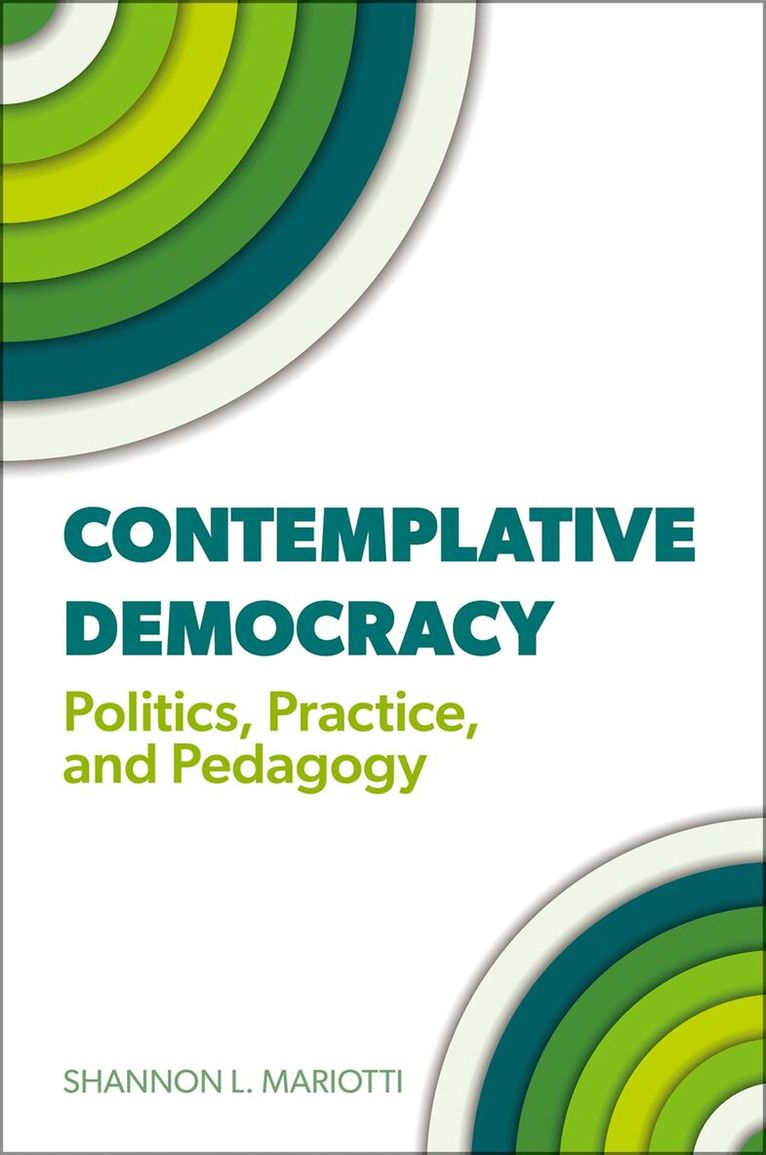
Contemplative practices are increasingly mainstream in the United States. From meditation, mindfulness, and yoga, to writing, walking, and gardening, contemplative practices aim to cultivate embodied awareness, attunement, and attention. What is the political value of the attentional ecologies created by the "Mindfulness Revolution"? In Contemplative Democracy, Shannon L. Mariotti explores how contemplative practices represent a form of world-building that is valuable for meaningful democracy and an overlooked form of ordinary political theory. As Mariotti shows, what appear to be mostly apolitical, self-cultivating activities--even ones that require withdrawal from society--can also make us more attuned to how we interact with the wider world in any given moment. Meditative practices can advance the goals of autonomy and community that are implied by the concept of democracy. Bringing disparate fields into dialogue, Mariotti highlights resonances between how theorists talk about meaningful democracy and how ordinary people talk about contemplative practice. Analyzing theorists, such as Jacques Rancière and Gloria Anzaldúa, alongside qualitative interviews, participant-observation, and a case study, this book integrates political theory--a discipline shaped by "The Enlightenment"--with meditative practices questing after other forms of "enlightenment." Reimagining the work of political theory, employing feminist approaches, and with a focus on educational spaces and democratic modes of pedagogy, Mariotti examines contemplative practices as spaces where ordinary people do the work of democracy, creating new political imaginaries, finding new selves, and founding new states of being. Further, Contemplative Democracy is an inclusive, accessible, and embodied book that reveals how the larger body politic may be reshaped by the everyday work people do in their own bodies.
314 kr
Skickas inom 10-15 vardagar
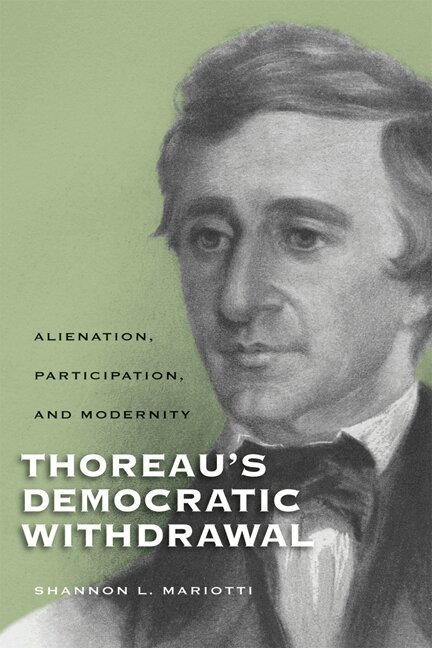
Best known for his two-year sojourn at Walden Pond in Massachusetts, Henry David Thoreau is often considered a recluse who emerged from solitude only occasionally to take a stand on the issues of his day. In Thoreau's ""Democratic Withdrawal"", Shannon L. Mariotti explores Thoreau's nature writings to offer a new way of understanding the unique politics of the so-called hermit of Walden Pond. Drawing imaginatively from the twentieth-century German social theorist Theodor W. Adorno, she shows how withdrawal from the public sphere can paradoxically be a valuable part of democratic politics. Separated by time, space, and context, Thoreau and Adorno share a common belief that critical inquiry is essential to democracy but threatened by modern society. While walking, huckleberrying, and picking wild apples, Thoreau tries to recover the capacities for independent perception and thought that are blunted by 'Main Street', conventional society, and the rapidly industrializing world that surrounded him. Adorno's thoughts on particularity and the microscopic gaze he employs to work against the alienated experience of modernity help us better understand the value of Thoreau's excursions into nature. ""Reading Thoreau with Adorno"", we see how periodic withdrawals from public spaces are not necessarily apolitical or apathetic but can revitalize our capacity for the critical thought that truly defines democracy. In graceful, readable prose, Mariotti reintroduces us to a celebrated American thinker, offers new insights on Adorno, and highlights the striking common ground they share. Their provocative and challenging ideas, she shows, still hold lessons on how we can be responsible citizens in a society that often discourages original, critical analysis of public issues.
636 kr
Skickas inom 3-6 vardagar
German philosopher and social critic Theodor Adorno (1903--1969) is widely regarded as one of the twentieth century's most influential thinkers. A leading member of the Frankfurt School, Adorno advanced an unconventional type of Marxist analysis in books such as Dialectic of Enlightenment (1944), Minima Moralia (1951), and Negative Dialectics (1966). Forced out of Nazi Germany because of his Jewish heritage, Adorno lived in exile in the United States for nearly fifteen years. In Adorno and Democracy, Shannon Mariotti explores how this extended visit prompted a concern for and commitment to democracy that shaped the rest of his work.Mariotti analyzes the extensive and undervalued works Adorno composed in English for an American audience and traces the development of his political theory during the World War II era. Her unique study examines how Adorno changed his writing style while in the United States in order to directly address the public, which lay at the heart of his theoretical concerns. Despite his apparent contempt for popular culture, his work during this period clearly engages with a broader public in ways that reflect a deep desire to understand the problems and possibilities of democracy as enacted through the customs and habits of Americans. Ultimately, Adorno advances a theory of democratic leadership that works through pedagogy to cultivate a more robust and meaningful practice of citizenship.Mariotti incisively demonstrates how Adorno's unconventional and challenging interpretations of US culture can add conceptual rigor to political theory and remind Americans of the normative promise of democracy. Adorno and Democracy is an innovative contribution to critical debates about contemporary US politics.
891 kr
Skickas inom 3-6 vardagar
Marilynne Robinson is arguably one of the most important writers of our time. Her voice resonates across the richly imagined American landscapes within which she grounds her stories of love and loss, alienation and belonging, injustice and redemption. Robinson's award-winning body of work -- including Gilead, winner of the 2005 Pulitzer Prize for Fiction and the National Book Critics Circle Award; Home, winner of the Orange Prize and the Los Angeles Times Book Prize; and Lila, winner of the National Book Critics Circle Award -- has cultivated admiration all over the world, offering readers new and profound interpretations of the meanings of transience, presence, convention, and resistance.In A Political Companion to Marilynne Robinson, Shannon L. Mariotti and Joseph H. Lane Jr. assemble both rising and established political theorists to explore the juxtaposition of Robinson's nonfiction works and her novels, and to examine their connections to contemporary political issues. The collection analyzes Robinson's writings on American democracy, community, and freedom, and it includes an engrossing interview with the author specifically conducted for this volume. From an exploration of the democratic potential in being a "housekeeper of homelessness" to a study of models of action against racial injustice, this volume provides fascinating new insights into Robinson's work and how it reflects and reassesses American political culture and theory.
588 kr
Kommande
Mindfulness is now a zeitgeist. The mainstreaming of mindfulness – what Time Magazine calls the “mindful revolution” – is being powered by research documenting the physical and mental health benefits of meditation. Like most revolutions, the mindful revolution is composed of multiple, competing forces. While corporate “McMindfulness” has received considerable and appropriate critical attention, less work has been done on the generative political potential of contemplative practices, particularly on how they might support the liberation goals of progressive social movements.This book is the first collection to systematically map the political implications of contemplative practices of all kinds – Buddhist meditation, yoga, and Indigenous ritual to name a few – with an explicit focus on the political, with an interdisciplinary approach, and from practitioners with first-hand experience. In addition to making a novel argument about the author’s own area of expertise, each chapter includes a literature review that maps the existing research and commentary at the intersection of contemplative praxis and applicable terrain of political struggle being covered in the chapter. Readers will come away with both a broad and deep understanding of emerging themes, new areas of research, and future directions.
2 113 kr
Kommande
Mindfulness is now a zeitgeist. The mainstreaming of mindfulness – what Time Magazine calls the “mindful revolution” – is being powered by research documenting the physical and mental health benefits of meditation. Like most revolutions, the mindful revolution is composed of multiple, competing forces. While corporate “McMindfulness” has received considerable and appropriate critical attention, less work has been done on the generative political potential of contemplative practices, particularly on how they might support the liberation goals of progressive social movements.This book is the first collection to systematically map the political implications of contemplative practices of all kinds – Buddhist meditation, yoga, and Indigenous ritual to name a few – with an explicit focus on the political, with an interdisciplinary approach, and from practitioners with first-hand experience. In addition to making a novel argument about the author’s own area of expertise, each chapter includes a literature review that maps the existing research and commentary at the intersection of contemplative praxis and applicable terrain of political struggle being covered in the chapter. Readers will come away with both a broad and deep understanding of emerging themes, new areas of research, and future directions.
1 564 kr
Kommande
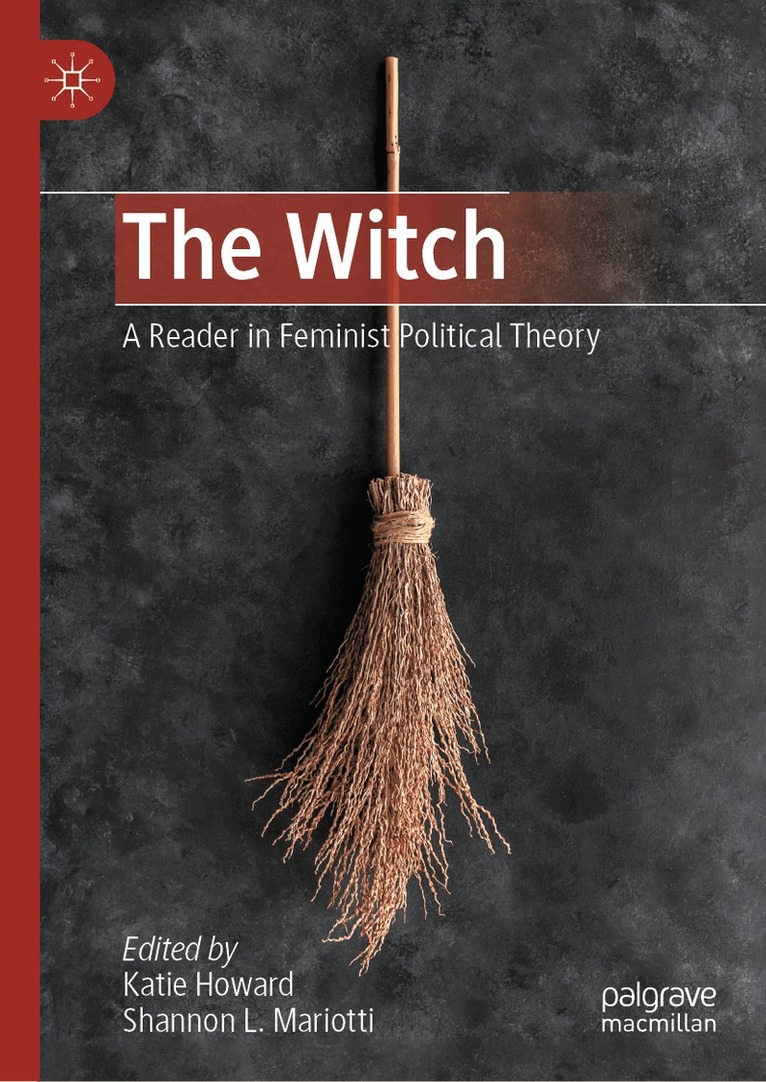
This reader addresses the popular resurgence of the political identity of the witch as a figure of power and feminist protest, expanding the area of study from early modern history and into political science and philosophy. Bringing together established classic essays on the witch with emerging new scholarship, this volume takes up a variety of pressing questions that are essential to feminist political theory. What power dynamics operate within these new forms of identification and commodification of the witch? What exactly is being claimed and reclaimed when one identifies as a witch today? What is the relationship between witches and the category of “woman”? What roles do race, class, and gender play in the figure? And how does the witch help us conjure up new approaches to – and new canons for – both philosophy and political theory? Through these essays and questions, this volume introduces tensions, critiques, and concepts that provide a mirror for larger conversations happening within feminist political theory.