Shaul Stampfer – författare
Visar alla böcker från författaren Shaul Stampfer. Handla med fri frakt och snabb leverans.
5 produkter
5 produkter
Häftad, Engelska, 2014
434 kr
Skickas inom 5-8 vardagar
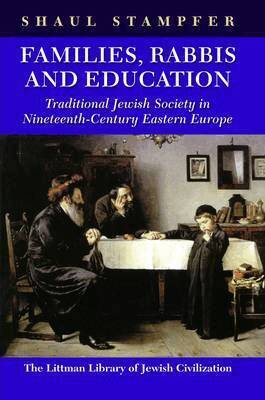
The realities of Jewish life in eastern Europe that concerned the average Jew meant the way their children grew up, the way they studied, how they married, and all the subsequent stages of the life cycle-including the problems of divorce, remarriage, and elderly parents. The family and the community were in a very real sense the core institutions of east European Jewish society. These realities were always dynamic and evolving but in the nineteenth century, the pace of change in almost every area of life was exceptionally rapid.This collection of essays deals with these social realities objectively and analytically. Some of the essays presented here are classics that have been widely acclaimed, earning their author a well-deserved reputation for authoritative research; all have been comprehensively revised for this book. They avoid both sentimental descriptions and judgmental attitudes. The result is a picture that is far from the stereotyped view of the past that is common today, but a more honest and more comprehensive one.Topics covered in the studies on education consider the learning experiences of both males and females of different ages. They also deal with and distinguish between study among the well off and learned (not surprisingly, the two went together) and study among the poorer masses. A number of essays are devoted to aspects of educating the elite. Here too, the reconstruction of the realities of the past, as opposed to the stereotypical popular image, reveals the remarkable creativity of what is often mistakenly considered a highly conservative element of society. Several essays deal with aspects of marriage, a key element in the life of most Jews. Using both quantitative and qualitative sources, the author has been able to identify and document characteristics of both first and subsequent marriages and to highlight and explain trends that have hitherto been misunderstood. The problem of aged parents and the changing nature of the nuclear family is also considered. The attempt to understand the rabbinate in its social and historical context is no less revealing then the studies in other areas. The realities of rabbinical life—the problems of getting appointments, job security and insecurity, changing responsibilities and the difficulties of dealing with fragmented and modernizing communities—are presented in a way that explains rabbinic behavior and the complex relations between communities, ideologies, and modernization. These essays look at the past through the prism of the lives of ordinary people, with results that are sometimes surprising but always stimulating. The topics they treat are varied, but the concern to explain what lay behind the visible reality is common to all of them.
Häftad, Engelska, 2014
422 kr
Skickas inom 5-8 vardagar
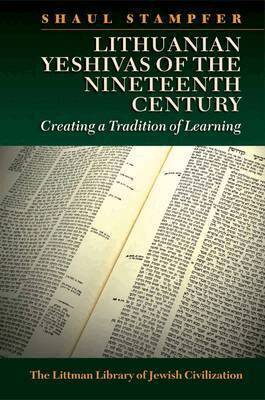
One of the key ways in which the traditional Jewish world of eastern Europe responded to the challenges of modernity in the nineteenth century was to change the system for educating young men so as to reinforce time-honoured, conservative values. The yeshivas established at that time in Lithuania became models for an educational system that has persisted to this day, transmitting the talmudic underpinnings of the traditional Jewish way of life. To understand how that system works, one needs to go back to the institutions they are patterned on: why they were established, how they were organized, and how they operated. This is the first properly documented, systematic study of the Lithuanian yeshiva as it existed from 1802 to 1914. It is based on the judicious use of contemporary sources—documents, articles in the press, and memoirs—with a view to presenting the yeshiva in its social and cultural context. Three key institutions are considered. Pride of place in the first part of the book is given to the yeshiva of Volozhin, which was founded in 1802 according to an entirely new concept—total independence from the local community—and was in that sense the model for everything that followed. Chapters in the second part focus on the yeshiva of Slobodka, famed for introducing the study of musar (ethics); the yeshiva of Telz, with its structural and organizational innovations; and the kollel system, introduced so that married men could continue their yeshiva education. Topics covered include the leadership and changes in leadership; management and administration; the yeshiva as a place of study; and daily life. This English edition is based on the second Hebrew edition, which was revised to include information that became available with the opening of archives in eastern Europe after the fall of communism.
Inbunden, Engelska, 2025
1 306 kr
Skickas
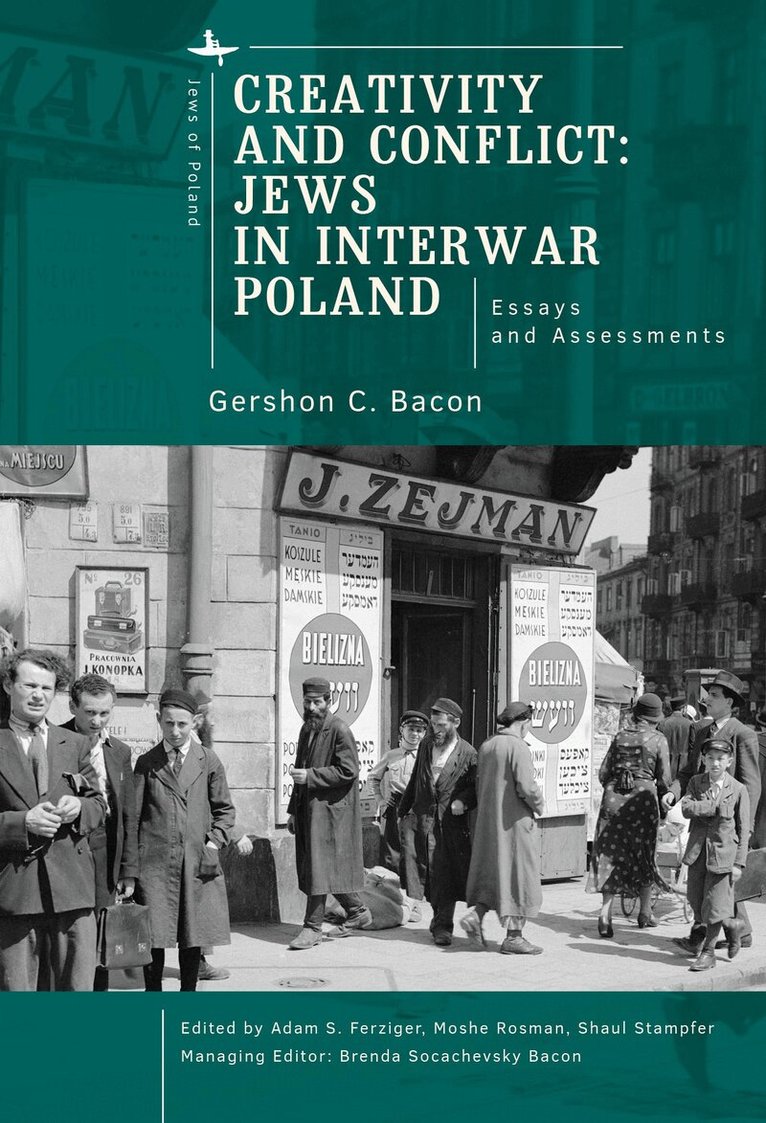
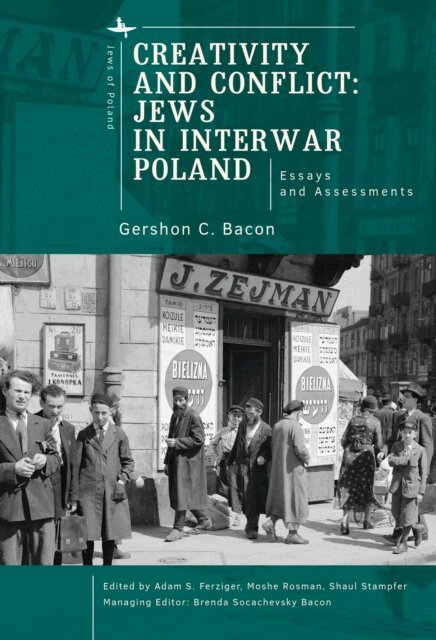
Creativity and Conflict reexamines interwar Polish Jewish history through the author's collected essays and scholarly responses of leading academicians. The work covers Polish-Jewish relations, Orthodox Judaism and the rabbinate, women's history, social history, and historiography, challenging prevalent myths about Jews in Poland.
E-bok
PDF, Engelska, 20252 433 kr
Läs direkt efter köp
Creativity and Conflict reexamines interwar Polish Jewish history through the author''s collected essays and scholarly responses of leading academicians. The work covers Polish-Jewish relations, Orthodox Judaism and the rabbinate, women''s history, social history, and historiography, challenging prevalent myths about Jews in Poland.
E-bok
Engelska, 20252 093 kr
Läs direkt efter köp
Creativity and Conflict reexamines interwar Polish Jewish history through the author''s collected essays and scholarly responses of leading academicians. The work covers Polish-Jewish relations, Orthodox Judaism and the rabbinate, women''s history, social history, and historiography, challenging prevalent myths about Jews in Poland.