• Fri frakt över 249 kr
  • •
  • Snabba leveranser
  • •
  • Billiga böcker
Kundservice

Du är på sajten för privatpersoner.

Företag, bibliotek eller offentlig verksamhet?

Du handlar på classic.bokus.com, där alla dina funktioner finns intakta.
Till classic.bokus.com
Bokus logotyp. Gå till startsidan.
  • Erbjudanden
  • Nyheter
  • Student
  • Topplistor
  • Barn & ungdom
  • Bokus Play
  • E-böcker
  • Pocketböcker
  • Spel & pussel

10% studentrabatt med kod TERM26

Sidfot

Mina sidor

    Hjälp

    • Kundservice
    • Vanliga frågor och svar
    • Frakt och leverans
    • Retur vid ångerrätt
    • Reklamera vara
    • Betalning
    • Köpvillkor
    • Allmänna villkor
    • Information om webbplatsens tillgänglighet

    Om Bokus

    • Om oss
    • Pressrum
    • För studenter
    • För företag
    • För bibliotek och offentlig verksamhet
    • För leverantörer
    • Hållbarhet

    Populärt

    • Aktuella erbjudanden
    • Presentkort
    • Studentlitteratur
    • Nya böcker
    • Topplistor
    • Signerade böcker
    • Engelska böcker

    Inspiration

    • Boktips
    • BookTok
    • Populära bokserier
    • Barnbokskaraktärer
    • Populära författare
    Logotyp för Bokus
    Följ oss på Facebook (extern länk)Följ oss på Instagram (extern länk)Följ oss på YouTube (extern länk)Följ oss på TikTok (extern länk)
    bokus @ CookiesAnpassa cookiesIntegritetspolicyKöpvillkor
    Till Citymail hemsida (extern länk)Till Budbee hemsida (extern länk)Till Postnord hemsida (extern länk)Till Schenker hemsida (extern länk)Till Early Bird hemsida (extern länk)Till Walleys hemsida (extern länk)
    1. Psykologi och pedagogik
    2. Pedagogik
    3. Pedagogik: historia

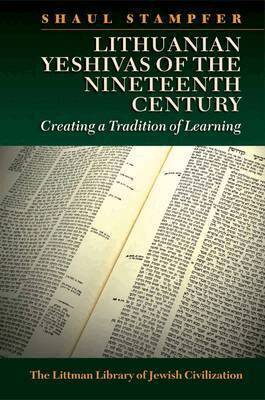
    Lithuanian Yeshivas of the Nineteenth Century

    Creating a Tradition of Learning

    AvShaul Stampfer

    Häftad, Engelska, 2014

    Del i serien Littman Library of Jewish Civilization

    425 kr

    Beställningsvara. Skickas inom 5-8 vardagar. Fri frakt över 249 kr.

    Beskrivning

    One of the key ways in which the traditional Jewish world of eastern Europe responded to the challenges of modernity in the nineteenth century was to change the system for educating young men so as to reinforce time-honoured, conservative values. The yeshivas established at that time in Lithuania became models for an educational system that has persisted to this day, transmitting the talmudic underpinnings of the traditional Jewish way of life. To understand how that system works, one needs to go back to the institutions they are patterned on: why they were established, how they were organized, and how they operated. This is the first properly documented, systematic study of the Lithuanian yeshiva as it existed from 1802 to 1914. It is based on the judicious use of contemporary sources—documents, articles in the press, and memoirs—with a view to presenting the yeshiva in its social and cultural context. Three key institutions are considered. Pride of place in the first part of the book is given to the yeshiva of Volozhin, which was founded in 1802 according to an entirely new concept—total independence from the local community—and was in that sense the model for everything that followed. Chapters in the second part focus on the yeshiva of Slobodka, famed for introducing the study of musar (ethics); the yeshiva of Telz, with its structural and organizational innovations; and the kollel system, introduced so that married men could continue their yeshiva education. Topics covered include the leadership and changes in leadership; management and administration; the yeshiva as a place of study; and daily life. This English edition is based on the second Hebrew edition, which was revised to include information that became available with the opening of archives in eastern Europe after the fall of communism.

    Produktinformation

    • Utgivningsdatum:2014-07-31
    • Mått:135 x 235 x 36 mm
    • Vikt:680 g
    • Format:Häftad
    • Språk:Engelska, Hebreiska
    • Serie:Littman Library of Jewish Civilization
    • Antal sidor:432
    • Förlag:Liverpool University Press
    • ISBN:9781906764609

    Utforska kategorier

    • Pedagogik: historia inom Psykologi och pedagogik
    • Skolan och förskolan inom Psykologi och pedagogik
    • Sociala grupper och identitet inom Samhälle och politik

    Mer om författaren

    Shaul Stampfer is Rabbi Edward Sandrow Professor of Soviet and East European Jewry and chairman of the Department of Jewish History at the Hebrew University of Jerusalem. He has also taught at Harvard University and elsewhere, including in Moscow (1989–91), where he helped establish the Jewish University. Through his many published articles he has made a seminal contribution to the Jewish social history of eastern Europe, opening up new areas of research in the history of Jewish education, Jewish demography and family life, community organization and leadership, and related topics.

    Recensioner i media

    'Those with an interest in modern Talmudic study will find the book, as I did, a spellbinding overview of the development of the modern yeshiva. Stampfer’s impeccable research changes the way one will look at the reasons for the creation of and the development of these yeshivas in Lithuania. The book is like a riveting documentary, full of fascinating insights.'Ben Rothke, The Times of Israel

    Innehållsförteckning

    • Introduction Part I The Volozhin Yeshiva1 The Beginnings of the Volozhin Yeshiva R. Hayim of Volozhin • The Foundation of the Volozhin Yeshiva • The Establishment of the Yeshiva in Volozhin • Setting Up the Yeshiva and Organizing Financial Support • Curriculum and Students • Areas of Study • The Position of the Rosh Yeshiva • Yeshivas Modelled on Volozhin 2 The Beginning of the Yeshiva - Succession, Conflicts, and Change R. Yitshak of Volozhin as Rosh Yeshiva • Change and Continuity at the Yeshiva • The Role of the Yeshiva in Society • R. Eliezer Fried as successor to R. Yitshak • R. Naftali Berlin and the Question of Authority at the Yeshiva • The Conflict with R. Yehoshua Heschel Levin • The Conflict with R. Yosef Dov Soloveitchik • The Restoration of Order to the Staff and the Yeshiva 3 The Yeshiva as a Place of Study The Yeshiva as a Torah Study Centre • The Framework of Study • The Yeshiva Staff and their Functions • The Yeshiva’s Functions 4 The Yeshiva Administration Supervision of Studies and Examinations • The Shiur and Student Participation • The Importance of the New Mode of Study • Staff–Student Relations: Financial Support and Discipline • The Status of the Yeshiva in the Jewish World 5 Students at the Volozhin Yeshiva The Decision to Study at the Yeshiva • Admission to the Yeshiva • Absorption at the Yeshiva • Integration at the Yeshiva • Student Activity and the Yeshiva’s Response • The Individual Student and the Yeshiva • Students and the Local Community 6 Life at the Volozhin Yeshiva Daily Routine • Study Arrangements • The Yeshiva Year • Sabbaths and Festivals • Extra-Curricular Activity • The Haskalah: Interest among Students• The Haskalah: The Yeshiva’s Response • Leisure Activities 7 The Final Years of the Volozhin Yeshiva Charity and Aid Associations • Zionist Organizations • Other Associations • Student Newspapers • Political Activity at the Yeshiva • The Financial State of the Yeshiva in its Final Years 8 The Closure of the Volozhin Yeshiva Relations between the Yeshiva and the Authorities • Secular Studies at the Yeshiva • Background to the Controversy over the Successor to R. Berlin • The Struggle over the Succession • The Factors in the Closure of the Yeshiva • Appendix to Chapter 8: Official Documents about the Volozhin Yeshiva Part II Slobodka, Telz, and the Kolel9 The Slobodka Yeshiva The Musar Movement • R. Yisrael Salanter • The Slobodka Yeshiva • The Yeshiva’s Students • Talmud Study at the ‘Musar Yeshiva’ • Internal Problems and External Expansion • Controversy and Conflict at the Yeshiva 10 The Telz Yeshiva The Foundation of the Yeshiva • R. Eliezer Gordon • The Aims of the Yeshiva • Study at the Yeshiva • Admission of Students • Basic Support for the Yeshiva Students • Conflicts at the Yeshiva • Factors in the Disruptions at the Yeshiva • R. Eliezer Gordon’s Attitude towards the Haskalah and Zionism • R. Gordon’s Confrontation with the Social Crisis 11 The Kolel Haperushim of Kovno and the ‘Kolel’ Institution The Foundation of the Kolel and its Early History • The Kolel’s Mode of Operation • Opposition and Conflicts • The Kolel of Brodsky Conclusion Bibliography Index