• Fri frakt över 249 kr
  • •
  • Snabba leveranser
  • •
  • Billiga böcker
Kundservice

Du är på sajten för privatpersoner.

Företag, bibliotek eller offentlig verksamhet?

Du handlar på classic.bokus.com, där alla dina funktioner finns intakta.
Till classic.bokus.com
Bokus logotyp. Gå till startsidan.
  • Erbjudanden
  • Nyheter
  • Student
  • Topplistor
  • Barn & ungdom
  • Bokus Play
  • E-böcker
  • Pocketböcker
  • Spel & pussel

10% studentrabatt med kod TERM26

Sidfot

Mina sidor

    Hjälp

    • Kundservice
    • Vanliga frågor och svar
    • Frakt och leverans
    • Retur vid ångerrätt
    • Reklamera vara
    • Betalning
    • Köpvillkor
    • Allmänna villkor
    • Information om webbplatsens tillgänglighet

    Om Bokus

    • Om oss
    • Pressrum
    • För studenter
    • För företag
    • För bibliotek och offentlig verksamhet
    • För leverantörer
    • Hållbarhet

    Populärt

    • Aktuella erbjudanden
    • Presentkort
    • Studentlitteratur
    • Nya böcker
    • Topplistor
    • Signerade böcker
    • Engelska böcker

    Inspiration

    • Boktips
    • BookTok
    • Populära bokserier
    • Barnbokskaraktärer
    • Populära författare
    Logotyp för Bokus
    Följ oss på Facebook (extern länk)Följ oss på Instagram (extern länk)Följ oss på YouTube (extern länk)Följ oss på TikTok (extern länk)
    bokus @ CookiesAnpassa cookiesIntegritetspolicyKöpvillkor
    Till Citymail hemsida (extern länk)Till Budbee hemsida (extern länk)Till Postnord hemsida (extern länk)Till Schenker hemsida (extern länk)Till Early Bird hemsida (extern länk)Till Walleys hemsida (extern länk)
    1. Filosofi och religion
    2. Religion och tro
    3. Religion: allmänt

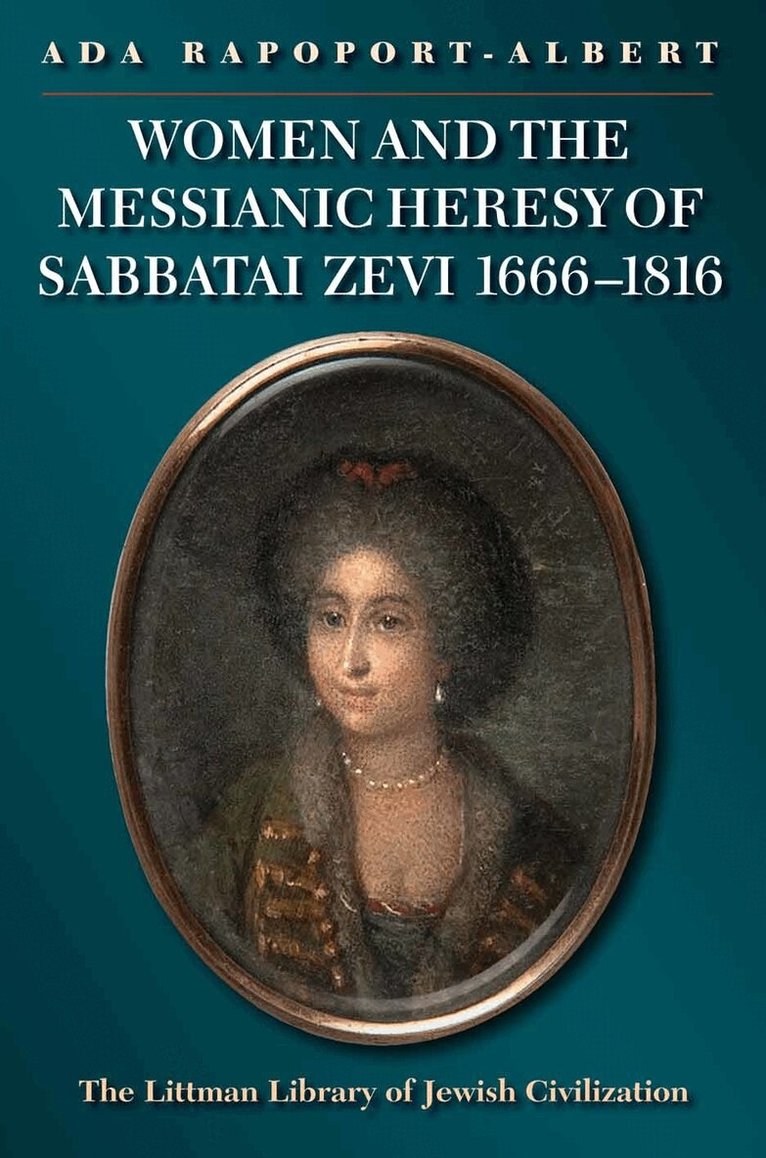
    Women and the Messianic Heresy of Sabbatai Zevi, 1666 - 1816

    AvAda Rapoport-Albert

    Häftad, Engelska, 2015

    Del i serien Littman Library of Jewish Civilization

    331 kr

    Beställningsvara. Skickas inom 5-8 vardagar. Fri frakt över 249 kr.

    Beskrivning

    Women are conspicuously absent from the Jewish mystical tradition. Even if historically some Jewish women may have experienced mystical revelations and led richly productive spiritual lives, the tradition does not preserve any record of their experiences or insights. Only the chance survival of scant evidence suggests that, at various times and places, individual Jewish women did pursue the path of mystical piety or prophetic spirituality, but it appears that they were generally censured, and efforts were made to suppress their activities. This contrasts sharply with the fully acknowledged prominence of women in the mystical traditions of both Christianity and Islam. It is against this background that the mystical messianic movement centred on the personality of Sabbatai Zevi (1626 - 76) stands out as a unique and remarkable exception. Sabbatai Zevi addressed to women a highly original liberationist message, proclaiming that he had come to make them 'as happy as men' by releasing them from the pangs of childbirth and the subjugation to their husbands that were ordained for women as a consequence of the primordial sin. This unprecedented redemptive vision became an integral part of Sabbatian eschatology, which the messianists believed to be unfolding and experienced in the present. Their New Law, superseding the Old with the dawning of the messianic era, overturned the traditional halakhic norms that distinguished and regulated relations between the sexes. This was expressed not only in the outlandish ritual transgression of sexual prohibitions, in which Sabbatian women were notoriously implicated, but also in the apparent adoption of the idea - alien to rabbinic Judaism - that virginity, celibacy, or sexual abstinence were conducive to women's spiritual empowerment. Ada Rapoport-Albert traces the diverse manifestations of this vision in every phase of Sabbatianism and its offshoots. These include the early promotion of women to centre-stage as messianic prophetesses; their independent affiliation with the movement in their own right; their initiation in the esoteric teachings of the kabbalah; and their full incorporation, on a par with men, into the ritual and devotional life of the messianic community. Their investment with authority was such as to elevate the messiah's wife (a figure mostly absent from traditional messianic speculations) to the rank of full messianic consort, sharing in her husband's redemptive mission as well as his divine dimension. By the late eighteenth century, a syncretistic cult had developed that recognized in Eva - the unmarried daughter of Jacob Frank, one of Sabbatai Zevi's apostate messianic successors - an incarnate female aspect of the kabbalistic godhead, worshipped by her father's devotees as 'Holy Virgin' and female messiah. This was the culmination of the Sabbatian endeavour to transcend the traditional gender paradigm that had excluded women from the public arena of Jewish spiritual life.This work is translated by Deborah Greniman.

    Produktinformation

    • Utgivningsdatum:2015-12-03
    • Mått:156 x 234 x 21 mm
    • Vikt:563 g
    • Format:Häftad
    • Språk:Engelska
    • Serie:Littman Library of Jewish Civilization
    • Antal sidor:400
    • Förlag:Liverpool University Press
    • ISBN:9781906764807

    Utforska kategorier

    • Religion: allmänt inom Filosofi och religion
    • Genusvetenskap inom Samhälle och politik
    • Judendom inom Filosofi och religion

    Mer om författaren

    Ada Rapoport-Albert, who died in 2020, was Professor of Jewish Studies and head of the Department of Hebrew and Jewish Studies at University College London.

    Recensioner i media

    'Not only breaks down many stereotypes about the roles of women in Judaism and Jewish society, but it is also a major contribution to understanding how Sabbatianism and Frankism spread and operated . . . rich in original ideas and insights. While many of the topics call for further research, the rich documentation Rapoport-Albert brings to bear on the topics leave little room for doubt that a call for changed gender roles, to a greater or lesser degree, was a central element in the Sabbatian and Frankist movements. It is a very stimulating contribution to the literature on Kabbalah, on modern religious movements, on gender history, as well as on conservative responses.'Shaul Stampfer, Religious Studies Review

    Innehållsförteckning

    • Note on Transliteration and Conventions Used in the Text Introduction 1 Female Prophets in Sabbatianism 2 Historical Precedents and Contexts 3 Sabbatian Women as Religious Activists 4 Women in Sectarian Sabbatianism 5 The Egalitarian Agenda: Sources of Inspiration and Modes of Implementation 6 In the Egalitarian 'Family' of Jacob Frank 7 The Redemptive 'Maiden' 8 'The Mother of God': Frank and the Russian Sectarians 9 Conclusion: From Sabbatianism to Hasidism Appendix: 'Something for the Female Sex': A Call for the Liberation of Women and the Release of the Female Libido from the 'Shackles of Shame', in an anonymous Frankist manuscript from Prague, c.1800 Introduction Translation Bibliography Index