Sheri Berman - Böcker
Visar alla böcker från författaren Sheri Berman. Handla med fri frakt och snabb leverans.
5 produkter
5 produkter
286 kr
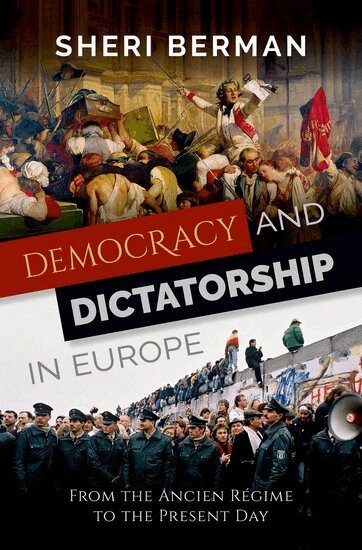
A magisterial look at the development of various political regimes in Europe from the ancien régime up through the present dayAt the end of the twentieth century, many believed the story of European political development had come to an end. Modern democracy began in Europe, but for hundreds of years it competed with various forms of dictatorship. Now, though, the entire continent was in the democratic camp for the first time in history. But within a decade, this story had already begun to unravel. Some of the continent's newer democracies slid back towards dictatorship, while citizens in many of its older democracies began questioning democracy's functioning and even its legitimacy. And of course it is not merely in Europe where democracy is under siege. Across the globe the immense optimism accompanying the post-Cold War democratic wave has been replaced by pessimism. Many new democracies in Latin America, Africa, and Asia began "backsliding," while the Arab Spring quickly turned into the Arab winter. The victory of Donald Trump led many to wonder if it represented a threat to the future of liberal democracy in the United States. Indeed, it is increasingly common today for leaders, intellectuals, commentators and others to claim that rather than democracy, some form dictatorship or illiberal democracy is the wave of the future.In Democracy and Dictatorship in Europe, Sheri Berman traces the long history of democracy in its cradle, Europe. She explains that in fact, just about every democratic wave in Europe initially failed, either collapsing in upon itself or succumbing to the forces of reaction. Yet even when democratic waves failed, there were always some achievements that lasted. Even the most virulently reactionary regimes could not suppress every element of democratic progress. Panoramic in scope, Berman takes readers through two centuries of turmoil: revolution, fascism, civil war, and -- finally -- the emergence of liberal democratic Europe in the postwar era. A magisterial retelling of modern European political history, Democracy and Dictatorship in Europe not explains how democracy actually develops, but how we should interpret the current wave of illiberalism sweeping Europe and the rest of the world.
Democracy and Dictatorship in Europe
From the Ancien Régime to the Present Day
Inbunden, Engelska, 2019
420 kr
Skickas inom 3-6 vardagar
At the end of the twentieth century, many believed the story of European political development had come to an end. Modern democracy began in Europe, but for hundreds of years it competed with various forms of dictatorship. Now, though, the entire continent was in the democratic camp for the first time in history. But within a decade, this story had already begun to unravel. Some of the continent's newer democracies slid back towards dictatorship, while citizens in many of its older democracies began questioning democracy's functioning and even its legitimacy.And of course it is not merely in Europe where democracy is under siege. Across the globe the immense optimism accompanying the post-Cold War democratic wave has been replaced by pessimism. Many new democracies in Latin America, Africa and Asia began "backsliding," while the Arab Spring quickly turned into the Arab winter. The victory of Donald Trump led many to wonder if it represented a threat to the future of liberal democracy in the united states. Indeed, it is increasingly common today for leaders, intellectuals, commentators and others to claim that rather than democracy, some form dictatorship or illiberal democracy is the wave of the future.In Democracy and Dictatorship in Europe, Sheri Berman traces the long history of democracy in its cradle, Europe. She explains that in fact, just about every democratic wave in Europe initially failed, either collapsing in upon itself or succumbing to the forces of reaction. Yet even when democratic waves failed, there were always some achievements that lasted. Even the most virulently reactionary regimes could not suppress every element of democratic progress. Panoramic in scope, Berman takes readers through two centuries of turmoil: revolution, fascism, civil war, and-finally-the emergence of liberal democratic Europe in the postwar era. A magisterial retelling of modern European political history, Democracy and Dictatorship in Europe not explains how democracy actually develops, but how we should interpret the current wave of illiberalism sweeping Europe and the rest of the world.
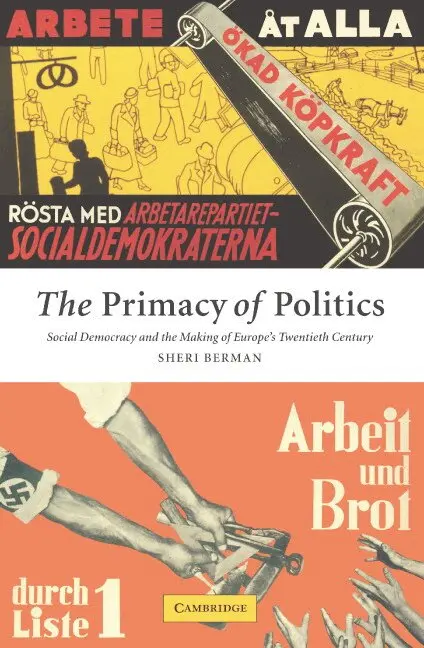
The Primacy of Politics
Social Democracy and the Making of Europe's Twentieth Century
Häftad, Engelska, 2006
331 kr
Skickas inom 7-10 vardagar
Political history in the industrial world has indeed ended, argues this pioneering study, but the winner has been social democracy - an ideology and political movement that has been as influential as it has been misunderstood. Berman looks at the history of social democracy from its origins in the late nineteenth century to today and shows how it beat out competitors such as classical liberalism, orthodox Marxism, and its cousins, Fascism and National Socialism by solving the central challenge of modern politics - reconciling the competing needs of capitalism and democracy. Bursting on to the scene in the interwar years, the social democratic model spread across Europe after the Second World War and formed the basis of the postwar settlement. This is a study of European social democracy that rewrites the intellectual and political history of the modern era while putting contemporary debates about globalization in their proper intellectual and historical context.
The Primacy of Politics
Social Democracy and the Making of Europe's Twentieth Century
Inbunden, Engelska, 2006
1 065 kr
Skickas inom 7-10 vardagar
Political history in the industrial world has indeed ended, argues this pioneering study, but the winner has been social democracy - an ideology and political movement that has been as influential as it has been misunderstood. Berman looks at the history of social democracy from its origins in the late nineteenth century to today and shows how it beat out competitors such as classical liberalism, orthodox Marxism, and its cousins, Fascism and National Socialism by solving the central challenge of modern politics - reconciling the competing needs of capitalism and democracy. Bursting on to the scene in the interwar years, the social democratic model spread across Europe after the Second World War and formed the basis of the postwar settlement. This is a study of European social democracy that rewrites the intellectual and political history of the modern era while putting contemporary debates about globalization in their proper intellectual and historical context.
950 kr
Skickas inom 10-15 vardagar
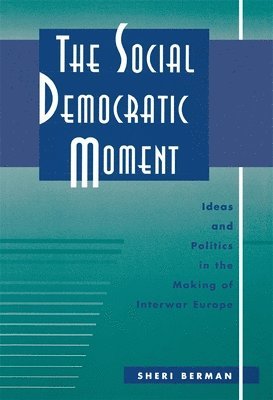
In addition to revising our view of the interwar period and the building of European democracies, this book cuts against the grain of most current theorizing in political science by explicitly discussing when and how ideas influence political behavior. Even though German and Swedish Social Democrats belonged to the same transnational political movement and faced similar political and social conditions in their respective countries before and after World War I, they responded very differently to the challenges of democratization and the Great Depression--with crucial consequences for the fates of their countries and the world at large.Explaining why these two social democratic parties acted so differently is the primary task of this book. Berman's answer is that they had very different ideas about politics and economics--what she calls their programmatic beliefs. The Swedish Social Democrats placed themselves at the forefront of the drive for democratization; a decade later they responded to the Depression with a bold new economic program and used it to build a long period of political hegemony. The German Social Democrats, on the other hand, had democracy thrust upon them and then dithered when faced with economic crisis; their haplessness cleared the way for a bolder and more skillful political actor--Adolf Hitler.This provocative book will be of interest to anyone concerned with twentieth-century European history, the transition to democracy problem, or the role of ideas in politics.