Sheridan Hough - Böcker
Visar alla böcker från författaren Sheridan Hough. Handla med fri frakt och snabb leverans.
2 produkter
2 produkter
664 kr
Skickas inom 7-10 vardagar
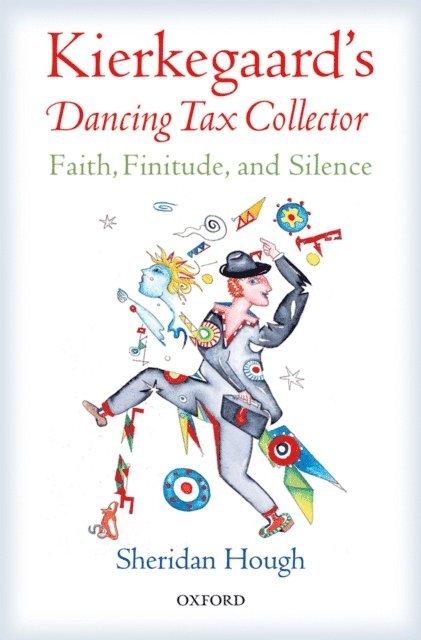
Kierkegaard's account of the life of faith turns on an astonishing claim: a person living faithfully continually enjoys, and takes part in, everything. What can this assertion actually mean? The pseudonymous author of Fear and Trembling, Johannes de silentio, imagines what such a human being might look like; indeed, as de silentio puts it, 'He looks just like a tax collector'. This seemingly ordinary person, in his 'movements' of faith, finds infinite significance and an absorbing joy in his environment, from moment to moment. How does he do it? This characterization of faithful comportment is unique in the Kierkegaardian corpus, and becomes the tantalizing centerpiece of an exploration of the Kierkegaardian self. Sheridan Hough embarks on a groundbreaking 'existential/ phenomenological' investigation of the uncanny abilities of the faithful life through an analysis of Kierkegaard's 'spheres of existence'; each sphere reveals a specific kind of significance, and indeed a way of 'being in the world'. Hough employs a distinctively original narrative voice, one that examines Kierkegaard's ontology from the perspective of his pseudonymous voices, and from the characters that they create. This approach is both descriptive and diagnostic: by understanding what someone living out an aesthetic, ethical, or a religious existence seeks to achieve, the phenomenon of the faithful life, and its demands, comes into sharper focus. This faith is not simply some thought about God's greatness-indeed, the 'propositional content' of faith is a central issue of the book. Instead, Hough argues that Kierkegaardian faith is the hallmark of the fullest flowering of a human life, one achieved in ways only hinted at in the demeanor of the cheerful and enigmatic 'tax collector,' an existential task in which 'temporality, finitude is what it is all about'.
572 kr
Skickas inom 5-8 vardagar
Ever since Heidegger lectured on Nietzsche, philosophers have stressed the active side of the Übermensch, the self who aggressively consumes and exploits value. Sheridan Hough, however, argues that there is a distinctly receptive and passive side to the Nietzschean self, and thus a pervasive doubleness in Nietzsche's thought that hasn't been explored before. This doubleness is the focus of Hough's attention here.Hough argues that Nietzsche's favorite way to describe the self is to use opposed pairs of metaphors. The sea and the land, the pursuit of archaeology and the "granite stratum" of the self, the child and pregnancy are tropes he uses to show the self as both an active critic of culture and a creation of that culture. Noon and shadow exemplify this dual thinking. The free spirit, according to Nietzsche, is dogged by a shadow, a shadow cast by the free spirit's efforts to overcome himself. Perfect noon—emblematic of the Übermensch—is the moment of ecstatic release for the free spirit. Thus the Übermensch is not a separate "superhuman" being but rather an ecstatic moment in the experience of free spirits.Hough succeeds in showing that the doubleness motif strikes deeper into the heart of Nietzsche's thinking than has been realized. Favorite Nietzschean images, such as that of pregnancy, suddenly take on new meaning when considered in this light. Careful to avoid a reductionist view, Hough adds significantly to our understanding of Nietzsche's contribution to modern thought.