• Fri frakt över 249 kr
  • •
  • Snabba leveranser
  • •
  • Billiga böcker
Kundservice

Du är på sajten för privatpersoner.

Företag, bibliotek eller offentlig verksamhet?

Du handlar på classic.bokus.com, där alla dina funktioner finns intakta.
Till classic.bokus.com
Bokus logotyp. Gå till startsidan.
  • Erbjudanden
  • Nyheter
  • Student
  • Topplistor
  • Barn & ungdom
  • Bokus Play
  • E-böcker
  • Pocketböcker
  • Spel & pussel

10% rabatt på allt med kod: NYSTART10 →

Sidfot

Mina sidor

    Hjälp

    • Kundservice
    • Vanliga frågor och svar
    • Frakt och leverans
    • Retur vid ångerrätt
    • Reklamera vara
    • Betalning
    • Köpvillkor
    • Allmänna villkor
    • Information om webbplatsens tillgänglighet

    Om Bokus

    • Om oss
    • Pressrum
    • För studenter
    • För företag
    • För bibliotek och offentlig verksamhet
    • För leverantörer
    • Hållbarhet

    Populärt

    • Aktuella erbjudanden
    • Presentkort
    • Studentlitteratur
    • Nya böcker
    • Topplistor
    • Signerade böcker
    • Engelska böcker

    Inspiration

    • Boktips
    • BookTok
    • Populära bokserier
    • Barnbokskaraktärer
    • Populära författare
    Logotyp för Bokus
    Följ oss på Facebook (extern länk)Följ oss på Instagram (extern länk)Följ oss på YouTube (extern länk)Följ oss på TikTok (extern länk)
    bokus @ CookiesAnpassa cookiesIntegritetspolicyKöpvillkor
    Till Citymail hemsida (extern länk)Till Budbee hemsida (extern länk)Till Postnord hemsida (extern länk)Till Schenker hemsida (extern länk)Till Early Bird hemsida (extern länk)Till Walleys hemsida (extern länk)
    1. Filosofi och religion
    2. Filosofi
    3. Filosofiska discipliner

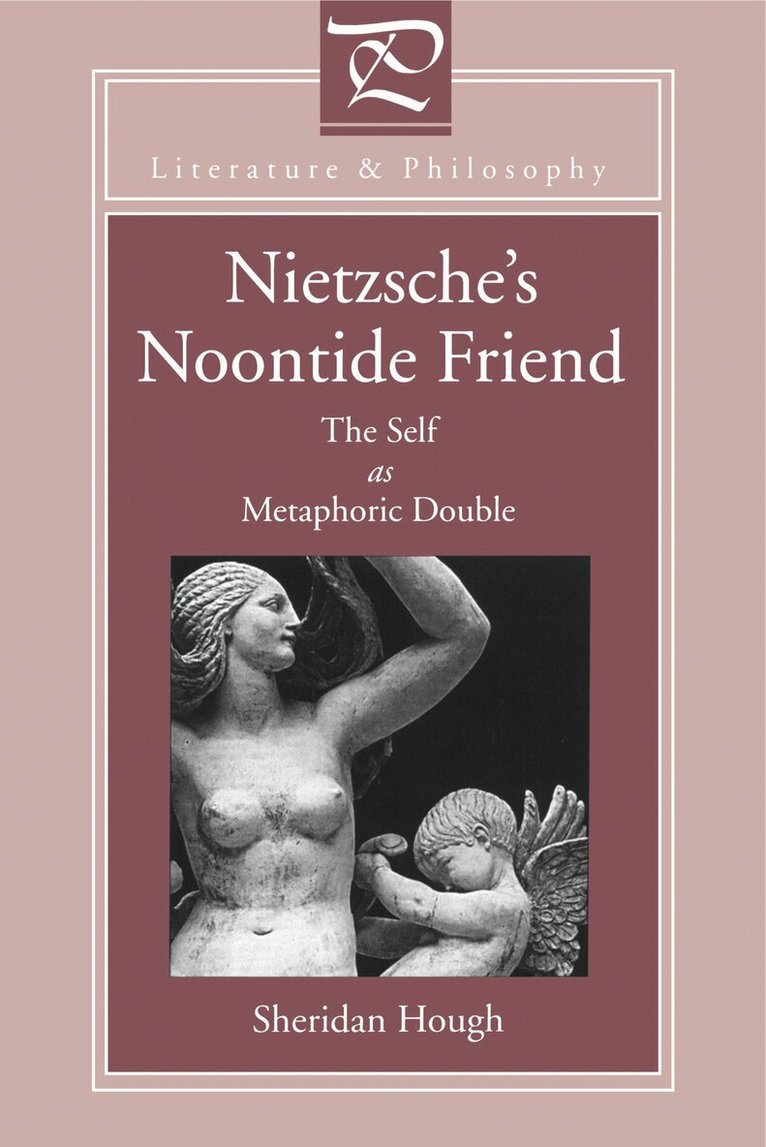
    Nietzsche's Noontide Friend

    The Self as Metaphoric Double

    AvSheridan Hough

    Häftad, Engelska, 1997

    Del i serien Literature and Philosophy

    582 kr

    Beställningsvara. Skickas inom 5-8 vardagar. Fri frakt över 249 kr.

    Beskrivning

    Ever since Heidegger lectured on Nietzsche, philosophers have stressed the active side of the Übermensch, the self who aggressively consumes and exploits value. Sheridan Hough, however, argues that there is a distinctly receptive and passive side to the Nietzschean self, and thus a pervasive doubleness in Nietzsche's thought that hasn't been explored before. This doubleness is the focus of Hough's attention here.Hough argues that Nietzsche's favorite way to describe the self is to use opposed pairs of metaphors. The sea and the land, the pursuit of archaeology and the "granite stratum" of the self, the child and pregnancy are tropes he uses to show the self as both an active critic of culture and a creation of that culture. Noon and shadow exemplify this dual thinking. The free spirit, according to Nietzsche, is dogged by a shadow, a shadow cast by the free spirit's efforts to overcome himself. Perfect noon—emblematic of the Übermensch—is the moment of ecstatic release for the free spirit. Thus the Übermensch is not a separate "superhuman" being but rather an ecstatic moment in the experience of free spirits.Hough succeeds in showing that the doubleness motif strikes deeper into the heart of Nietzsche's thinking than has been realized. Favorite Nietzschean images, such as that of pregnancy, suddenly take on new meaning when considered in this light. Careful to avoid a reductionist view, Hough adds significantly to our understanding of Nietzsche's contribution to modern thought.

    Produktinformation

    • Utgivningsdatum:1997-09-15
    • Mått:152 x 229 x 14 mm
    • Vikt:513 g
    • Format:Häftad
    • Språk:Engelska
    • Serie:Literature and Philosophy
    • Antal sidor:188
    • Förlag:Pennsylvania State University Press
    • ISBN:9780271026442

    Utforska kategorier

    • Filosofiska discipliner inom Filosofi och religion

    Mer om författaren

    Sheridan Hough is Assistant Professor of Philosophy at the College of Charleston.

    Recensioner i media

    “A thoroughly original contribution to contemporary thinking on Nietzsche. This is clearly the ripened fruit of a great deal of meditation.”—Geoffrey Galt Harpham, Tulane University