Sherry L. Reames - Böcker
Visar alla böcker från författaren Sherry L. Reames. Handla med fri frakt och snabb leverans.
2 produkter
2 produkter
451 kr
Skickas
This collection of Middle English hagiographies presents readers with women saints’ lives in multiple retellings from the thirteenth, fourteenth, and fifteenth centuries. Frideswide of Oxford was the Anglo-Saxon abbess of a well-endowed monastery who is presented as a victim of male persecution. Mary Magdalen’s story touches upon feminine authority while also offering three paradigms of sanctity—the repentant sinner, apostle, and contemplative—which could be emulated by both men and women. The virgin martyr legends of Margaret of Antioch, Christina of Tyre, and Katherine of Alexandria present these women as challengers to political tyrants. Finally, Anne’s vita popularized a new type of sanctity of holy motherhood that was not miraculously virginal but biologically and maritally typical. Sherry Reames introduces readers to relatively obscure female-centered hagiographies, the majority of which have never before been published or have not been edited since the nineteenth century.
Del 2 - York Manuscript and Early Print Studies
Saints' Legends in Medieval Sarum Breviaries
Catalogue and Studies
Inbunden, Engelska, 2021
1 401 kr
Skickas inom 7-10 vardagar
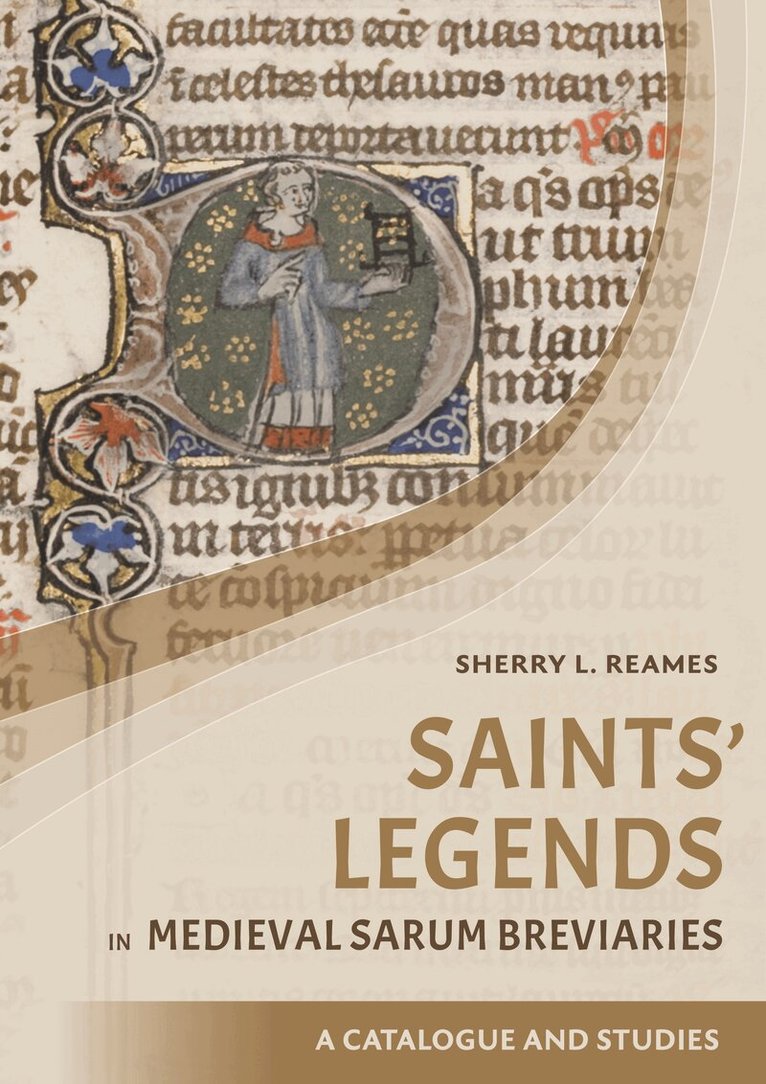
Comprehensive catalogue of the hagiographical lessons in Sarum breviaries, with key studies of the most crucial elements.Sarum Use was the most widely used form of the liturgy in late medieval England, but its service books were much less standardized than their modern counterparts. The lack of uniformity is particularly marked in Sarum breviaries' lessons on saints, which can vary enormously from copy to copy. This book is the first comprehensive examination of those lessons and the manuscripts that preserve them. It provides a catalogue of over 80 manuscripts and 12 early printed versions, giving a brief description of each one, sometimes correcting previous views of its date and provenance, and identifying each copy's divergences from the standard Sarum roster of saints. The book also identifies the textual families into which the manuscripts fall and the extent of their divergence from the lessons in both the early printed versions and the inadequate nineteenth-century edition on which modern scholars have previously depended. The author's findings offer an introduction to the unexpectedly rich variety of hagiographical lessons that survive, identify some of the sources behind them, and shed new light on the ways in which the Sarum breviary developed and was disseminated in the fourteenth and fifteenth centuries.