Shobna Nijhawan - Böcker
Visar alla böcker från författaren Shobna Nijhawan. Handla med fri frakt och snabb leverans.
3 produkter
3 produkter
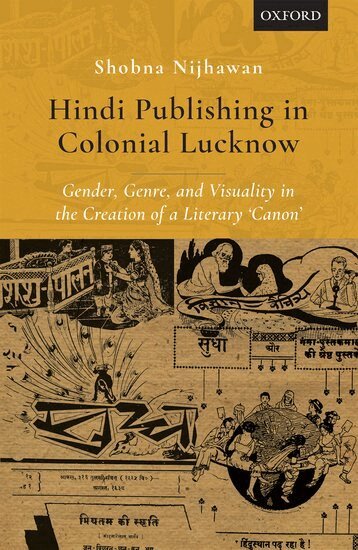
Hindi Publishing in Colonial Lucknow
Gender, Genre, and Visuality in the Creation of a Literary 'Canon'
Inbunden, Engelska, 2018
865 kr
Skickas inom 5-8 vardagar
Hindi Publishing in Colonial Lucknow centers on the literary activities emerging out of the publishing house Ganga Pustak Mala in colonial Lucknow in the first half of the twentieth century. Closely associated with Ganga Pustak Mala was the Hindi monthly Sudha (lit. nectar, ambrosia), a literary, social, political and illustrated periodical, in which Hindi writings in prose and poetry, including Hindi literary criticism, and other activities concerning the Hindi public sphere, such as language politics, social reforms, matters concerning lifestyle, health, arts and sciences, and the political emancipation of women and men were promoted and developed. Building on the defining work of Gérard Genette on paratexts as well as on scholarship on text-image relationships, this book charts the literary networks established by the publishing house's proprietor and chief editor of Sudha, Dularelal Bhargava, who played a pivotal role in the emergence of Hindi literary production out of Lucknow and in the commercialization and nationalization of Hindi literature in the north Indian Hindi public sphere.
2 430 kr
Skickas inom 10-15 vardagar
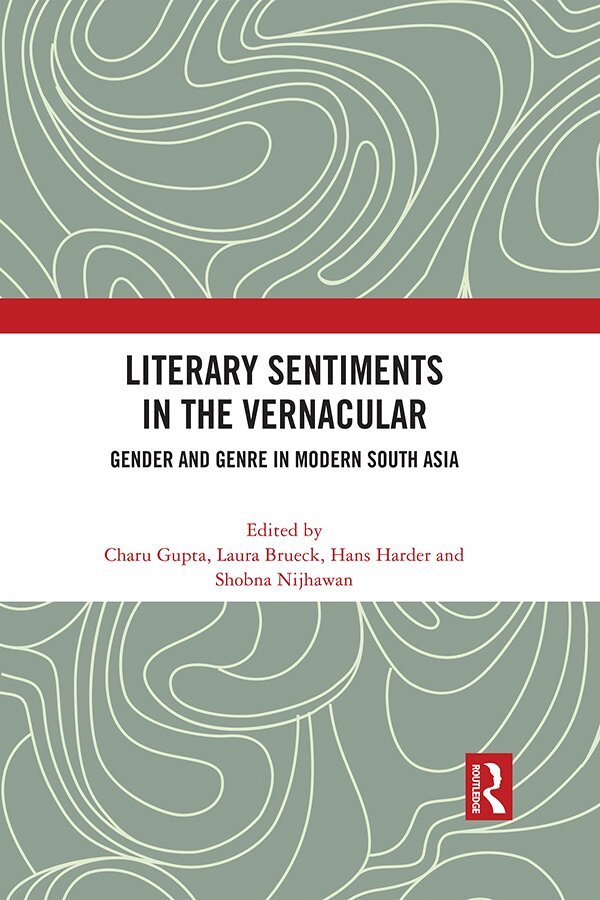
This collection brings together nine essays, accompanied by nine short translations that expand the assumptions that have typically framed literary histories, and creatively re-draws their boundaries, both temporally and spatially. The essays, rooted in the humanities and informed by interdisciplinary area studies, explore multiple linkages between forms of print culture, linguistic identities, and diverse vernacular literary spaces in colonial and post-colonial South Asia. The accompanying translations—from Bengali, Hindi, Marathi, Tamil, and Urdu—not only round out these scholarly explorations and comparisons, but invite readers to recognise the assiduous, intimate, and critical labour of expanding access to the vernacular archive, while also engaging with the challenges—linguistic, cultural, and political—of rendering vernacular articulations of gendered experience and embodiment in English. Collectively, the essays and translations foreground complex and politicised expressions of gender and genre in fictional and non-fictional print materials and thus draw meaningful connections between the vernacular and literature, the everyday and the marginals, and gender and sentiment. They expand vernacular literary archives, canons and genealogies, and push us to theorise the nature of writing in South Asia. Literary Sentiments in the Vernacular is a significant new contribution to South Asian literary history and gender studies, and will be a great resource for academics, researchers, and advanced students of History, Literature, Cultural Studies, Politics, and Sociology. The chapters in this book were originally published as a special issue of South Asia: Journal of South Asian Studies.
711 kr
Skickas inom 10-15 vardagar
This collection brings together nine essays, accompanied by nine short translations that expand the assumptions that have typically framed literary histories, and creatively re-draws their boundaries, both temporally and spatially. The essays, rooted in the humanities and informed by interdisciplinary area studies, explore multiple linkages between forms of print culture, linguistic identities, and diverse vernacular literary spaces in colonial and post-colonial South Asia. The accompanying translations—from Bengali, Hindi, Marathi, Tamil, and Urdu—not only round out these scholarly explorations and comparisons, but invite readers to recognise the assiduous, intimate, and critical labour of expanding access to the vernacular archive, while also engaging with the challenges—linguistic, cultural, and political—of rendering vernacular articulations of gendered experience and embodiment in English. Collectively, the essays and translations foreground complex and politicised expressions of gender and genre in fictional and non-fictional print materials and thus draw meaningful connections between the vernacular and literature, the everyday and the marginals, and gender and sentiment. They expand vernacular literary archives, canons and genealogies, and push us to theorise the nature of writing in South Asia. Literary Sentiments in the Vernacular is a significant new contribution to South Asian literary history and gender studies, and will be a great resource for academics, researchers, and advanced students of History, Literature, Cultural Studies, Politics, and Sociology. The chapters in this book were originally published as a special issue of South Asia: Journal of South Asian Studies.