Shulamit S. Magnus - Böcker
Visar alla böcker från författaren Shulamit S. Magnus. Handla med fri frakt och snabb leverans.
2 produkter
2 produkter
833 kr
Skickas inom 10-15 vardagar
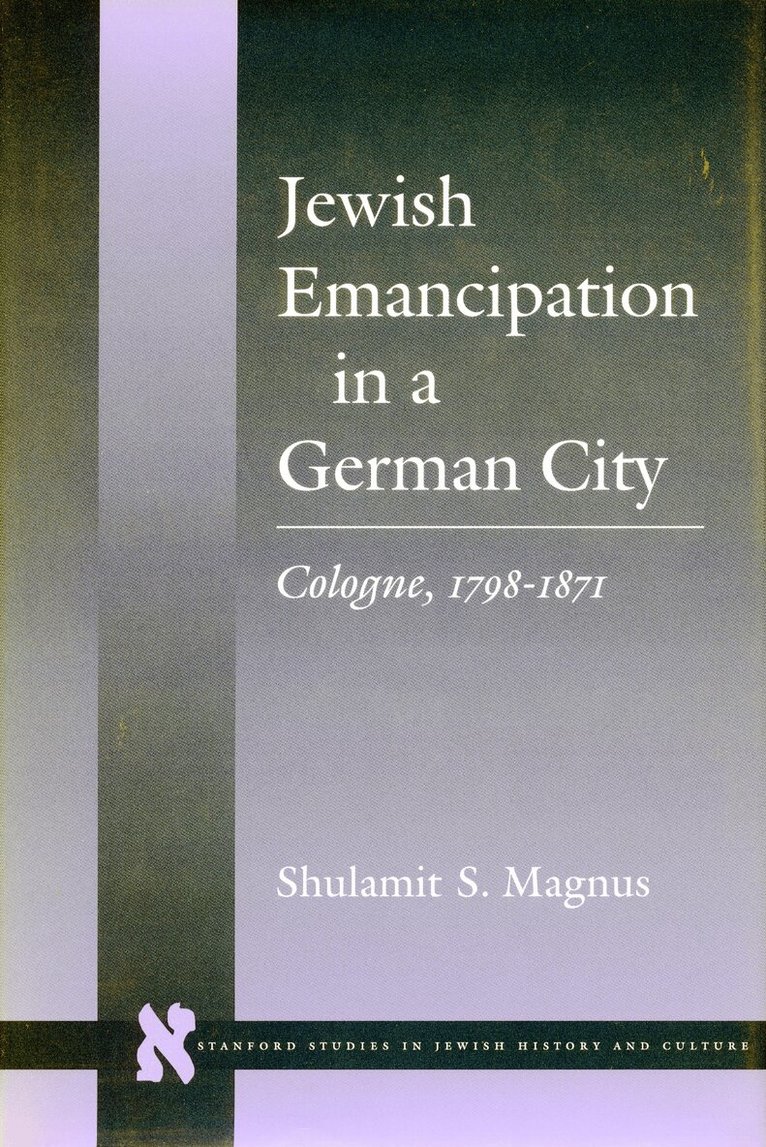
This work seeks to understand how, in nineteenth-century Germany, Jews and non-Jews shaped and experienced Jewish emancipation, a process whereby Jews were freed from ancient discriminatory laws and, over the course of decades, became citizens. Unlike most other works on German Jewish emancipation, this book examines how so fundamental and dramatic a transformation in the relation of Jews and non-Jews was experienced by the people who lived it, how economic, social, political, and ideological forces interacted to bring about change, and how accommodation actually occurred.The book focuses on Cologne, the most populous and economically powerful city in the Rhineland. Jews, excluded since 1424, returned under French Revolutionary rule, but Napoleonic legislation in 1808 compromised their equality and gave city elders an opportunity to reassert Cologne's historic control when the territory passed to Prussia in 1814. A long struggle between municipal and state authorities ensued, with the city hostile to Jewish rights but ultimately losing its bid to exercise local sovereignty over the Jews.The 1840's saw the advent of the railway age, and Cologne's economic and political climate was transformed. The city soon became the center for Rhenish liberal advocacy of Jewish rights, led by regional entrepreneurs in association with Jewish bankers. The author demonstrates, however, that Jewish emancipation was not simply conferred on Jews from above or engineered by financial mavericks in the community. Rather, it occurred as part of a broad societal transformation and as the result of the efforts and behavior of ordinary Jews, whose voices the author records.The book reveals how such Jews responded to the lure of equality and the pressures of continued discrimination in their business and private lives, and shows how their response fostered a new, positive perception of Jews as honorable people deserving of civic inclusion. It also illustrates how Jews, enjoying unprecedented success and acceptance, fought not only for individual rights but for the right of organized Judaism to achieve a secure place in society.
505 kr
Skickas inom 10-15 vardagar
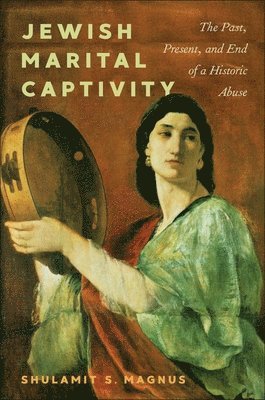
Solutions to divorce abuse in Jewish societies Jewish Marital Captivity centers on the experience of women encountering systemic disadvantage in rabbinic marriage and divorce throughout Jewish history and across the map of Jewish life. In rabbinic law, marriage is a unilateral act by the husband, making divorce, similarly, the husband's sole prerogative, in which his conscious will is also sacrosanct. Abuse necessarily follows, and has been the case from earliest recorded history when husbands abandoned wives, perished on business trips or in war or criminal incidents, or maliciously refused wives a rabbinic writ of divorce (get), or extorted for one, leaving wives trapped in marriage, including to dead men. There is no time limit to this state. Women in such marital captivity, without a husband's economic partnership, or divorce or death settlements, yet unfree to contract other marriages, suffered devastating social, economic, and psychological hardship, as did their children. Women's marital captivity has been treated as an issue in rabbinic law but has not, until now, been studied as a problem in Jewish societies across time and place, with a focus on the predicament and behavior of women.Jewish Marital Captivity is a social history of this problem from the seventh century to the present across multiple Jewish communities, focusing on the interaction of law and social reality. Magnus documents a pattern of assertive and transgressive actions by pious and rebellious women in traditional Jewish societies to escape marital captivity, often, with the assistance of male kin, also probing why such behavior emerged in pre-modern, patriarchal societies. She charts women's role in the emergence of reforms in the medieval era offering women significant protections in marriage and divorce, and rabbinic backlash against these advances. This backlash was codified and its legal rulings are enacted to this day in rabbinic courts in the US and other Diaspora communities and in Israel, which lacks civil marriage and divorce and where Jewish citizens can only get divorced in rabbinic courts. It combines a sweeping history of Jewish women's marital captivity with an analysis of the problem's systemic nature, however personally and individually women experience it, and with a critique of current policy as seeking to manage and thus, perpetuate, rather than end the abuse. It applies the lessons of the history uncovered to propose solutions to what Magnus presents not an Orthodox or an Israeli problem, but a Jewish one.