• Fri frakt över 249 kr
  • •
  • Snabba leveranser
  • •
  • Billiga böcker
Kundservice

Du är på sajten för privatpersoner.

Företag, bibliotek eller offentlig verksamhet?

Du handlar på classic.bokus.com, där alla dina funktioner finns intakta.
Till classic.bokus.com
Bokus logotyp. Gå till startsidan.
  • Erbjudanden
  • Nyheter
  • Student
  • Topplistor
  • Barn & ungdom
  • Bokus Play
  • E-böcker
  • Pocketböcker
  • Spel & pussel

10% rabatt på allt med kod: NYSTART10 →

Sidfot

Mina sidor

    Hjälp

    • Kundservice
    • Vanliga frågor och svar
    • Frakt och leverans
    • Retur vid ångerrätt
    • Reklamera vara
    • Betalning
    • Köpvillkor
    • Allmänna villkor
    • Information om webbplatsens tillgänglighet

    Om Bokus

    • Om oss
    • Pressrum
    • För studenter
    • För företag
    • För bibliotek och offentlig verksamhet
    • För leverantörer
    • Hållbarhet

    Populärt

    • Aktuella erbjudanden
    • Presentkort
    • Studentlitteratur
    • Nya böcker
    • Topplistor
    • Signerade böcker
    • Engelska böcker

    Inspiration

    • Boktips
    • BookTok
    • Populära bokserier
    • Barnbokskaraktärer
    • Populära författare
    Logotyp för Bokus
    Följ oss på Facebook (extern länk)Följ oss på Instagram (extern länk)Följ oss på YouTube (extern länk)Följ oss på TikTok (extern länk)
    bokus @ CookiesAnpassa cookiesIntegritetspolicyKöpvillkor
    Till Citymail hemsida (extern länk)Till Budbee hemsida (extern länk)Till Postnord hemsida (extern länk)Till Schenker hemsida (extern länk)Till Early Bird hemsida (extern länk)Till Walleys hemsida (extern länk)
    1. Historia och arkeologi
    2. Historia
    3. Historia: särskilda händelser och ämnen
    4. Socialhistoria och kulturhistoria

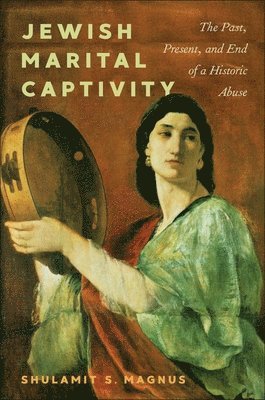
    Jewish Marital Captivity

    The Past, Present, and End of a Historic Abuse

    AvShulamit S. Magnus

    Inbunden, Engelska, 2025

    522 kr

    Beställningsvara. Skickas inom 10-15 vardagar. Fri frakt över 249 kr.

    Beskrivning

    Solutions to divorce abuse in Jewish societies Jewish Marital Captivity centers on the experience of women encountering systemic disadvantage in rabbinic marriage and divorce throughout Jewish history and across the map of Jewish life. In rabbinic law, marriage is a unilateral act by the husband, making divorce, similarly, the husband's sole prerogative, in which his conscious will is also sacrosanct. Abuse necessarily follows, and has been the case from earliest recorded history when husbands abandoned wives, perished on business trips or in war or criminal incidents, or maliciously refused wives a rabbinic writ of divorce (get), or extorted for one, leaving wives trapped in marriage, including to dead men. There is no time limit to this state. Women in such marital captivity, without a husband's economic partnership, or divorce or death settlements, yet unfree to contract other marriages, suffered devastating social, economic, and psychological hardship, as did their children. Women's marital captivity has been treated as an issue in rabbinic law but has not, until now, been studied as a problem in Jewish societies across time and place, with a focus on the predicament and behavior of women.Jewish Marital Captivity is a social history of this problem from the seventh century to the present across multiple Jewish communities, focusing on the interaction of law and social reality. Magnus documents a pattern of assertive and transgressive actions by pious and rebellious women in traditional Jewish societies to escape marital captivity, often, with the assistance of male kin, also probing why such behavior emerged in pre-modern, patriarchal societies. She charts women's role in the emergence of reforms in the medieval era offering women significant protections in marriage and divorce, and rabbinic backlash against these advances. This backlash was codified and its legal rulings are enacted to this day in rabbinic courts in the US and other Diaspora communities and in Israel, which lacks civil marriage and divorce and where Jewish citizens can only get divorced in rabbinic courts. It combines a sweeping history of Jewish women's marital captivity with an analysis of the problem's systemic nature, however personally and individually women experience it, and with a critique of current policy as seeking to manage and thus, perpetuate, rather than end the abuse. It applies the lessons of the history uncovered to propose solutions to what Magnus presents not an Orthodox or an Israeli problem, but a Jewish one.

    Produktinformation

    • Utgivningsdatum:2025-08-19
    • Mått:152 x 229 x 32 mm
    • Vikt:712 g
    • Format:Inbunden
    • Språk:Engelska
    • Antal sidor:376
    • Förlag:New York University Press
    • ISBN:9781479835546

    Utforska kategorier

    • Socialhistoria och kulturhistoria inom Historia och arkeologi
    • Sociologi inom Samhälle och politik
    • Sociala grupper och identitet inom Samhälle och politik

    Mer om författaren

    Shulamit S. Magnus is Professor Emerita of Jewish Studies and History, Oberlin College. She is the author of several books, including the 2-volume Pauline Wengeroff, Memoirs of a Grandmother: Scenes from the Cultural History of the Jews of Russia in the Nineteenth Century, the first volume of which was awarded the National Jewish Book Award.

    Recensioner i media

    "Provides a magisterial, global analysis of iggun (marital captivity) and agunot (Jewish women whose husbands refused to give them a rabbinical divorce [or get] and who were thus `chained' to those men) across millennia. Deftly using myriad sources, Magnus presents a lucid chronicle of misogynist and systemic Jewish laws and resistance against them. Readers learn a riveting story of the victimization of Jewish women to this day, but also women's resistance and hopes for change." - Marion Kaplan, author of Between Dignity and Despair: Jewish Life in Nazi Germany "This necessary and luminous book by an accomplished social historian is far more than a comprehensive overview of the enduring tragedy of the agunah. Inspired by examples of female agency in previous eras, Magnus offers an impassioned agenda for feminist action in the present to eliminate a persisting and unconscionable oppression that dishonors the entire Jewish community." - Judith R. Baskin, Philip H. Knight Professor of Humanities Emerita, University of Oregon "A brilliant historical study." - Susannah Heschel, Dartmouth College