Sidney W. Mintz - Böcker
Visar alla böcker från författaren Sidney W. Mintz. Handla med fri frakt och snabb leverans.
10 produkter
10 produkter
201 kr
Skickas
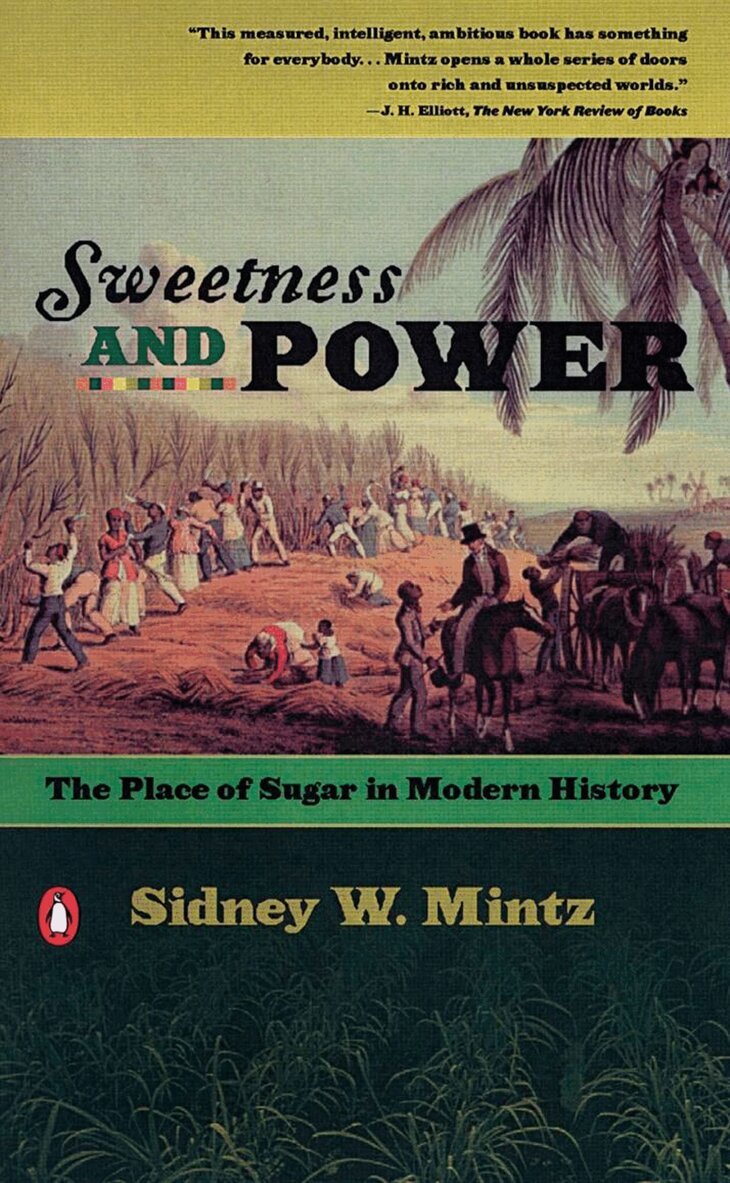
A fascinating persuasive history of how sugar has shaped the world, from European colonies to our modern dietsIn this eye-opening study, Sidney Mintz shows how Europeans and Americans transformed sugar from a rare foreign luxury to a commonplace necessity of modern life, and how it changed the history of capitalism and industry. He discusses the production and consumption of sugar, and reveals how closely interwoven are sugar's origins as a "slave" crop grown in Europe's tropical colonies with is use first as an extravagant luxury for the aristocracy, then as a staple of the diet of the new industrial proletariat. Finally, he considers how sugar has altered work patterns, eating habits, and our diet in modern times."Like sugar, Mintz is persuasive, and his detailed history is a real treat." -San Francisco Chronicle
708 kr
Skickas inom 10-15 vardagar
Contact and clash, amalgamation and accommodation, resistance and change have marked the history of the Caribbean islands. It is a unique region where people under the stress of slavery had to improvise, invent and literally create forms of human association through which their pasts and the symbolic interpretation of their present could be structured.Caribbean Transformations is divided into three major parts, each preceded by a brief introductory chapter. Part One begins with a look at the African antecedents of the Caribbean, then discusses slavery and the plantation system. Two chapters deal with slavery and forced labor in Puerto Rico and the history of a Puerto Rican plantation. Part Two is concerned with the rise of a Caribbean peasantry--the erstwhile slaves who separated themselves from the plantation system on small plots of land. This creative adaptation led to the growth of a class of rural landowners producing a large part of their own subsistence but also selling to and buying from wider markets. Mintz first discusses the origins of reconstructed peasantries, and then proceeds to the specifics of the origins and history of the peasantry in Jamaica. Part Three turns to Caribbean nationhood--the political and economic forces that affected its shaping and the social structure of its component societies. A separate chapter details the case of Haiti. The book ends with a critique of the implications of Caribbean nationhood from an anthropological perspective, stressing the ways that class, color and other social dimensions continue to play important parts in the organization of Caribbean societies.Caribbean Transformations--lucidly written and presenting broad coverage of both time and space--is essential reading for anthropologists, sociologists, historians and all others interested in the Caribbean, in black studies, in colonial problems, in the relationships between colonial areas and the imperial powers, and in culture change generally.
294 kr
Skickas inom 5-8 vardagar
Worker in the Cane is both a profound social document and a moving spiritual testimony. Don Taso portrays his harsh childhood, his courtship and early marriage, his grim struggle to provide for his family. He tells of his radical political beliefs and union activity during the Depression and describes his hardships when he was blacklisted because of his outspoken convictions. Embittered by his continuing poverty and by a serious illness, he undergoes a dramatic cure and becomes converted to a Protestant revivalist sect. In the concluding chapters the author interprets Don Taso's experience in the light of the changing patterns of life in rural Puerto Rico.
280 kr
Skickas inom 5-8 vardagar
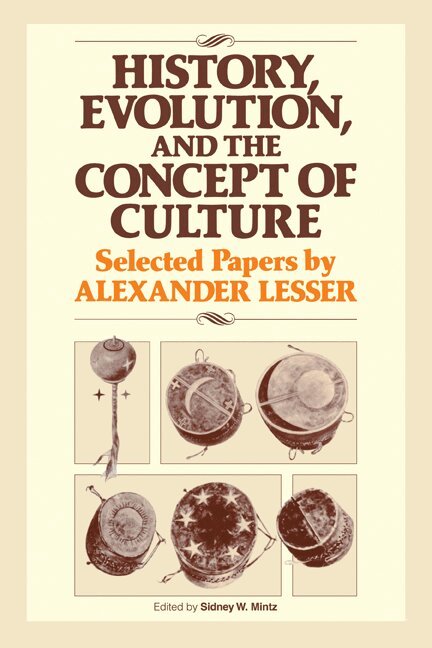
History, Evolution and the Concept of Culture
Selected Papers by Alexander Lesser
Häftad, Engelska, 2009
428 kr
Skickas inom 7-10 vardagar
Alexander Lesser, one of Franz Boas's finest students, and probably one of the best of his time in his research on the Plains Indians, is a brilliant but neglected figure in American anthropology. This representative selection of Lesser's work is designed to make the range of his writings accessible to a broad audience. His work is of particular interest to present-day readers for its advocacy of an historical-evolutionary perspective in anthropology. Such an approach, almost unique at the time Lesser was writing, has become increasingly widely appreciated since. His work is also of interest for the light it throws on the British 'functionalist' school, and the effects of their views on American anthropology.
287 kr
Skickas inom 10-15 vardagar
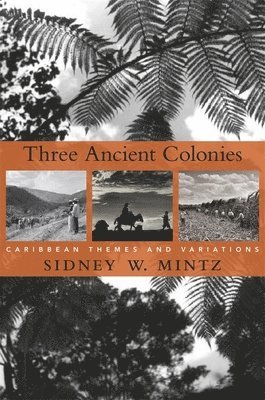
As a young anthropologist, Sidney Mintz undertook fieldwork in Jamaica, Haiti, and Puerto Rico. Fifty years later, the eminent scholar of the Caribbean returns to those experiences to meditate on the societies and on the island people who befriended him. These reflections illuminate continuities and differences between these cultures, but even more they exemplify the power of people to reveal their own history. Mintz seeks to conjoin his knowledge of the history of Jamaica, Haiti, and Puerto Rico—a dynamic past born of a confluence of peoples of a sort that has happened only a few times in human history—with the ways that he heard people speak about themselves and their lives. Mintz argues that in Jamaica and Haiti, creolization represented a tremendous creative act by enslaved peoples: that creolization was not a passive mixing of cultures, but an effort to create new hybrid institutions and cultural meanings to replace those that had been demolished by enslavement. Globalization is not the new phenomenon we take it to be. This book is both a summation of Mintz's groundbreaking work in the region and a reminder of how anthropology allows people to explore the deep truths that history may leave unexamined.
2 098 kr
Skickas inom 10-15 vardagar
Contact and clash, amalgamation and accommodation, resistance and change have marked the history of the Caribbean islands. It is a unique region where people under the stress of slavery had to improvise, invent and literally create forms of human association through which their pasts and the symbolic interpretation of their present could be structured.Caribbean Transformations is divided into three major parts, each preceded by a brief introductory chapter. Part One begins with a look at the African antecedents of the Caribbean, then discusses slavery and the plantation system. Two chapters deal with slavery and forced labor in Puerto Rico and the history of a Puerto Rican plantation. Part Two is concerned with the rise of a Caribbean peasantry--the erstwhile slaves who separated themselves from the plantation system on small plots of land. This creative adaptation led to the growth of a class of rural landowners producing a large part of their own subsistence but also selling to and buying from wider markets. Mintz first discusses the origins of reconstructed peasantries, and then proceeds to the specifics of the origins and history of the peasantry in Jamaica. Part Three turns to Caribbean nationhood--the political and economic forces that affected its shaping and the social structure of its component societies. A separate chapter details the case of Haiti. The book ends with a critique of the implications of Caribbean nationhood from an anthropological perspective, stressing the ways that class, color and other social dimensions continue to play important parts in the organization of Caribbean societies.Caribbean Transformations--lucidly written and presenting broad coverage of both time and space--is essential reading for anthropologists, sociologists, historians and all others interested in the Caribbean, in black studies, in colonial problems, in the relationships between colonial areas and the imperial powers, and in culture change generally.
1 259 kr
Skickas inom 7-10 vardagar
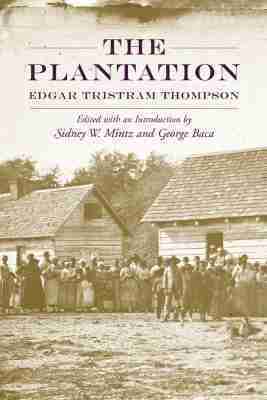
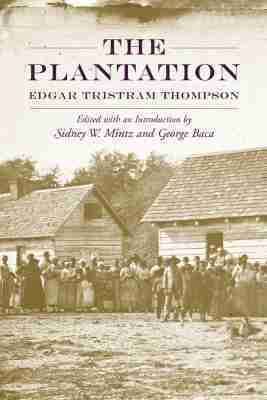
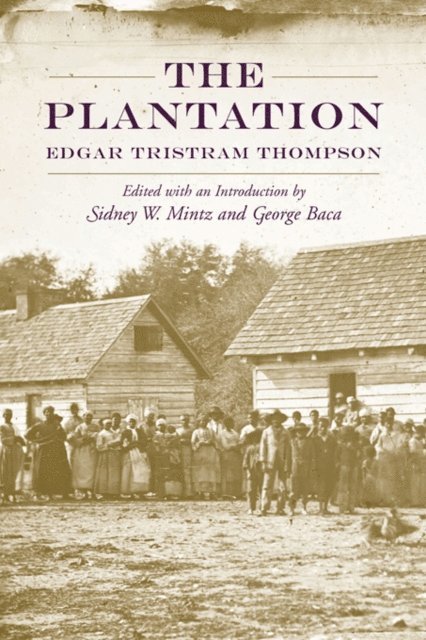
A rare classic in American social science, Edgar Thompson's 1932 University of Chicago dissertation, ""The Plantation,"" broke new analytic ground in the study of the southern plantation system. Thompson refuted long-espoused climatic theories of the origins of plantation societies and offered instead a richly nuanced understanding of the links between plantation culture, the global history of capitalism, and the political and economic contexts of hierarchical social classification. This first complete publication of Thompson's study makes available to modern readers one of the earliest attempts to reinterpret the history of the American South as an integral part of global processes. In this Southern Classics edition, editors Sidney W. Minz and George Baca provide a thorough introduction explicating Thompson's guiding principles and grounding his germinal work in its historical context.Thompson viewed the plantation as a political institution in which the quasi-industrial production of agricultural staples abroad through race-making labor systems solidified and advanced European state power. His interpretation marks a turning point in the scientific study of an ancient agricultural institution, in which the plantation is seen as a pioneering instrument for the expansion of the global economy. Further, his awareness of the far-reaching history of economic globalization and of the conception of race as socially constructed predicts viewpoints that have since become standard. As such, this overlooked gem in American intellectual history is still deeply relevant for ongoing research and debate in social, economic, and political history.
214 kr
Skickas inom 10-15 vardagar
A rare classic in American social science, Edgar Thompson's 1932 University of Chicago dissertation, ""The Plantation,"" broke new analytic ground in the study of the southern plantation system. Thompson refuted long-espoused climatic theories of the origins of plantation societies and offered instead a richly nuanced understanding of the links between plantation culture, the global history of capitalism, and the political and economic contexts of hierarchical social classification. This first complete publication of Thompson's study makes available to modern readers one of the earliest attempts to reinterpret the history of the American South as an integral part of global processes. In this Southern Classics edition, editors Sidney W. Minz and George Baca provide a thorough introduction explicating Thompson's guiding principles and grounding his germinal work in its historical context.Thompson viewed the plantation as a political institution in which the quasi-industrial production of agricultural staples abroad through race-making labor systems solidified and advanced European state power. His interpretation marks a turning point in the scientific study of an ancient agricultural institution, in which the plantation is seen as a pioneering instrument for the expansion of the global economy. Further, his awareness of the far-reaching history of economic globalization and of the conception of race as socially constructed predicts viewpoints that have since become standard. As such, this overlooked gem in American intellectual history is still deeply relevant for ongoing research and debate in social, economic, and political history.
425 kr
Skickas inom 3-6 vardagar