Siegwart Reichwald – Författare
Visar alla böcker från författaren Siegwart Reichwald. Handla med fri frakt och snabb leverans.
3 produkter
3 produkter
448 kr
Skickas inom 10-15 vardagar
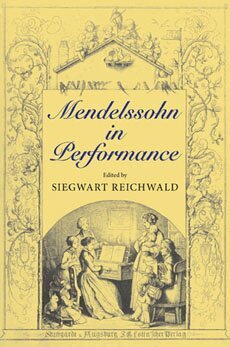
Exploring many aspects of Felix Mendelssohn's multi-faceted career as musician and how it intersects with his work as composer, contributors discuss practical issues of music making such as performance space, instruments, tempo markings, dynamics, phrasings, articulations, fingerings, and instrument techniques. They present the conceptual and ideological underpinnings of Mendelssohn's approach to performance, interpretation, and composing through the contextualization of specific performance events and through the theoretic actualization of performances of specific works. Contributors rely on manuscripts, marked or edited scores, and performance parts to convey a deeper understanding of musical expression in 19th-century Germany. This study of Mendelssohn's work as conductor, pianist, organist, violist, accompanist, music director, and editor of old and new music offers valuable perspectives on 19th-century performance practice issues.
1 314 kr
Skickas inom 10-15 vardagar
Felix Mendelssohn is one of the most celebrated figures of the early Romantic period. As a composer of sacred texts, he is chiefly remembered today for the oratorios Paulus (1836) and Elijah (1846). In this groundbreaking study, Siegwart Reichwald offers a meticulous analysis of Paulus, beginning with a general overview of the oratorio traditions of the early nineteenth century. He details the phases of the compositional process of Paulus as well as principles governing its development. Numerous musical examples, figures, and tables accompany the text.This thorough treatment of Paulus, while shedding light on Mendelssohn's approach to the oratorio and to sacred music in general, will be of interest to students of musicology.
234 kr
Skickas inom 7-10 vardagar
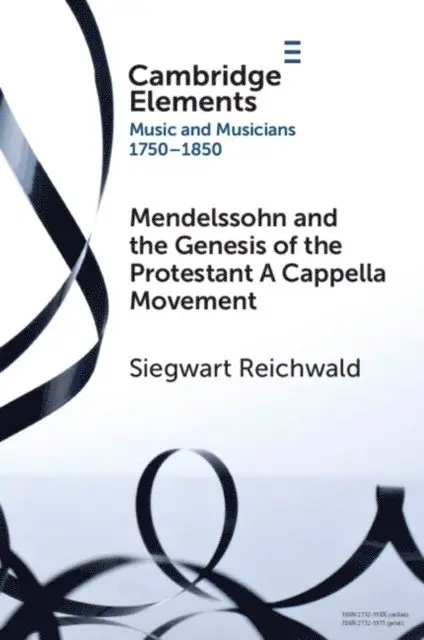
Drawing on his experiences in Berlin under Schleiermacher and his travels to the Vatican, Mendelssohn, as the Director of Prussian Church Music, wanted to offer an edifying worship experience where large-scale choral works would become an indispensable part of the liturgy, which he saw as a performative or representational act, centered around the life of Christ. Yet he quickly realized that the court and clergy were not interested in his foundational concepts; they merely wanted reforms based on the restauration ideals espoused by Winterfeld and Thibaut. Analyses of his 25 Domchor compositions and their revisions in this Element chronicle Mendelssohn's stylistic development and his ability to continue to offer a Christological worship experience within strictly prescribed parameters. The Berlin Domchor and its new repertoire by Mendelssohn and contemporaneous composers quickly became the model for the emerging a cappella movement throughout Protestant Germany.