Sikata Banerjee – Författare
Visar alla böcker från författaren Sikata Banerjee. Handla med fri frakt och snabb leverans.
7 produkter
7 produkter
693 kr
Skickas inom 10-15 vardagar
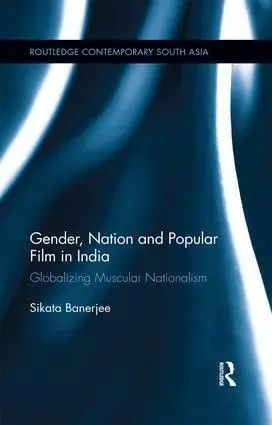
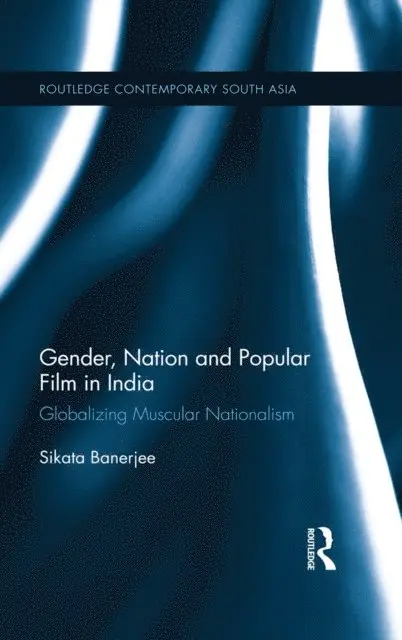
Interpretations of manhood have unfolded in India within a middle class cultural milieu shaped by an assertive self-confidence fuelled by liberalisation, a process by which India has been integrated into the global political economy and the prominence of Hindutva or Hindu nationalist politics. This book unpacks a particular gendered vision of nation in the modern Indian context by drawing on popular films. This muscular nationalism is an intersection of a specific vision of masculinity with the political doctrine of nationalism. The idea of nation is animated by an idea of manhood associated with martial prowess, muscular strength and toughness, but coupled with the image and construct of virtuous woman – a gendered binary of martial man and chaste woman. The author skilfully and convincingly draws together issues of political economy, including globalization and neoliberalism with majoritarian politics and popular culture, thus showing how disparate strands intersect and build on each other.Using interpretive methodologies and popular media, the book presents new interpretations of Bollywood films through the lenses of gender, masculinity and nationalism. It will be of interest to scholars of South Asian politics and culture, in particular Indian nationalism, popular culture, media and gender studies.
1 977 kr
Skickas inom 10-15 vardagar
In theorizing about the link between violence and the politics of nationalism, most scholars have rejected the idea that primordial hatred between different ethnic and/or religious groups residing in close proximity will inevitably lead to conflict and the call for an ethnically/religiously pure nation-state. Rather, conflict tends to occur when humans manipulate social, political, economic, and ideological factors to construct nationalist identities and movements. The manipulation perspective is the underlying theoretical framework of Warriors in Politics which uses the Mumbai riots of December 1992 and January 1993 to analyze the brand of nationalism created and disseminated by the Indian political party Shiv Sena. While the theoretical and empirical research of others is an important part of this study, interviews conducted by the author when she lived in Mumbai during this tumultuous period as well as her own theorizing on the links among masculinity, militarism, and nationalism, provide an analysis of the factors - economic, political, and ideological - that converge to transform the simmering discontent of the politics of nationalism into violent conflict.
618 kr
Skickas inom 10-15 vardagar
In theorizing about the link between violence and the politics of nationalism, most scholars have rejected the idea that primordial hatred between different ethnic and/or religious groups residing in close proximity will inevitably lead to conflict and the call for an ethnically/religiously pure nation-state. Rather, conflict tends to occur when humans manipulate social, political, economic, and ideological factors to construct nationalist identities and movements. The manipulation perspective is the underlying theoretical framework of Warriors in Politics which uses the Mumbai riots of December 1992 and January 1993 to analyze the brand of nationalism created and disseminated by the Indian political party Shiv Sena. While the theoretical and empirical research of others is an important part of this study, interviews conducted by the author when she lived in Mumbai during this tumultuous period as well as her own theorizing on the links among masculinity, militarism, and nationalism, provide an analysis of the factors - economic, political, and ideological - that converge to transform the simmering discontent of the politics of nationalism into violent conflict.
1 057 kr
Tillfälligt slut
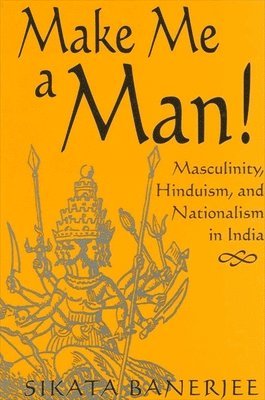
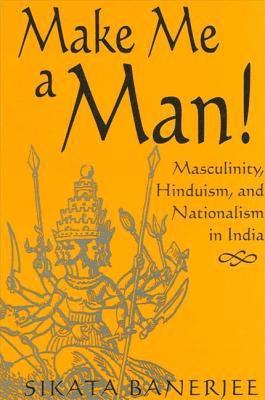
Looks at the ideals of masculine Hinduism—and the corresponding feminine ideals—that have built the Indian nation, and explores their consequences.Make Me a Man! argues that ideas about manhood play a key role in building and sustaining the modern nation. It examines a particular expression of nation and manliness: masculine Hinduism. This ideal, which emerged from India's experience of British imperialism, is characterized by martial prowess, muscular strength, moral fortitude, and a readiness to go to battle. Embodied in the images of the Hindu soldier and the warrior monk, masculine Hinduism is rooted in a rigid "us versus them" view of nation that becomes implicated in violence and intolerance. Masculine Hinduism also has important connotations for women, whose roles in this environment consist of the heroic mother, chaste wife, and celibate, masculinized warrior. All of these roles shore up the "us versus them" dichotomy and constrict women's lives by imposing particular norms and encouraging limits on women's freedom.Sikata Banerjee notes that the nationalism defined by masculine Hinduism draws on a more general narrative of nation found in many cultures. If the outcomes of this narrative are to be resisted, the logic of masculinity, armed manhood, and nation need to be examined in diverse contexts.
347 kr
Skickas inom 7-10 vardagar
Looks at the ideals of masculine Hinduism—and the corresponding feminine ideals—that have built the Indian nation, and explores their consequences.Make Me a Man! argues that ideas about manhood play a key role in building and sustaining the modern nation. It examines a particular expression of nation and manliness: masculine Hinduism. This ideal, which emerged from India's experience of British imperialism, is characterized by martial prowess, muscular strength, moral fortitude, and a readiness to go to battle. Embodied in the images of the Hindu soldier and the warrior monk, masculine Hinduism is rooted in a rigid "us versus them" view of nation that becomes implicated in violence and intolerance. Masculine Hinduism also has important connotations for women, whose roles in this environment consist of the heroic mother, chaste wife, and celibate, masculinized warrior. All of these roles shore up the "us versus them" dichotomy and constrict women's lives by imposing particular norms and encouraging limits on women's freedom.Sikata Banerjee notes that the nationalism defined by masculine Hinduism draws on a more general narrative of nation found in many cultures. If the outcomes of this narrative are to be resisted, the logic of masculinity, armed manhood, and nation need to be examined in diverse contexts.
Muscular Nationalism
Gender, Violence, and Empire in India and Ireland, 1914-2004
Inbunden, Engelska, 2012
649 kr
Skickas inom 10-15 vardagar
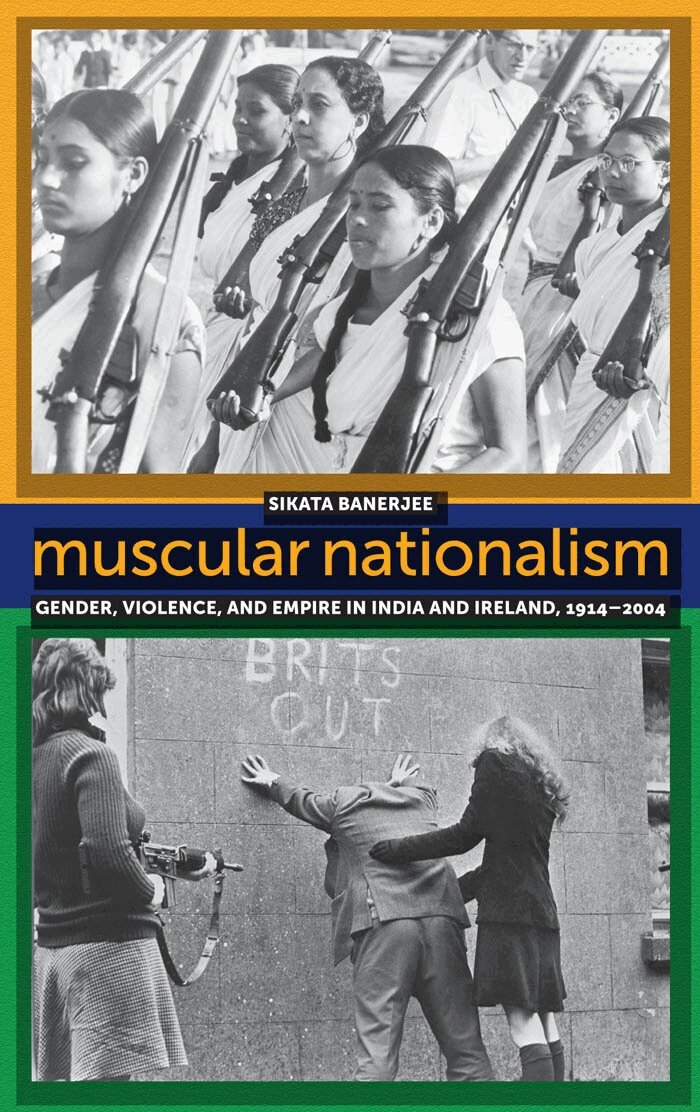
A particular dark triumph of modern nationalism has been itsability to persuade citizens to sacrifice their lives for a political visionforged by emotional ties to a common identity. Both men and women can respond to nationalistic calls to fight thatportray muscular warriors defending their nation against an easily recognizableenemy. This "us versus them" mentality can be seen in sectarian violencebetween Hindus and Muslims, Tamils and Sinhalas, Serbs and Kosovars, andProtestants and Catholics. In MuscularNationalism, Sikata Banerjee takes a comparative look at Indiaand Ireland andthe relationship among gender, violence, and nationalism. Exploring key textsand events from 1914-2004, Banerjee explores how women negotiate "muscularnationalisms" as they seek to be recognized as legitimate nationalists andequal stakeholders in their national struggles. Banerjee argues that the gendered manner in which dominantnationalism has been imagined in most states in the world has had importantimplications for women's lived experiences. Drawing on a specific intersection of gender and nationalism, shediscusses the manner in which women negotiate a political and social terraininfused with a masculinized dream of nation-building. India and Ireland—two states shaped by thelegacy of British imperialism and forced to deal with modern political/socialconflict centering on competing nationalisms—provide two provocative casestudies that illuminate the complex interaction between gender and nation.
2 246 kr
Skickas inom 10-15 vardagar
Interpretations of manhood have unfolded in India within a middle class cultural milieu shaped by an assertive self-confidence fuelled by liberalisation, a process by which India has been integrated into the global political economy and the prominence of Hindutva or Hindu nationalist politics. This book unpacks a particular gendered vision of nation in the modern Indian context by drawing on popular films. This muscular nationalism is an intersection of a specific vision of masculinity with the political doctrine of nationalism. The idea of nation is animated by an idea of manhood associated with martial prowess, muscular strength and toughness, but coupled with the image and construct of virtuous woman – a gendered binary of martial man and chaste woman. The author skilfully and convincingly draws together issues of political economy, including globalization and neoliberalism with majoritarian politics and popular culture, thus showing how disparate strands intersect and build on each other.Using interpretive methodologies and popular media, the book presents new interpretations of Bollywood films through the lenses of gender, masculinity and nationalism. It will be of interest to scholars of South Asian politics and culture, in particular Indian nationalism, popular culture, media and gender studies.